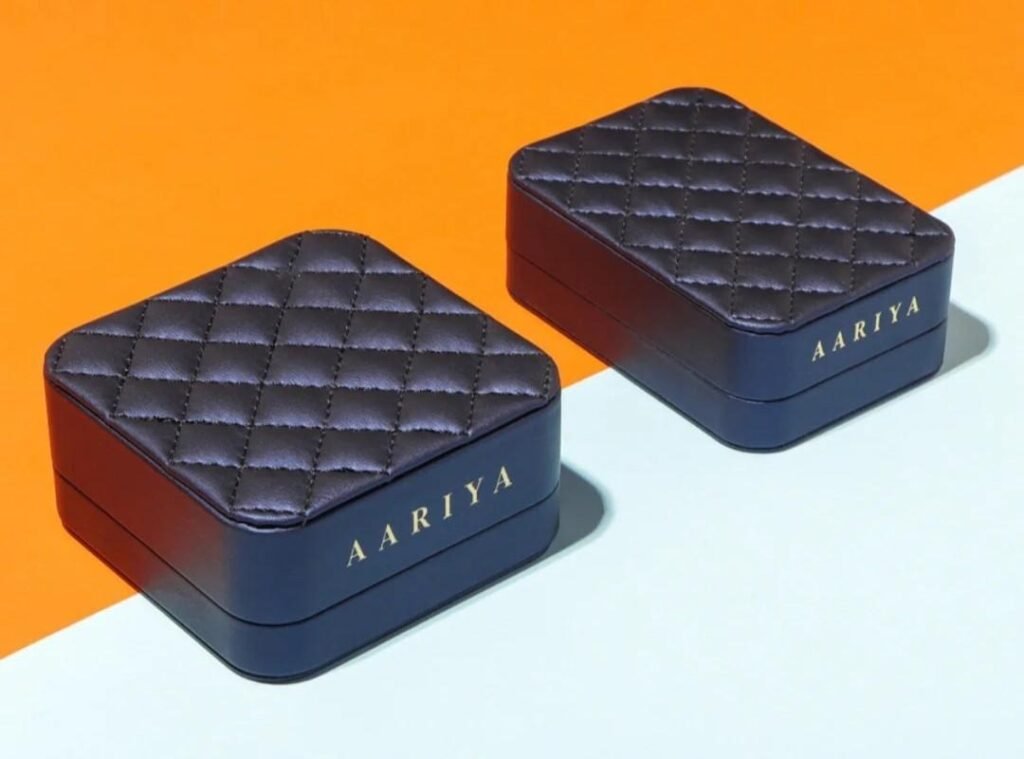
Most jewelry packaging has a lifespan measured in seconds. Rip the tape, lift the lid, remove the piece, toss the box. The container did its one job—surviving shipping—and now it’s landfill filler. That’s not packaging. That’s waste with a logo stamped on it.
But every once in a while, a brand gets it right. The box is so well-made, so thoughtfully designed, so genuinely useful that the customer keeps it. It sits on a dresser. It holds other small treasures. It moves houses. And every time that person glances at it, they remember where it came from. That’s not packaging anymore. That’s a brand ambassador that works for years without costing you another dime in ad spend.
Creating that kind of keep-forever packaging doesn’t happen by accident. It requires a specific set of design choices, material selections, and conversations with a custom leather jewelry box supplier who understands that the goal isn’t just protection during transit. The goal is permanence.
Design for the Second Life First
Here’s the thing most packaging designers get backwards. They design for the jewelry, then think about what happens after the unboxing as an afterthought. But if you want someone to keep your box, you need to design it for the life it’ll lead after the jewelry is around their neck or on their wrist.
Ask yourself: what would someone use this box for if my jewelry wasn’t inside it? Would it hold earrings? Loose change? Medication? Tiny mementos from travel? If the answer is “nothing, it only works as a single-purpose jewelry box,” you’ve designed something disposable. But if the box has proportions that work for multiple uses, a durable interior that doesn’t shed fibers, and hardware that holds up to daily handling, you’ve designed something worth keeping.
This mindset shift changes your material decisions immediately. A glued-in velvet insert designed only for one specific pendant shape becomes limiting. A modular or removable insert system, on the other hand, lets the customer reconfigure the box for whatever they need. Now the box adapts to their life instead of demanding they adapt to it.
A knowledgeable leather jewelry box manufacturer can guide you through these design conversations. They’ve seen what customers actually do with boxes over time. They know which hinges break after a year of daily use and which ones don’t. They understand that a box opened once for a gift has different structural demands than a box opened weekly for years. Tapping into that experience early in your design process prevents you from making choices that feel right on a spec sheet but fail in the real world.
The Difference Between a Souvenir and a Tool
Let’s get specific. A “souvenir” box is one that’s pretty but useless. It looks nice on a shelf for a week and then gets tossed because it’s taking up space. A “tool” box is one that earns its place in someone’s daily routine. It solves a small problem, and because it solves a problem, it stays.
Think about the jewelry storage problems your customers actually have. Necklaces that tangle in a drawer. Earrings that lose their backs. Rings that scratch each other when they’re tossed together. A box that solves even one of these problems becomes a tool. The customer doesn’t keep it because they’re sentimental about your brand. They keep it because it’s useful. The brand affinity is a happy side effect.
Now, this is where most people go wrong. They think “useful” means “complicated.” Hidden compartments, multi-tiered trays, elaborate folding mechanisms. But complexity adds cost, and it also adds failure points. A simple box that does one thing perfectly—keeps three necklaces tangle-free, say, or holds seven rings without them touching—will outlast a gimmicky box every time.
The magic is in the interior architecture, not the exterior ornamentation. Here’s how different interior designs serve different keep-forever functions:
| Interior Design | Keepsake Potential | Why It Works |
| Snug ring rolls | High | Rings stay separated and visible; box becomes the permanent ring storage solution |
| Lay-flat necklace panel with clasp straps | Very High | Solves the universal tangled-necklace problem; no comparable off-the-shelf product |
| Removable compartment tray | Highest | Box functions with or without the tray; adapts to whatever the customer needs over time |
| Fixed molded insert | Low | Only works for the original jewelry piece; likely discarded once the jewelry is worn |
| Open empty interior with soft lining | Medium-High | A blank canvas; customer assigns their own purpose to it |
When you look at it this way, the interior design becomes the retention strategy. If you’re sourcing from a leather jewelry box manufacturer that offers multiple interior configuration options, you’re not just picking a layout. You’re deciding whether your packaging becomes part of someone’s daily life or gets buried in a junk drawer.
Materials That Age Gracefully vs. Materials That Degrade
There’s a particular kind of disappointment that comes from opening a box you’ve kept for a couple of years and finding that the lining has started to disintegrate, leaving black fibers all over your belongings. Or that the “leather” exterior is peeling away to reveal a gray fabric backing. Or that the hinge has developed a squeak that no amount of oil can fix.
These are material failures, and they’re entirely avoidable.
Full-grain and top-grain leathers develop a patina. They get softer and richer with age. That’s a feature, not a bug. It’s what makes old leather goods feel valuable rather than worn out. But bonded leather and PU-coated splits do the opposite. They degrade. The surface layer separates from the backing. The color fades unevenly. The material looks worse every year instead of better.
The same logic applies to interiors. A quality suede or microfiber lining, properly adhered, can last decades. A cheap flocked velvet, which is basically sprayed-on fibers, will shed and thin out. The difference is a few cents per box at the manufacturing stage and a completely different experience for the customer three years later.
Hardware matters too. A solid brass or stainless steel hinge with a proper pin mechanism can cycle thousands of times without loosening. A cheap zinc alloy hinge might start wobbling after a hundred opens. If your box is designed to be used daily rather than displayed once, the hardware has to be up to the task.
This is where a long-term view pays off. A box that costs a bit more but lasts a decade generates more brand impressions, more word-of-mouth recommendations, and more customer goodwill than a box that costs less and falls apart in eighteen months. The math is simple, but it requires looking beyond the initial invoice.
Frequently Asked Questions
What’s the single biggest factor in whether a customer keeps a box?
Usability. If the box solves a small storage problem the customer already has, they’ll keep it. If it only serves the original unboxing moment and then becomes clutter, they won’t. Design for the drawer, not the Instagram photo.
How do I test whether my packaging design has keep-forever potential?
Give a sample box to someone who’s never seen your brand. Don’t tell them it’s for jewelry. Ask them what they’d use it for. If they can’t think of anything, redesign. If they immediately name a use, you’ve got something worth producing.
Does keep-forever packaging make sense for lower-priced jewelry lines?
It depends on your margins, but don’t automatically rule it out. A forty-dollar necklace in a box that becomes someone’s go-to earring holder creates a brand touchpoint that a disposable box never will. If your customer acquisition costs are high, that ongoing presence has real financial value.
How do I communicate to customers that the box is meant to be kept and reused?
You don’t always need to say it directly. A small, tasteful insert card that says “This box was designed for a long life. We hope you’ll keep it.” plants the seed without being preachy. The box itself should make the argument by feeling worth keeping.
What’s the most common durability failure in leather boxes?
Delamination of interior lining material. It’s usually caused by cheap adhesives drying out and losing bond strength over time. Ask your manufacturer specifically about their adhesive aging properties and whether they’ve tested for multi-year durability.
A box that gets thrown away is a cost. A box that gets kept is an investment that keeps paying. The difference comes down to choices made early in the design process—choices about materials that age instead of degrade, interiors that solve problems instead of creating clutter, and hardware that endures instead of failing. Partner with a supplier who thinks about that second life as hard as you do, and your packaging stops being something you ship. It becomes something your customers keep, use, and remember you by for years.