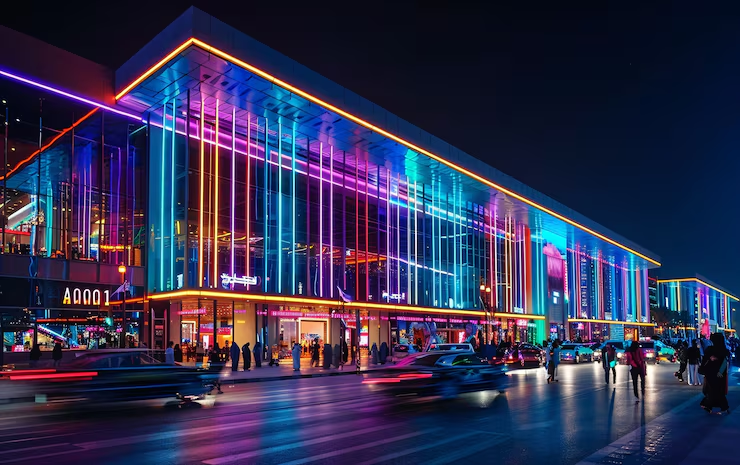
Facade & Architectural Lighting explores the principles, techniques and practical considerations required to illuminate a building facade with clarity, aesthetic sensitivity and technical precision. This introduction outlines the art of facade lighting and sets the stage for a detailed examination of facade lighting design, the selection of fixtures and luminaires, methods to enhance texture and detail, energy and environmental considerations, and strategies to integrate lighting solutions with architectural intent while complying with technical standards and installation realities.
For more in-depth information you should view from China Facade & Architectural Lighting Manufacturer-Guangqi Lighting
What is facade lighting and how does facade lighting design differ from general lighting design?
Facade lighting refers to the deliberate application of exterior lighting to a building’s exterior with the objective of emphasizing architectural features, creating visual identity and improving nocturnal legibility. Facade lighting design differs from general lighting design in scope and intent: while general lighting design often focuses on human visual tasks, interior comfort and uniform illuminance, facade lighting prioritizes the sculptural and compositional reading of the building facade, hierarchical focal points and the creation of silhouette and texture through controlled illumination. A lighting designer engaged in architectural facade lighting must therefore consider the building’s massing, facade elements, rhythms and materials in conjunction with outdoor lighting goals such as wayfinding and civic presence, resulting in lighting concepts that are both aesthetic and functional.
How do facade lighting and outdoor lighting goals differ?
Outdoor lighting broadly addresses safety, security, circulation and landscape visibility, whereas facade lighting specifically seeks to enhance architectural features and to create a narrative for the building’s exterior. Goals for facade lighting include elevating the building’s identity, creating focal points and balancing contrast so the facade reads correctly at night. Conversely, outdoor lighting objectives like glare control, even illuminance across walkways and minimizing light pollution may sometimes compete with dramatic facade lighting that relies on high contrast and directional beams. The lighting approach for a comprehensive lighting project must reconcile these differing goals through layered lighting systems that integrate uplighting, floodlighting, accent fixtures and linear light elements to satisfy both functional and expressive requirements.
Which lighting techniques are unique to illuminating facades?
Illuminating facades employs several specialized lighting techniques that differ from typical outdoor lighting. Wall washing produces even illumination to reveal color and material, while grazing light accentuates texture and relief by placing fixtures close to the wall so the beam runs parallel to the facade surface. Highlight and accentuate strategies use narrow-beam projectors and spotlight fixtures to create focal points on architectural features such as columns, cornices or signage. Uplighting and carefully aimed floodlight installations are common for silhouette and massing emphasis, while linear light and strip lights embedded in reveals or cills deliver continuous lines of illumination that express architectural geometry. The artful combination of these types of facade lighting—grazing, wall washing, uplighting, accentuation and dynamic light effects—allows designers to craft nuanced lighting effects that complement the facade material and the building’s overall composition.
When should architects specify facade lighting vs interior lighting?
Architects should specify facade lighting when the design objective extends beyond interior illumination to include the building’s presence in the public realm, evening identity and architectural storytelling. Facade lighting is appropriate where exterior articulation, landmarking or contextual relationships to surrounding buildings and streetscapes are important. Interior lighting specifications remain focused on occupant visual comfort and task illumination, but they should be coordinated with facade lighting where transparency, glazing and interior luminance can influence exterior perception and light pollution. Early integration of facade lighting into the architectural brief ensures the lighting solution becomes part of the facade material selection, mounting strategies and structural coordination, enabling a cohesive outcome where interior and exterior lighting complement rather than conflict.
How do I choose the right lighting fixtures and luminaires for a building facade?
Choosing the right fixtures and luminaires for a building facade involves understanding the distinction between a lighting fixture, luminaire and lighting fixture type, assessing the facade’s architectural needs and matching performance characteristics such as beam distribution and glare control to the intended lighting effect. The lighting fixture describes the physical device; the luminaire includes optical assemblies, shielding, thermal management and mounting provisions necessary to achieve predictable light distribution. Lighting fixture types—linear, projector, floodlight, accent—offer different beam geometries, lumen outputs and control options. Selection must be driven by the required illuminance levels, desired contrast, installation constraints and energy efficiency targets to create a durable and effective lighting solution for the building’s exterior.
What is the difference between a lighting fixture, luminaire and lighting fixture type?
In technical terms, a lighting fixture often refers to the complete physical assembly that houses the light source, whereas a luminaire is the industry term encompassing the fixture plus all optical and electrical components designed to deliver a controlled light distribution. Lighting fixture type categorizes the luminaire function—such as floodlight, linear light, projector or accent fixture—indicating intended application and beam characteristics. For facade and architectural lighting, precise specification of luminaire photometrics, IP rating, thermal management and accessory optics is essential so that the chosen fixtures perform reliably in an exterior environment while delivering the required lighting effect without causing undue glare or light pollution.
When to use linear light, flood lighting or accent fixtures on a facade?
Linear light and strip lights are best used to emphasize horizontal or vertical lines, to create continuous illumination along reveals, parapets and cornices and to provide a uniform wash across planar surfaces. Flood lighting and floodlight projectors serve well for emphasizing massing, providing even coverage for larger façades and establishing presence at a distance, but require careful beam control to avoid spill and glare. Accent fixtures and narrow-beam projectors are chosen when the goal is to highlight architectural features, to create focal points and to articulate texture with higher contrast. The ideal lighting solution combines these types of facade lighting—using linear light for edge definition, floodlighting for general presence and spot accentuation for detail—so the composition remains balanced and the building’s exterior is enhanced without excessive energy consumption or light spill.
How do beam angle and glare control affect fixture selection?
Beam angle determines the spread of light and directly impacts illuminance distribution and the perceived crispness of shadows and texture. Narrow beams concentrate luminance and are effective for highlighting and creating focal points, whereas wide beams are suitable for wall washing and even coverage. Glare control is critical for exterior settings; uncontrolled glare can degrade night-time legibility, create nuisance for pedestrians and drivers, and provoke neighbor complaints. Fixtures with precision optics, integrated shields, cut-off angles and correct aiming strategies reduce intrusive artificial light and ensure that the facade lighting highlights without dazzling. Selecting LED fixtures with appropriate beam control and using lighting controls for dimming and zoning further mitigates glare while optimizing energy efficiency.
Which lighting techniques best enhance texture and architectural detail?
Enhancing texture and architectural detail on a building facade requires a deliberate combination of grazing, highlighting and accentuate techniques, each tailored to the facade material and the intended visual hierarchy. Grazing light—placing fixtures close to a textured surface so light runs across the plane—magnifies relief and shadow, bringing materials such as stone, brick and textured concrete to life. Highlighting with narrow beams draws attention to cornices, pilasters and other sculptural elements, while accentuate strategies use contrasts in illuminance and color temperature to guide the viewer’s eye and create depth. The success of these techniques depends not only on fixture selection but also on subtle control of beam, aiming and intensity so the lighting effect remains integrated with the architectural intent rather than becoming a decorative afterthought.
How and when should you use grazing, highlighting and accentuate techniques?
Grazing is best applied to surfaces with pronounced texture where the objective is to reveal materiality; it should be used when the facade material benefits from high contrast and directional light, and when fixtures can be discreetly installed close to the wall. Highlighting is reserved for architectural features that define the building’s silhouette or historical detail, using narrow-beam led fixtures or projectors to create crisp emphasis without lighting the entire surface. To accentuate elements, a combination of intensity modulation, beam shaping and selective color temperature is used to create a visual hierarchy among facade elements. These techniques should be integrated during the design phase to ensure that fixtures, conduits and mounting points are coordinated with the facade construction, preventing unsightly retrofit interventions that compromise the architectural expression.
What role does beam control and fixture placement play in graze effects?
Beam control and fixture placement are fundamental to achieving successful graze effects: the distance from the wall, the beam angle and the vertical and horizontal aiming determine the length and contrast of the shadows that define texture. Small changes in placement can exaggerate or soften the effect; placing fixtures too far may wash out texture, while placing them too close can create excessive contrast and hotspots. Optics that provide tight beam control and accessories such as louvers and barn doors help limit spill and allow the lighting designer to fine-tune the graze effect, delivering a controlled and repeatable lighting effect that enhances the facade material without increasing light pollution or energy waste.
Can color temperature and 3000K choices change perceived texture?
Color temperature significantly influences how texture and color are perceived; a 3000K warm white tends to soften contrasts and enrich facade materials such as stone and warm brick, creating a welcoming and legible nighttime appearance, whereas cooler temperatures can increase perceived contrast and make details appear crisper but sometimes harsher. Choosing 3000K LED lighting for facades is often a balanced compromise between visual warmth and color rendering, producing an architectural lighting effect that enhances materiality while maintaining energy efficiency. The combination of color temperature with beam control and luminance levels shapes the overall expression of the facade and should be considered alongside the building’s context, the surrounding urban lighting and the client’s aesthetic objectives.
How to design energy efficient and low light pollution facade lighting?
Designing energy efficient and low light pollution facade lighting requires a holistic approach that includes the specification of high-efficiency LED lighting fixtures, targeted use of lighting controls, accurate beam distribution and careful zoning to prevent unnecessary illumination. Energy consumption can be minimized by selecting led fixtures with high lumen-per-watt performance, incorporating dimming and scheduled control strategies, and using occupancy or astronomical controls to reduce output during low-demand hours. To limit light pollution and stray artificial light, designers should employ full cut-off or shielded luminaires, precise aiming, and layered light distribution that confines light to the facade plane while avoiding upward scatter that contributes to skyglow. This balanced strategy ensures the facade is effectively illuminated while meeting environmental responsibilities and regulatory expectations.
What are the best practices to reduce light pollution and stray artificial light?
Best practices to reduce light pollution include choosing fixtures with tight beam control and shielding, specifying luminaire aiming tolerances that avoid upward light, employing lower correlated color temperatures such as 3000K where appropriate, and implementing lighting controls that dim or switch off non-essential facade lighting during late-night hours. Using wall-mounted linear light with integrated baffles, downlight-only configurations where possible, and avoiding excessive lumen outputs are effective tactics. Additionally, careful photometric modeling during the design stage helps predict and mitigate stray light, ensuring compliance with local ordinances and minimizing the impact on adjacent properties and nocturnal wildlife.
How to balance energy consumption with impact—LEDs, controls and dimming?
Balancing energy consumption with visual impact demands specification of high-efficiency LED lighting systems, the use of intelligent lighting controls and strategic dimming profiles that adapt to time of night, occupancy and special events. LEDs offer superior efficacy and controllability compared with traditional sources, and when paired with lighting controls such as scene-setting, scheduling and remote management, they enable reduction in energy consumption without compromising the lighting effect when needed. Dimming reduces lumen output during off-peak hours and can preserve the architectural intent while cutting operating costs; combined with robust photometric design and quality led fixtures, these measures create a sustainable facade lighting solution that respects environmental and budgetary constraints.
Which fixtures and strategies maximize energy efficiency for exterior facades?
Fixtures that maximize energy efficiency include led fixtures with high lumen efficacy, precision optics to minimize wasted light, and integrated drivers compatible with dimming and networked controls. Strategies such as task-focused accentuation instead of full-surface floodlighting, zoning of luminaires so only necessary areas are illuminated, and the use of linear light in narrow, targeted runs reduce overall consumption. Employing lighting controls with astronomical timers, daylight harvesting for nearby glazing and occupancy sensors for adjacent circulation areas further reduces energy consumption while maintaining the desired architectural illumination and limiting light pollution.
What are common challenges in illuminating facades of residential buildings and commercial façades?
Common challenges when illuminating residential and commercial facades include managing scale and proportion so the lighting remains sympathetic to the building’s dimensions, controlling glare to avoid disturbing occupants and neighbors, dealing with limited mounting and concealment opportunities, and maintaining long-term performance in exterior conditions. Residential buildings demand subtlety to minimize neighbor complaints about intrusive light, whereas commercial facades often require greater presence and dynamic light options for branding and event-based scenarios. Both contexts require robust maintenance planning, appropriate IP-rated fixtures and accessible mounting strategies to ensure that the lighting system continues to function as intended over time.
How to manage scale and proportion on large building facades?
Managing scale and proportion on large facades involves using layered lighting to break down mass into readable components, employing floodlighting at distances that preserve silhouette without flattening details, and integrating linear light to emphasize structural lines that convey rhythm. Photometric studies and scale models help determine appropriate lumen outputs so the facade does not become an overpowering luminous plane. Using varied beam angles and zoning to create vertical and horizontal hierarchies enables the lighting designer to modulate perceived scale, creating focal points at key architectural nodes to guide the observer’s eye and maintain contextual balance within the urban fabric.
How to minimize glare and neighbor complaints in residential buildings?
To minimize glare and neighbor complaints, designers should specify fully shielded fixtures, limit upward light and excessive lumen outputs, use warm color temperatures such as 3000K, and implement dimming schedules to reduce intensity during late evening hours. Careful aiming and the selection of fixtures with low UGR (unified glare rating) for visible installations are critical, and incorporating community consultation into the lighting project can identify local sensitivities early. Strategically placing luminaires to avoid direct line-of-sight into residential windows, and employing motion-based activation for security lighting rather than continuous high-intensity uplighting, further reduces nuisance and preserves good neighborhood relations.
What maintenance issues affect long-term facade lighting performance?
Maintenance issues that influence long-term performance include photometric degradation of led systems, ingress of moisture and dust into fixtures, corrosion of mounting hardware, and accumulation of dirt on optics that reduces effective illuminance. Selecting fixtures with appropriate IP and IK ratings, employing corrosion-resistant materials, and designing for easy access to lamps and drivers lowers life-cycle costs. A planned maintenance schedule that includes cleaning, photometric re-measurement and timely replacement of components ensures the facade lighting maintains its intended lighting effect, energy efficiency and compliance with safety standards over the building’s life.
How to create a cohesive lighting solution that complements architectural intent?
Creating a cohesive lighting solution that complements architectural intent requires collaboration between the architect and the lighting designer from project inception, careful selection of lighting fixtures and colors that harmonize with facade material, and the development of layered lighting strategies combining flood, accent and linear light in measured proportions. The lighting approach must respect the building’s primary forms and material palette while being flexible enough to accommodate functional demands and local context. Photometric analysis, mock-ups and iterative refinement of aiming and intensity are essential to achieving an outcome where the lighting enhances rather than competes with the architecture, reinforcing the design language at night.
How to integrate facade lighting with architectural facade materials and color?
Integration begins with a comprehensive understanding of facade material reflectance and texture; highly reflective materials may require lower illuminance and careful beam diffusion, whereas matte, textured materials benefit from grazing and slightly higher contrast to reveal character. Color temperature selection influences perceived color of materials—warm 3000K light accentuates earth tones and masonry whereas cooler temperatures can make concrete and metal appear crisp. Choosing fixtures with appropriate color rendering index (CRI), matching linear light and accent fixtures in color temperature, and ensuring consistent light distribution across facade elements preserves material integrity and supports a harmonious lighting design that respects the architect’s material choices.
When to use warm (3000K) vs cool color temperatures for mood and legibility?
Use warm 3000K color temperatures when the intent is to create a welcoming, human-scaled ambiance and to enrich traditional materials; 3000K often strikes the right balance between warmth and legibility for many facade applications. Cooler temperatures may be appropriate for modern facades emphasizing glass, stainless steel or white finishes where a crisp, high-contrast presentation is desired. The choice should also consider surrounding outdoor lighting and the urban context—warmer tones reduce skyglow impacts and can be friendlier to residential neighborhoods, while cooler tones can support brand identity and visual prominence in commercial settings.
How can layered lighting combine flood, accent and linear light for balance?
Layered lighting combines broad floodlighting for presence, linear light for defining edges and accent fixtures for focal emphasis to create a balanced facade composition. Floodlighting establishes overall visual mass and ensures the building is legible from distance, linear light traces architectural lines and provides continuity, and accent lighting highlights details and textures that reward close viewing. The balance is achieved by controlling relative luminance, beam shaping and timing through lighting controls so that each layer supports the others without competing, forming a cohesive and energy-efficient architectural facade lighting solution that fulfills the lighting project objectives.
What regulations, technical specifications and installation considerations should be addressed?
Addressing regulations and technical specifications starts with understanding local codes and standards that govern exterior lighting, photometric requirements, and light pollution restrictions. Installation considerations such as mounting, aiming, wiring, thermal management and access for maintenance influence fixture performance and longevity. Accurate specification of photometrics, lumen output and beam distribution is necessary for permit approvals and to ensure the lighting design meets both aesthetic and technical objectives. Coordination among electrical engineers, facade consultants, lighting manufacturers and installers is essential to translate the design into a compliant and durable installation.
Which codes and standards govern exterior lighting and light pollution?
Exterior lighting and light pollution are governed by a combination of local ordinances, national electrical codes and international standards addressing lumen caps, skyglow limits and fixture performance. Standards from organizations such as the International Dark-Sky Association (IDA), local planning authorities and national building codes often define allowable upward light ratios, color temperature recommendations and glare criteria. Compliance requires careful documentation of photometric outputs and justification for any deviations, with the lighting designer responsible for ensuring that the facade lighting design adheres to relevant regulations while achieving the project’s aesthetic goals.
What mounting, aiming and wiring considerations affect fixture performance?
Mounting considerations include structural capacity, vibration isolation, and the ability to conceal fixtures to preserve facade aesthetics; aiming considerations demand secure, adjustable mountings to maintain precise beam direction despite thermal expansion or wind load. Wiring must follow code requirements for exterior installations, incorporating sealed junctions, correct conductor sizing, surge protection and access for servicing drivers and controls. Proper thermal management—ensuring fixtures can dissipate heat—preserves led lifetime and color stability, and attention to these installation details is crucial for the durability and consistent performance of the facade lighting scheme.
How to specify photometrics, lumen output and beam distribution for a facade design?
Specifying photometrics involves producing detailed lighting calculations and isolux or polar diagrams showing illuminance levels, contrast ratios and light distribution across the facade, with lumen outputs calibrated to the desired visual hierarchy. Beam distribution must be selected to match the facade’s proportions—narrow beams for accentuation, medium beams for feature emphasis, wide beams for wall washing—and should be complemented by glare and spill control measures. Including manufacturer photometric files (IES/LM-63) in the documentation, specifying target illuminance levels, color temperature (often 3000K) and maintenance factors ensures that the installed lighting matches the design intent and achieves predictable, measurable outcomes for the architectural facade lighting project.