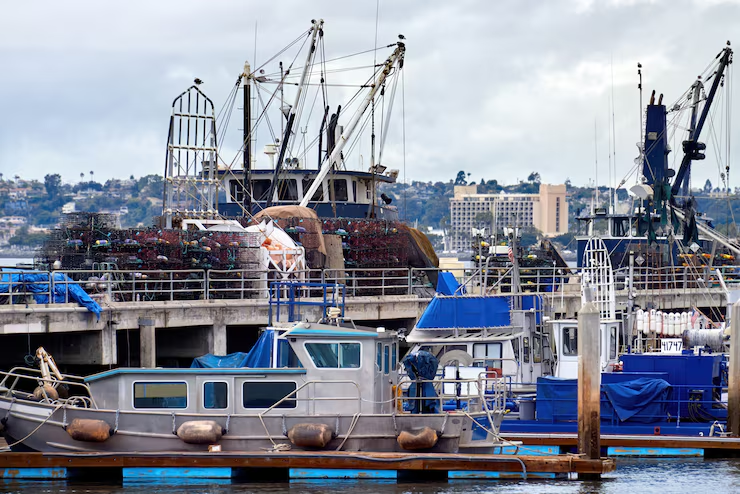
The advent of shipyard robotics for shipbuilding represents a transformative shift in heavy industry manufacturing, enabling shipbuilders to automate welding operations, increase productivity and address skilled welder shortages. This article examines shipyard welding automation, explores configurations such as gantry systems, welding cells and mobile welding robots, and details how intelligent robotics, AI and advanced tooling combine to deliver precision welding for vessel fabrication. Through practical guidance on pilot programs, supplier selection and lifecycle support, shipbuilding operations can evaluate robotic welding solutions that improve assembly throughput, reduce rework and integrate with existing shipyard operations.
For more in-depth information you should view from China Shipbuilding Welding Robot Manufacturer – Zhouxiang
What is shipyard robotic welding and how does welding automation improve shipbuilding fabrication?
Shipyard robotic welding refers to the use of welding robots and automated robotic equipment to perform welds on ship structures, panels and assemblies during shipbuilding fabrication. In the context of shipbuilding, welding automation encompasses fixed welding cells, gantry-mounted robots, mobile welding solutions and integrated automation systems designed specifically for heavy industry and vessel assembly. By employing robotic welding, shipbuilders can automate repetitive fillet welds, multipass butt joints and complex stiffener attachments with consistent heat input and repeatable deposition, which improves quality, reduces distortion and increases productivity in shipyard operations. This shift toward automation solutions for shipbuilding addresses the chronic shortage of skilled welders by supplementing human operators with autonomous and operator-assisted robotic systems, allowing skilled welders to focus on complex tasks while robotic welders handle high-volume panel fabrication and stiffener installation.
How does a welding robot work in shipyard manufacturing?
A welding robot in shipyard manufacturing integrates a multi-axis manipulator, welding power source, wire feed system and sensors to execute programmed weld trajectories on ship panels and larger assemblies. Advanced robotic welding systems employ path planning software to translate joint geometry into robot trajectories, while seam tracking sensors or vision systems provide closed-loop feedback to compensate for fit-up variation. The robot controller adjusts welding parameters—amperage, voltage, travel speed and wire feed—either through preprogrammed multipass strategies or adaptive control driven by sensor input. In shipbuilding applications, robots are frequently mounted on gantries or mobile bases to access large panels and vessel sections, and they interface with positioners, fixtures and end-effectors engineered for heavy fabrication. The result is an automated welding process that enforces welding procedure specifications, archives weld data for quality assurance and integrates with shipyard manufacturing execution systems to support assembly schedules.
What are the main benefits of welding automation for vessel assembly and productivity?
Welding automation delivers multiple advantages for vessel assembly: improved weld consistency and reduced defect rates, higher throughput and lower unit labor cost, and better utilization of skilled welders by reallocating them to value-added tasks. Precision welding enabled by robotic systems reduces distortion, minimizes rework and ensures compliance with classification society requirements. In addition, automated robotic welding enhances safety by removing operators from hazardous fume and confined space exposure, and supports offshore and large-assembly tasks where manual access is limited. The cumulative effect on shipbuilding productivity is measurable through reduced cycle times for panel fabrication, predictable throughput for assembly blocks and improved overall equipment effectiveness across shipyard manufacturing lines, enabling shipbuilders to compete on cost and delivery schedule in the global market, including hubs such as Korea where large shipbuilders like Hyundai have invested in shipyard automation.
Which shipbuilding processes are best suited to robotic welding?
Processes best suited to robotic welding in shipbuilding include repetitive panel welds, stiffener attachment, longitudinal and transverse seam welding on thick plates, and multipass butt welds where consistent heat input is critical. Robotic welding excels in flat and horizontal positions common to panel shops, in controlled welding cells for quality-critical multipass joints, and on gantry-mounted deployments for long-seam welds on hull blocks. Mobile welding robots prove advantageous for on-board assembly, offshore modules and large subassemblies where relocating a welding cell is impractical. Applications involving high volumes of similar joints, such as tank boundaries and longitudinal stiffeners, benefit most from automation solutions because programming and tooling amortize quickly and yield significant productivity gains.
How do welding cells, gantry systems and mobile welding solutions for shipbuilding compare?
Welding cells, gantry systems and mobile welding robots represent distinct approaches to shipyard automation with different trade-offs in flexibility, footprint and throughput. Dedicated welding cells provide controlled environments with fixtures and positioners optimized for panel and multipass welds, delivering the highest precision and repeatability. Gantry systems offer long reach and are well-suited to large panels and block-length welds, enabling automated welding across extended geometries with stable kinematics. Mobile welding solutions prioritize on-site flexibility, enabling shipbuilders to deploy automated robotic welding directly at the assembly location or offshore installation, albeit with challenges around anchoring, power supply and environmental protection. Choosing between these models requires evaluating production volume, joint complexity, access constraints and the desired level of automation in shipyard operations.
When should a shipyard choose a gantry versus a mobile welding robot?
A shipyard should select a gantry system when production demands long, repeatable seam welds across large panels or blocks where a fixed path and high positional stability yield superior weld quality and productivity. Gantries excel when integrating with fixed tooling, enabling high throughput in dedicated production lines and efficient utilization of welding robots across multiple stations. Conversely, a mobile welding robot is preferable when shipyard operations require flexibility to work on in-situ assemblies, to perform on-board welding in confined areas or to support offshore fabrication where installing a permanent gantry is infeasible. Mobile solutions allow shipbuilders to deploy automated welding close to the point of assembly, reducing the need for heavy movement of panels and improving overall assembly flow, but may require additional engineering for environmental protection, fixturing and power interfaces.
What are the advantages of a dedicated welding cell for panel and multipass welds?
A dedicated welding cell delivers controlled environmental conditions, optimized fixturing and precise positioners that enable multipass strategies essential for thick-plate welds common in shipbuilding. Welding cells allow for rigorous control of preheat, interpass temperature and travel parameters, which reduces distortion and ensures compliance with welding procedure specifications. The integration of seam tracking, wire-feed automation and data logging within a cell facilitates repeatable quality and straightforward qualification for class rules. Moreover, welding cells protect operators, centralize maintenance and support continuous process improvement through analytics, making them ideal for panel fabrication lines where efficiency and weld integrity are paramount.
How to evaluate on-site mobile welding for offshore and large-assembly tasks?
Evaluating on-site mobile welding requires assessing access constraints, on-board fixturing options, environmental protection against wind and moisture, and integration with shipyard safety protocols. Key considerations include the robot’s reach and payload, anchoring solutions to minimize movement during welding, power and gas supply logistics, and the ability to perform seam tracking under variable lighting and surface conditions. For offshore installations, ruggedized enclosures, corrosion-resistant components and remote monitoring capability become critical. Assessing productivity gains also requires comparing cycle times, setup duration and the cost of temporary tooling versus the costs and delays associated with transporting large assemblies to fixed welding cells. A thorough evaluation balances throughput improvements with operational constraints to decide if mobile welding deployment will deliver net benefits for vessel fabrication.
What configuration, tooling and multipass strategies are needed for shipyard welding automation?
Configuring robotic welding for shipbuilding demands careful selection of welding parameters, end-effectors, positioners and fixture design to accommodate heavy plates, stiffeners and varying joint geometries. Multipass strategies for thick panels require sequencing of root, fill and cap passes, controlled interpass temperatures and adaptive parameter adjustments to maintain weld integrity. End-effectors must manage torch orientation, cooling and wire delivery for long welds, while positioners and heavy-duty fixtures handle panel manipulation with precision. Effective robot configuration includes collision avoidance, trajectory planning for complex assemblies and integration with seam tracking sensors to maintain groove alignment through successive passes, ensuring automated welding meets shipbuilding standards and classification requirements.
How are welding parameters configured for multipass joints and thick panels?
Welding parameters for multipass joints are configured by defining separate profiles for root, fill and cap passes, specifying current, voltage, travel speed, wire feed and heat input targets for each pass to control penetration and avoid defects. For thick panels common in shipbuilding, preheat and interpass temperature controls are essential to mitigate cracking and to control hydrogen diffusion; sophisticated automated welding solutions incorporate temperature monitoring and programmable interpass limits. Robots execute programmed sequences while controllers adjust parameters based on seam tracking feedback and adaptive control algorithms, enabling consistent multipass deposition across varying fit-up and joint geometry. Parameter libraries, developed through qualification trials and stored within the manufacturing execution system, facilitate reproducible welding across multiple panels and assemblies.
What end-effectors, positioners and fixturing are required for ship panel assembly?
End-effectors for ship panel assembly typically include robust torch mounts with integrated wire feed and cooling, seam-tracking sensors or cameras, and flexible interfaces for quick tool changes. Heavy-duty positioners and turntables capable of supporting large plate weights and enabling rotation to favorable welding positions are essential for reducing gravity-related defects and for optimizing robot reach. Fixturing must be modular and scalable to accommodate different panel sizes and stiffener patterns, using precision locators and clamping systems to ensure repeatable fit-up and joint geometry. Integration of positioners with the robot controller and welding power source allows synchronized motion for complex multipass strategies, improving deposition quality and minimizing cycle time for shipbuilding fabrication.
How to plan robot trajectories and seam tracking for complex ship structures?
Planning robot trajectories for complex ship structures starts with detailed CAD models of the panel and joint geometry, from which offline programming tools generate precise paths while considering robot kinematics and collision zones. Trajectories must incorporate approach and exit strategies for multipass welding, optimized torch angles for consistent bead profile, and positional tolerances that align with seam tracking capabilities. Seam tracking systems—laser, arc-sensing or vision-based—provide real-time feedback to correct for fit-up variation, enabling the robot to adapt trajectory on-the-fly while maintaining weld quality. Simulation and virtual commissioning validate trajectories and reduce on-site tuning, while adaptive control algorithms integrated with seam tracking ensure robust performance across the variable conditions inherent in shipbuilding.
How can robotics, AI and intelligent control optimize welding quality and productivity?
Robotics coupled with AI and intelligent control forms the backbone of modern welding automation by enabling adaptive responses to fit-up variation, predictive maintenance and continuous process improvement. AI algorithms analyze sensor data to detect anomalies, guide seam detection and recommend parameter adjustments for optimal penetration and bead shape. Intelligent control systems manage closed-loop feedback from temperature sensors, wire deposition monitors and vision systems to maintain consistent weld quality, reduce spatter and minimize defects. By embedding machine learning models within welding controllers, shipyards can progressively refine welding recipes and reduce operator intervention, enhancing productivity while safeguarding weld integrity across repetitive shipbuilding operations.
What role does AI play in seam detection, adaptive control and defect prevention?
AI enhances seam detection by processing visual and laser sensor inputs to identify joint edges, gaps and offset in challenging lighting and surface conditions, enabling accurate path correction even with irregular fit-up. For adaptive control, AI models predict required parameter changes based on historical weld outcomes and live sensor feedback, dynamically tuning current, speed and wire feed to maintain target weld geometry. In defect prevention, AI-driven analytics detect patterns that precede porosity, lack of fusion or excessive distortion, prompting corrective actions or flagging parts for inspection. AI thus reduces reliance on manual adjustment, shortens qualification cycles and elevates consistency of automated robotic welding across shipbuilding applications.
How do sensors and closed-loop robotics systems improve weld consistency?
Sensors such as arc sensors, laser profilometers, thermal cameras and torch-integrated force sensors provide the data necessary for closed-loop control, enabling robots to respond in real time to deviations in joint alignment, plate geometry and thermal behavior. Closed-loop systems use this feedback to adjust torch position, travel speed and welding parameters during deposition, guaranteeing consistent bead placement and penetration that meet welding procedure specifications. Data logging of sensor outputs supports traceability, process audits and continuous improvement programs, while reducing rework and ensuring each weld meets the rigorous quality expectations of shipbuilders and classification societies.
Can intelligent systems reduce reliance on highly skilled welders in shipbuilding?
Intelligent systems can significantly reduce the dependence on highly skilled welders for repetitive and high-volume welding tasks by automating parameter control, seam tracking and multipass sequencing, thereby enabling operators to supervise multiple robotic cells rather than perform every weld manually. However, skilled welders remain essential for programming, qualification, process troubleshooting and complex repairs; the workforce transition focuses on upskilling operators into robot technicians and weld process engineers. In this way, shipbuilding automation addresses skilled welder shortage while preserving critical expertise within the shipyard, enhancing overall manufacturing capability and resilience.
What are typical shipyard welding automation challenges and how to solve them?
Common challenges in shipyard welding automation include variation in fit-up, structural distortion, limited access on assembled vessels, environmental conditions and integration with existing shipyard workflows. Overcoming these issues requires a combination of robust fixturing, adaptive seam tracking, thermal management strategies, and modular tooling that can be rapidly reconfigured. Integration challenges are addressed through standardized interfaces for power, gas and data, along with thorough planning for installation, maintenance access and safety systems. By combining practical engineering with intelligent robotics and close collaboration with integrators, shipbuilders can mitigate these challenges and deploy automation that delivers measurable improvements in fabrication and assembly.
How to handle variation in fit-up, distortion and access limitations on vessels?
Handling fit-up variation and distortion involves implementing active seam tracking, flexible fixtures and adaptive welding parameters that compensate for gaps, offsets and misalignment. Pre-weld measurement using vision or laser scanning can inform robot trajectories and update programs in real time, while preheat and controlled interpass temperatures limit distortion during multipass welding. Access limitations are managed through the deployment of mobile welding robots, remote manipulators and tailored end-effectors designed to operate in confined spaces. Combining these approaches ensures reliable automated welding even when confronted with the complexities of large vessel assemblies.
What maintenance, safety and integration issues should be anticipated in the shipyard?
Anticipate maintenance for robotic manipulators, welding power sources, wire feeders and sensor systems, ensuring spare parts availability and scheduled servicing to maintain uptime. Safety measures include guarding, interlocks, fume extraction and emergency stops integrated into the welding cell or mobile system, alongside operator training and lockout procedures tailored to the shipyard environment. Integration issues encompass electrical and compressed gas supply, data interfaces to MES systems and physical alignment with existing production flows; early coordination between shipbuilders, integrators and vendors streamlines installation and reduces operational disruptions.
How to manage training, change management and workforce transition to robotic welding?
Managing workforce transition requires a structured training program that re-skills skilled welders into robot operators, maintenance technicians and welding engineers, while change management addresses cultural concerns through stakeholder engagement, transparent KPIs and demonstrations of productivity gains. Cross-functional teams should define new roles, create competency frameworks and implement apprenticeship models combining on-the-job training with vendor-supported certification. Effective communication about how automation augments rather than replaces human expertise fosters acceptance, enabling shipyard operations to harness automation solutions while maintaining institutional welding knowledge.
Which welding robot vendors, solutions and configurations (including inrotech-style systems) are available for shipyards?
Vendors offering robotic welding solutions for shipyards range from global robot manufacturers and turnkey cell suppliers to specialized integrators delivering inrotech-style systems tailored for heavy fabrication. Solutions include gantry-mounted robots for long-seam applications, modular welding cells for panel shops, mobile welding platforms for on-board assembly and integrated systems that combine AI-enabled seam detection and adaptive control. Recognized shipbuilding adopters and integrators, including large-scale projects in Korea with suppliers partnering with Hyundai, illustrate the maturity of shipyard automation, while custom integrators deliver bespoke solutions tuned to specific vessel classes and fabrication processes.
What to look for when selecting a welding robot supplier for shipbuilding projects?
Select suppliers with proven experience in heavy industry and shipbuilding, demonstrated capability in multipass and thick-plate welding, and a track record deploying gantry, cell and mobile solutions in shipyards. Evaluate their ability to provide end-to-end integration, lifecycle support, training and local service, and confirm compatibility with existing shipyard interfaces and classification requirements. Assess vendor commitments to AI and intelligent control features, data logging and process traceability, and prioritize partners that deliver robust automation solutions for shipbuilding operations, including references from large shipbuilders and successful deployments in similar production environments.
How do turnkey welding cell suppliers compare to custom integrators for shipyard needs?
Turnkey welding cell suppliers typically offer faster deployment, standardized hardware and predictable performance for high-volume panel production, while custom integrators provide tailored solutions for unique vessel geometries, mobile on-site requirements and complex assembly flows. Turnkey systems excel when production is consistent and repeatable, offering economies of scale and simplified maintenance, whereas custom integration is preferable when shipyard operations demand specialized tooling, inrotech-style innovations or bespoke software for adaptive control. Choosing between them depends on production scale, the degree of customization required and the shipyard’s internal capability to own and evolve automation solutions.
What criteria should be used to assess ROI, throughput and lifecycle support?
Assess ROI by modeling reduced labor hours, increased throughput, improved first-pass yield and lower rework costs, while factoring in capital expenditure, installation, training and ongoing maintenance. Throughput metrics include cycle time per panel, weld length per shift and system uptime, and should be benchmarked against manual baselines and supplier performance guarantees. Lifecycle support criteria encompass spare parts availability, remote diagnostics, software updates, on‑site service agreements and vendor training programs. A comprehensive evaluation ties technical performance to financial outcomes, supporting informed decisions on deploying shipyard welding automation.
How to implement a pilot project for shipyard welding automation and scale to full assembly lines?
Implementing a pilot project begins with scoping the pilot to representative parts—micro panels to full panels—defining KPIs such as weld quality, cycle time and operator utilization, and selecting appropriate robotics configurations and tooling. Pilot planning includes risk assessments, qualification of welding procedures, offline programming and simulation to minimize shop floor disruption. During pilot runs, rigorous validation of welding quality, data collection and iterative tuning of parameters build confidence, while stakeholder involvement and operator training establish operational readiness for scale-up. Successful pilots provide the blueprint for replicable cells, standardized fixtures and rollout strategies for multiple welding cells across the shipyard.
What steps are involved in planning a pilot: scope, KPIs and test parts (micro panel to full panel)?
Planning a pilot requires selecting test parts that represent the range of joint geometries, thicknesses and stiffness found in production, defining KPIs for weld integrity, cycle time, scrap reduction and operator workload, and establishing acceptance criteria in consultation with classification societies. Scope includes hardware selection, software and AI integration, fixture design and the training plan for operators and maintenance staff. The pilot should be staged to transition from controlled cell trials with micro panels to progressively larger panels and eventually to full panel production, enabling incremental validation and risk mitigation.
How to validate welding quality, cycle times and production readiness during pilot runs?
Validation during pilot runs includes non-destructive testing of representative welds, destructive weld coupons to confirm mechanical properties, thermal monitoring to control interpass temperature, and statistical analysis of cycle times and downtime. Process capability studies, measurement of first-pass yield and comparison against manual benchmarks establish production readiness, while audits of operator competence and maintenance procedures ensure the shipyard can sustain the automated process. Continuous data collection and post-run analysis drive parameter refinements and document the basis for scaling to full production.
What are best practices for scaling from pilot to multiple welding cells across the shipyard?
Best practices for scaling include standardizing fixtures, parameter libraries and software templates to ensure repeatability across cells, centralizing data architecture for process analytics, and establishing a phased rollout that prioritizes high-impact assemblies. Develop a training pipeline, spare parts strategy and service contracts to support expanded operations, and implement change control to manage updates to welding procedures. Engage cross-functional teams to synchronize production planning, logistics and quality systems, and use lessons learned from pilots to optimize layout, gantry placement and mobile deployment strategies, enabling shipyard automation to deliver sustained productivity and long-term competitive advantage.