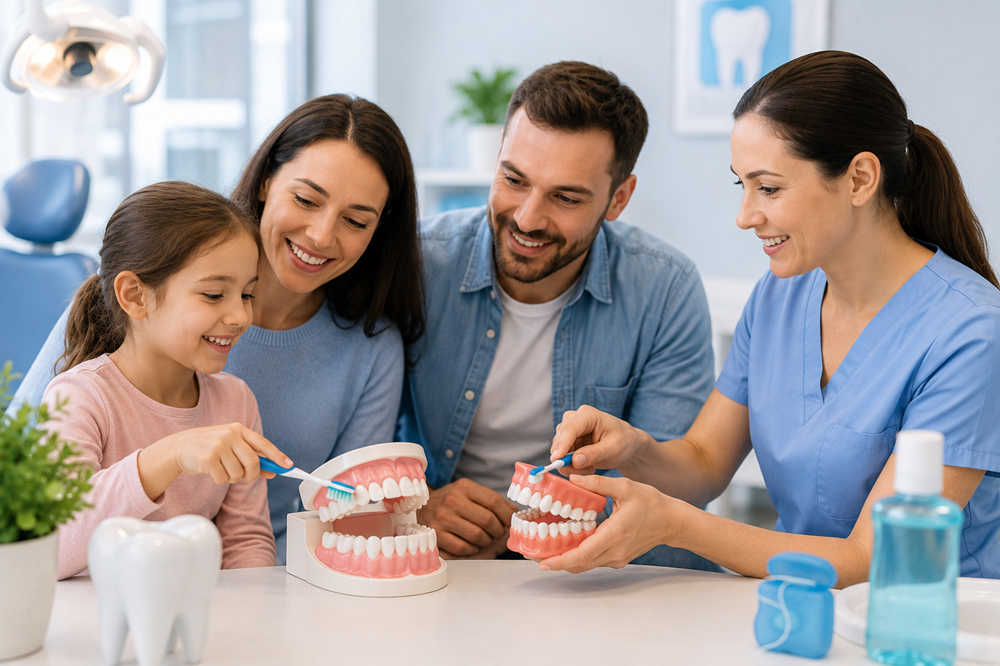
Healthy teeth protect more than your smile. They protect how you eat, speak, and feel every day. When one person in your home has pain, the whole family feels it. General dentists see this pattern again and again. Simple steps at home and regular checkups prevent many urgent visits and high bills. This blog explains 6 preventive steps general dentists recommend for families. You will see how to clean better, choose smarter snacks, and use simple tools that protect your teeth. You will also learn what to expect at routine visits and how to prepare your children. Many Bucks County dentists repeat the same clear message. Strong habits at home and steady care at the office give your family the best protection. You can start with small changes today. Then you can protect your teeth for many years.
1. Brush the right way two times each day
Brushing is simple. It still needs care and focus. Quick brushing leaves sticky film on teeth. That film feeds germs that cause decay and gum disease.
Use these steps with every family member.
- Brush two times each day for two full minutes.
- Use a soft brush with a small head.
- Place bristles at a slight angle toward the gum line.
- Use short strokes on the front, back, and chewing sides of each tooth.
- Spit out toothpaste. Do not rinse right away so the fluoride can stay on teeth longer.
Children copy what they see. Stand next to them and brush together. Turn off screens. Focus only on the teeth. You can use a timer or a simple song that lasts two minutes.
2. Floss once each day to clean where brushes miss
Floss cleaning removes food and sticky film between teeth. Brushes cannot reach those tight spaces. When you skip floss, germs stay trapped near the gums. That leads to bleeding, bad breath, and bone loss.
Use regular floss, floss picks, or small brushes for tight spots. Help young children. Most children need hands-on help until about age ten.
Follow this simple pattern.
- Use a clean section of floss for each tooth.
- Slide gently between teeth. Do not snap.
- Curve in a C shape around each tooth.
- Move up and down under the gum line on both sides.
Choose one set time each day. Evening works well. This turns floss cleaning into a daily anchor, not a guess.
3. Choose tooth safe drinks and snacks
What you eat and drink all day shapes your teeth. Sugar and acid wear down enamel. Frequent sipping keeps your mouth in a state of attack.
Use this simple guide at home.
| Choice | Better for teeth | Hard on teeth |
|---|---|---|
| Drinks | Plain water, unsweetened milk | Soda, sports drinks, juice boxes |
| Snacks | Cheese, nuts, fresh fruit, yogurt without added sugar | Sticky candy, fruit snacks, cookies, crackers that cling |
| Timing | Snack at set times with water | Frequent grazing or sipping all day |
Offer water between meals. Keep sweet drinks for rare treats. When you do serve sweets, pair them with a meal. The extra saliva during meals helps wash sugar away.
The Centers for Disease Control and Prevention reports that children with frequent sugary snacks have more decay. You can cut that risk with steady routines around food and drink.
4. Use fluoride and sealants for stronger teeth
Fluoride strengthens enamel. It makes teeth more resistant to decay. Most toothpastes for adults and older children contain fluoride. Use only a smear for children under three and a pea-sized amount for older children.
Fluoride varnish at the dental office gives extra protection. Many general dentists place it during regular cleanings for children and for adults with a higher risk.
Sealants give even more help. They are thin coatings on the chewing surfaces of back teeth. These grooves trap food and germs. Sealants block that trap. The process is quick and does not involve shots or drilling.
- Sealants are most common on first and second permanent molars.
- They work best when placed soon after these teeth come in.
- They can last for years and can be repaired if needed.
The National Institute of Dental and Craniofacial Research explains that sealants lower decay on chewing surfaces in children. This supports what many general dentists see every day.
5. Keep regular checkups and cleanings
Routine visits find small problems before they become emergencies. They also remove hardened buildup that brushing and flossing cannot remove. That buildup irritates gums and leads to infection.
For most families, general dentists suggest visits every six months. Some people with higher risk need visits more often. During these visits, you can expect three main steps.
- Review of your medical history and daily habits.
- Cleaning, polishing, and guidance on home care.
- Exam of teeth, gums, and soft tissues. X-rays when needed.
Use each visit to ask clear questions. Bring a short list. You can ask about grinding, mouthguards, diet, or your child’s thumb sucking. This turns a simple visit into a shared plan for your whole family.
6. Protect teeth from injuries and nighttime grinding
Sports and play help children grow strong. They can also cause injuries to the mouth. A cracked tooth changes eating and speaking for life.
Use mouthguards for any contact sport. This includes soccer, basketball, football, and martial arts. A custom guard from a general dentist fits better and stays in place during play.
Grinding during sleep is common in both children and adults. You may notice flat teeth, jaw pain, or morning headaches. A custom night guard can protect teeth from wear and fractures.
- Store guards in a clean, dry case.
- Rinse before and after use.
- Bring them to checkups so the dentist can review the fit.
Turn small steps into lasting family habits
Strong teeth come from steady habits, not sudden change. Start with three moves. Brush with focus two times each day. Floss every night. Replace one sugary drink with water. Then add fluoride, sealants, and regular visits as a routine part of life. These steps protect your family from pain, lost school days, and deep worry. They give you calm confidence every time someone in your home smiles.