Technology is reshaping how we approach wellness, moving far beyond simple step counters and calorie trackers into territory that once seemed like science fiction. Yet for many fitness enthusiasts, two persistent challenges continue to undermine progress: sluggish muscle recovery that extends downtime between workouts, and poor circulation that limits performance and overall vitality. These obstacles can stall even the most dedicated training regimen, leaving people searching for smarter solutions. Enter EMS suits—wearable technology that delivers electrical muscle stimulation through a full-body garment, now enhanced with artificial intelligence to offer truly personalized recovery and circulatory benefits. Designed for health-conscious individuals who demand more than generic fitness advice, these suits represent a convergence of neuroscience, data analytics, and wearable engineering. Whether you’re an athlete pushing physical limits or someone managing everyday stiffness and fatigue, AI-integrated EMS technology offers a compelling path forward. In this article, we’ll explore how these intelligent suits work, why they accelerate healing, and how they can transform your approach to training and whole-body wellness.
Demystifying EMS Suits: The Foundation of Intelligent Training
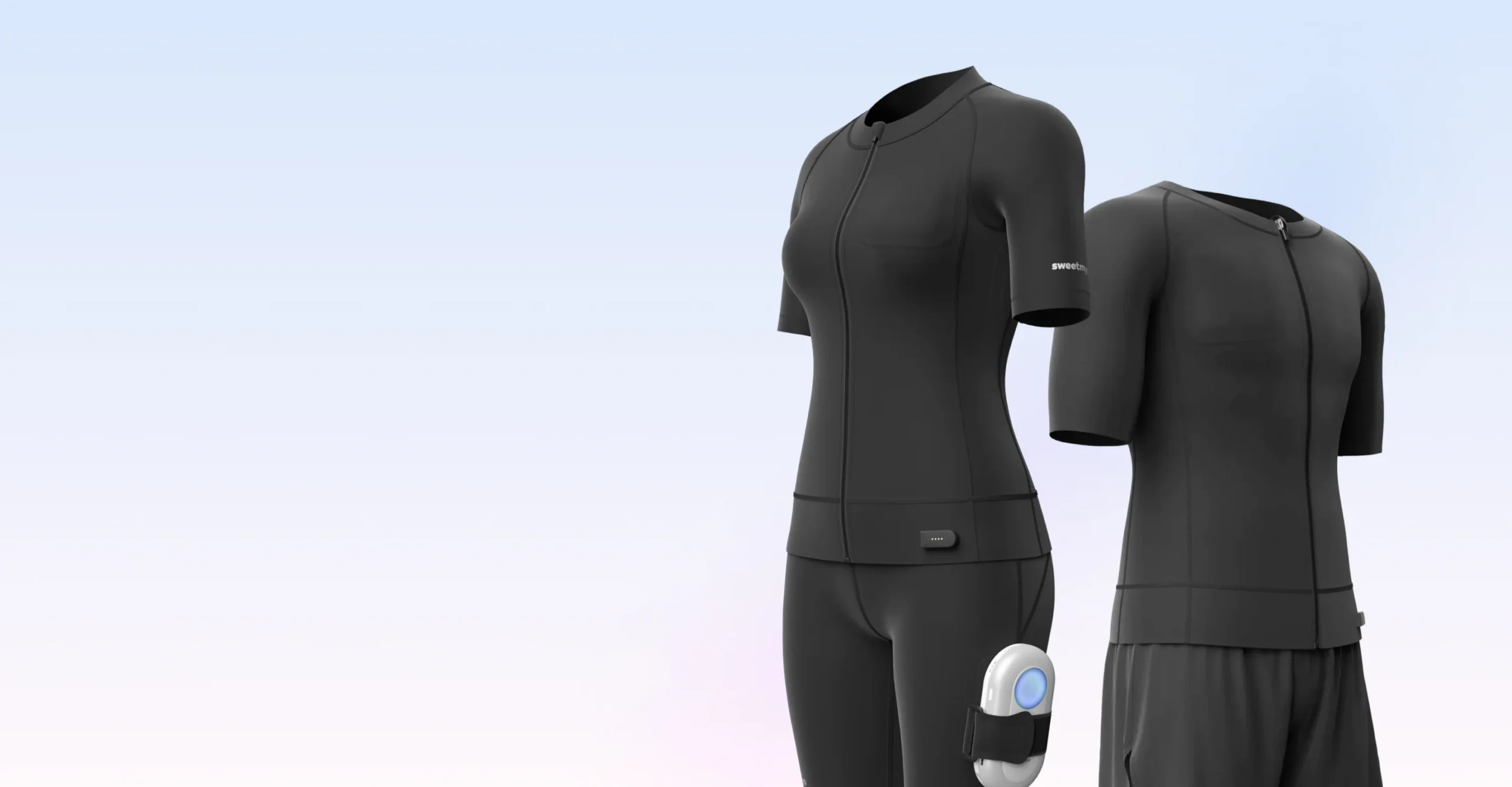
Electrical Muscle Stimulation, or EMS, works by sending low-frequency electrical impulses through the skin to trigger involuntary muscle contractions—mimicking the signals your brain naturally sends during physical movement. An EMS suit takes this principle and scales it across the entire body, embedding dozens of electrodes into a form-fitting garment that targets major muscle groups simultaneously. The core components are straightforward: conductive electrode pads positioned over specific muscles, a compact control unit that regulates pulse frequency and intensity, and increasingly, wireless connectivity that links the suit to companion software.
The roots of EMS stretch back decades into physical therapy clinics, where it was used to rehabilitate patients who couldn’t perform voluntary exercises after injury or surgery. Soviet-era sports scientists also experimented with electrical stimulation to boost athletic performance in the 1970s. Over time, the technology migrated from clinical settings into commercial gyms and eventually into personal wearable devices. Modern EMS suits represent the latest evolution—sleek, portable, and designed for everyday use rather than supervised medical sessions. This accessibility is what makes them such a powerful foundation for layering on advanced capabilities like AI-driven personalization, real-time biometric tracking, and adaptive recovery protocols that transform a simple stimulation garment into a comprehensive wellness platform.
AI Muscle Recovery: How EMS Suits Accelerate Healing
Recovery is where real progress happens. Muscles don’t grow stronger during a workout—they rebuild afterward, and the quality of that rebuilding process determines whether you come back better or simply break down further. Traditional recovery methods like foam rolling, ice baths, and passive rest work to varying degrees, but they share a common limitation: they’re one-size-fits-all. AI muscle recovery changes this equation entirely by turning your EMS suit into an adaptive healing tool that responds to your body’s unique signals rather than following a generic protocol.
When artificial intelligence is layered into EMS technology, the suit becomes capable of reading your physiological state and making real-time decisions about how to stimulate your muscles for optimal repair. Instead of applying the same electrical impulse pattern every session, the system learns from your data and evolves its approach, shortening recovery windows and helping you return to training feeling genuinely restored rather than merely less sore.
The Role of AI in Personalizing Recovery
AI algorithms embedded in modern EMS suits continuously analyze variables such as muscle fatigue levels, localized soreness patterns, workout intensity from previous sessions, and even sleep quality when synced with complementary wearables. By processing this data, the system identifies which muscle groups need gentle, low-frequency stimulation to promote blood flow and nutrient delivery, and which areas can handle more aggressive contractions to flush metabolic waste. The result is a recovery session tailored specifically to your current condition—not yesterday’s or last week’s. Users often find that their downtime between intense training sessions shrinks noticeably, because the AI targets recovery precisely where it’s needed most rather than spreading stimulation evenly across muscles that may not require it.
Step-by-Step Solution: Implementing AI Recovery with Your EMS Suit
Getting started with AI-powered recovery requires a deliberate approach. First, complete the initial setup and calibration process by inputting your fitness profile—training history, injury background, and recovery goals—so the AI has a meaningful baseline. Second, wear the suit during and after workouts to allow its embedded sensors to capture real-time recovery metrics like muscle activation imbalances and contraction response times. Third, review the AI’s feedback through the companion app after each session and adjust settings if the system recommends changes to pulse intensity or session duration; this feedback loop is where personalization deepens over time. Finally, integrate dedicated recovery sessions into your weekly routine—scheduling two to three focused 20-minute sessions on rest days creates consistency that the AI can optimize around, progressively refining its recommendations as it accumulates more data about how your body responds.
Wellness Technology Integration: Beyond Basic Fitness
EMS suits represent something larger than a single-purpose training tool—they embody the broader shift toward wellness technology that treats the body as an interconnected system rather than isolated parts to be worked independently. For health-conscious individuals who’ve grown frustrated with fragmented fitness ecosystems—a separate app for nutrition, another for sleep, yet another for workouts—these suits consolidate critical health data into a unified platform. The garment itself becomes a hub, gathering physiological information during every interaction and feeding it into intelligent systems that see patterns humans simply cannot detect on their own. This holistic approach resonates deeply with users who want more than generic workout plans; they want technology that understands their body’s rhythms, anticipates needs, and evolves alongside their changing fitness journey.
Smart Features for Holistic Health Monitoring
Modern EMS suits go well beyond delivering electrical impulses. Embedded sensors continuously track heart rate variability, muscle activation symmetry, and exertion levels throughout each session, building a comprehensive picture of your physiological state over time. Progress logs stored in companion apps reveal trends that might otherwise go unnoticed—gradual improvements in muscle endurance, shifts in recovery speed, or emerging imbalances between left and right sides. Many systems also sync with third-party devices like smartwatches and sleep trackers, pulling in resting heart rate data, sleep stage information, and daily activity levels. This connectivity creates a genuinely comprehensive wellness dashboard where training decisions aren’t made in isolation but informed by everything from last night’s sleep quality to this morning’s stress levels.
Addressing the Need for Personalized Guidance
What separates intelligent EMS suits from conventional fitness equipment is their capacity to deliver tailored recommendations that adapt as you change. Rather than offering static programs that remain identical whether you’re fresh or fatigued, these systems process accumulated user data to suggest session modifications in real time. If your recovery metrics indicate accumulated fatigue across your posterior chain, the suit might recommend shifting emphasis to lighter stimulation with longer pulse intervals. Adaptive goal-setting is another powerful feature—the system recalibrates weekly targets based on actual performance rather than arbitrary benchmarks, keeping you challenged without pushing into overtraining territory. This continuous feedback loop between user and technology creates a coaching relationship that becomes more precise with every session, satisfying the desire for personalized fitness insights that generic programs simply cannot provide.
Intelligent Training with EMS: Maximizing Efficiency and Results
Time is one of the biggest barriers to consistent training, and intelligent training through EMS suits directly addresses this by compressing meaningful work into shorter sessions without sacrificing results. A typical EMS-enhanced workout can deliver the muscular engagement of a much longer conventional session in roughly 20 minutes, because the suit recruits deep muscle fibers that voluntary effort alone often misses. But efficiency isn’t just about saving time—it’s about making every minute count through smart programming that aligns stimulation with your specific objectives. The AI driving these suits doesn’t simply automate what a trainer might do manually; it processes performance data across sessions to identify where you’re progressing, where you’ve plateaued, and where untapped potential exists. This transforms each workout from a routine repetition into a strategically optimized effort, linking directly to measurable improvements in strength, endurance, and neuromuscular coordination.
Adaptive Workout Programs
The intelligence behind EMS suit programming lies in its ability to adjust multiple variables simultaneously based on who you are and how you’re performing right now. Intensity levels shift automatically when sensors detect that a muscle group is responding sluggishly compared to previous sessions, either dialing back to prevent overload or increasing stimulation to push through a stagnation point. Duration and targeted muscle groups also adapt—if your training goal is building posterior chain strength but your quadriceps are compensating excessively, the system redistributes emphasis accordingly. Brands like sweetmyo offer suits loaded with pre-set programs designed for different fitness levels and objectives, from beginner endurance building to advanced power development. These templates serve as starting points that the AI progressively customizes, so a program that felt challenging in week one evolves into something meaningfully different by week six, reflecting your actual gains rather than following a rigid, predetermined schedule.
Practical Steps for Effective Intelligent Training
To get the most from intelligent EMS training, start by selecting a training mode that matches your current goal—whether that’s muscle building, active recovery, or cardiovascular conditioning—and let the system run its initial assessment to establish baseline metrics. During the session, pay close attention to the real-time feedback displayed on your companion app or the suit’s interface; these cues highlight form corrections, suggest tempo adjustments, and flag when you’re compensating with the wrong muscle groups, allowing you to refine movement quality on the spot. Equally important is combining EMS sessions with traditional exercises rather than treating them as a complete replacement. Pairing a 20-minute EMS strength session with bodyweight movements or free weights creates a balanced routine that develops functional coordination alongside the deep fiber activation the suit provides. Over successive weeks, review the AI’s session summaries to track which programs are driving the strongest results and let the data guide your training split rather than relying on guesswork.
Circulation Improvement: The Health Benefits of EMS Stimulation
Beyond muscle recovery and training efficiency, one of the most significant yet often overlooked benefits of EMS suits is their capacity for circulation improvement throughout the entire body. When electrical impulses trigger muscle contractions, those contractions act as mechanical pumps that push blood through vessels—particularly in the extremities where circulation tends to be weakest. This effect mirrors what happens during physical exercise but can be achieved even while stationary, making it invaluable for individuals dealing with sedentary lifestyles, chronic stiffness, or conditions that limit voluntary movement. Improved blood flow carries oxygen and nutrients to tissues more effectively while simultaneously accelerating the removal of metabolic waste products like lactate that contribute to soreness and fatigue. The downstream health benefits extend beyond athletic performance into everyday vitality: reduced swelling in the lower limbs, warmer extremities, faster wound healing, and enhanced cardiovascular function over time. For health-conscious users already invested in their wellness, this circulatory dimension adds a layer of benefit that passive recovery methods simply cannot replicate.
The Science of Enhanced Blood Flow
The physiological mechanism behind EMS-driven circulation improvement is well-documented. When an electrical impulse causes a muscle to contract, it compresses surrounding blood vessels, forcing blood upward through the venous system against gravity—a process known as the skeletal muscle pump. This enhanced venous return increases the volume of blood flowing back to the heart, which in turn boosts cardiac output and improves oxygen delivery to peripheral tissues. Research published in journals focused on sports medicine and rehabilitation has demonstrated that EMS applied to the lower extremities significantly increases blood flow velocity and volume compared to passive rest alone. One study found that post-exercise EMS application reduced blood lactate concentrations faster than seated recovery, indicating more efficient metabolic clearance. The rhythmic contraction-relaxation cycles also stimulate the release of nitric oxide from blood vessel walls, promoting vasodilation and reducing vascular resistance. This combination of mechanical pumping and biochemical signaling creates a robust circulatory response that benefits both athletic recovery and general cardiovascular health.
Solution for Better Circulation: Using EMS Suits Effectively
Maximizing circulatory benefits from your EMS suit requires intentional programming and consistent application. Start by incorporating dedicated circulation-focused sessions into your weekly schedule—two to three sessions lasting 15 to 25 minutes work well, ideally on days when you’re not performing intense training. Set the stimulation to moderate intensity with longer pulse durations and lower frequencies, typically in the 1 to 10 Hz range, which promotes rhythmic contractions that mimic the natural pumping action without causing muscular fatigue. Focus electrode activation on the calves, thighs, and glutes, as these large muscle groups have the greatest impact on venous return. Monitor your progress through the suit’s companion app, tracking metrics like reported leg heaviness, recovery heart rate trends, and any subjective improvements in warmth or reduced swelling in your extremities over weeks of consistent use. If you have pre-existing cardiovascular conditions or circulatory disorders, consult a healthcare professional before beginning an EMS circulation protocol to ensure the intensity and frequency settings are appropriate for your specific situation and to establish safe parameters that complement any existing treatments.
Recover Faster, Train Smarter, and Boost Circulation with AI-Powered EMS
EMS suits powered by artificial intelligence represent a genuine leap forward in how we approach fitness and whole-body wellness. Rather than treating muscle recovery, training efficiency, and circulatory health as separate concerns requiring separate tools, these intelligent garments unify them into a single adaptive system that learns your body and evolves with it. AI muscle recovery transforms post-workout healing from a passive waiting game into an active, data-driven process that targets exactly what your body needs. Intelligent training compresses meaningful work into efficient sessions while ensuring every impulse serves a strategic purpose. And the circulation improvement these suits deliver—through rhythmic, programmed contractions that mimic natural blood-pumping mechanisms—extends benefits well beyond the gym into everyday energy and long-term cardiovascular health. For health-conscious individuals who refuse to settle for generic programs and fragmented fitness tools, EMS suits offer the personalized, science-backed approach that modern wellness demands. The technology is here, accessible, and continuously improving. If you’re ready to recover faster, train smarter, and invest in circulatory health that supports everything else you do, exploring an AI-integrated EMS suit may be the most impactful step you take this year.