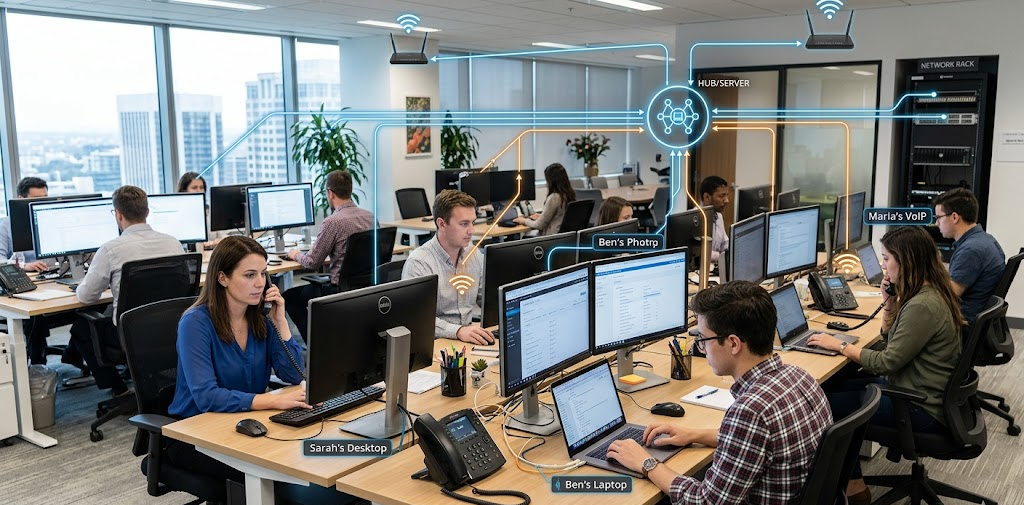
Digital transformation is no longer a point of differentiation but a need to survive in today’s competitive global marketplace. The complex design of computer networks is the backbone of today’s organization’s “central nervous system. They include a wide range of interconnected devices, protocols, and infrastructures, from the small ones found within a single office, to the large ones that can cover continents. The ability to cross geographical and organizational boundaries, optimize operations and manage market volatility with unprecedented agility, is what computer networks allow businesses to do. With the growing trend towards more and more automation and big data in industries, the need for strong networking frameworks is increasing even more, influencing how value is generated and delivered to consumers.
How networking has evolved over the years in the corporate world
Internal and external communication are the foundation of any successful operation of a business. In the days before the advent of sophisticated computer networks, corporate communication was often disjointed, using postal mail and landline telephony alongside isolated data silos. Now, the technologies of networking have combined these channels into an all-encompassing communication platform. Internet and intranet systems provide high-speed communication at a glance via email, instant messaging and Voice over Internet Protocol (VoIP) services. This integration will allow information to flow vertically and horizontally across the organizational chart without having to wait for the delay of the legacy system. Moreover, the ability to send rich media like high definition video and complex sets of data can help teams communicate nuanced information, which is otherwise hard to share, minimizing the risk of miscommunication and project delays.
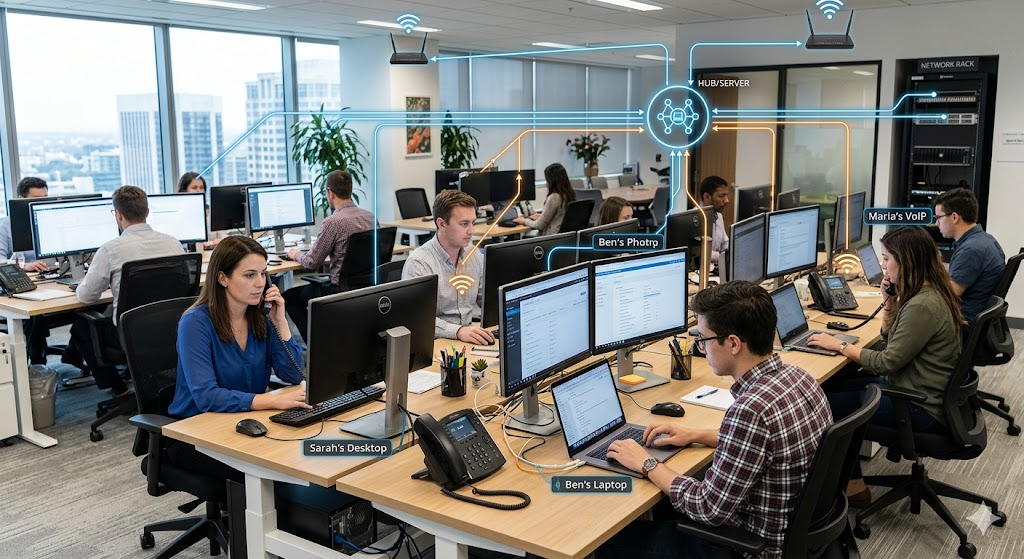
Communication is not just a matter of speed, it must be accessible and reliable. Cloud computing is used by modern businesses to run communication servers that guarantee 99.9% uptime, so that teams around the world can stay in sync no matter how time zones differ. These network-based tools enable immediate feedback loops that enable stakeholders to offer input to live documents or participate in virtual town halls to synchronize on corporate strategy. Computer networks have the power to create a more inclusive corporate environment: One in which all employees, regardless of their location, whether high rise headquarters or remote home office, enjoy the same quality of information. This democratization of data is one of the main reasons for keeping morale high and keeping all departments aligned on one vision.
Improving data sharing and information management
In the information age, data is likely to be the most valuable asset in an organization. Advanced data sharing and centralized information management relies on computer networks. Businesses can build centralized storage that securely stores data and grants access to authorized users by utilising Network Attached Storage (NAS) and Storage Area Networks (SANs). This helps to remove the “silo effect” that could result in duplicated efforts or conflicting data points, because important information is contained in one department. Effectively networking data means that a sales person in the field can have access to the same inventory levels as a warehouse manager, in real time, which means more accurate customer promises, and streamlined supply chain logistics. This degree of openness is essential for running effective business operations in complex facades where businesses are spread out.
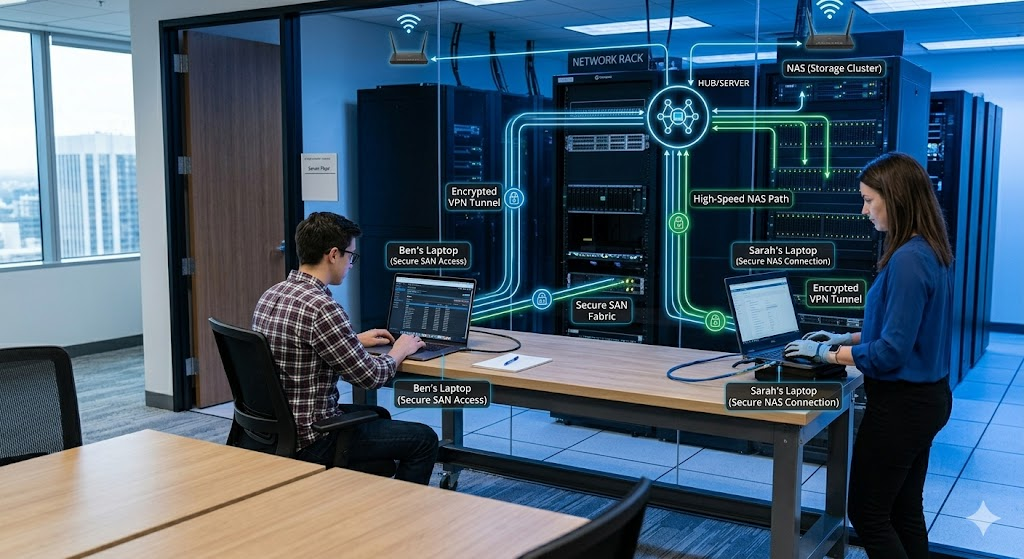
Networked environments aren’t just about sharing files; they’re also about enabling Enterprise Resource Planning (ERP) and Customer Relationship Management (CRM) systems. These are platforms that serve as a single source of truth for the organization, consolidating data from finance, HR, sales and manufacturing in a single dashboard. These systems are networked, so that if you update one part of the system, that change will be seen everywhere in your enterprise. For example, when a manufacturing plant finishes a production run, the networked ERP system automatically updates the inventory count, notifies the sales team about the available goods and activates the financial reporting processes. The automatic synchronisation minimizes human error and administrative burden, enabling staff to concentrate on high-value tasks, instead of manual data entry and cross-departmental reconciliation.
The transformative power of the cloud and remote collaboration
Cloud-based networking is maturing and driving the change to decentralized work environments. Cloud computing represents a shift away from the cost-intensive on-premise model where businesses were forced to invest in computing facilities, storage and software applications, and can instead rent them from the cloud via the internet. Such flexibility is especially useful to small to medium sized enterprises (SMEs) today, who can take advantage of the same high level tools as Fortune 500 enterprises without having to spend large sums of money on hardware. As cloud-native apps are designed to be accessed from every device with an internet connection, so has taken root the “Bring Your Own Device” (BYOD) movement and the emergence of the hybrid way of working. This change has not only cut down on the overheads of a traditional office, but also enabled businesses to access a worldwide talent pool, which is no longer limited by commute time.
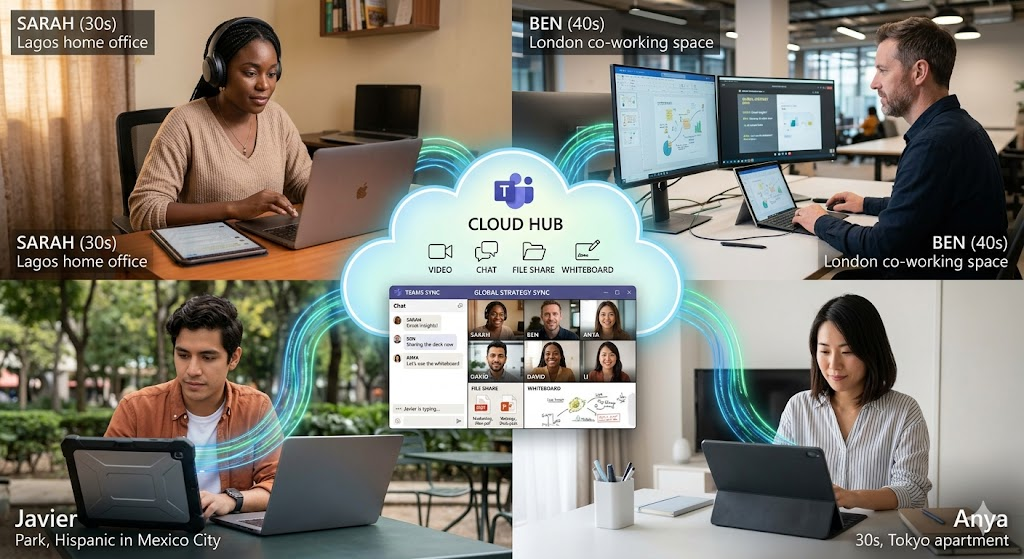
The obvious use of networking in the modern age is remote collaboration tools. These platforms, like Microsoft Teams, Slack, and Zoom, rely on intricate networking mechanisms that handle bandwidth and allow for low-latency interactions. These are more than just video conferencing tools—they’re also equipped with integrated workspaces that enable teams to collaborate on documents, track project schedules, and brainstorm in sync without being face-to-face. In industrial use, this includes “Digital Twins” and remote monitoring – engineers can now access the networked sensors of machinery thousands of miles away to troubleshoot, and that’s not just in the industrial world. Virtual collaboration enables innovations to not stall even when people are not physically present. The fact that networked businesses were able to quickly evolve into remote work during global disruption, even for the most part of a single day, while other businesses with legacy systems were struggling to catch up, is a testament to this resilience.
Boosting productivity and operational efficiency
In today’s industrial world, productivity is connected tightly to the efficiency of the underlying network. The promise of networked automation, also known as the Industrial Internet of Things (IIoT), is to enable machines to communicate with one another and with human operators. A smart factory can alert the maintenance staff to a potential mechanical breakdown by sensors on a production line, while also rerouting the production to another line. By taking proactive steps in the maintenance process, owners of expensive industrial equipment can avoid time-consuming and expensive downtime. Computer networks eliminate the guessing aspect of operations and enable a “Just-In-Time” approach to manufacturing, which ensures that resources are ordered and used just when they are needed, thus minimizing waste and storage costs from having too much inventory.
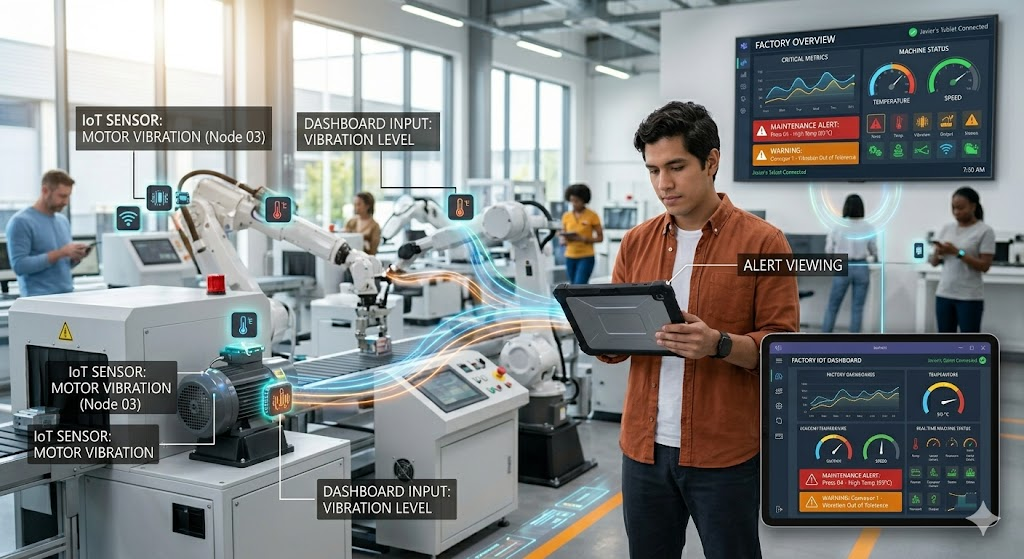
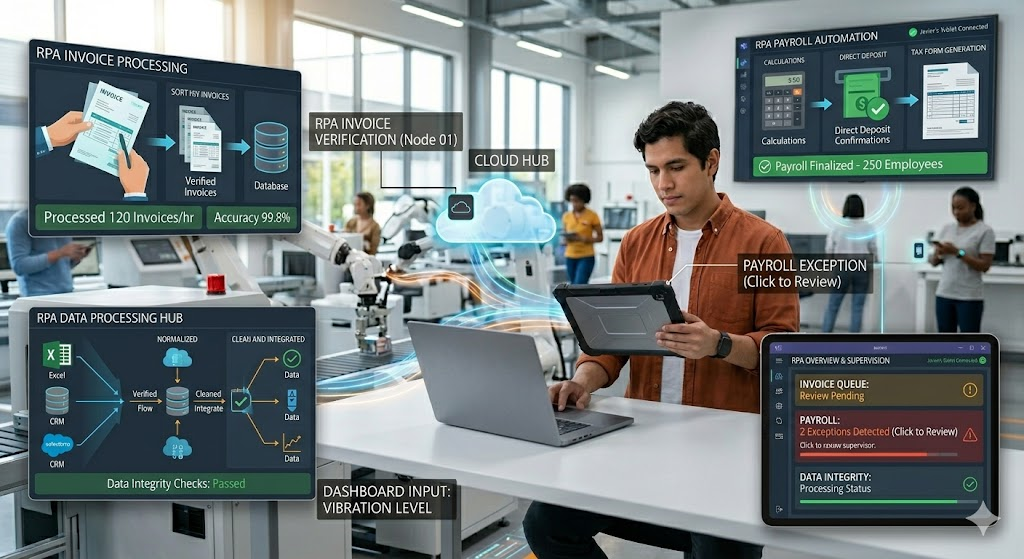
Moreover, networking streamlines the working process of the human resources by automating repetitive administrative tasks. Robotic Process Automation (RPA) is possible on high-speed networks, as software bots do the data migration, processing of invoices, and payroll. By incorporating these automated processes into the network, they can work non-stop, without getting tired, and provide a more precise and faster response than a human could. This does not take the place of workers, but it is an enhancement of their role, wherein they will be able to engage in creative problem solving and strategic planning. The sum of all of these efficiencies is a leaner, more agile company with the ability to deliver higher quality products and services at lower expense, to the end user, and thus, better market share.
How to leverage networked analytics to drive strategic decision-making
Data-driven decision making is the last and most significant use of computer networks. The business is networked and all transactions, customer interactions, and all other measures are recorded and passed along to analytical engines. Large scale networks enable to gather Big Data that can then be analysed with Machine Learning algorithms and reveal patterns and trends not discernible by human eye. Real-time data visualizations enable executives to keep an eye on Key Performance Indicators (KPIs) and modify strategies as they go. A retail chain, for instance, could see if a particular product is suddenly in high demand to change their regional marketing and distribution strategy within hours, not weeks, by using networked Point of Sale (POS) data.
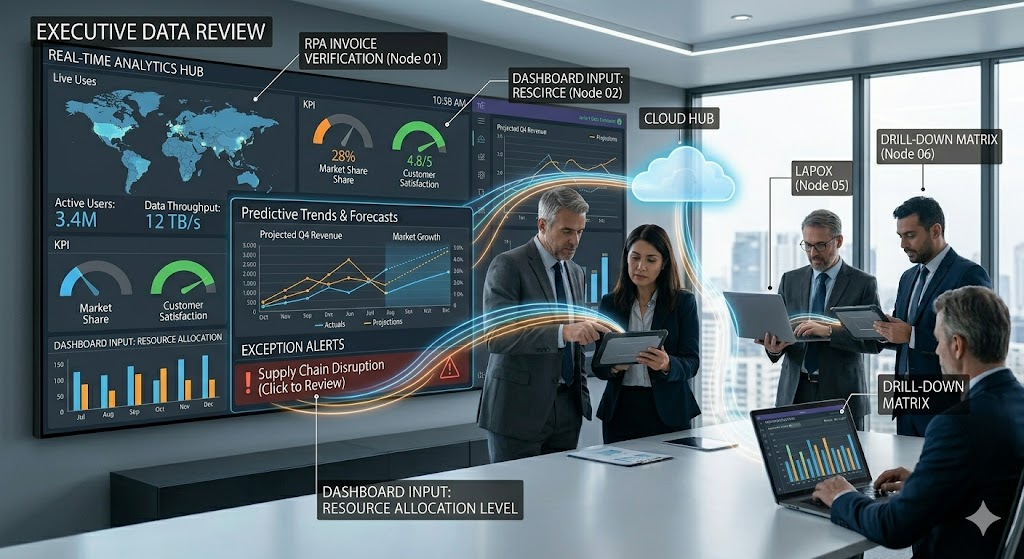
Robust networking is directly correlated with the ability to do predictive analytics. Looking back at data that has been passed through the network, businesses can predict future market conditions, customer behaviors and risks. This capability is one that will ordinarily change decision-making from reactive, intuitive to proactive, empirical. In sectors like financial support or energy, where market dynamics are unpredictable, the time it takes to network and analyze data can imply the distinction between a lucrative exchange and a big loss. The ability to make independent decisions in repetitive tasks like inventory reordering or dynamic pricing represents the next generation in the integration of AI and business, further enhancing the efficiency and effectiveness of modern enterprises.
Security Challenges and Future Trends in Business Networking
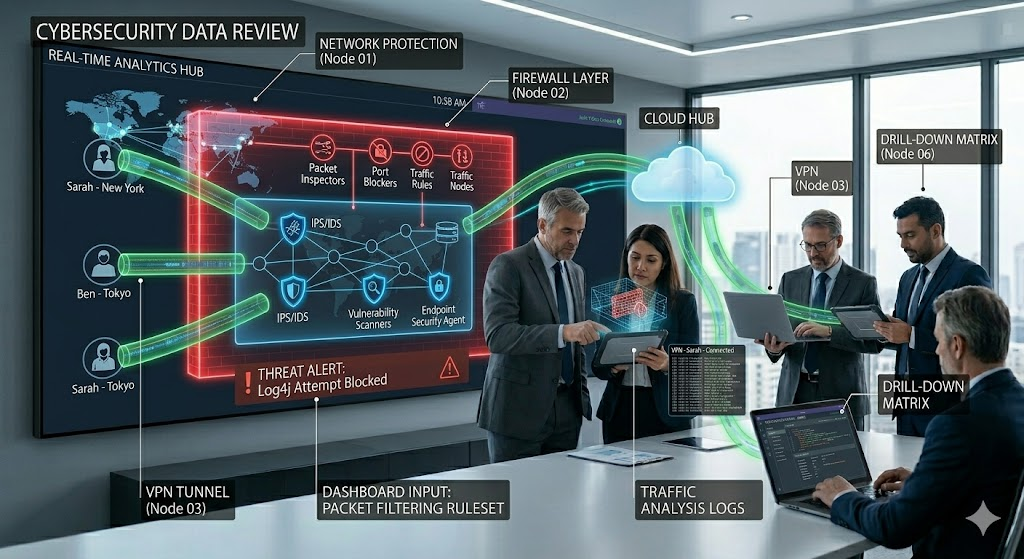
Although the advantages of computer networks are tremendous, there are also a number of security vulnerabilities that must be addressed when dealing with computer networks. The “attack surface” to humans on the Internet is growing as organizations become more interconnected. Sophisticated threats, like ransomware, phishing and Advanced Persistent Threats (APTs) target the networks businesses depend on for daily operations. Therefore, today’s networking needs to incorporate strong security features such as firewall, Virtual Private Networks (VPNs), and Zero Trust Architecture (ZTA). Financial loss and irreparable damage to a brand’s reputation are possible consequences of a security breach. Investing in networked security is thus not only a technical necessity, but a fundamental part of the business model for the protection of intellectual property and customer privacy in an increasingly hostile online environment.
In the future, with the advent of 5G technology and Edge Computing, business networking will once again be transformed. 5G has the ultra-low latency and high bandwidth needed for the next generation of mobile applications and autonomous systems. Edge computing does this by processing data at the “edge” of the network, which is near the source rather than going to central cloud server. This not only cuts down on lag time and bandwidth usage but also makes real-time applications such as autonomous delivery drones and remote robotic surgery more possible. As these technologies are developed, the physical and digital worlds will keep converging and will usher in a hyper-connected industrial world where information is everywhere and instantly available. The institutions that make it to the other side of these technological transitions will be the ones to lead the economy in the mid-21st century.
Conclusion
Computer networks in business and industry have revolutionized the concept of productivity and working together. Networking has been the key driver of growth in organizations, starting from basic email contacts to today’s sophisticated AI-powered systems. Networks have allowed businesses to operate with a level of precision and scale that was once unimaginable, by allowing for smooth communication, efficient data sharing and infrastructure for cloud computing and remote work. The future of networking technologies will continue to bring forth new challenges as we go onward in life, especially when it comes to cybersecurity. The benefits, however, of a greater degree of efficiency and of more informed choice are substantially greater than these risks. The network is not just a tool anymore; it’s the blueprint for the future of business for any modern enterprise.