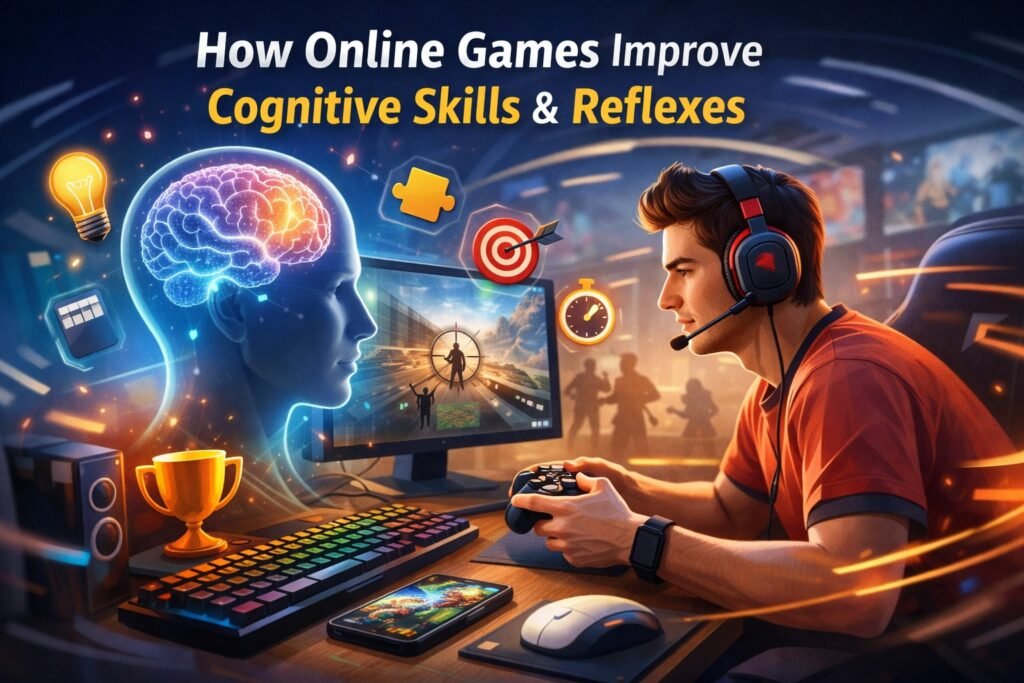
The world of digital entertainment has evolved rapidly over the past decade, and online games now sit at the center of that transformation. What was once considered a simple pastime is now widely recognized as a powerful tool for mental development. From improving decision-making speed to enhancing memory and coordination, online games offer far more than just entertainment.
As someone deeply involved in content strategy and audience engagement, I have seen how interest in online games continues to grow not only among younger users but also among adults seeking mental stimulation. This shift is not accidental. It reflects a deeper understanding of how interactive digital experiences can sharpen the mind in ways traditional activities cannot.
The Connection Between Gaming and Brain Function
When people engage with online games, their brains are constantly processing information. Unlike passive forms of entertainment, gaming requires active participation, quick thinking, and continuous adaptation. Every level, challenge, or opponent demands attention and strategic thinking.
Neuroscience research has shown that such activities stimulate different areas of the brain simultaneously. This includes regions responsible for:
- Problem-solving
- Memory retention
- Hand-eye coordination
- Spatial awareness
The dynamic nature of online games keeps the brain alert. Players must respond to changing environments, which strengthens neural pathways over time. This consistent mental engagement can lead to noticeable improvements in cognitive performance.
Enhancing Memory and Concentration
One of the most significant cognitive benefits of online games is improved memory. Many games require players to remember patterns, sequences, maps, or rules. This repeated mental exercise strengthens both short-term and long-term memory.
For example, strategy-based games often involve tracking multiple elements at once. Players must remember resources, objectives, and enemy movements while planning their next steps. This type of multitasking enhances concentration and attention span.
Additionally, fast-paced games train players to focus under pressure. Distractions are minimized as the brain prioritizes relevant information. Over time, this ability to concentrate can extend beyond gaming into everyday tasks such as studying or working.
Faster Decision-Making Skills
In many online games, hesitation can mean failure. Players are frequently placed in situations where they must make quick decisions with limited information. This constant exposure to time-sensitive scenarios improves reaction speed and judgment.
Action and competitive games, in particular, push players to:
- Analyze situations instantly
- Predict outcomes
- Choose the best possible response
These skills are highly transferable. Whether it is making decisions at work or reacting in real-life situations, individuals who regularly play online games often demonstrate quicker and more confident decision-making abilities.
Improved Hand-Eye Coordination
Hand-eye coordination is another area where online games have a clear impact. Games that involve precise movements, such as shooting or racing, require players to synchronize their visual input with physical actions.
As players navigate complex environments, their brains learn to process visual cues and translate them into accurate movements. This coordination improves with practice and can benefit activities outside gaming, including sports, driving, and even typing.
Interestingly, studies have shown that gamers often perform better in tasks that require fine motor skills. This is because their brains are trained to respond quickly and accurately to visual stimuli.
Strengthening Problem-Solving Abilities
Problem-solving lies at the core of many online games. Whether it is solving puzzles, completing missions, or overcoming obstacles, players are constantly challenged to think critically.
Games encourage experimentation and adaptability. When one approach fails, players must try another. This trial-and-error process builds resilience and creativity.
Key problem-solving benefits include:
- Breaking down complex challenges into smaller steps
- Identifying patterns and solutions
- Learning from mistakes without fear
Over time, these habits become second nature. Players develop a mindset that embraces challenges rather than avoiding them, which is valuable in both personal and professional settings.
Boosting Multitasking and Cognitive Flexibility
Modern online games often require players to handle multiple tasks simultaneously. For instance, a player might need to manage resources, communicate with teammates, and respond to threats all at once.
This constant juggling improves cognitive flexibility, which is the ability to switch between tasks efficiently. Instead of feeling overwhelmed, the brain becomes better at prioritizing and managing different streams of information.
Multitasking skills developed through gaming can be particularly useful in fast-paced environments such as workplaces or academic settings. Individuals become more organized, responsive, and capable of handling complex situations.
Reflex Development and Reaction Speed
Reflexes are crucial in many aspects of life, and online games provide an effective way to train them. Fast-paced games demand immediate responses to visual and auditory cues.
For example, players may need to:
- Dodge obstacles within milliseconds
- React to sudden changes in the environment
- Execute precise actions under pressure
These repeated actions strengthen the connection between the brain and the body. As a result, players experience faster reaction times and improved reflexes.
This benefit is not limited to gaming. Enhanced reflexes can improve performance in sports, driving, and other activities that require quick responses.
Social Interaction and Cognitive Growth
While the focus is often on individual skills, online games also offer social benefits that contribute to cognitive development. Multiplayer games encourage communication, teamwork, and strategic collaboration.
Players must coordinate with others, share information, and adapt to different playing styles. This interaction enhances:
- Communication skills
- Emotional intelligence
- Strategic thinking
Engaging with diverse players from around the world also broadens perspectives. It challenges individuals to think differently and consider alternative approaches to problem-solving.
Managing Stress and Mental Agility
Another often overlooked benefit of online games is their ability to reduce stress. Engaging in enjoyable activities can relax the mind and improve overall mental well-being.
When players are relaxed, their brains function more efficiently. This state of mental clarity enhances cognitive performance and creativity.
Moreover, certain games are designed to challenge the brain without overwhelming it. These experiences keep the mind active while providing a sense of achievement, which boosts motivation and confidence.
Finding the Right Balance for Maximum Benefits
While online games offer numerous cognitive advantages, balance is essential. Excessive gaming can lead to fatigue and reduced productivity. The key is to use gaming as a tool for growth rather than allowing it to become a distraction.
To maximize benefits, consider the following:
- Set time limits for gaming sessions
- Choose games that challenge your mind
- Take regular breaks to avoid burnout
- Combine gaming with other productive activities
By maintaining a balanced approach, players can enjoy the positive effects of gaming without negative consequences.
A Smarter Way to Play and Grow
The perception of gaming has changed significantly, and for good reason. Online games are no longer just a source of entertainment. They are a powerful medium for developing cognitive skills and improving reflexes.
From enhancing memory and decision-making to sharpening coordination and problem-solving abilities, the benefits are both practical and measurable. When approached thoughtfully, gaming can become a valuable part of personal growth.
As digital experiences continue to evolve, the role of online games in mental development will only become more important. The key lies in understanding their potential and using them wisely to build a sharper, more agile mind.