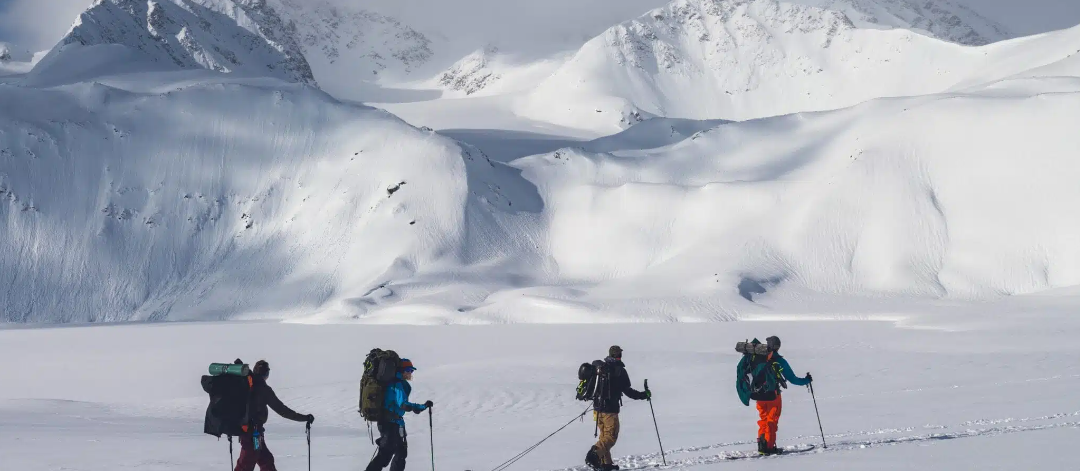
Everest Base Camp Trekking is one of the most visited treks in the world, drawing thousands of trekkers from all around the world to Nepal every season. The trail itself is peppered with breathtaking panoramic views combined with an insight into a completely different Sherpa way of life, and last but not least, the view that one gets when face-to-face at the bottom of this world’s highest summit. But as you covered the rugged terrain, made your way up thin air, and felt obstacles multiplying like rabbits, you quickly realized this is a journey of not only the physical variety but also mental and emotional.
I was indeed very, very lucky to have an amazing guide who introduced me to his personal version of the Khumbu, on the way up to Everest Base Camp. What I did not know was that the plant wasn’t intended to share all of his knowledge with me simply before we embarked on our journey, instead reserving it for the most pivotal points during our ruin — indeed at its very end upon Everest Basecamp. Frozen in the moment, consumed by the beauty and enormity of it all, my guide implanted within me thoughts that would go on to reshape how I saw the trek, the people, and their mighty mountain. Here’s what I learned.
It’s Not the Summit, It’s How You Get There
“We had an extension of this odd year, because of the dozens and dozens of Earths in configuration. At the base camp of Everest, he imparted that wisdom to me as we looked up at the enormous Khumbu Icefall. A bucket-list item for many trekkers is to visit Base Camp and have that classic photograph taken with Everest in the background. Yes, Base Camp is the reward, but it’s where all the magic is happening before you even arrive. From the day you fly out of Lukla to the final time some part of your hiking boot touches land at top Base Camp Treks, every step, person, and obstacle adds up to solidifying a four-week-long adventure into the most unforgettable memory imaginable.
As Itahisa puts it, when you’re walking and taking the path of religious processions, the journey is just as important as – if not more than– arriving at your destination (laughs while crying).
Altitude Will Be Your Worst Enemy, But Your Best Friend Will Be Your Mind.
You can read about altitude sickness symptoms all day, but they’re a different beast when you’re feeling them. I had read that altitude sickness can hit without warning, and when it arrived, I wasn’t quite prepared for how hard it would smash into me physically and mentally. At higher elevations, I struggled with exhaustion, headaches, and vomiting.
My guide nodded when I mentioned these symptoms to him and reminded me that pushing through altitude was as much about mental toughness as physical fitness. Your body is going to slow down, but you have to keep your mind up, and really, that describes the whole fourth quarter for our team right there,” he added. Take it one step at a time.”
That was when I realized how much travel is about a state of mind. Being fit will get you to the starting line, but it’s all about attitude to get you to Base Camp.
Sherpas Are Not Just Mountain Guides —They Are the Custodians of This Mountain.
I had heard that Sherpas were skilled at high-altitude travel, and I knew they played a key role in mountain operations, but it wasn’t until Base Camp that I understood the full extent. My guide told me that the Sherpas’ connection to Everest is essentially spiritual, not professional. Leading them to Base Camp is not just a job for those trekkers — it’s also a life that they’ve devoted to hard labor on the mountain and its ecosystem’s behalf.
The same way Sherpas worship Everest is how they hike there. Everest is one of the numerous peaks that Sherpas use, and many make offerings, or perform other rituals—praying for all blessings once the season begins. It is this deep connection with the mountain that makes the Sherpas more than just guides — they are the mountain’s custodians, ensuring that trekkers do not merely get to Base Camp but arrive respectfully and safely.
Every Single Step of This Hike Has Its Reason
‘There’s a point in the trail when we were climbing up to Lobuche: (I thought) “you little shit”. It was a steep trail, and it was cold out there, and I was very tired. My guide observed my difficulty and said to me, “Actually, you are not just walking physically; each step that you take here has a bigger meaning. It’s a performing-arts mantra about extending your personal envelope, finding who you are, and getting ready for whatever is next in life.”
I could barely comprehend what he was saying until I reached the top. Each battle, each sore muscle, and every twinge of self-doubt equipped me: this is how I learned resilience. By the time I got to Everest Base Camp, not only was I physically stronger — I felt mentally sharper and had a clearer picture of what it is that I am really capable of.
The Weather Here Doesn’t Play by Your Rules.
This one cut close to the bone. I was so prepared; I had even looked at the forecast to ensure that the hike would happen as perfectly as possible. But as we climbed, I quickly discovered that the weather in the Khumbu range can change on a whim. Snowstorms, high winds, and wild temperature swings are par for the course.
‘Weather has its own mind,’” My guide said. “There’s no feeling of planning down.” You sort of have to game-plan on the run and deal with that,” he said. The weather is the least of it — when you’re walking the walk of a lifetime, it’s one of the things that’ll be hardest to predict. And whether it be snow, fog, or sun, you will acclimatize to the change in conditions and make the most of your trip.
You Are Going to Learn More About You in the Next Few Days Than You Have Over the Last Few Years
I didn’t see it coming at all, but when we got up there to Base Camp, my guide turned to me and said, “This mountain, this trek, is going to teach you more about who you are than anything else. “When you’re pushed up against hard elements, physical walls and mental blocks, you will see yourself coming out the other side.”
And he was right. The adventure pushed me to confront my fears, blast through physical limitations and question what I thought I was able to do. I was discovering things about what I could do every day in the woods: my strength, my weaknesses and through it all how to endure. It was a transformative experience.
Take It Slow: Your Body Knows What You Need
“Slow and steady wins the race” was my motto during the trek, but I didn’t realize how much life-affirming wisdom that advice is until we were way up in our ascent. My leader was very clear about the need to stop, rest well, and “listen” to when it felt right to start walking again.
“At this kind of altitude, it’s not about how fast you can go,” he said. “It’s listening to your body and knowing the right pace at which you should be working.” This advice was a game-changer. Slowing down and tuning in to my body wasn’t just a good way to prevent altitude sickness; it was more enjoyable.
Everest Is the Boss. You’re Just a Visitor
We’d made it to the top, and my guide was looking out at Everest sprawled before us, and he said something that captured me: “Remember, Everest is the boss. You’re just a visitor here. Respect the mountain and the mountain will respect you.”
It was a simple but powerful reminder of how, trained as we may be and trying as hard as possible to control the situation, sometimes it’s just down to nature… We are all guests in the house of a giant, and humility is called for.
Conclusion
The journey to the Everest Base Camp is not just a physically arduous endeavor. (It was a way that I’d soon found, my guide informed me, that it’s a spiritual and emotional and mental journey in which you encounter yourself: your limitations, yes (some of which are familiar to all of us) but otherwise stuff about yourself you’ve never had an inkling even existed.) It’s not the view from the bottom of the world’s highest mountain; it’s what happens to your mind and heart as you move toward it. So when you make this life-changing trip, be prepared to deal with the emotional. It’s always worth the physical and psychic weight that comes with it — and as my guide so wisely put it: Enjoy every step of the way.