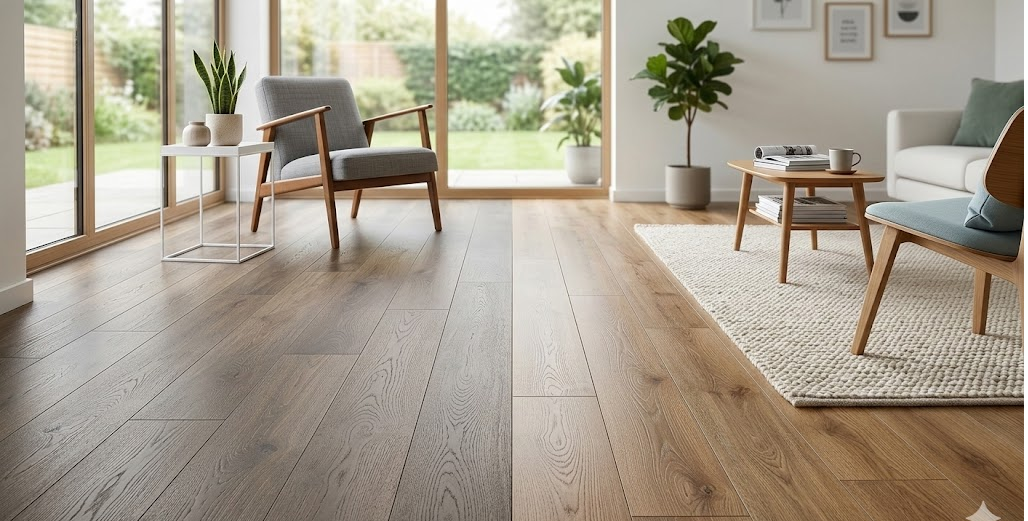
Choosing the right flooring is one of the most important decisions when renovating or building a home. Floors not only set the tone for your interior style but also need to be practical, durable, and suited to your lifestyle. Two of the most popular options available are laminate flooring and hybrid flooring in Melbourne and nearby locations. Both bring their own unique benefits, but homeowners often find themselves comparing hybrid flooring vs laminate to decide which one is best.
If you’re wondering which is better, laminate or hybrid flooring for homeowners or commercial property owners, this blog breaks down their differences, pros, cons, installation requirements, and cost factors, helping you make the right choice for your home.
What Is Laminate Flooring?
Laminate flooring has been a household favourite for decades, particularly for homeowners who want a timber-like look without the expense of hardwood. It is made from a high-density fibreboard (HDF) core with a photographic layer on top that mimics natural wood, stone, or tile designs. A protective wear layer finishes the product, giving it scratch and stain resistance.
Key Benefits of Laminate Flooring
Here are some of the key benefits of flooring:
- Inexpensive option – One of the most common reasons people choose laminate is its affordability compared to hardwood or hybrid floors.
- Aesthetic variety – With advanced printing technology, laminate can replicate the look of timber, oak, or even stone.
- Scratch resistance – Great for homes with pets and children, as the protective layer helps withstand daily wear and tear.
Limitations of Laminate Flooring
Here are a few limitations of laminate flooring:
- Moisture sensitivity – Laminate is not fully waterproof. Excess moisture can cause the boards to swell or warp.
- Sound and feel – Compared to natural timber or hybrid flooring, laminate may feel slightly hollow underfoot.
- Limited lifespan in wet areas – Bathrooms, laundries, and kitchens may not be ideal for laminate unless extra care is taken.
What Is Hybrid Flooring?
Hybrid flooring is a more recent development in the flooring industry that utilises the beneficial elements of laminate and vinyl flooring. Hybrid flooring has a rigid core (made from limestone and plastic composites), a decorative top printed layer, and a protective wear layer. The most significant benefit of hybrid flooring is that it is 100% waterproof, which allows for a multitude of uses in modern households.
Here are some of the key advantages of hybrid flooring :
- Waterproof hybrid – This flooring can be applied in the kitchen, laundry room, or bathroom, where water may be present, without the risk of warping.
- Durable– resistant to scratching, denting, and staining so that it can be installed in areas with high traffic.
- Comfort and acoustics – Hybrid often feels softer and quieter underfoot compared to laminate.
- Easy maintenance – Cleaning usually requires just sweeping and mopping.
Here are some of the limitations of hybrid flooring:
- Higher upfront cost – Hybrid is generally more expensive than laminate.
- Subfloor preparation required – A perfectly level subfloor is needed for a finish.
- Fewer options than laminate – Although hybrid products are growing, laminate products still have a larger range of patterns and finishes.
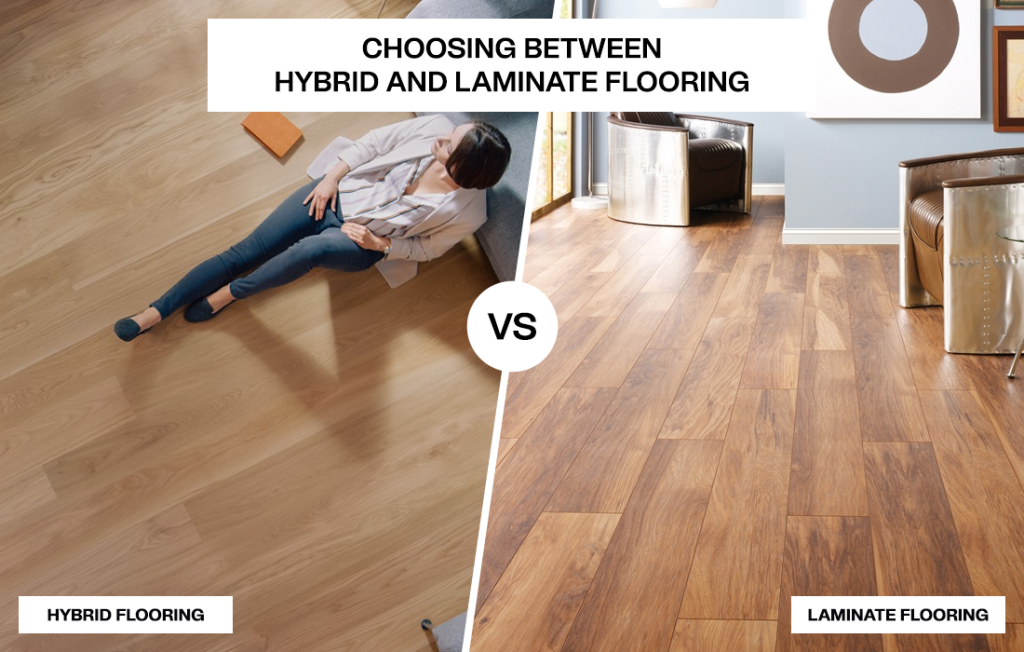
Hybrid Flooring vs. Laminate: A Comprehensive Comparison
To help you decide between the two, here is a comparison based on the major factors homeowners consider:
1. Durability
- Laminate flooring is scratch-resistant, but not water-resistant.
- Hybrid flooring is resistant to scratches while still being waterproof, making it considerably more durable.
2. Water-resistant
- Laminate can only withstand small spills if they are cleaned up.
- The Hybrid is entirely waterproof, making it the safe option for kitchens, bathrooms, and laundry rooms.
3. Visual Appeal
- Laminate has always been good at reproducing the appearance of wood textures and is typically more affordable.
- Hybrid also does a great job at recreating natural wood, while laminate may offer a broader range of finishes.
4. Comfort Underfoot
- Laminate can feel harder and produce more noise when walked on.
- A hybrid usually has a softer, quieter feel thanks to its vinyl elements.
5. Installation
- Laminate flooring installation uses a click-lock system and is generally easy for DIY enthusiasts.
- Hybrid also uses click-lock technology but requires more careful subfloor preparation for best results.
6. Cost
- Laminate is cheaper upfront, making it budget-friendly.
- A hybrid is more expensive but often pays off in the long run due to its durability and water resistance.
Which Is Better – Laminate or Hybrid Flooring?
The answer depends on your lifestyle, budget, and where the flooring will be installed:
- If you are looking for an economical floor option for a bedroom, living area, or low-moisture area, laminate flooring is a great choice. Laminate flooring can be fashionable, inexpensive, and relatively easy to install.
- If you need a long-term solution that can withstand spills, moisture, and heavy foot traffic, hybrid flooring is a worthwhile investment. Its waterproof and durable design makes it versatile for nearly every room in the home.
Hybrid Flooring in Melbourne: Why It’s Gaining Popularity
In Melbourne, where homes can be exposed to rainy winters and warm summers, hybrid flooring is a popular option for homeowners. The waterproof feature of hybrid flooring is especially appealing to households that want a single flooring style throughout their home, including kitchens and bathrooms.
Homeowners also want flooring that is aesthetically pleasing and practical. Hybrid flooring can replicate the look of timber with low maintenance, making it a desirable option for modern living. While many still prefer laminate flooring installation as an economical option, an increasing number of homeowners are opting for hybrid flooring as a future-proof investment.
Cost Considerations: Long-Term Value
Although laminate is cheaper, hybrid flooring can ultimately prove to be a better value in the long run. For example, if laminate is exposed to water damage, it will need to be replaced sooner, whereas hybrid flooring can withstand spills and moisture for numerous years. If you are a homeowner planning to stay in your home long-term, hybrid flooring is a better overall value. If you are renovating on a budget or preparing a rental property, laminate flooring remains a viable option.
To Summarise
In short, both hybrid flooring and laminate flooring offer style, durability, and practicality for your home. The best choice depends on your budget, your lifestyle, and the rooms you are renovating.
- Choose laminate flooring if:
- You want a budget-friendly option.
- You’re confident with laminate flooring installation as a DIY project.
- You’re flooring low-moisture areas, such as bedrooms or living rooms.
- Choose hybrid flooring if:
- You want a waterproof and durable flooring option.
- You’re upgrading high-traffic or wet areas.
- You prefer a modern, versatile solution that lasts longer.
For homeowners, hybrid flooring in Melbourne is fast becoming the go-to option due to its resilience and practicality. But whether you choose laminate or hybrid, both offer stylish, timber-look designs that can transform your home’s interior.