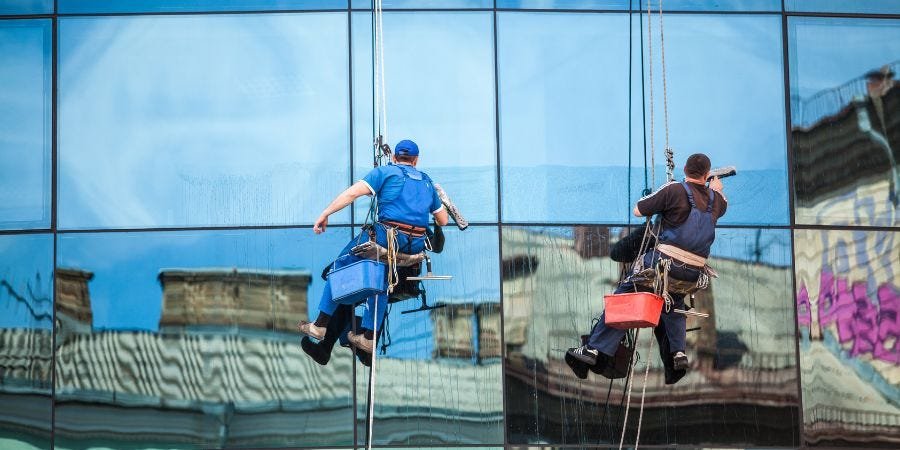
Cleaning windows on tall buildings has always been one of the most dangerous and expensive aspects of building maintenance. Traditional methods rely on scaffolding, rope access, or suspended platforms—systems that require heavy setup, pose safety risks, and often disrupt daily operations.
Drone window cleaning is emerging as a modern alternative. By using remotely operated drones equipped with cleaning systems, building owners and facility managers can maintain glass façades more safely, efficiently, and with less disruption.
What Is Drone Window Cleaning?
Drone window cleaning is a method of exterior glass cleaning that uses specially designed drones instead of human workers operating at height. These drones are controlled from the ground and equipped with stabilization systems and cleaning attachments that allow them to wash windows on high-rise and hard-to-reach buildings.
Unlike conventional approaches, drones eliminate the need for scaffolding, lifts, or rope-access technicians, significantly reducing risk and setup time.
How Drone Window Cleaning Works
The process begins with a site assessment to evaluate building height, façade design, and environmental conditions. Once approved, trained operators deploy drones that are designed for stability, precision, and controlled movement.
Most systems use water-fed cleaning mechanisms with purified water or mild detergents. Operators monitor the drone in real time from the ground, adjusting pressure and movement to ensure thorough and consistent cleaning. Safety protocols, including geofencing and emergency controls, are built into the operation to minimize risk.
Benefits of Drone Window Cleaning
Drone-based cleaning offers several advantages over traditional methods:
- Improved safety: No workers are suspended at dangerous heights
- Faster setup: Minimal equipment and preparation required
- Reduced disruption: No blocked walkways or extended building shutdowns
- Cost efficiency: Lower labor and insurance-related expenses
- Accessibility: Easier access to complex or irregular building designs
For buildings with extensive glass surfaces, these benefits can translate into measurable operational savings.
Drone Window Cleaning vs Traditional Methods
Traditional window cleaning relies heavily on physical access systems, which are time-consuming and risky. In contrast, drones shift most of the risk away from human workers and reduce logistical complexity.
While traditional methods are still necessary for certain detailed or interior tasks, drone window cleaning is increasingly preferred for large exterior surfaces where speed, safety, and scale matter most.
Costs and Pricing Considerations
Drone window cleaning costs vary depending on several factors:
- Building height and total surface area
- Type and condition of glass
- Frequency of cleaning
- Local regulatory requirements
Pricing is often structured per project or per façade rather than hourly labor. While costs can be comparable to traditional cleaning in some cases, the reduction in setup time and risk often makes drones more economical over time.
Common Use Cases for Drone Window Cleaning
This technology is particularly useful for:
- High-rise commercial buildings
- Office towers with glass façades
- Hotels and hospitality properties
- Industrial and warehouse facilities
- Architecturally complex structures
As adoption increases, more property managers are evaluating drone-based solutions as part of their regular maintenance strategy.
Safety, Regulations, and Compliance
Drone window cleaning is subject to aviation and safety regulations that vary by region. Professional operators must comply with local drone laws, maintain proper certifications, and carry appropriate insurance coverage.
Environmental considerations are also important. Many systems use purified water to minimize chemical runoff, making the process more sustainable than traditional cleaning methods.
For a balanced overview of advantages and limitations, this detailed guide on drone window cleaning explains both the pros and cons building owners should consider.
Is Drone Window Cleaning Right for Your Building?
Drone window cleaning is best suited for buildings where height, accessibility, or safety concerns make traditional methods inefficient. It may not replace all forms of window cleaning, but it offers a strong alternative for large-scale exterior maintenance.
A professional assessment can help determine whether this approach aligns with a building’s design, budget, and operational needs.
Final Thoughts
Drone window cleaning represents a significant shift in how exterior building maintenance is approached. By combining technology with safety-focused design, it offers a practical solution to long-standing challenges in high-rise cleaning.
As regulations mature and technology improves, drone-based cleaning is likely to become a standard option rather than an exception in modern property management.