At every major trade show, you’ll see a familiar pattern: dozens of booths that look nearly identical. Despite companies investing thousands of dollars, most fail to capture attention—or worse, fail to connect. The reason? They’re making the same mistake: focusing on appearance over experience.
Your custom trade show booth isn’t just a backdrop for your logo—it’s your brand’s stage. The difference between a forgettable booth and a high-performing one lies in how well it engages people, not just in how good it looks.
The #1 Mistake: Designing for You, Not Your Audience
Exhibitors often design their booths around internal preferences—colors they like, slogans they came up with, or layouts that please the executive team. But trade shows aren’t about you; they’re about them—the attendees.
Visitors don’t care about how expensive your booth looks. They care about how your brand can help them solve a problem or achieve a goal. When you design from your perspective instead of theirs, you lose the opportunity to connect emotionally and practically.
Example: A software company once built an elegant, glass-walled booth with minimal text and soft lighting. It looked stunning—but visitors couldn’t tell what they actually did. Engagement was almost zero.
Step 1: Clarify What You Want Visitors to Feel
Before discussing graphics or layout, define your emotional goal. Do you want people to feel excited, curious, safe, or inspired? Your design should support that.
- Use visuals that evoke the emotion you want to create.
- Choose materials, lighting, and music that match your brand’s personality.
- Train your team to carry that energy into conversations.
When your space makes people feel something, they remember your brand long after the event.
Step 2: Create a Visitor Journey, Not a Display
Think of your booth like a mini-store or theme park experience. Visitors should naturally move through stages: curiosity → engagement → conversation → conversion.
Here’s how to make that flow work:
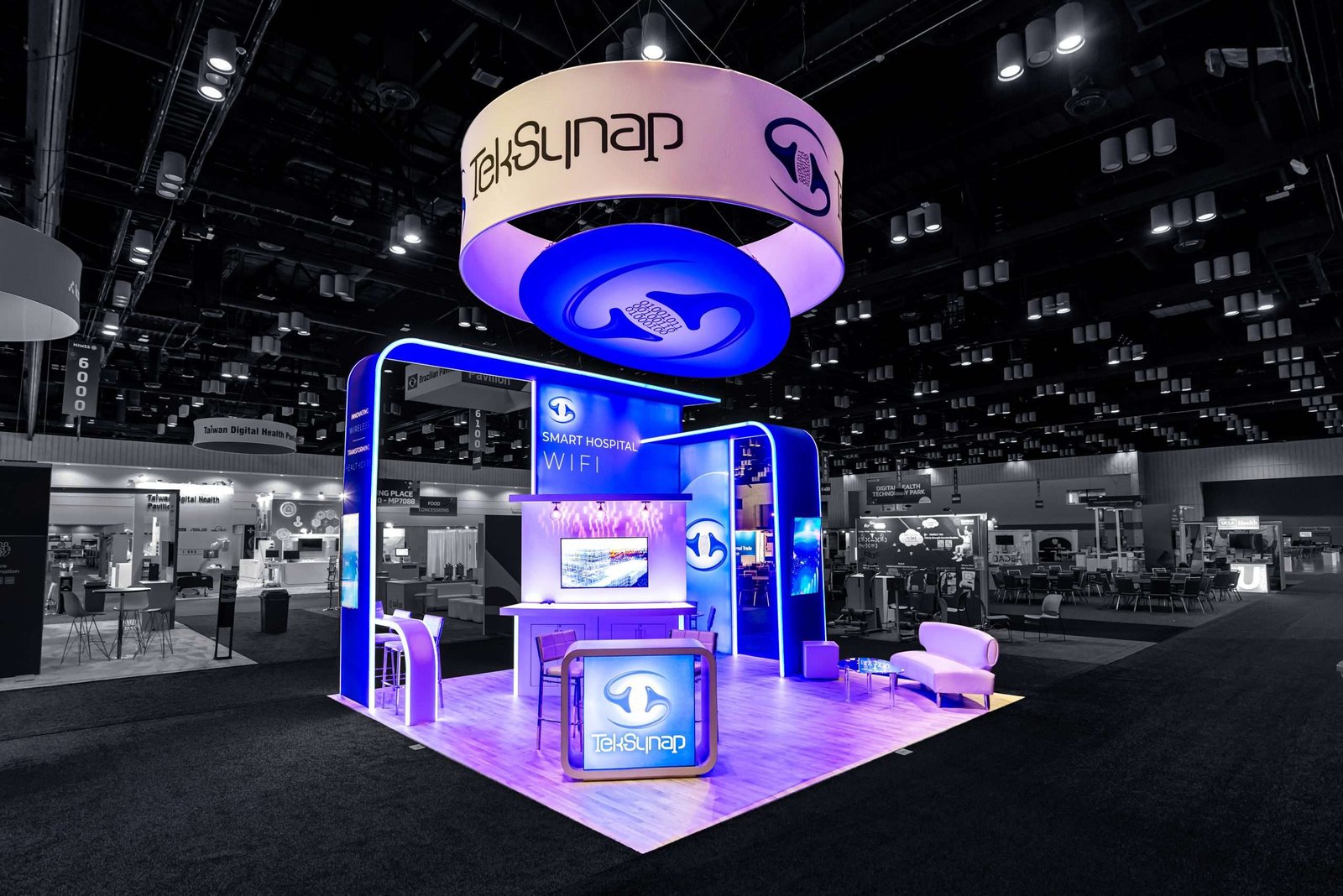
- Attraction zone: Use movement (LED visuals, interactive screens, or demos) to stop foot traffic.
- Engagement zone: Provide hands-on interaction—touchscreens, product samples, or quick challenges.
- Conversation zone: Have an open, quiet corner for meaningful discussions.
This structure helps transform walk-by glances into measurable leads.
Step 3: Simplify Your Message
Too many booths look like visual overload—wall-to-wall text, busy graphics, and buzzwords. Your audience doesn’t have time to read a novel.
Follow this rule:
- One clear headline (no more than seven words).
- One supporting image or demo.
- One call to action.
If a visitor can’t understand who you are and what you do in five seconds, you’ve lost them.
Step 4: Train Your Team Like Performers
Even the best-designed booth can fail if your staff isn’t ready. Many exhibitors forget that people buy from people, not backdrops.
- Train your team to greet without sounding scripted.
- Encourage them to ask questions instead of pitching immediately.
- Give them short, value-driven responses to explain your offer.
A confident, engaging booth team can double your conversions compared to a static design alone.
Step 5: Measure What Actually Worked
After the show, don’t just count business cards. Track engagement metrics—how many demos happened, how long people stayed, what questions they asked.
Use that data to refine your next booth. Design should evolve like marketing campaigns—measured, tested, and improved.
Key Takeaways
| Problem | Fix |
|---|---|
| Designing for your own taste | Design for your audience’s needs |
| Too much text or visuals | Focus on one strong message |
| Static layouts | Build interactive zones |
| Poor staff training | Treat staff as performers and storytellers |
| No data tracking | Measure engagement, not just attendance |
Conclusion
The #1 mistake exhibitors make is forgetting who their booth is for. A trade show is more than a design contest—it’s a communication opportunity.
When you stop decorating and start designing experiences, you shift from looking impressive to being unforgettable.
Your next trade show shouldn’t just display your brand—it should make people feel it.