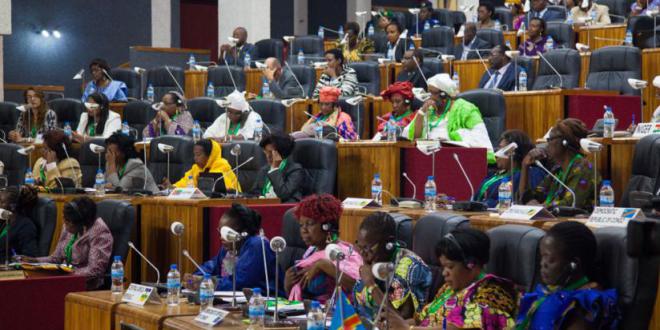
The Rwandan Parliament has asked the government to consider seeking funding for major socio-economic projects that due to the economic effects of coronavirus will not be able to get a budget line.
The legislators made the call today during a budget input review in the draft budgets F2020-21 and 2022-23 for the next fiscal year.
This comes after the economic and budgetary committee of the parliament has shown that the government will face difficulties in raising money to finance socio-economic activities and projects as a result of the projected drop in internal revenues largely caused by the ongoing Covid-19 crisis.
Parliament said that while the economy is projected to expand by another 2 percent higher, a parliamentary study found that the current budget would not be able to fund all the projects planned.
“This means that some 61 projects will not get financing as planned but we hope that after the midterm budget we will be able to cover some of the other areas though others will not be financed in the budget,” Committee Chair Omar Munyaneza said.
Building Ruhengeri hospital and Musanze Dumping site, planned industrial parks, housing for the poor, reconstruction of damaged dams, and bridges, for example , did not get a budget line.
Others also affected, in the same way, are the Technical Education Schools (TVET) that will not receive the required budget for examination content, while the development of cross-border markets would stagnate given their significance in regional trade balance with neighboring countries.
While acknowledging Covid-19 ‘s effects, MPs were not happy to hear this news, they asked the Ministry of Finance to ensure that these major budget gaps are deemed urgent.
MP Jean Bituguramye said: “There are many economic recovery gaps that are not considered or put in the report yet there are many in districts. We want these gaps be put in report even if no funding but to be considered later,”
Many MPs were worried that some of the unbudged rural development initiatives, such as roads and bridges, will cause more disasters as the environment continues to change but also demean national policies and promises to the people.
Committee Chair, Munyaneza responded: “This was because the development budget was reduced however we discussed this issue with ministry of finance and they said it will be resolved especially in the midterm framework (2022-23) the budget resource are expected to increase,”
Fiscal year 2020/21 Total expenditure is projected to be Rwf3, 245.7 billion, which is Rwf228.7 billion higher than the revised budget estimates of Rwf3.017.1 billion used by 83.5 percent to date.
While the overall tax revenue is projected to decrease to Rwf1, 421.4 billion in 2020-21, which is Rwf147.6 billion short of Rwf1,569 billion estimated in the revised budget for 2019-20, Parliament said donor funds are expected to rise and may cover some of the gaps.
Munyaneza said the proposed budget would concentrate on ten major areas affected by Covid-19 during this time, and will boost economic growth.
Some of these include: having Rwf481.2 billion for the education sector to create classrooms to minimize overpopulation, building over Rwf248 billion healthcare infrastructure, creating jobs with over Rwf300 billion through water , energy, and sanitation infrastructure.
Others including agricultural promotion are expected to receive Rwf92bn, disaster preparedness Rwf49.7bn, communication infrastructure Rwf16.8bn, while the private sector will receive Rwf126.6bn and social protection programs (VUP), Rwf123bn among others.
Munyaneza said some key planned and already published projects in most districts, including those with a vital need for social welfare such as hospitals and bridges and feeder roads, will go without a budget.
This fiscal budget (2020-21) allocated 57.2% for economic transformation, 28.7% for social transformation, and 14.1% for government.
Parliament accepted its final input report on the budget and recommended that the finance ministry consider closing the economic gaps as a priority for the coming budget.
The Parliament ‘s report on the 2020-21/2022-23 budgets will be submitted to the central government immediately before the final budget is tabled in June.