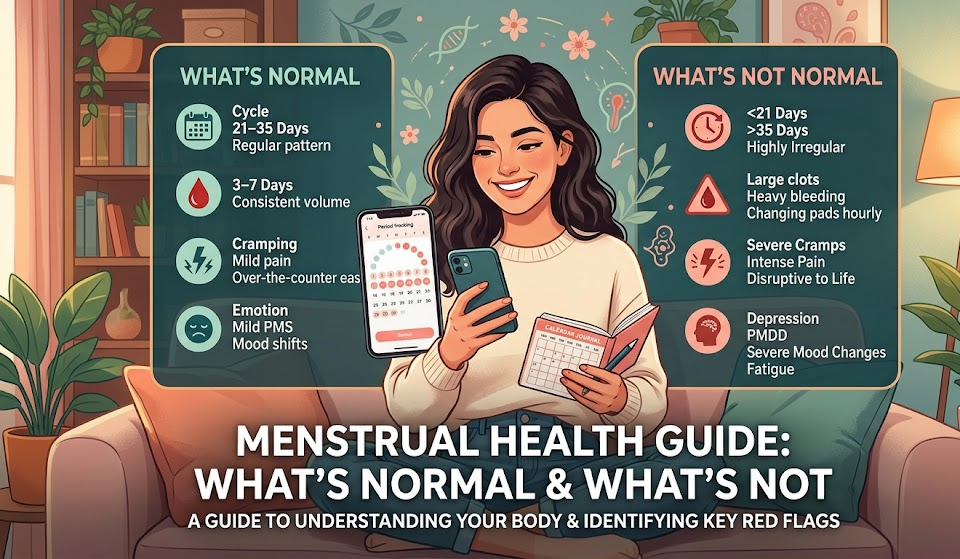
Menstrual health is still a highly misconstrued issue concerning the well-being of women, even though it is a natural and indispensable part of biological functioning. Most women are raised with little knowledge of what a healthy menstrual cycle is and tend to be guided by myths, bits of advice, or even their own assumptions. This ambiguity may complicate the ability to differentiate between normal fluctuations and those symptoms which might need the intervention of a health professional.
The ability to discern the range of menstrual experiences is an important step towards being able to understand what your body is telling you. Every woman has her own cycle, but there are general trends and red flags that assist in defining what is deemed normal. By being more conscious of these patterns, women will be able to manage their health, monitor changes, and get medical assistance as soon as they need it.
Medical experts assert that the cycle varies depending on age, lifestyle, hormones, and underlying health conditions. This paper examines those differences, pointing out what is normal and what could indicate the necessity for a professional assessment.
Learning about the Menstrual Cycle
The menstrual cycle is a monthly cycle which prepares the body to conceive. It is controlled by estrogen and progesterone hormones and normally takes 21–35 days in adults, yet fluctuation is normal.
Important Stages of the Cycle
- Menstrual Phase: It is at this point that bleeding takes place and a new cycle begins. It takes 3–7 days on average.
- Follicular Phase: This is the time when an egg is ready to be released by the body. The level of hormones continues to rise.
- Ovulation: Ovulation usually takes place in the middle of the cycle, where an egg is discharged from the ovary.
- Luteal Phase: Following ovulation, the body gets ready in case of a potential pregnancy. In case fertilization is not reached, the level of hormones decreases, and menstruation takes place.
The knowledge of these phases allows women to monitor their cycles and identify any alterations which may not be in the normal pattern.
What Is Normal?
There is no “perfect” menstrual cycle. Rather, the concept of normalcy is determined by consistency and a lack of severe or disruptive symptoms.
Period and Periodicity
A normal cycle is between 21 and 35 days. Whereas there are women with very regular cycles, others might be slightly irregular on a monthly basis. Irregularity that occurs occasionally is not generally a cause for concern, particularly in adolescence or perimenopause.
Flow Characteristics
The menstrual flow ranges from light to heavy. The average mean is 30 to 80 milliliters of blood loss per cycle. Clots can be found in isolated cases and are usually normal when small.
Light to Moderate Pain
Cramps are an experience which many women undergo during menstruation. They can usually be treated with over-the-counter pain medication, rest, or lifestyle changes. Also common are mild fatigue, bloating, and mood changes.
Recognizing Abnormal Symptoms
Although variation is normal, some symptoms would be indicative of underlying health complications that require medical care.
Heavy Menstrual Bleeding
Heavy bleeding, or menorrhagia, is marked by:
- Wetting one or more sanitary products every 1–3 hours.
- The pressure of passing large blood clots.
- Bleeding which extends beyond 7 days.
It may cause anemia and be associated with hormonal imbalances, fibroids, or other medical problems.
Severe Menstrual Cramps
Severely painful cramps that disrupt normal activities are not the norm. Extreme pain can be a sign of:
- Endometriosis
- Adenomyosis
- Pelvic inflammatory disease (PID)
When the pain is chronic or getting worse, a healthcare professional should be consulted.
Irregular Cycles
Periods that are uneven consist of cycles that are:
- Less than 21 days or more than 35 days.
- Frequently missed.
- Unpredictable in timing.
Although some irregularity might be normal, periodic disturbances might indicate hormonal imbalances, thyroid problems, or Polycystic Ovary Syndrome (PCOS).
Absence of Menstruation
Several months of amenorrhea (the absence of periods) when not pregnant, breastfeeding, or in menopause is a cause for concern. It can be induced by stress, over-exercise, or health issues.
Premenstrual Syndrome (PMS)
Premenstrual syndrome is a disorder that afflicts numerous women during the premenstrual period. The symptoms may be physical, emotional, or behavioral.
Common PMS Symptoms
- Mood swings
- Irritability
- Fatigue
- Breast tenderness
- Bloating
- Food cravings
In the majority of women, PMS symptoms are mild and can be controlled. Nevertheless, symptoms are in certain instances severe and can indicate Premenstrual Dysphoric Disorder (PMDD), which is more serious and needs medical attention.
Factors Which Affect Menstrual Health
Menstrual cycles are delicate and sensitive to other internal and external changes. These influences might explain the changes in the patterns of the cycles.
Hormonal Fluctuations
Hormones control the menstrual cycle, and any abnormality may cause irregularities.
Stress and Lifestyle
Hormonal balance may be upset by high levels of stress, insomnia, and physical inactivity, which, in turn, may influence the regularity of menstruation.
Diet and Nutrition
Menstrual well-being and energy levels may be affected by nutritional deficiencies, especially of iron and essential vitamins.
Medical Conditions
PCOS, thyroid diseases, and uterine fibroids can dramatically change menstrual patterns.
When to Seek Medical Advice
When the symptoms exceed normal ranges, it is worth paying attention to your body and consulting a doctor.
Some of the Red Flags to Be Aware Of
- Bleeding between periods.
- Very heavy or long-term bleeding.
- Severe pelvic pain.
- Missed periods for three consecutive months.
- Abrupt alterations in the pattern of cycles.
Timely diagnosis and treatment may avoid complications and enhance overall health outcomes.
Handy Advice on Cycle Watching
One of the best methods to know your body is to keep track of your menstrual cycle.
Use a Tracking Method
Cycle length, symptoms, and flow patterns can be recorded by using apps, calendars, or journals.
Record Physical and Emotional Changes
Monitoring symptoms like cramps, mood swings, and energy levels gives you good information about your health.
Live a Healthy Life
Eating well, exercising, and managing stress aid in hormone balance and well-being.
It is Time to Break the Stigma of Menstrual Health
Menstruation is a topic that is often not openly discussed due to cultural stigma and misinformation. This silence may contribute to late diagnosis and needless suffering.
Open discussions and education can normalize menstrual health as a vital element of overall health. Women ought to be empowered to question, seek assistance, and advocate for their health without fear.
Conclusion
A single standard of menstrual health does not exist, but rather a continuum of experiences that differ for each person. It is vital to learn what is normal for your body and also be aware of red flags that could be warning signs for your long-term health.
Women can take positive action towards better health by being aware of symptoms like heavy bleeding, intense pain, irregular cycles, and major changes in PMS. The basis of effective menstrual health management is knowledge, awareness, and timely medical care.
Empowerment starts with comprehension. Once women have the correct information, they are more likely to watch their cycles, detect abnormalities, and pursue the care they require with confidence.