Eco-Friendly Home Upgrades are one of the most effective ways to reduce energy costs while creating a more sustainable and comfortable home.Today homeowners are reporting that they are on the lookout for methods to decrease energy use without trade off comfort. We see a rise in utility costs at the same time environmental awareness is at an all-time high which in turn makes for very relevant efficiency focused improvements. The good news is that many ecofriendly improvements do not require a full home renovation. Instead we are seeing that small to medium sized updates like better insulation, water saving fixtures, and efficient lighting systems do in fact greatly reduce monthly bills at the same time which in turn increases the home’s value over the long term. Also these changes play into modern sustainability goals which in turn make homes more comfortable, durable and cost efficient all year round.
At the heart of what makes a home energy efficient is the principle of waste reduction at the same time as maintaining performance. This is the area in which the concept of energy efficiency comes into play. By improving energy use instead of just increasing supply we see that homeowners achieve in the long term what they want which is savings and environmental benefit. The US Department of Energy reports that with proper planning and implementation strategic home improvements may see large reductions in energy bills. This article looks at practical, long lasting ecofriendly upgrades which in addition do not fall prey to trend changes.
For more tips on seasonal changes and cost effective solutions we have put together these relevant all year round energy saving ideas:
1. Improving Home Insulation for all Seasons
One of the greatest ecofriendly updates you can do is to improve home insulation. What we do is we better maintain indoor temperatures which in turn reduces heat loss in the wintertime and at the same time minimizes heat gain in the summer. Also which in that process we are in fact reducing the load on heating and cooling systems which in fact are the main players in home energy use. We use things like fiberglass, foam boards, and spray foam to improve the insulating in the walls, the roof, and the floors. From an energy point of view, insulation is also one of the best solutions out there to get stable indoor climate at the same time as you see some great returns on your investment over time.
The pay in time for home insulation is usually between 3 – 7 years which varies based on the home’s state and climate. Also in many cases we see home owners report of reduced energy bills right after the install. What we find is that thermal insulation does an excellent job of putting up a barrier which in turn slows down heat flow which in term reduces the need for continuous heating or cooling. This upgrade is also very valuable in older homes which may have out dated or poor quality insulation which in turn makes it one of the most cost effective sustainability improvements out there.
2. Install low use water fixtures
Water efficiency is a key element in ecofriendly home design which has seen to be achieved through the use of low flow fixtures. We see that low flow shower heads, faucets, and toilets are put in to produce great results while using a large amount of less water. Also since less hot water is needed it is reported that there is a drop in the energy which goes to water heating. This means that low flow fixtures play a dual role as an upgrade for water conservation and at the same time help to reduce utility bills.
The average pay out time for low flow fixtures is out to be under 2 years which we see as a result of their low install cost and immediate savings. Also these fixtures report to reduce water use by 20 60% which is based on the model and how they are used. As time goes on the savings grow to be very large in scale, in particular in homes that have many people. Also we see this improvement in terms of cost savings as well as support for sustainable practices which in turn puts less strain on local water and energy resources.
3. Transitioning to LED Lighting Retrofit
Lighting is a simple area to improve for immediate energy savings. Incandescent bulbs which we are used to see at home are heavy consumers of electricity and also have a very short life span as compared to what we have today. We may say that replacing them with LED bulbs is the best we can do in terms of home efficiency. What we see in LEDs is that they use much less electricity as compared to what we are used to and at the same time they produce the same if not better brightness. Thus LED retrofit is a very important part of any plan for eco-friendly home improvements.
The pay back for LED lighting improvements is generally less than a year what with the drop in electricity bills right away. Also LEDs outlive them by a large margin, up to 25,000 hours or more which in turn reduces the frequency of replacement and maintenance. Beyond the savings though LEDs provide you control over brightness and color temperature which in turn allows home owners to create more comfortable and adaptive living spaces without compromising on energy efficiency.
4. Installing smart thermostats for efficient climate control

Smart thermostats are a contemporary solution for improving home climate control. These devices identify home patterns and put together which times of the day are spent the least at home and at those times they regulate temperature to minimize energy use. Also unlike the old thermostats which had to be set and forgotten, smart models can be controlled via phone apps which means from the office you can still control energy use in your home. This also means energy is not wasted on heating or cooling unoccupied homes and that systems are only on when they should be.
Smart payback time for smart thermostats is between 1 3 years which does vary based on behavior and climate. We see that which do reduce heating and cooling costs by 10 to 15% each year post install. Also in homes with irregular schedules this feature really stands out as the automation puts out efficiency which is a hands off thing. As time goes by smart thermostats become a key player in the energy conscious home system.
5. Installing energy saving windows
In many homes windows are the great cause of energy loss. We see that in homes with little or no insulation and single-pane windows which allow heat out in winter, and in summer heat in. That also leaves it up to heating and cooling systems. Efficient windows we have with double and even triple glazing are a fix for that issue which will do much to better our home’s heat balance. Also within those windows is the feature of a heat reflecting coating while at the same time permitting natural light to in, a feature that also plays to their aesthetic advantage.
Window upgrade payback is usually a longer term which may range from 7 to 15 years but what you get in return is large. Home owners see better comfort, reduced noise and lower energy costs in the long run. When combined with proper insulation and sealing energy efficient windows do in fact greatly contribute to total home performance and sustainability.
6. Using green building materials
Choosing green materials is a key element of eco-friendly home improvements. We see in bamboo flooring, reclaimed wood, recycled metal, and low VOC paints which are examples of what you should use. Also these materials usually are produced with less environmental impact and they improve indoor air quality. Green choices not only better the environment but also which in turn raises home value in the long term.
Sustainable material payback periods are variable by product but many do provide great value in the long term via their durability and reduced maintenance. Also we see that materials like bamboo or reclaimed wood perform better than traditional options in terms of strength and longevity in some cases. We support responsible consumption and at the same time align with what is today’s eco conscious lifestyle.
7. Improving water heating systems
In most homes’ total energy bill water is the biggest component. By upgrading to energy efficient water heaters which may be tankless or heat pump systems you can see great reduction in your energy use. These systems in turn do a better job of heating water and also only do it when it is required which in turn reduces the stand by energy losses of traditional storage tanks. In the long run you will see that the pay off in terms of money and improved performance.
The pay in period for water heating improvements is between 3 and 10 years which does vary based on what system you go for. Although the initial outlay is large the long term energy savings which we see is in fact a very good reason to do it. Also these systems tend to have a longer life span and require less maintenance which in turn adds to the value of the upgrade.
8. Improving Home Air Tightness
Air leakage is a silent cause of energy loss in many homes. At points of entry like doors, windows, vents, and ductwork air escapes which in turn causes heating and cooling systems to work overtime. Air sealing is the process of finding out which of these issues exist and remedying them with caulk, weather-stripping, or foam sealants. This is an easy improvement which in large degree will increase your home’s efficiency without the need for major renovation.
Air sealing pays back in as little as 1 to 2 years which we see in large part due to low install costs and right away energy savings. Also when you pair it with insulation upgrades you see even greater efficiency. This is also one of the best value plays out there in terms of improving comfort at the same time you reduce your monthly energy expenses.
9. Putting in Solar Panels for the long term
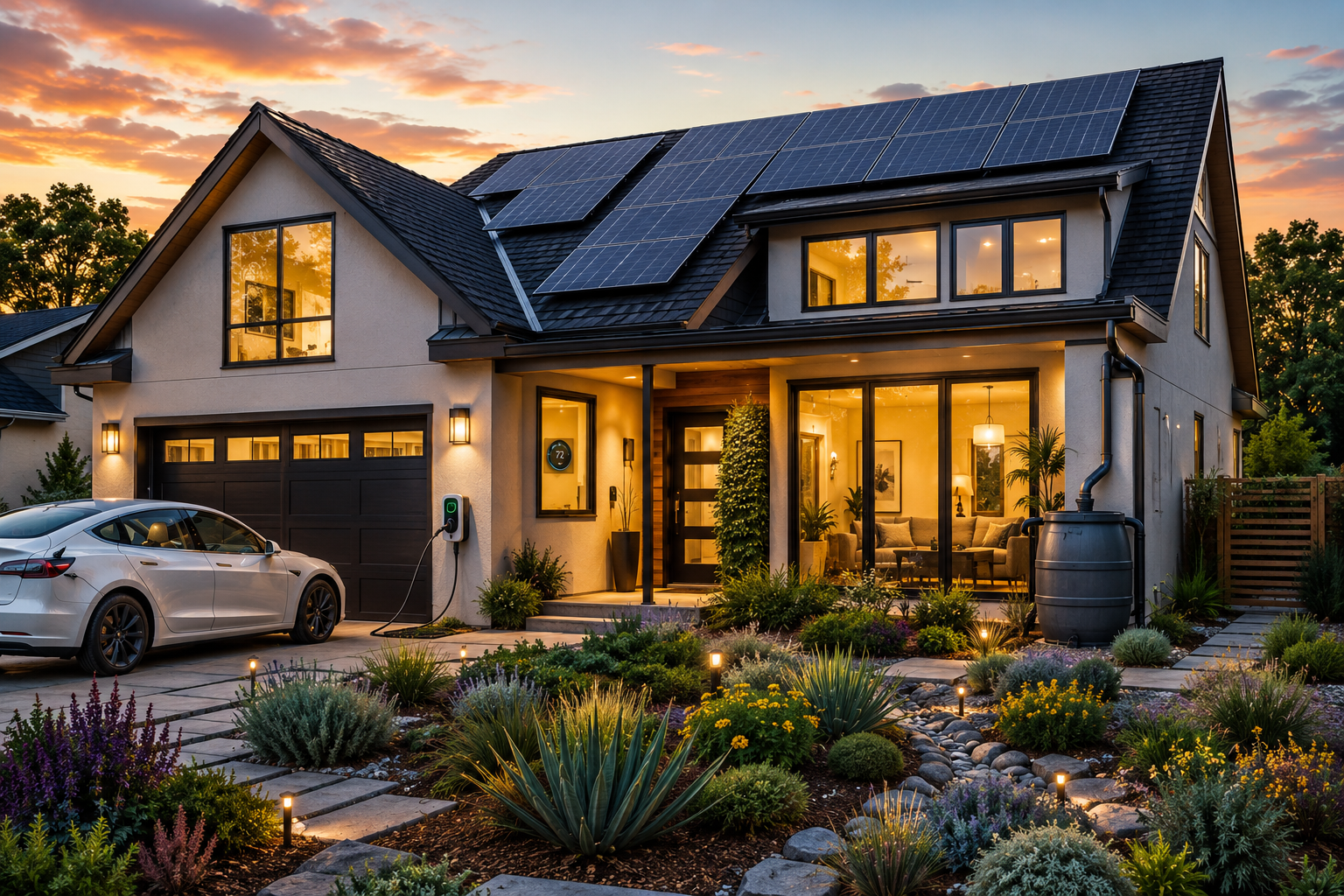
Solar energy is at the top of the list for what are now the best home improvements for the environment. They take in the sun’s rays and turn it into power which in turn decreases your use of the old power companies. While there is a large investment at the start, solar powered systems do out perform in the long run and in some cases will even produce more energy then you use. Also many governments have incentive programs which put more money back in home owners’ pockets which in turn puts a dent in that initial price tag.
Solar panel systems’ payback period is between 6 to 12 years which varies by location, energy use, and system size. Once past that time the energy is almost free which in turn makes solar a very financial beneficial long term investment. Also in addition to cost savings solar energy greatly reduces carbon foot print and supports global sustainability goals.
Final Thoughts

Eco friendly home improvements are a trend no more they are a practical solution to high energy costs and environmental issues. We see in the case of LED lighting, low flow fixtures, smart energy systems, insulation and many other updates that not only do they better the environment and improve energy efficiency, they also at the same time pay for themselves out of the reduced energy bills which is also an issue. As well each improvement better the functionality and comfort in your home separately, together these changes make an amazing powerful system to greatly reduce the total energy use in a house.
In a focus which is more on long term benefits instead of short term gain we see that homeowners can indeed put in place buildings which are not only affordable to run but at the same time very much so from an environmental perspective. From simple steps which include better lighting or which go into larger projects such as solar panels, each improvement counts. Also over time what we find is that these changes reduce the utility bills, at the same time they also see a return in the form of increased property value which at the same time is a contribution to a more sustainable environment for us all.