Trends in bridal fashion may change rapidly, but there are several accessories that continue to pop up in photos from 1994, 2009, and last weekend’s Instagram feed. It’s not because we’re all nostalgic – it’s that these pieces have a way of either framing the face, completing the silhouette, or simply adding special meaning to the look. Knowing exactly why they work is more effective than just adding them to the cart.
The “something old” principle still anchors the look
Heirloom jewelry is often written off as something you wear out of obligation, but the brides who pull it off look at it more like simply making a pretty design choice. A vintage brooch is pinned into a modern bouquet, a strand of grandmother’s cultured pearls is paired with a cool, modern slip dress, an earring is converted into a pendant. These things all “work” because contrast is interesting. A clean, very contemporary gown reads differently when it’s carrying one piece that reads very obviously “old” and “heavy.” But the same pair of earrings can be worn with a dozen other outfits and not read vintage at all.
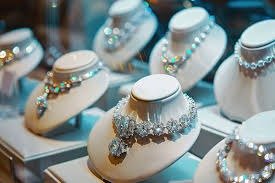
And you know what? This principle is also true of the sort of pieces with precious metal and stones that aren’t physically inherited. Those Deco-style settings with geometric metalwork and milgrain edges are all over Pinterest because they photograph beautifully and look like they are 30 years old. This is not an accident. They don’t look 30 years old; they actually look like they’ve been loved for decades. Selecting that on purpose, rather than selecting the setting of this year because it’s suddenly having a hip resurgence, is the smarter long-term play.
Drop earrings and the frame-the-face rule
A singular earring, whether pear cut, round brilliant, or a classic creamy pearl, accomplishes something that a stud or hoop can’t. It exerts vertical gravitational pull at the level of the jaw. You want the eye drawn towards your face in every picture. This will matter a lot more on that grand day than you think, for a couple of unusual reasons: close-cropped portraits and video. The space around your face becomes part of the composition.
The best ones play the simplest hand, preferably a single stone; clean setting; minimal hardware. A tennis bracelet on the wrist operates along the same lines – one long steady line of small glints that adds presence without the annoying sensation that comes from visual clutter. Both these choices reflect the minimalist approach that photographs incredibly well over the decades, guaranteed not to age.
Lab-grown stones have changed what “statement jewelry” means
The shift toward ethical sourcing has moved from a fringe concern to a mainstream purchase decision. Over 40% of couples now choose lab-grown diamonds for engagement rings and bridal jewelry. That’s not a passing wave – that’s a structural change in how brides approach the category.
Lab-grown diamonds are chemically identical to mined stones. They’re graded using the same 4Cs framework – cut, color, clarity, and carat – by the same certification bodies. The difference is origin and price, which has made genuinely high-quality statement pieces accessible to more budgets. A pair of drop earrings or a solitaire pendant that would have been financially out of reach in mined form is now a realistic choice.
The selection process still requires care. Not all retailers handle grading, certification, or stone quality the same way, which is why analyzing the best lab-grown diamond retailers before committing to a purchase matters. Look for third-party certification, clear disclosure of origin, and cut grades that match what you’d demand from a mined stone.
The birdcage veil over the cathedral veil
A cathedral veil is still beautiful, but it commits the bride to a particular silhouette – formal, sweeping, traditional. The birdcage veil offers something different: vintage flair on a modern, minimal gown without the weight or choreography of a train. It sits at the eye line, adds texture and personality, and disappears easily when the reception calls for less structure.
This isn’t a downgrade. It’s a different tool. For a bride wearing a bias-cut satin gown or a structured column dress, a cathedral veil can overwhelm. A birdcage that sits off a pearl-pinned fascinator finishes the look without competing with it.
The silk ribbon – the most underused accessory
The silk ribbon or bow detail on your dress keeps popping up because it works. Cinched at your waist on the big day, it’s a simple, pretty way to highlight that feature and make sure your photographer gets a clean shot. Then, worn in your hair later – tied around a loose chignon or knotted at your nape – it’s a twofer with your bridal accessory and no duplication of hair accoutrements.
The devil is in the material, though. Anything less than silk reads cheap up close and from far away. Proper silk or high-quality charmeuse holds its drape and photographs differently – there’s a weight to it that registers even in photos.
Choosing quality over quantity
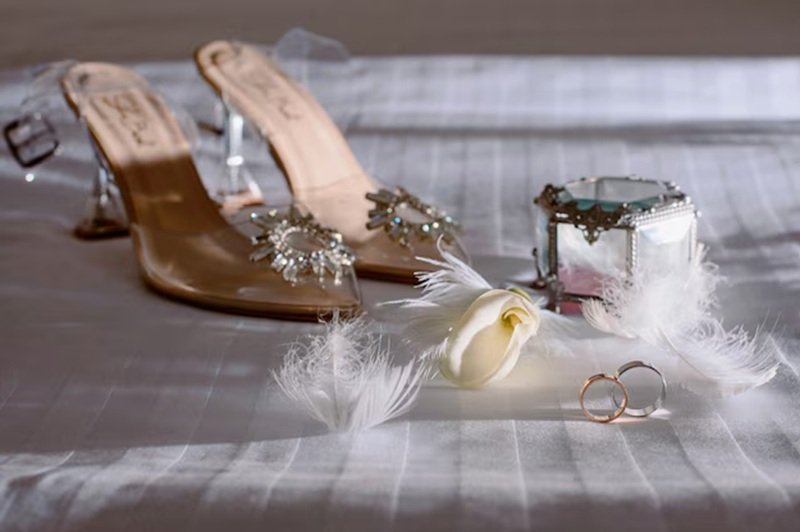
The brides whose photos hold up over decades are almost never the ones who layered every accessory available. They made two or three specific, considered choices: a piece with history or meaning, something that frames the face, a shoe or fabric detail that suits the silhouette. Satin pumps over strappy sandals when the dress is floor-length. One heirloom piece rather than a full matched set.
Timeless doesn’t mean conservative. It means choosing materials and proportions with enough integrity that the look doesn’t depend on that specific year’s context to make sense.