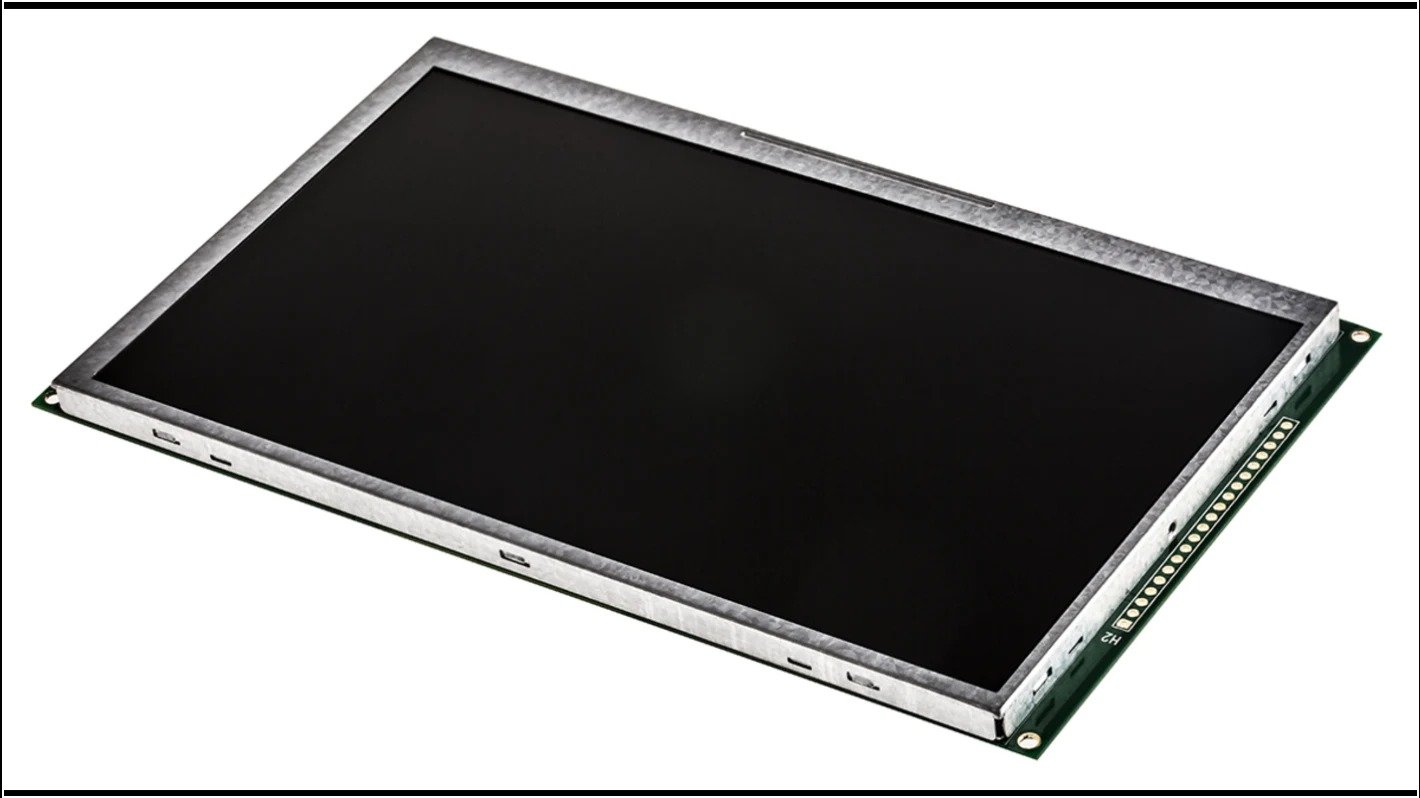
In the display specification hierarchy, 480×800 is often positioned as a mid-range resolution above QVGA at 240×320, below FHD at 1080 pixels on the short axis. But framing it purely as a stepping stone between lower and higher specifications misses the practical picture. The 480×800 TFT resolution known as WVGA is a mature, well-supported standard that continues to power a substantial portion of the global embedded and consumer display market for good reasons.
This article covers what the 480×800 TFT specification delivers at 4.0 inches, why WVGA remains a practical choice for smart devices and industrial terminals, and what engineers need to know before integrating this display into a product design.
What WVGA Means and Why It Matters
WVGA stands for Wide Video Graphics Array a resolution standard that extends the traditional VGA 640×480 format into a widescreen aspect ratio at 480×800. The result is a display with enough horizontal resolution for readable text and enough vertical height for a meaningful amount of UI content in portrait orientation.
At 4.0 inches diagonal with 480×800 resolution, the 480×800 TFT achieves a pixel density of approximately 233 PPI. This is below the threshold for imperceptibility at very close viewing distances a sharp-eyed user at 15cm might notice individual pixels but at normal handheld device viewing distances of 25 to 35cm, the rendering quality is clean and readable for standard UI content including text, icons, menus, and data visualization.
The 480×800 pixel count uses 16-bit color depth at 750KB frame buffer memory manageable for mid-range microcontrollers with external SRAM or high-end Cortex-M devices with large internal RAM. This keeps the hardware requirements within reach of processors commonly used in industrial terminal and smart device designs.
Why WVGA Remains Relevant
Several factors keep the 480×800 TFT resolution in active use despite the availability of higher-resolution alternatives.
Processor compatibility. The GPU and display controller requirements for 480×800 are well within the capabilities of mid-range processors used in industrial and cost-sensitive smart device applications. Processors that struggle to drive 1080×1920 smoothly handle 480×800 without difficulty, leaving more processing headroom for application logic.
Driver and software maturity. The WVGA format has been in active production for over a decade. Driver libraries, graphics frameworks, and example code are extensively documented and tested. Integration time for 480×800 displays is shorter than for newer, less-established resolutions.
Cost. Mature display technologies at established resolutions are typically less expensive than newer alternatives. For cost-sensitive industrial and consumer applications where display cost is a significant portion of the BOM, the WVGA format offers a proven specification at a competitive price point.
The 4.0 Inch Form Factor
At 4.0 inches diagonal, the 480×800 WVGA TFT display sits in the middle of the handheld device display range large enough for a comfortable touch interface with readable text and adequately sized touch targets, compact enough for a device that a user holds in one hand for extended periods.
This form factor is well established in industrial handheld terminals barcode scanners, RFID readers, data collection devices where the display needs to show meaningful data and support touch navigation in a package that workers can carry and use throughout a shift. It also suits smart device applications including compact navigation devices, standalone music players, handheld gaming devices, and compact POS terminals.
Interface and Integration
The 480×800 TFT at 4.0 inches typically uses an RGB parallel interface, an MIPI DSI interface, or an MCU parallel interface depending on the specific panel variant. RGB parallel suits processors with dedicated LCD controllers. MIPI DSI suits higher-performance application processors running Linux or Android. MCU parallel suits microcontrollers with sufficient GPIO for a 16-bit parallel connection.
For developers working across the 4 to 5 inch range, EasyQuick LCD’s 5 to 9.9 inch TFT LCD module range provides a view of larger panel options useful context for teams evaluating whether 4.0 inches is the optimal size or whether a slightly larger panel would better suit the application.
Touch integration for handheld terminal applications typically uses resistive touch for industrial glove compatibility or capacitive touch for consumer-facing applications where smooth multi-touch interaction is expected. EasyQuick LCD’s customization service supports touch integration specification for both options.
Frequently Asked Questions
What is WVGA resolution and how does it compare to other standards? WVGA (Wide Video Graphics Array) refers to 480×800 resolution in portrait orientation. It is above QVGA (240×320) and below HD (720×1280) in the resolution hierarchy. For embedded applications with moderate processing resources and cost constraints, WVGA provides a practical middle point between these standards.
Can a basic microcontroller drive a 480×800 TFT display? The frame buffer for a 480×800 display at 16-bit color is approximately 750KB larger than the internal RAM of most basic microcontrollers. Driving this display typically requires an ARM Cortex-M4 or higher processor with external SRAM, or an application processor with a dedicated display controller. The interface type also affects processor requirements.
What touch panel options are available for this display? Both resistive and capacitive touch panels are available for the 4.0 inch form factor. Resistive touch suits industrial applications with gloved operators. Capacitive touch provides a smoother multi-touch experience for consumer-facing applications. The choice should be driven by the operating environment and expected interaction pattern.
Is this display suitable for outdoor installations? The standard brightness version is suitable for shaded outdoor use. For direct sunlight applications, a high-brightness variant with 800 nits or above is recommended. An anti-reflective surface treatment further improves outdoor readability by reducing reflection from the display surface.
What graphics libraries support 480×800 TFT displays? LVGL, emWin, TouchGFX (for STM32), and Android display stack all support 480×800 resolution with appropriate hardware driver layers. The specific library and driver implementation depends on the processor platform and operating environment.