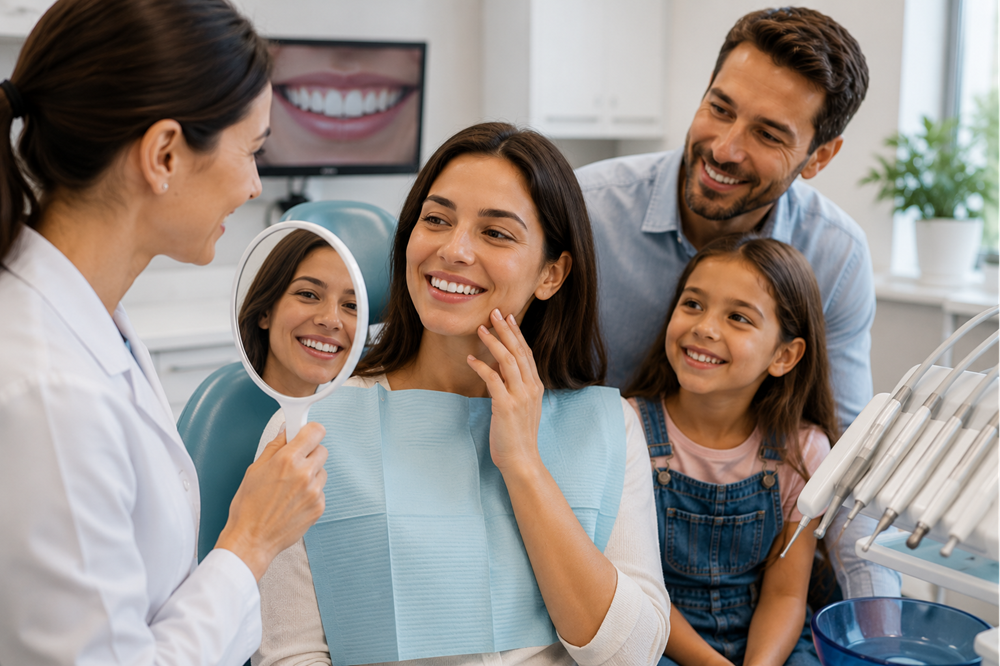
You might be sitting in the waiting room before a routine cleaning at a Dentist in Wall Township, NJ, wondering if you really have the energy for yet another trip to the dentist. Life is busy, your family’s schedule is packed, and just keeping up with basic checkups can feel like enough. Thinking about cosmetic dentistry on top of all that might seem like “extra” or even a little indulgent.end
At the same time, you may notice small things that bother you. A chipped tooth in family photos. A teenager who refuses to smile because of stains. Your own hesitation when someone pulls out a camera. These moments can sting more than you admit, and they often linger in the back of your mind long after you leave the dental chair.
So where does that leave you. In a place many families find themselves. You are doing your best to stay on top of oral health, yet you also want smiles that look as good as they feel. The good news is that you do not always need separate visits or a huge treatment plan. There are strong reasons to consider simple cosmetic services during your regular family dentistry appointments, and they often work hand in hand with long term oral health.
Here is the short version. Combining preventive family care with cosmetic options can save you time, support your oral health, reduce long term costs, and give your family more confidence. The rest of this page walks through why that is true and how to think about it in a calm, practical way.
Why do small smile concerns feel so big during routine family visits?
Routine visits are meant to be straightforward. A cleaning. A check for cavities or gum issues. Maybe X rays every so often. Yet for many people, those visits highlight everything they wish they could change. You see your teeth under bright lights, you hear numbers called out for each tooth, and you start comparing your smile to what you wish it looked like.
The problem is not just appearance. The Centers for Disease Control and Prevention explains that regular preventive care helps protect you from decay, gum disease, and tooth loss over time. You can read more about that preventive focus in the CDC’s overview on oral health prevention. When your teeth are stained, chipped, or misaligned, it can be harder to clean them well, which may raise your risk of problems in the future.
Because of this tension, you might wonder whether cosmetic work is just about looks, or if it actually supports your family’s health. You might also worry about cost, extra appointments, or whether you will be pressured into something you do not want or need.
Imagine a few common scenarios. A parent who grinds their teeth at night has worn edges and small cracks. They feel self conscious at work and during social events. A teenager has white spots from early enamel damage and feels embarrassed every time they talk. A grandparent has an old front filling that has discolored, making them look older than they feel. In each case, a simple cosmetic step during a routine visit could protect the tooth and improve confidence at the same time.
How can combining family and cosmetic dentistry actually help you?
When you hear “cosmetic dentistry,” you might think of full smile makeovers and big price tags. In reality, many cosmetic services are small, conservative treatments that can be added to regular visits with a family and cosmetic dentist. Here are four reasons to consider it.
1. Cosmetic care can protect your teeth, not just polish them
Bonding a chipped tooth, smoothing rough edges, or placing a well fitting crown are all cosmetic in the sense that they improve appearance. They also help prevent further wear and reduce places where plaque can build up. Protecting your teeth today can lower your risk of serious issues that may lead to tooth loss later. The CDC’s page on tooth loss shows how common this outcome is when problems are left untreated.
2. One visit can do more than one job
Time is one of the biggest pressures on families. Combining a cleaning, exam, and a small cosmetic service in the same visit can mean fewer trips, less time off work or school, and less stress. For example, mild whitening touch ups, minor reshaping, or replacing an old front filling can sometimes be done right after a cleaning, while you are already in the chair and numb if needed.
3. Confidence affects how you follow through with care
People who feel good about their smiles often take better care of them. They are more motivated to brush and floss, more willing to keep regular visits, and more likely to talk openly with their dentist. Simple cosmetic improvements during family appointments can encourage this positive cycle, especially for children and teens who are still forming habits and self image.
4. Planning cosmetic changes early can save money later
When you talk about cosmetic goals during routine visits, your dentist can factor them into your long term treatment plan. For instance, if you know you want whiter teeth, your dentist may suggest whitening before matching the shade of new fillings or crowns. If you want straighter teeth, early guidance can help avoid extra work later. This kind of planning can reduce the need to redo work and can spread costs over time.
What practical trade offs should you weigh before saying yes?
Even when the benefits make sense, you still have to weigh real world questions. How much will this cost. Will insurance help. Will the visit be longer. Is this the right moment, or can it wait.
One helpful way to think about it is to compare “routine only” care with combining preventive and cosmetic services during the same visits. The table below offers a simple comparison for common family situations.
| Approach | What it looks like in real life | Short term impact | Long term impact |
|---|---|---|---|
| Routine family care only | Cleanings, exams, fillings when needed, no cosmetic changes | Lower upfront cost. Shorter visits. Appearance concerns remain. | May need more work later if worn or chipped areas are not reinforced. Confidence issues may persist. |
| Routine care plus small cosmetic services | Cleanings and exams combined with whitening touch ups, bonding, contouring, or cosmetic fillings | Some extra cost and slightly longer visits. Noticeable smile improvements. | Better protection for at risk teeth, easier cleaning, and stronger motivation to keep up with care. |
| Postponed cosmetic treatment | Waiting months or years, then doing multiple cosmetic procedures at once | No immediate cost or time. Appearance concerns continue. | May require more invasive work if issues worsen. Larger single expense and more complex planning. |
If you are not sure where you fit, it may help to know that many people start small. They choose one or two cosmetic changes that also support function, such as repairing chips or replacing stained fillings, and they see how they feel before doing anything more.
For additional background on common dental conditions and treatments, you can review the National Institute of Dental and Craniofacial Research’s general oral health information. This can give you neutral, research based context before you make decisions with your dentist.
What steps can you take before your next family and cosmetic dentist visit?
1. Make a simple “smile wish list” at home
Before your next appointment, take a quiet moment in front of a mirror. Notice what bothers you and what you like. Is it color. Shape. Small gaps. Old fillings that show. Write down three things you would change if it were easy. Do the same for your children, based on what they mention about their smiles. This short list gives you a calm, clear starting point for a conversation.
2. Ask your dentist to separate “health needs” from “cosmetic options”
During your visit, share your list and ask your dentist to clearly label which items are medically necessary and which are optional cosmetic choices. Ask about timing, cost ranges, and whether any cosmetic step would also help protect or strengthen a tooth. This makes it easier to decide what to do now, what to plan for later, and what you may choose to skip.
3. Start with one small, low stress cosmetic service
If you decide to move forward, consider starting with something simple that fits comfortably within your budget and schedule. Examples might be whitening before a big family event, bonding a small chip on a front tooth, or replacing an old, discolored filling. See how that change affects your confidence and your feelings about dental visits. Positive experiences build trust and make it easier to consider future improvements if you want them.
Where does this leave you and your family now?
You do not have to choose between healthy teeth and a smile you feel proud of. With thoughtful planning, routine and cosmetic dental care can work together, often during the same visits, to support both your well being and your confidence.
As you think about your next appointment, remember that you are allowed to ask questions, set boundaries, and move at a pace that feels right. A caring family dental service will respect that. The goal is not perfection. It is a smile that feels like you, and a plan that your family can actually live with.
If you feel a bit more informed and a little less overwhelmed, that is a good sign. Bring your questions, bring your “wish list,” and start a calm, honest conversation with your dentist about what is possible during your regular visits.