The Shift Has Already Begun
Walk into any growing business in Dubai, Abu Dhabi, or Sharjah today and you will find the same conversation happening across boardrooms and back offices: how do we bring all of this together? Sales teams using one tool, finance on another, HR on spreadsheets, and inventory on something completely different. It is a chaotic way to run a modern company and most business owners know it.
That is exactly why Odoo erp has taken hold so quickly across the Emirates. It is not just another software platform. For thousands of companies, it has become the single system that connects every corner of the business from the first customer inquiry to the final payment without the complexity or cost that legacy ERP systems traditionally demand.
The numbers tell the story. Odoo now powers over 12 million users worldwide, and its growth in the Middle East particularly the UAE has been nothing short of remarkable. So what is driving this adoption, and why is it happening now?
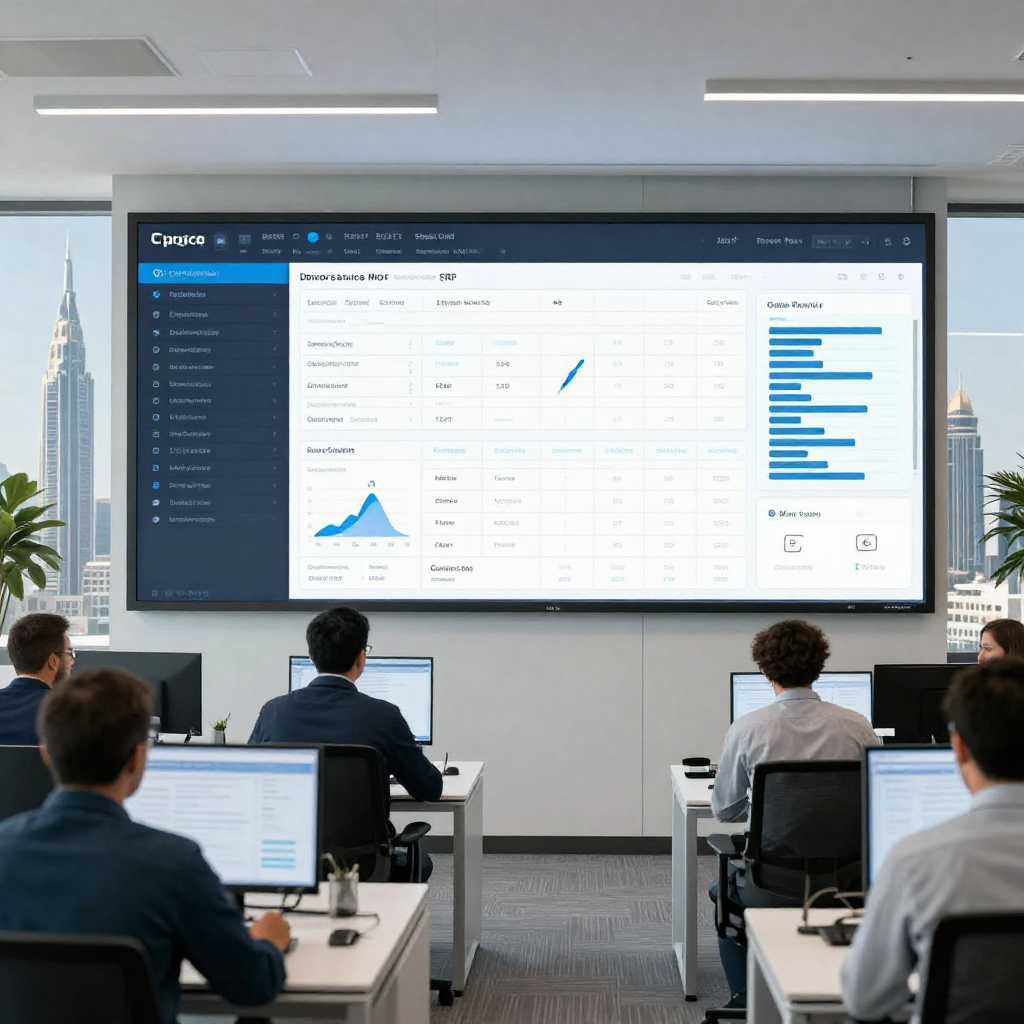
A Business Environment That Demands Better Systems
The UAE is not standing still. With initiatives like Dubai’s D33 Economic Agenda and the broader push toward a knowledge-based economy, businesses are under real pressure to digitise not someday, but now. E-invoicing requirements, VAT compliance, real-time financial reporting, and cashless transactions are no longer optional conversations. They are operational realities.
Many businesses in the UAE were running on systems built for a simpler time. QuickBooks for accounts. Excel for inventory. A separate tool for HR. None of these talk to each other, and stitching them together with manual processes costs time, money, and accuracy. When regulatory requirements tighten and competition intensifies, those cracks become crises.
This is the environment in which Odoo has found its moment. As an integrated ERP system, it replaces that fragmented stack with a single platform that is already configured for UAE tax law, supports Arabic language interfaces, and works just as well on a mobile phone as it does on a desktop.
What Makes Odoo Different From Other ERP Options
There is no shortage of ERP software in the market. SAP, Oracle, Microsoft Dynamics, these are household names in enterprise technology. But for the majority of UAE businesses, they come with a problem: they are built for very large organisations, and the cost and complexity of implementation can be prohibitive.
Odoo sits in a different space entirely. It is modular, which means a business can start with just the applications it needs today, say, accounting and inventory and expand to CRM, manufacturing, HR, or e-commerce as the business grows. There is no need to pay for features you will not use, and there is no painful migration when you are ready to scale.
Here is a quick snapshot of what businesses typically manage through Odoo:
- Accounting and finance – VAT filing, multi-currency transactions, bank reconciliation, and real-time P&L reporting.
- Inventory and warehouse – Stock tracking, automated reorder rules, barcode scanning, and multi-location management.
- Sales and CRM – Lead tracking, quotations, customer communication, and pipeline management in one view.
- Human resources and payroll – Employee records, leave management, performance reviews, and WPS-ready payroll.
- Manufacturing – Production orders, bill of materials, quality control, and shop floor scheduling.
- E-commerce and POS – An online store or retail point of sale that syncs live with inventory and accounting.
- Project management – Task assignments, timelines, resource planning, and budget tracking.
The ability to manage all of this from one login, on one database, with one consistent interface is the core value proposition, and it is why so many businesses describe Odoo as a turning point rather than just a software upgrade.
The Real Cost Conversation
One of the most persistent myths around ERP is that it is expensive. And historically, that was often true. Implementations could take years, cost millions, and still fail to deliver. Odoo has fundamentally changed that equation.
The platform offers two editions: a free Community version that suits early-stage businesses or those with in-house technical capability, and an Enterprise version with additional features, official support, and a mobile app. Even the Enterprise pricing, however, is structured per user rather than as a massive upfront licence which means smaller teams can get started without betting the business on a software investment.
Equally important is implementation speed. A well-scoped Odoo deployment for a mid-sized UAE business, say, 20 to 50 users across accounting, inventory, and HR can go live in six to twelve weeks. Compare that to the multi-year timelines associated with traditional enterprise platforms, and the business case becomes clear very quickly.
Why Industry Fit Matters and Why Odoo Delivers It
The UAE economy is genuinely diverse. Construction, retail, logistics, hospitality, healthcare, education, and manufacturing all operate under the same regulatory framework but with completely different day-to-day operational needs. A one-size-fits-all ERP approach rarely works.
What sets Odoo apart is how deeply it can be shaped to fit a specific industry. A logistics company needs fleet management and delivery tracking. A construction firm needs project costing and subcontractor billing. A retail chain needs real-time inventory visibility across multiple outlets. Odoo can be configured to handle all of these not through expensive custom development, but through its ecosystem of modules and the expertise of a skilled implementation partner.
This is where the role of an experienced Odoo functional consultant becomes genuinely important. A good consultant does not just install software, they map your business processes, identify gaps, configure the system to your workflows, and ensure that your team actually knows how to use it. The difference between a mediocre ERP rollout and a transformational one almost always comes down to the quality of that guidance.
Growing With the Business: Upgrades and Long-Term Scalability
One of the quieter but genuinely significant advantages of Odoo is that it grows with you. Businesses that start on the Community edition and outgrow its capabilities can migrate to Enterprise without rebuilding from scratch. Companies that expand from one country to three can activate multi-company and multi-currency features. Teams that grow from ten people to a hundred can add users and modules incrementally.
This is not always seamless: Odoo releases a major new version annually, and businesses on older versions eventually need to plan an upgrade. The process of Odoo upgrade and migration requires careful data mapping, testing, and validation, particularly when custom modules are involved. But when handled by a partner with the right experience, it is far less disruptive than the alternative: staying on outdated software until it becomes a liability.
For UAE businesses with long-term growth ambitions, this upgrade path is actually a competitive asset. It means the platform you invest in today is not a dead end, it is a foundation that can support the next five to ten years of your business.
Choosing a Partner, Not Just a Vendor
Across the UAE, there is no shortage of companies offering odoo implementation services. The challenge is finding one that brings more than just technical know-how. The most successful deployments happen when the implementation partner understands both the software and the business context, when they can look at a logistics operation or a manufacturing plant and immediately understand what the system needs to do.
When evaluating Odoo partners in the UAE, look for:
- Certified Odoo partnership status – indicating formal training, verified project experience, and direct access to Odoo’s support ecosystem.
- Industry experience – a partner who has worked with businesses similar to yours will ask better questions and avoid common pitfalls.
- Post-go-live support – implementation is the beginning, not the end. Ongoing support, training, and system optimization are just as important.
- Transparent project scoping – a trustworthy partner will tell you what Odoo can and cannot do for your business before any contract is signed.
The goal is a long-term relationship, not a transactional software purchase. Businesses that approach Odoo adoption this way consistently report better outcomes, higher adoption rates, faster ROI, and fewer mid-project surprises.
What UAE Businesses Are Actually Seeing
Beyond the theory, the results speak for themselves. Businesses across sectors in the UAE are reporting meaningful, measurable improvements after going live on Odoo:
- Significant reductions in manual data entry – because information entered once flows automatically across accounting, inventory, and reporting.
- Faster month-end close – finance teams that previously spent two weeks pulling data together are completing the process in days.
- Better inventory accuracy – real-time stock visibility reduces overstocking, prevents shortages, and improves supplier negotiations.
- Improved customer response times – sales and support teams working from the same system can respond to enquiries and resolve issues faster.
- Cleaner compliance – VAT returns, audit trails, and financial statements that previously required significant manual effort are generated automatically.
These are not extraordinary claims. They are the natural result of replacing fragmented, manual processes with an integrated, automated system and they represent exactly what digital transformation is supposed to deliver.

The Window Is Open But It Will Not Stay That Way
The UAE has always rewarded businesses that move decisively. The companies adopting Odoo today are not just solving an operational headache, they are building a foundation that will support growth for years to come, positioning themselves ahead of competitors who are still running on disconnected systems.
Whether you are a ten-person startup that has outgrown spreadsheets, a mid-sized retailer managing multiple locations, or a manufacturing business trying to bring production and finance closer together, the right ERP platform exists, and it is more accessible than you might think.
The question is not whether your business needs this kind of change. At this point, that answer is obvious. The question is how quickly you are ready to make it happen and who you want alongside you when you do.


Great insights! This article clearly explains why UAE businesses are adopting Odoo ERP for digital transformation. The focus on scalability, automation, and improved operational efficiency makes it a valuable read for businesses looking to modernize their processes. Thanks for sharing this informative content.