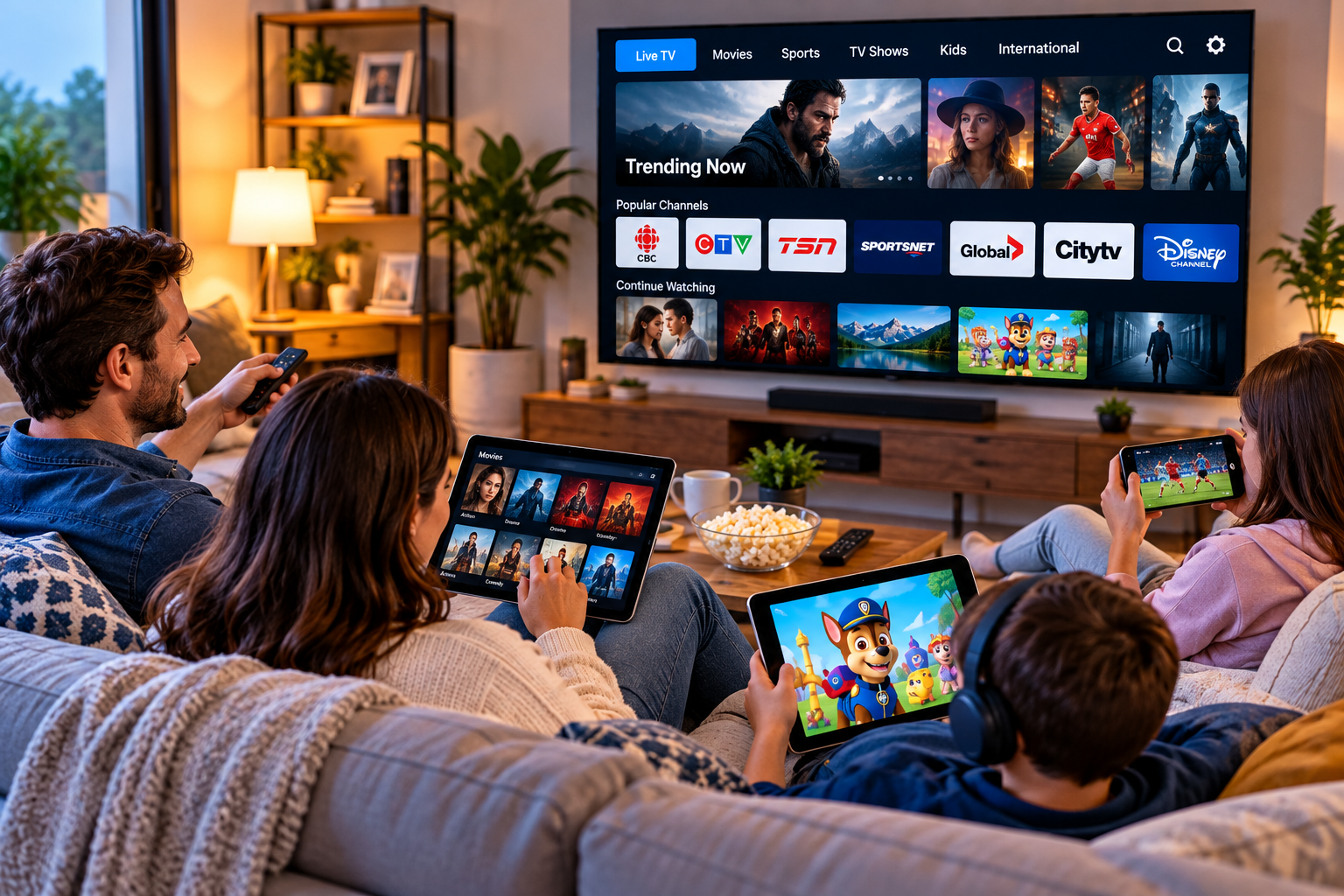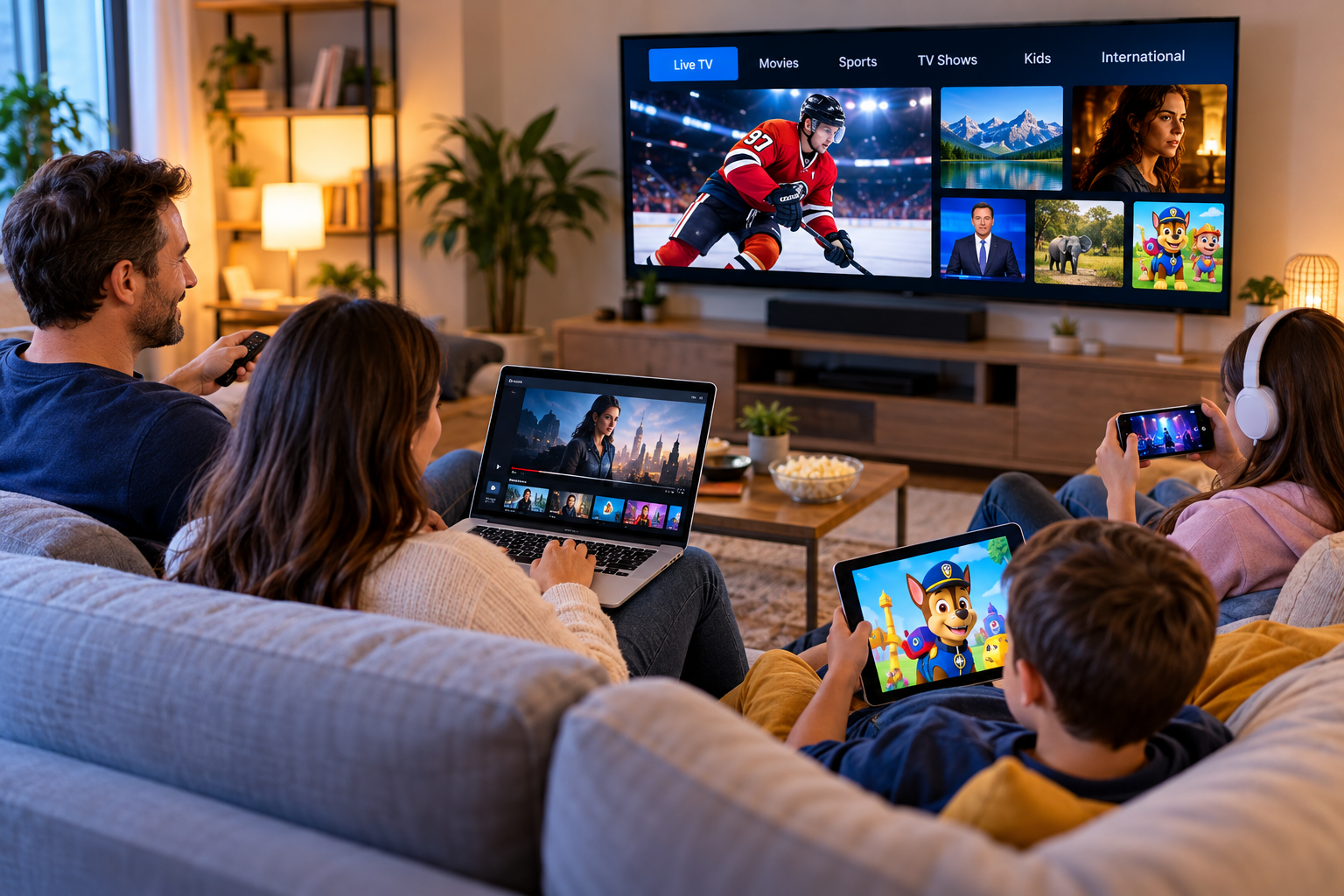
The way families watch television has changed significantly over the past decade. Instead of relying on a single television connected to a traditional cable package, households increasingly use several screens throughout the home. Smart TVs, streaming devices, smartphones, tablets, and computers can all become part of the family’s entertainment setup.
This shift has also increased interest in multi-device HD streaming subscriptions. Families want the flexibility to watch different programs in different rooms without having to build completely separate entertainment systems.
A household might have children watching cartoons on a tablet, parents watching a movie in the living room, and another family member following a live sports event on a bedroom television. A multi-device streaming plan can make these viewing habits easier to manage.
However, choosing a streaming subscription requires more than looking at the number of channels or the advertised video resolution. Families should consider device compatibility, simultaneous streaming, content selection, reliability, internet requirements, pricing, and user experience.
Here are some of the main reasons families are increasingly interested in multi-device HD streaming subscriptions.
1. One Household Can Have Multiple Viewing Preferences
One of the biggest advantages of multi-device streaming is that everyone in the household may have different interests.
Parents may want news or movies, children may prefer cartoons and educational programs, teenagers may watch sports or entertainment, and other family members may prefer international programming.
With a traditional single-screen setup, everyone may have to agree on what to watch.
Multi-device streaming can provide greater flexibility when the subscription and service support simultaneous viewing. Different household members can use compatible devices according to their own preferences.
This does not necessarily mean every person needs a separate subscription. Depending on the provider’s terms, one household plan may support multiple devices or simultaneous connections.
2. Families Are Using More Screens
The television is no longer the only screen used for entertainment.
Many households now use:
- Smart TVs
- Android TV devices
- Streaming boxes
- Tablets
- Smartphones
- Laptops
- Desktop computers
This makes device compatibility an important consideration when selecting a streaming service.
A family may want to watch television on a large screen in the evening but use a tablet or smartphone while traveling or moving around the home.
A service designed to work across several supported platforms can therefore offer more flexibility than one restricted to a single type of device.
3. HD Streaming Provides a Better Viewing Experience
High-definition video has become an expected feature for many viewers.
HD streaming can provide sharper images and more detail, particularly on modern televisions with larger screens.
For movies, sports, documentaries, and other visually detailed programming, picture quality can make a noticeable difference.
Some services also advertise Full HD or 4K options. However, viewers should remember that resolution is only one part of streaming quality.
A high-resolution stream can still be frustrating if it constantly buffers or loses connection.
Families should therefore evaluate both picture quality and reliability when comparing subscriptions.
4. Simultaneous Streaming Can Make Family Viewing Easier
The ability to stream on multiple devices at the same time can be particularly useful for larger households.
Imagine a family where one person is watching a movie in the living room while another is watching a sports event on a bedroom television. Children might be using a tablet at the same time.
Without simultaneous streaming support, users may need to share a single screen or purchase additional subscriptions.
However, multi-device policies vary between providers. Some plans allow several simultaneous connections, while others may limit the number of active streams.
Families should always check the provider’s specific terms before assuming that multiple devices can be used at once.
5. International Programming Is Easier to Access
Modern families can have connections to different countries and cultures.
They may want to watch programming from Canada, the United States, Europe, Asia, the Middle East, or other regions.
Internet-based television services can make international programming more accessible, depending on the provider’s available content and distribution rights.
For households where family members speak different languages or enjoy programming from different countries, a broader channel selection can make a subscription more useful.
Before subscribing, however, viewers should verify that the specific channels they want are actually included.
A large advertised channel count does not necessarily mean that all preferred networks are available.
6. Families Can Use Existing Devices
Another reason multi-device streaming is attractive is that households may already own compatible hardware.
A family does not necessarily need to purchase a new television for every room.
If the service supports existing smart TVs, streaming devices, tablets, smartphones, or computers, family members may be able to use equipment they already own.
For example, one television could be used as the primary viewing screen while another family member uses a tablet.
Before subscribing, check the provider’s supported operating systems and applications. Device compatibility can vary considerably between services.
7. Streaming Can Offer More Flexibility Than Traditional Television
Traditional television packages can be relatively fixed. Customers may have to select predefined channel bundles and use specific equipment.
Streaming services can provide a different approach.
Viewers can potentially watch programming on different devices and in different locations, depending on the service’s terms and internet requirements.
This flexibility can be useful for families with changing schedules.
Parents may watch television at home while children use mobile devices. Someone traveling for work may also want access to compatible programming away from the primary television.
The exact level of portability depends on the provider’s policies, so users should review account and device restrictions before subscribing.
8. Families Are More Comfortable With Internet-Based Entertainment
Another factor behind the growth of multi-device streaming is familiarity.
People are already accustomed to using internet-connected services for video, music, communication, shopping, and other activities.
Smart TVs and streaming devices have also become common parts of home entertainment systems.
As a result, watching television through an internet connection can feel more natural than it did in the past.
The growing number of connected devices means that families increasingly expect entertainment services to work across multiple screens rather than being tied to one television.
9. Sports Viewing Benefits From Multiple Screens
Sports can be particularly well suited to multi-device households.
A family may have different interests during the same match or event. One person might want to watch a live game while another prefers a different program.
Multiple supported streams can reduce the need to negotiate over a single television.
Sports viewers should nevertheless check exactly what channels and events are included in a subscription.
For viewers researching different IPTV options, an IPTV subscription can be one of the options to investigate when comparing internet-based television services and their features.
10. Families Can Create More Personalized Viewing Experiences
Multi-device streaming can allow each person to use the device that suits them best.
A large television may be preferable for movies and major sporting events, while a tablet may be more convenient for casual viewing.
Smartphones can provide portability, while laptops can be useful when television viewing needs to fit around work or study.
This variety allows households to build viewing habits around their schedules rather than relying on a single screen.
The result can be a more flexible entertainment environment without requiring every family member to have a separate traditional television setup.
11. Choosing a Provider Still Requires Research
The growing popularity of multi-device streaming does not mean every provider offers the same experience.
Families should compare services carefully before paying for a subscription.
Important questions include:
- How many devices are supported?
- How many simultaneous streams are allowed?
- Which operating systems are supported?
- What channels are included?
- Is HD or 4K available?
- Is an electronic program guide included?
- What customer support is available?
- What are the subscription and cancellation terms?
- Is a trial available?
- Does the provider have appropriate rights to distribute its content?
These questions can help families distinguish between different services.
A provider that looks attractive because of a large channel count may not necessarily be suitable if its application does not support the family’s devices.
12. Reliability Matters More Than Channel Quantity
Families generally want entertainment that works when they need it.
Frequent buffering, channel interruptions, application crashes, or connection problems can quickly reduce the value of a subscription.
This is particularly noticeable when several people depend on the service at the same time.
When researching providers, look for information about reliability and test the service if a trial is available.
For Canadian households specifically, viewers researching reliable streaming Canada options can compare factors such as device compatibility, streaming quality, and available features rather than focusing solely on channel numbers.
13. Internet Quality Is Part of the Equation
Multi-device HD streaming requires an internet connection capable of handling the household’s viewing habits.
When multiple devices are streaming simultaneously, more bandwidth may be required than when only one television is connected.
Families should consider their internet speed, Wi-Fi coverage, router performance, and network usage.
If one device works well but several devices experience buffering at the same time, the issue may involve the home network rather than the streaming service itself.
Improving Wi-Fi coverage or using a wired connection where practical can sometimes provide a more consistent experience.
14. Cost Can Be Considered Across the Entire Household
Families should evaluate the total cost of their entertainment setup rather than looking only at the monthly subscription price.
If one multi-device plan can legally and reliably serve several household screens, it may reduce the need for separate subscriptions or additional television packages.
However, this depends entirely on the provider’s terms.
A subscription that allows only one active stream may not be suitable for a family that regularly watches different programs simultaneously.
Always check the number of permitted connections before assuming that a particular plan will meet household needs.
15. A Better Family Setup Starts With the Right Plan
The best setup depends on the household.
A small family with two televisions may have very different requirements from a larger household with several smart TVs, tablets, and mobile devices.
Before subscribing, make a list of the devices that will be used and identify how many people may watch at the same time.
Then compare plans based on those requirements.
For example, a family might need:
- Three or four supported devices
- Two simultaneous streams
- HD or Full HD quality
- Canadian channels
- International programming
- Sports coverage
- A useful program guide
- Responsive customer support
Once these requirements are clear, it becomes easier to compare providers.
16. Research Providers Before Making a Long-Term Commitment
Families should also avoid committing to a long-term subscription without understanding how the service works.
If a trial is available, use it to test the features that matter most.
Try multiple devices and test different channels. Check whether the service performs consistently during peak viewing hours.
Also review billing, cancellation, and renewal conditions.
For households exploring different services, a top IPTV provider resource may offer another starting point for comparing provider features, although families should still conduct their own checks before subscribing.
What Should Families Look For in a Multi-Device Streaming Service?
A useful checklist can make the decision easier.
Device Support
Confirm that the provider supports the televisions, streaming devices, phones, tablets, or computers your family uses.
Simultaneous Connections
Check how many devices can stream at the same time under the chosen plan.
Streaming Quality
Look for stable HD or higher-resolution streaming, but remember that resolution and reliability are separate factors.
Content
Make sure the service provides the channels and programming your household actually watches.
User Experience
A simple application and useful program guide can make daily viewing easier.
Customer Support
Check how technical issues and account questions are handled.
Subscription Terms
Review pricing, renewal conditions, cancellation policies, and any restrictions before paying.
Content Authorization
Understand whether the provider has appropriate rights to distribute the content it offers.
Final Thoughts
Families are increasingly using multiple connected screens for entertainment, and multi-device HD streaming subscriptions can fit naturally into this changing viewing environment.
Instead of relying on a single television, household members can potentially use smart TVs, streaming devices, tablets, smartphones, and computers according to their individual schedules and preferences.
However, the benefits depend heavily on the service selected. Families should look beyond channel counts and promotional claims and evaluate device compatibility, simultaneous streaming, picture quality, reliability, content availability, customer support, pricing, and subscription terms.
Internet connectivity should also be considered because several simultaneous HD streams can place greater demands on a household network.
The most practical approach is to identify the family’s actual viewing habits first and then compare providers against those requirements. A trial, where available, can provide an opportunity to test performance before making a longer commitment.
As television continues moving toward connected and flexible viewing experiences, multi-device streaming gives families more ways to organize entertainment around their individual needs. With careful research, households can choose a setup that works across their devices while providing the quality and flexibility they expect from modern streaming.