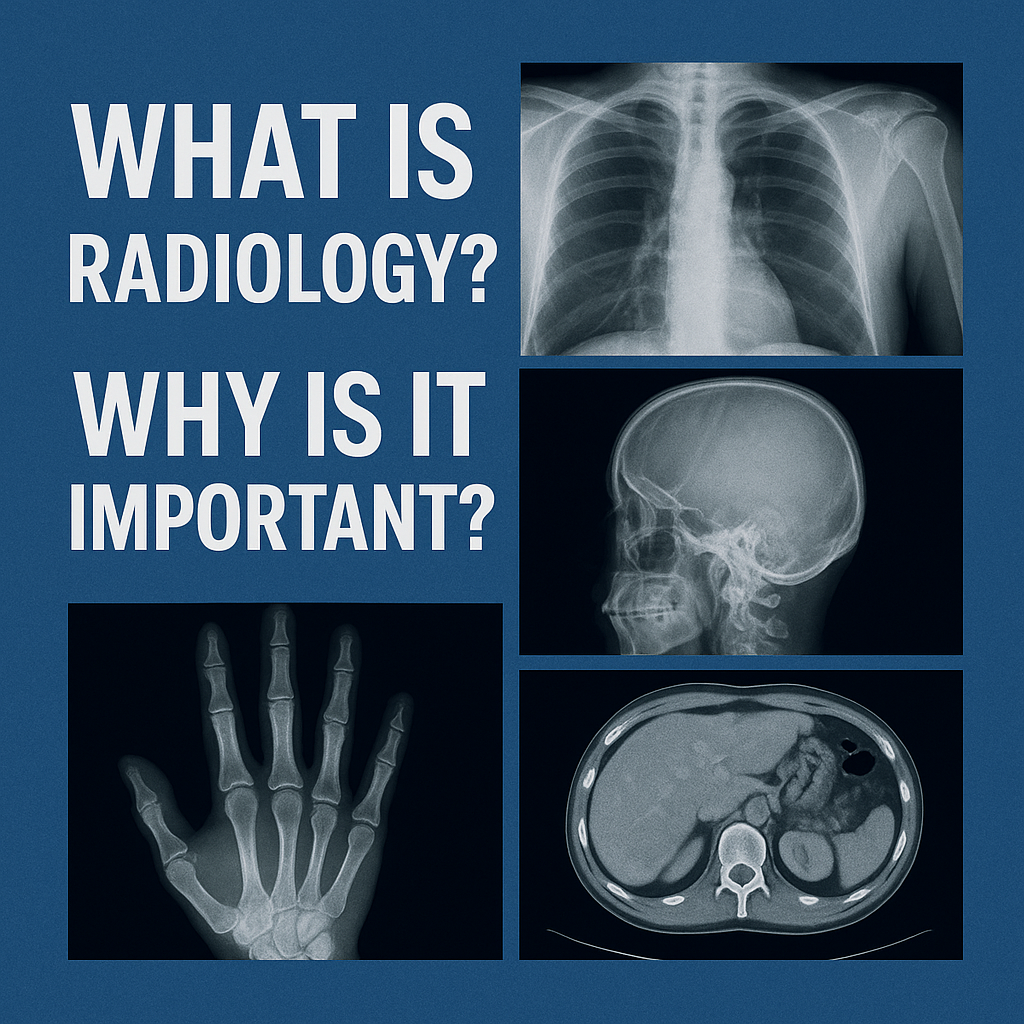
In 1895, a German physicist named Wilhelm Röntgen made a groundbreaking discovery that would revolutionize the field of medicine. While experimenting with cathode rays, he noticed a mysterious glow emanating from a nearby fluorescent screen. Intrigued, Röntgen realized he had discovered a new form of radiation, which he named X-rays.
This discovery marked the birth of radiology, a field that has since become an indispensable tool in modern medical diagnostic imaging and treatment.
What is Radiology?
At the heart of radiology lies the concept of using radiation to create images of the human body. Different types of radiation, such as X-rays, gamma rays, and radio waves, are used to penetrate tissues and organs. These rays interact with the body’s atoms, producing signals that are detected by specialized equipment. These signals are then processed to generate detailed images, revealing abnormalities and injuries.
Types of Radiology
Radiology encompasses a wide range of imaging techniques, each with its own unique applications.
1. Diagnostic Radiology
- X-rays: They are the most common type of radiological imaging. They use electromagnetic radiation to produce images of bones, lungs, and other dense tissues.
- CT scans: CT scans combine multiple X-ray images to create cross-sectional views of the body. They provide detailed information about soft tissues, bones, and blood vessels.
- MRI scans: These use powerful magnets and radio waves to generate detailed images of the body’s soft tissues. They are particularly useful for imaging the brain, spinal cord, and joints.
- Ultrasound: It uses high-frequency sound waves to create images of internal organs. It is a safe and non-invasive technique that is commonly used for prenatal imaging, as well as for diagnosing heart and abdominal conditions.
- Nuclear medicine: Nuclear medicine involves the administration of radioactive tracers, which are then detected by specialized cameras to create images of organ function.
2. Interventional Radiology
- Angiography: This procedure uses X-ray imaging to visualize the blood vessels. It is often used to diagnose and treat conditions such as atherosclerosis and aneurysms.
- Biopsy: Interventional radiologists can perform minimally invasive biopsies to obtain tissue samples for diagnosis.
- Embolization: It is a procedure that involves blocking blood vessels to treat conditions such as tumors and aneurysms.
- Drainage procedures: Interventional radiologists can perform procedures to drain fluid from cysts, abscesses, and other collections of fluid.
4 Reasons Why Radiology is Important
Radiology plays a crucial role in modern healthcare, offering numerous benefits to patients.
1. Early Disease Detection
Radiological imaging services can detect diseases in their early stages when they are more treatable. For example, mammograms can detect breast cancer before it becomes symptomatic, and colonoscopies can detect colon cancer polyps.
2. Accurate Diagnosis
Radiological images provide valuable information that helps physicians make accurate diagnoses. By analyzing these images, doctors can identify abnormalities, measure the extent of injuries, and assess the progression of diseases.
3. Treatment Planning and Monitoring
Radiological images are essential for planning and monitoring treatment. For example, CT scans are used to plan radiation therapy, and MRI scans are used to monitor the response to chemotherapy. This is why you should only go for a trusted radiology service.
4. Minimally Invasive Procedures
Interventional radiology techniques offer a less invasive alternative to traditional surgery. These procedures are often associated with shorter recovery times and fewer complications.
What is a Radiologist? What they Do?
Radiologists are highly trained medical professionals who specialize in interpreting radiological images. They play a critical role in the diagnosis and treatment of a wide range of medical conditions.
They work closely with other healthcare professionals, such as physicians, surgeons, and nurses, to provide comprehensive patient care. They collaborate to develop treatment plans, interpret imaging results, and monitor patient progress.
How to Become a Radiologist?
Educational requirements & skills required to become a radiologist in the USA include:
Educational Requirements:
- Undergraduate Degree: You’ll need a bachelor’s degree, preferably in a science-related field like biology, chemistry, or physics.
- Medical School: Attend a four-year medical school program leading to an MD (Doctor of Medicine) or DO (Doctor of Osteopathic Medicine) degree.
- Residency Program: Complete a four-year residency program in diagnostic radiology. This program provides hands-on training in various imaging modalities and interpretation of medical images.
Additionally, many radiologists pursue a 1-2 year fellowship in a subspecialty like Neuroradiology, Cardiovascular Radiology, Interventional, Musculoskeletal or Pediatric Radiology, Nuclear Medicine or Radiation Oncology.
For both trainees and practicing radiologists, structured, case-based learning can bridge gaps between formal training and the day-to-day interpretation challenges encountered in busy departments. Platforms that combine short, expert-led videos with annotated DICOM cases and accredited CME allow learners to practise pattern recognition, refine reporting skills, and track progress in a measurable way.
Those preparing for residency, fellowship, or board maintenance may find curated options such as online radiology courses particularly useful because they focus on practical cases and flexible study formats. Integrating these resources into individual study plans or departmental teaching can make preparation more efficient and clinically relevant.
Licensure and Certification is needed for you to take employment as a Radiologist in the USA.
- Obtain a medical license from the state where you plan to practice.
- Become board-certified in diagnostic radiology by passing the examinations administered by the American Board of Radiology (ABR). This demonstrates your expertise and commitment to professional standards.
Conclusion
New imaging modalities, such as positron emission tomography (PET) and molecular imaging, are opening up new frontiers in medical diagnosis and treatment. Radiology has come a long way from its humble beginnings to its current status as an indispensable tool in modern medicine.

This is a very good tips especially to those new to blogosphere, brief and accurate information… Thanks for sharing this one. A must read article.
I’m not positive the place you are getting your information, but great topic. I must spend some time finding out much more or understanding more. Thank you for fantastic information I used to be on the lookout for this information for my mission.
I’ve been surfing online more than 3 hours today, yet I never found any interesting article like yours. It is pretty worth enough for me. Personally, if all web owners and bloggers made good content as you did, the web will be much more useful than ever before.
Somebody necessarily assist to make significantly posts I might state. This is the very first time I frequented your website page and to this point? I amazed with the analysis you made to create this particular publish incredible. Great task!
Hmm is anyone else having problems with the images on this blog loading? I’m trying to determine if its a problem on my end or if it’s the blog. Any feed-back would be greatly appreciated.