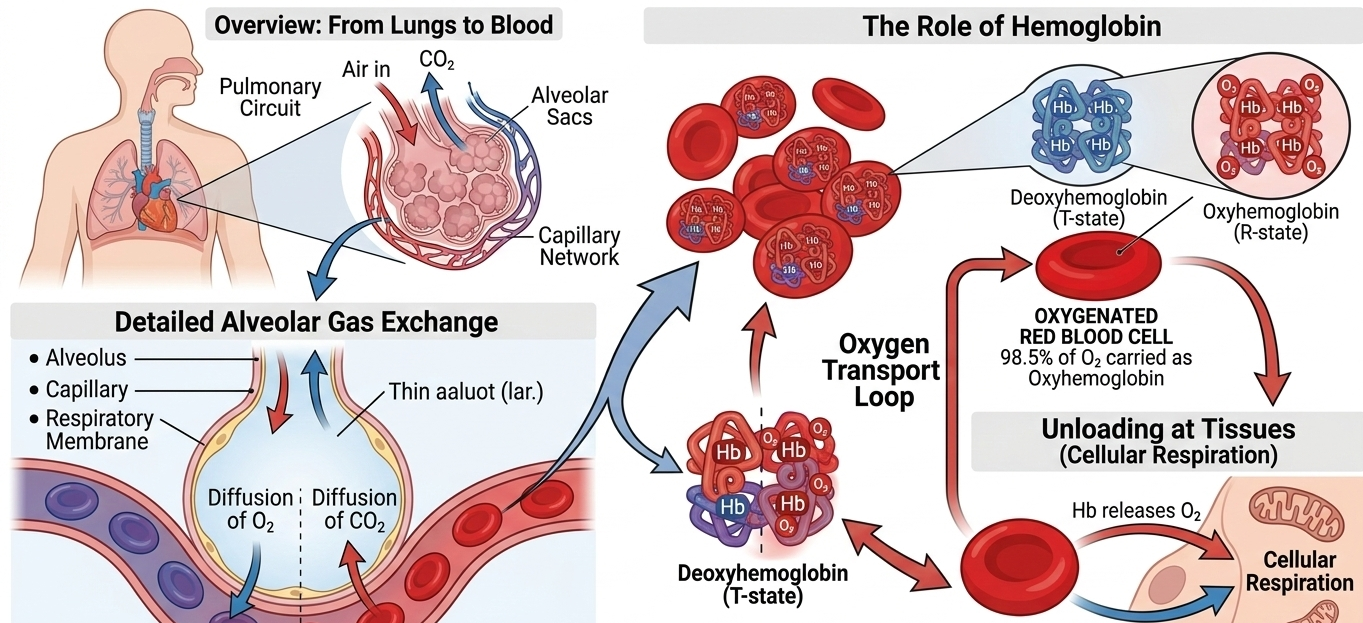
People usually underestimate the importance of breathing because it promotes one of the most imperative functions in human biology: the provision of oxygen into all cells. It does much more than merely fill the chest cavity and the air that enters the lungs. It supplies oxygen that is needed by the cells in order to produce energy and eliminate waste gases produced during metabolism. This is where the oxygen gets in the blood and carbon dioxide gets out and this process is called alveolar gas exchange.
This occurs in the microscopic air sacs or alveoli of the lungs. In these structures, oxygen diffuses through thin membranes, combines with haemoglobin in the red blood cells and is transported throughout the body to the respiratory apparatus in the cells. All tissues, including muscle and brain, require this supply of oxygen to produce adenosine triphosphate (ATP), which is the molecule that drives almost any biological process.
Learning the process of gas exchange can tell us how two phenomena as the respiratory anatomy and the biochemical metabolism are closely related to each other. In case of efficient work of the lungs, oxygen enters the bloodstream easily and promotes the generation of energy at the cellular level. Once the functioning of the lungs is compromised, oxygen supply is reduced and the overall capacity of the body to generate energy is compromised.
This article describes the mechanisms of alveolar gas exchange, diffusion of oxygen in bloodstream, transportation of oxygen in blood by the haemoglobin, and how this oxygen is further utilized to power the cellular respiration in the mitochondrial system.
The Construction of the Alveoli and the way they help with the gas exchange
Millions of balls shaped structures are found on the inside of the lungs, and these structures are called alveoli. These tiny airways produce clusters in the end of bronchioles and generate an enormous amount of surface area in the exchange of gases. The total surface area of the alveoli in the human lungs is in fact estimated to be about the size of a tennis court.
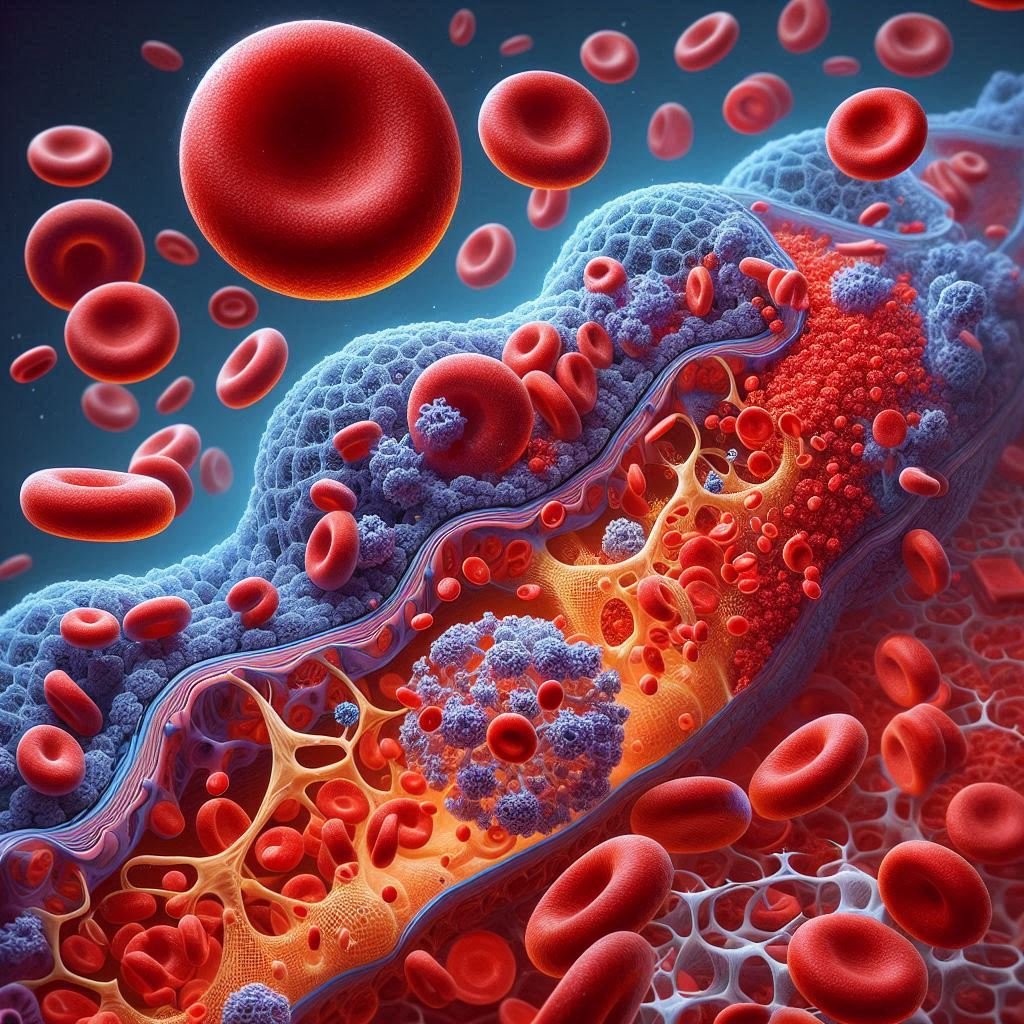
The alveoli walls are very thin and they are composed of a single layer of epithelial cells. An equally fine system of capillaries of the lungs surrounds these cells. The combination of this results in what is referred to as the alveolar-capillary membrane which is an extremely thin barrier through which the gases can diffuse through.
Capillary and alveoli exchange of gases
Such design is necessary in order to have effective alveolar gas exchange. The oxygen present in the inhaled air is drawn to the alveoli, whereas blood that comes to the pulmonary arteries has a lesser amount of oxygen and a greater amount of carbon dioxide. Diffusion of gases takes place as the gases in the greater concentration will be diffused to the lesser concentration forming oxygen in blood and carbon dioxide in alveoli.
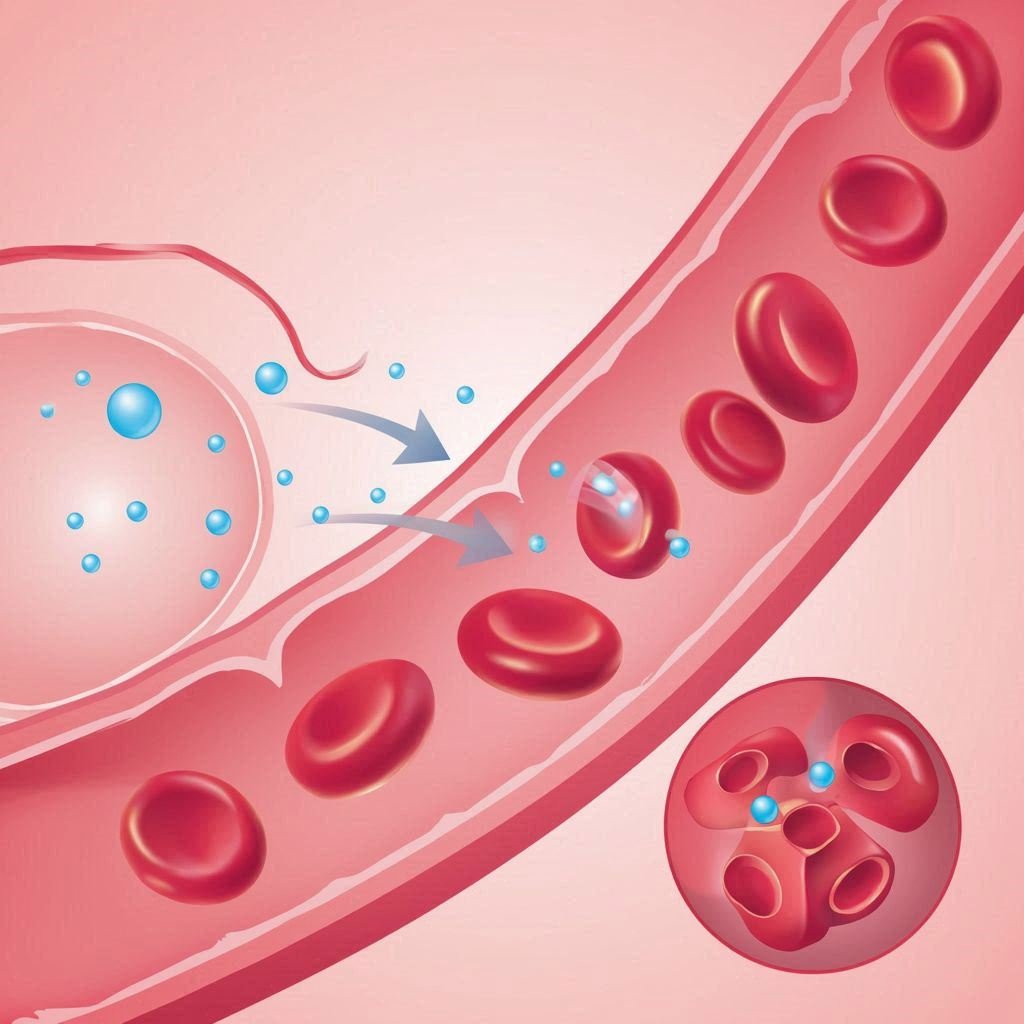
The effectiveness of such exchange is dependent on a number of factors. The thinness of the membrane will minimize the distance that gases have to travel and the capillary network that is large will guarantee that blood will always be moving past the alveoli to retrieve oxygen. Moreover, the alveoli are lined with a chemical known as surfactant which prevents the alveoli to collapse and remain open as the breathing progresses.
These structural adjustments ensure that the lungs have a continuous flow of oxygen and carbon dioxide that ensures that life is maintained.
Principles of Diffusion Alveolar Gas Exchange
The flow of gases in the lungs is based on the fundamentals of diffusion. Diffusion is the passive flow of molecules in higher concentration to areas of lower concentration. This relocation takes place in the lungs across the alveolar-capillary membrane.
The volume of oxygen in the air within the alveoli is greater than the amount of oxygen in the deoxygenated blood that comes to the body. This difference in concentration forms a gradient which pushes oxygen molecules across the membrane and into the blood.
Simultaneously, the amount of carbon dioxide in the blood is more than it is in the alveolar air. The carbon dioxide thus diffuses back in the opposite direction and passes through the blood into the alveoli where it can at a later stage be released through the exhalation.
Diffusion rates are also dependent on a number of factors such as surface area, membrane thickness, and strength of concentration gradient. All these conditions are optimised in the lungs. The large volumes of gases that are exchanged due to their huge surface area and the exceedingly thin walls of the alveoli promote the diffusion process.
These principles of diffusion also render alveolar gas exchange as one of the most effective biological processes in the body. In conditions of normalcy, the oxygen supplied to the lungs is able to travel to the bloodstream in just fractions of a second.
Haemoglobin and Oxygen Binding
After diffusion of oxygen in the blood, it should be carried to the tissues located in the body. This is facilitated by a protein called haemoglobin that is present in red blood cells.
The haemoglobin molecules have iron-binding compounds known as heme groups. The haemoglobin molecules are capable of carrying four oxygen molecules each. Once this oxygen bonds to such binding sites, it creates a reversible bond which enables oxygen to be transported throughout the blood without being attached to the protein permanently.
This is crucial to connect and disconnect oxygen. Haemoglobin is easily bound with oxygen in the lungs where there is a high concentration of oxygen. In the body tissues that have lower oxygen concentration, the haemoglobin gives out the oxygen based on the fact that it can be diffused to the cells.
The transportation of oxygen to the tissues in the body following the exchange of carbon dioxide in the lungs.
In the absence of haemoglobin, the blood transporter was able to carry a minimal amount of oxygen needed by the body. The binding of oxygen molecules by hemoglobin makes the blood oxygen carrying capacity significantly higher and provides tissues with a constant supply.
Through this mechanism is in close cooperation with alveolar gas exchange, as the level of oxygen that is attached to haemoglobin is determined by the efficiency with which oxygen diffuses out of the lungs into the blood.
Delivery of Oxygen by the Circulatory System
Once oxygen is attached to the haemoglobin it is carried all around the body as a part of the circulatory system. The heart forces the lungs to pump out blood rich in oxygen to the left side of the heart where it gets into the systemic circulation.
This oxygenated blood moves to tissues and organs via the arteries. On passing through smaller blood vessels known as arterioles and capillaries, oxygen starts to dissociate with haemoglobin and diffuses into the cells.
Such release takes place due to constant consumption of oxygen by tissues in the metabolism. When oxygen is used by the cells in the body, there is a decrease in concentration of oxygen locally, which forms a gradient that promotes the release of more oxygen by haemoglobin.
By this process, oxygen available in the exchange of gases in the alveoli is transported to all cells in the body which requires the reactions that produce energy to sustain life.
Relation Between Oxygen and Cellular Respiration
Oxygen delivers are ultimately intended to aid in cell respiration. Cellular respiration is defined as the biochemical process by which nutrients are transformed into useful energy in the body in the form of ATP by the cells.
This is done in the mitochondria which are commonly known as the powerhouse of the cell. A series of chemical reactions in which food materials, like glucose, are broken down by using oxygen takes place in mitochondria.
At the last step in the cellular respiration process, oxidative phosphorylation is the oxygen, which is the last electron donor in the electron transport chain. The chain cannot work properly without oxygen and production of ATP is reduced significantly.
The interconnection between the exchange of gases in the alveoli and breathing of the cellular structures thus becomes apparent. Oxygen is delivered to the blood by the lungs, transported to the tissues by the circulatory system and consumed by mitochondria to produce energy that acts to drive cellular processes through.
All movements, thoughts and biological activity are all based on this constant supply of oxygen.
The impact of the impaired lung functioning to the energy production
Once the functioning of the lungs is hampered, the affects are much greater than the respiratory system. Any process that occurs to disturb the exchange of oxygen and carbon dioxide in the alveoli may decrease the supply of oxygen to the tissues and interrupt the process of cell metabolism.
The alveoli may be damaged by diseases like pneumonia, pulmonary fibrosis, and chronic obstructive pulmonary disease or the alveolar-capillary membrane may be thickened. In case this happens, the diffusion is less effective and oxygen cannot be distributed in the bloodstream as fast.
A low level of oxygen in blood causes a condition referred to as hypoxemia. Lack of oxygen to tissues leads to the slowing of mitochondrial respiration and reduction of ATP quantities. Because of this, cells have to use inefficient forms of energy and that may cause fatigue, organ dysfunction and compromised physical performance.
Even slight changes in the amount of oxygen supplied can influence such vulnerable organs as brain and heart. These tissues need constant supply of energy and are more susceptible to difficulty in the oxygen circulation.
This association is important in noting why good lungs are vital in ensuring good metabolism.
Enhancing Effective Gas Exchange
The effectiveness of the alveolar gas exchange is conditional on a number of physiological circumstances. Proper circulation, healthy lung tissue and enough ventilation are all factors of good oxygen delivery.
Exercise is useful in enhancing breathing by training the muscles of respiration and increasing blood circulation. Smoking is avoided and environmental pollutants should not be exposed to as much as possible to maintain the fragile structures of the alveoli.
Moreover, cardiovascular health is also maintained which aids in the delivery of blood rich in oxygen to the body tissues. The respiratory and the circulatory systems are interconnected like a network and the performance of one system directly impacts on the other.
Conclusion
Breathing does much more than just expelling and inhaling air in and out of the lungs. It starts a series of physiological reactions which eventually energizes all body cells. The process of breathing the air into blood and removal of wasted gas carbon dioxide occurs through a process called the alveolar gas exchange.
As the oxygen gets to the blood, it is bound by hemoglobin and issued all over the body in tissues by the blood circulation. Oxygen is then an important constituent of the cellular respiration of the mitochondria, which allows the cells to produce ATP and support essential biological processes.
This connection between the structure of the respiratory system and the metabolism of the cell testifies to the extent to which the body systems are interconnected. In case the lungs are working properly, the supply of oxygen will maintain healthy metabolism and energy production. The effects when the lung functioning is impaired, however, are expressed all over the body reducing the cellular energies and the overall health.
The insights gained into the role of cellular respiration with an understanding of how alveolar gas exchange promotes it are useful in understanding the significance of respiratory health and its role in maintaining life.