The new web is designed around three basic technologies, HTML, CSS, and JavaScript. These technologies are important to anyone who is venturing into web development. The technologies are used to achieve different things but when combined, they form interactive, appealing to the eye and useful websites. We will discuss their purpose, their usage in practice, tips that beginners may follow and how they combine to create modern web experience in this article.
HTML: The Backbone of the Web
Any web page is based on HTML or Hypertext Markup Language. It organises the content and gives the framework of all other web technologies. The websites would have been blank pages without HTML.
Simple Organization of an HTML Document
There are generally the following parts of to HTML document:
- <!DOCTYPE html> – It is a definition of document type and version of HTML.
- <html> – This is the root element which surrounds the whole content.
- <head> – Holds meta-data, page name, and green goes to CSS or JavaScripts.
- <body> – The apparent content, e.g. text, pictures, videos, and forms.
Common HTML Elements
HTML has a large number of elements which enable a developer to develop structured and semantic content:
- Headings: h1 to h6. arrange the information in order of significance.
- Paragraphs: <p> between readable blocks of text.
- Lists: unordered lists are listed with <ul>; ordered lists are listed using <ol>.
- Links: These are links to allow one to navigate to another page or site.
- Media: <img>, <video> and <audio> embedded.
- Forms: <form>, <input> and <textarea> and <button> to do user interactions.
As a way of organizing and grouping content, there are containers: <div> and <span>.
The Importance of HTML
With the help of HTML, it gives semantics and structure that help:
- Search engines are cognitive of the content and enhance SEO.
- Web pages can be understood by accessibility tools like the use of screen readers.
- Developers put together content effectively and provide a platform on which style and interactivity can be built.
Although HTML does not have the ability to style or animate a page it is the backbone of any of the other web technologies.
CSS: Styling the Web
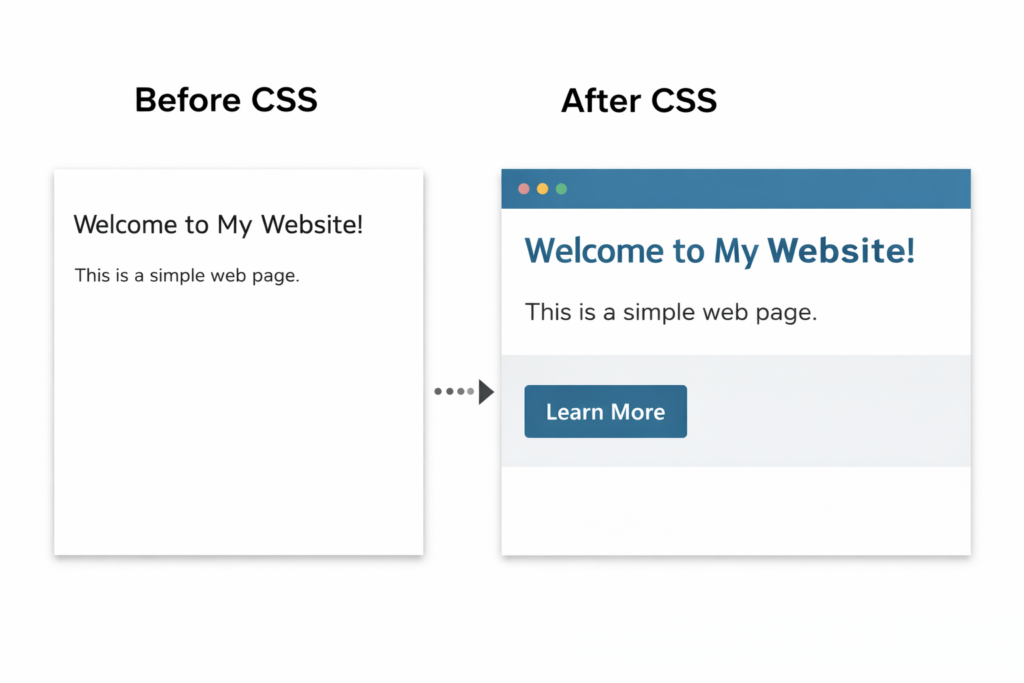
CSS, which is also known as Cascading Style Sheets, governs the appearance of the sites. Whereas HTML gives structure, CSS makes web pages attractive, readable and device responsive.
How CSS Works
CSS uses styles through the selection of HTML objects and specification of values:
p {
color: #333;
font-size: 16px;
line-height: 1.6;
margin-bottom: 12px;
}
In this example, all the paragraph parts <p> are styled with dark gray color, font 16 pixels and correct line spacing.
Ways to Apply CSS
- Inline CSS: This is placed on a single element of an HTML document, in an element that has a style attribute.
<p style=”color:red;”>This is a red text.</p>
- Internal CSS: It is defined in a <style> tag in the head tag.
- External CSS: This is loaded in a separate .css file, and its link is released within <link rel=”stylesheet” href=”styles.css”>. External CSS is useful in large websites because it separates the content and the design.
Applications of CSS in Practice
CSS allows developers to:
- Make Typography Better: Adjust font family, font size, font weight and spacing.
- Layout Control: Flexbox, Grids, or floating elements Control layouts apply to both Flexbox and Grid systems.
- Backgrounds, Borders, Gradients, and Themes: This section allows you to add colors and themes to the section you are working on.
- Make Animations: Hover effects, transitions and keyframe animations.
- Apply Responsive Design: Support mobile, tablet and desktop layouts with media queries.
CSS is used to make the ordinary HTML into beautiful, user-friendly websites and provide consistency in designs using different devices.
JavaScript: Interactivity Addition
JavaScript is the interactive programming language that is used in making websites interactive. It enables developers to interact with HTML and respond to user interaction and communicate with servers without page reloading.
Core Features of JavaScript
- Event Handling: Reacts to user interaction like the clicking, scrolling, typing of keys or submitting of forms.
- DOM Manipulation: this is used to modify the HTML content dynamically in real-time.
- Form validation: Non-users should get the correct input.
- Asynchronous Requests: Access data on servers by using AJAX or Fetch API and do not reload the page.
- Animations and Effects: Provide visual interaction and movement to web pages.
Real-life Scripts of JavaScript
- Interactive Forms: Accept email addresses, passwords or any other fields in real time.
- Image Sliders and Carousals: Image/content rotation.
- Web-based Games: Interactive Games with HTML canvas and JavaScript.
- Single Page Applications (SPAs): React, Angular, or Vue are frameworks that are based on the use of JavaScript heavily to make their applications dynamic and seamless.
JavaScript will play a significant role in the conversion of the existing web pages into dynamic interactive interfaces to users.
The HTML, CSS, JavaScript Relationship
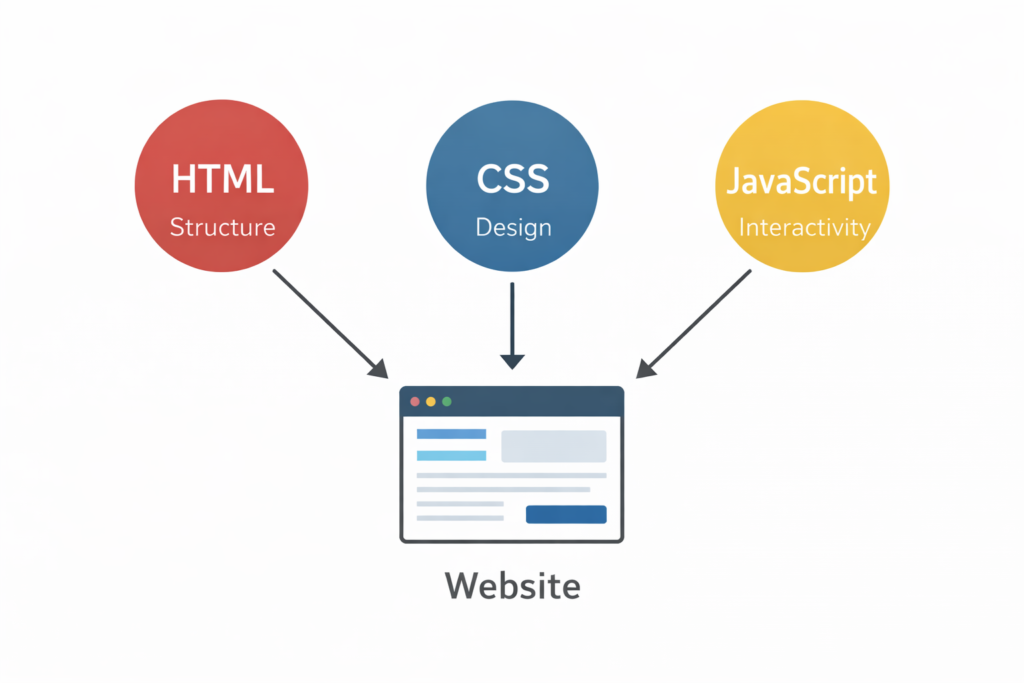
However, the combination of HTML, CSS, and JavaScript is the actual power of web development:
- The content and structure is offered by HTML.
- CSS is used to define the visual design.
- JavaScript brings in the aspect of interactivity and dynamism.
Scenario: development of an animated button
HTML:
<button id=”myButton”>Click Me</button>
CSS:
#myButton {
background-color: #4CAF50;
color: white;
padding: 12px 24px;
border: none;
cursor: pointer;
border-radius: 5px;
}
#myButton:hover {
background-color: #45a049;
}
JavaScript:
document.getElementById(“myButton”).addEventListener(“click”, function() {
alert(“Button clicked!”);
});
The example illustrates how HTML can give the structure, CSS can provide the appearance of the element and JavaScript can make this element interactive, which results in a smooth user experience.
Best Practices on Entry Level
- Semantic HTML: Semantic tags, such as <header>, <footer>, <article> and <section> should be used.
- CSS in order: External stylesheets and logical grouping of related rules.
- Separate JavaScript Files: Inline scripts are to be avoided and logic is so maintained in separate files.
- Cross-Browser Testing: Test websites with Chrome, Firefox, Safari and Edge.
- Debugging Tools: Check the elements and console errors, as well as optimize the performance with the help of browser developer tools.
These practices assist the beginners in developing sustainable and professional web projects.
Learning Resources and Tools
- Code Editors VS Code, Sublime Text, Atom.
- FreeCodeCamp, Codecademy, MDN Web Docs Online Tutorials.
- Version Control Version Control is a project and collaboration tracking tool provided by GitHub.
- Online Sandboxes: JSFiddle and JSBin are experimentation sandboxes, which use CodePen to ensure the code is readable.
- Browser Developer Tools: Inspect, debug, and test style.
Practicing with these tools on a regular basis also facilitates learning and equips the beginners with the real-world projects.
Typical Publicity Problems of a Novice
- Knowing Document Object Model (DOM) and JavaScript event.
- Enabling cross-border compatibility.
- Developing responsive designs.
- Efficiently debugging errors.
With practice and by utilizing online resources and learning more about the actual projects, inexperienced bloggers can manage these difficulties successfully and gain confidence in the professional field of web development.
Advanced Applications
When the basic skills are in place, developers may deal with more advanced applications:
- Web Animations: Smooth, engaging animations should be done using CSS and such libraries as GSAP.
- Interactive Data Visualization: Use D3.js or Chart.js to build interactive graphs and charts.
- Progressive Web Apps (PWAs): It is a mixture of web and mobile apps to provide a smooth user experience.
- Single Page Applications(SPAs): Develop react, angular or Vue fast, dynamic apps.
- API Integration: API Integration allows websites to be connected to external services such as maps, social media or payment gateways.
Learning of such advanced applications enables beginners to move into career web development positions with a sense of security.
Web Development Trends in Future
- Frontend: React, Angular and Vue are the leaders in the front-end development.
- CSS Innovations: CSS variables, flexbox and grid enhance the design flexibility.
- JavaScript Evolution ECMAScript updates allow code to be cleaner, quicker and easier to maintain.
- Performance Optimization: Lazy loading, caching, and reducing as much as possible in the number of HTTP requests make user experience better.
- Accessibility and Inclusivity: Paying more attention to designing sites that are user friendly.
Uptaking of skills makes sure that developers are competitive and relevant in the industry that is constantly changing.
Conclusion
Content is organized using HTML, styles using CSS, and is made interactive using JavaScript. And they are the basis of the modern web development. To start with, these technologies are important in ensuring that the websites are useful, attractive, and interesting to the users.
With the use of best practice, practice, and exploration of tutorials and tools, the potential developer can create dynamic web experiences and establish a solid foundation of more advanced web development abilities. The knowledge of the synergy between HTML, CSS, and JavaScript makes frameworks, SPAs, APIs, and full-stack development usable.
With the acquisition of these essential technologies, novices obtain the education and the enthusiasm to operate effectively in digitalized reality and make their own contributions to the constantly expanding web.