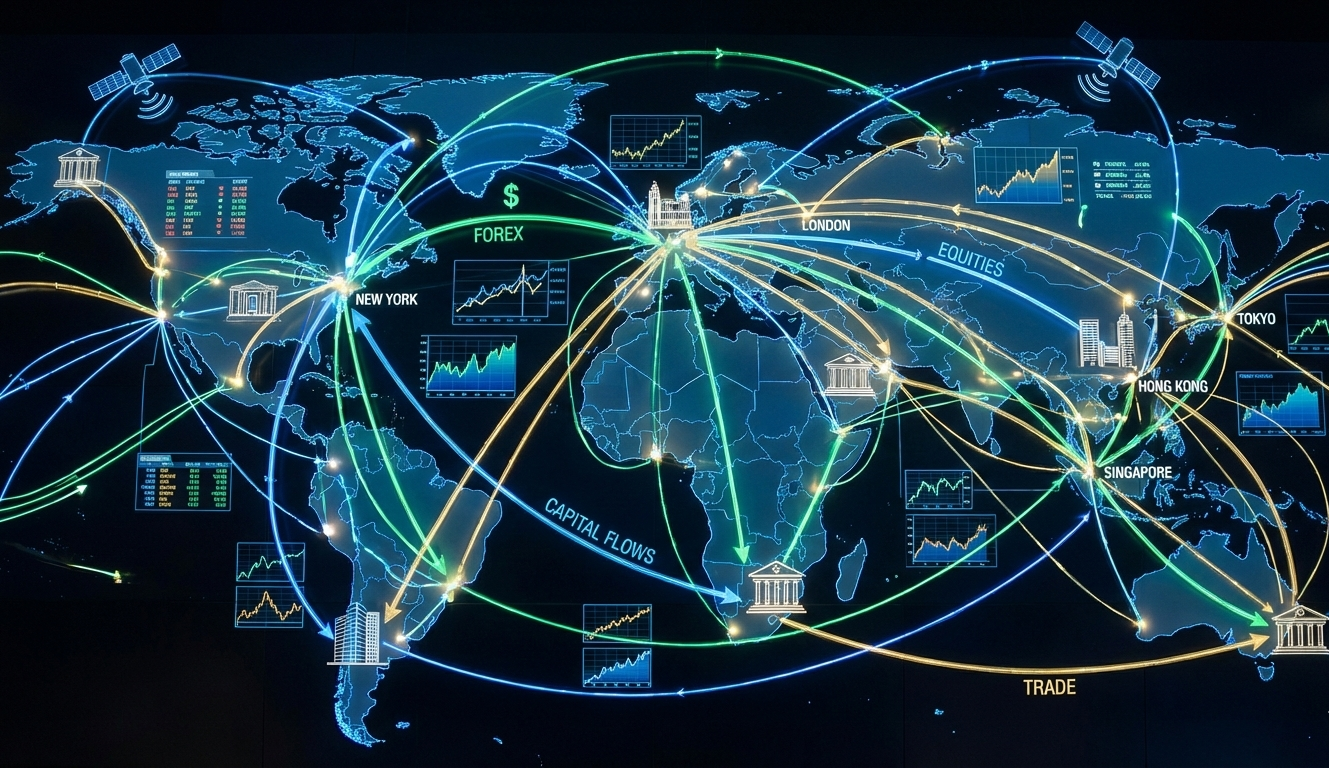
The financial markets of the world are of prime importance in the contemporary economy. They are the medium by which the capital crosses the boundaries, allowing the countries, companies, and individual people to invest, trade and grow. These interlinked systems create impacts on the economic development, level of employment, balance of trade as well as financial stability in the world scale, beginning with stock exchanges and bond markets to commodities and foreign exchange.
Financial markets in an economy that is becoming more and more globalized will no longer exist as isolated entities. Investment decisions by investors in a particular country can have immediate impacts on the prices of assets, exchange rates and economies in other countries. The knowledge of the functioning of the global financial markets assists individuals and companies in making wise choices and also offers an insight into the manner the shocks and opportunities disseminated among the countries.
The article provides a basic explanation of the global financial markets and how capital circulates in the major market segments, as well as how international forces of globalization influence capital movements and how investors act in the international financial markets. The examination of the workings and roles of these markets can help readers appreciate the effects of these markets on the global economy.
Defining Global Financial Markets
Financial marketplaces are used the world over as a buyer and seller of financial assets in international markets. The markets help in the exchange of capital between the savers and borrowers, investors and issuers, and those countries with excess funds and those requiring investment. They are mainly aimed at efficient allocation of capital, which sustains the economy and growth.
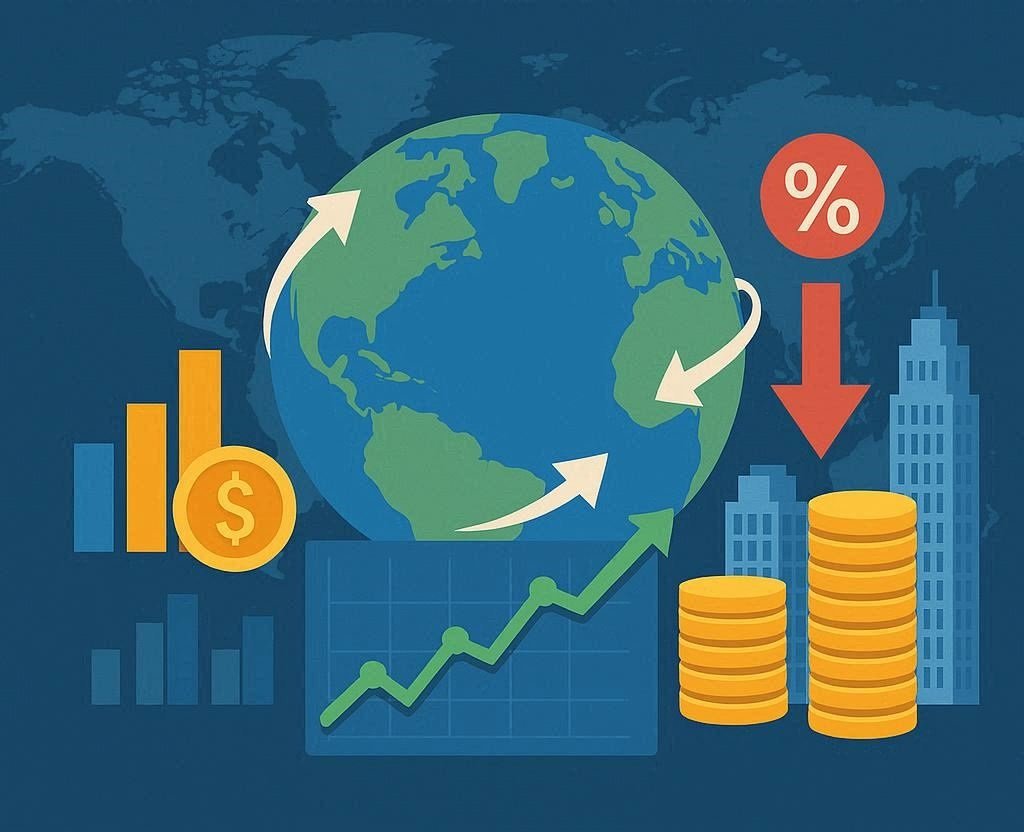
Global financial markets, unlike domestic markets, are spread over various legal systems, varied currencies and varied regulatory environments. These differences do not imply that they are not closely linked in the form of technology, financial institutions, and investor networks. This connectedness enables the flow of capital quickly in line with fluctuation of the economic conditions, interest rates and risk perception.
Several main segments comprise the global financial markets, among them are equity markets, bond markets, commodities markets and the foreign exchange markets. Both of them have different functions to support international capital flows.
International Investment and Equity Markets
Companies can raise funds through equity markets by selling company shares to investors. At the global level, stock markets introduce the businesses to the internationally based investors facilitating cross-border investment in the growth and innovation of corporations.
Investors buy foreign equities, which leads to an inflow of capital in the country of issuance. This inflow aids in the growth of businesses, creation of jobs and technological advancement. Meanwhile, investors will find diversification and higher returns opportunities by investing outside their markets.
International equities are exposed to economic operations, corporate profits, political stability and investor emotions. Good economic prospects will be productive to foreign investment whereas uncertainty or instability may evoke capital outflows. Such movements may impact on the national economies, stock prices, and currency strength to a great degree.
Bonds Markets and Government Financing
Another significant constituent of the world financial markets is the bond markets. Bonds are issued by governments and corporations to borrow funds with the commitment to pay the loan interest with the principal at a later period of time. Lenders in the international bond market provide the borrowers with a wide global capital base.
Government sovereign bonds are important in financing government expenditure, construction of infrastructure, and social services. Foreign investors buying the government bonds inject the country where they are bought with capital that helps in fostering the development efforts and fiscal stability.
Corporate bonds enable the firms to fund projects and growth at possibly reduced expenses compared to equity funding. The flows in bond market and the borrowing conditions are highly dependent on investor confidence, interest rates, and credit ratings.
Global Trade and Commodities Markets
The commodities markets help in the trading of raw materials like oil, metals, agricultural products and also energy resources. The markets have been extensively integrated into the global trade and economic system because commodities are needed as the inputs of production and consumption.
The supply and demand, geopolitical processes, and prospects of economic development drive inflows of capital into commodities markets. Indicatively, higher industrialization can raise the demand level of metals and energy which would draw investment in the markets.
Commodity prices determine inflation, trade balance and economic stability especially to the countries that are major importers/ exporters of resources. Commodities markets are therefore important in influencing the conditions of the global economies.
Currencies Flows and Foreign Exchange Markets
In the world, the foreign exchange market is the biggest and the most liquid financial market. It facilitates the exchange of currencies, thus international trade, investment and money transactions are possible.
The value of money changes depending on the interest rates, the economic performance, the balance of trade, and investor confidence. Inflow of capital in a nation usually boosts the demand of the currency of the country against which the currency can be exchanged, and thereby, with the exchange rate. On the other hand, capital outflows may undermine a currency.
The foreign exchange markets are the pillars of the global financial markets which unites all other market segments allowing the cross-border flow of capital.
Globalization in the Capital Flows
Financial markets have become vast and fast due to globalization. Technological, communication and transportation advancements have decreased the barriers to international investment in the sense that it is easy to transfer capital across the borders.
Financial institutions are international and they provide services and products on investment in more than one market. Such integration enables investors to devote capital effectively as well as enhances chances of financial contagion during crisis times.
To get information and opinion regarding the global investment platforms and market involvement, one can visit https://opiniones-plataforma-en-espana.es/ and read the discussion about the market platforms and user experiences.
Investor Dynamics and Market Dynamics
The actions of investors are very important in determining the financial markets across the world. Risk tolerance, future returns, economic data, and market sentiment affect the decisions. Massive individual investor behaviour has the potential to increase market trends, which can result in either capital inflow or outflow.
Optimism tends to cause more investment and an increase in asset prices whereas uncertainty can cause risk aversion and capital flight. Such behaviour patterns may contribute to volatility in the market and in the economic stability.
The psychology of investors can be used to understand why the markets can be highly responsive to the news in certain cases despite the fact that the underlying economic factors tend to vary over time.
Capital Flows and Economic Growth
International capital flows facilitate economic growth through funding of businesses, infrastructure and innovation. The countries that are attractive to foreign investors are likely to enjoy transfer of technology, employment and high productivity.
Nevertheless, external capital is also associated with risks. An abrupt change in the movements of capital may impair financial systems, put pressure on currencies, and decelerate economic operations. These risks require the effective regulation and appropriate economic policies to manage them.
Proportional capital movements are associated with sustainable growth and economic stability in the world.
Balances and Financial Markets Trade
Global financial markets also affect trade balances through the effect they have on the exchange rates and patterns of investments. The inflow of capital may also strengthen a currency and this will render exports costly and imports cheap. The opposite is the case with capital outflows.
These are the forces that determine trade competitiveness and economic relations among the nations. The financial markets are under keen observation by policy makers to determine their effects on trade and performance of the economy.
An entry point to the visions and assessments of the global market may be available via the access here, where the visions of international trading platforms and financial involvement are provided.
Working and Economic Security
Employment has a direct effect on the flow of capital in the global financial market. Investment contributes to the growth of business, creation of jobs and wages. On the other hand, economic slowdown and layoffs may be caused by financial instability.
Market stability, clarity in regulations, and risk management are all essential in achieving financial stability. Having regulators work together across the globe in an attempt to moderate systemic risks and market confidence.
Prosperity and well-being of the economy and society are based on stable financial markets.
Global Financial Markets Risk and Challenges
Global financial markets have a number of challenges even though they have advantages. Capital flows and economic stability can be upset by market volatility, regulatory differences, geopolitical tensions and speculative behaviour.
The financial crises emphasize the interdependence of markets and the need to identify quality oversight. Enhancement of transparency and risk management is a key aspect that policymakers and institutions in the world are insisting on.
These issues need to be solved to ensure there is trust and efficiency in the global financial systems.
Conclusion
Global financial market is very critical in the development of world economy because it facilitates the flow of capital across the borders in terms of equities, bonds, commodities and foreign exchange. These markets contribute to the economic growth, balance in trade, creation of job positions and stability in finances.
Financial markets have never been as much interconnected as they are due to globalization and investor behaviour. The knowledge of the functioning of these systems is an important contribution on the economic tendencies and development globally.
Through a basic knowledge of global financial markets, the reader is more able to see how they impact their lives and the economy in general.