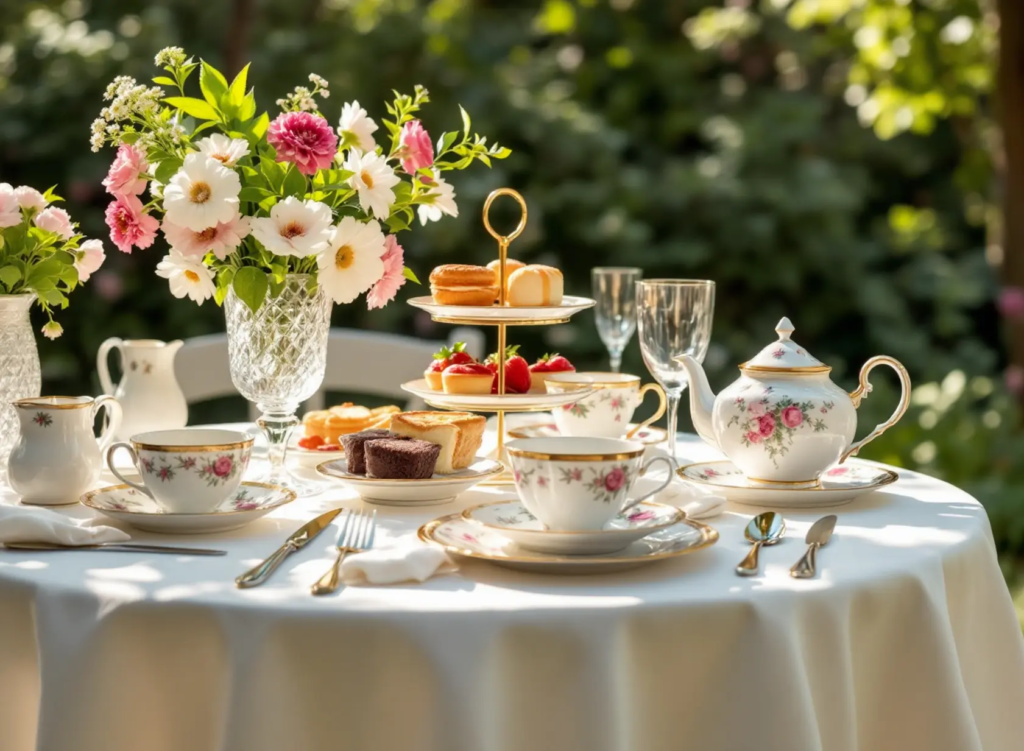
Few rituals feel as restorative as brewing and sharing tea with a beautifully made set. A well-chosen ensemble elevates quiet mornings and celebratory afternoons alike, transforming a simple beverage into an experience of aroma, texture, and conversation. Among all materials, porcelain stands apart for its silken finish, fine edgework, and luminous glow under natural light. Crafted from refined clays and fired at high temperatures, it delivers a harmony of delicacy and durability unmatched by everyday ceramics. Whether you’re a new host curating a first set or an enthusiast refining a collection, understanding how Porcelain Tea Service sets are designed, chosen, and used can turn each pour into a ritual of taste and style.
What Defines a Great Porcelain Tea Service Set
The essence of an exceptional tea service begins with materials. True hard-paste porcelain results from a precise blend of kaolin, feldspar, and quartz fired around 1,300°C, creating a vitrified body that is notably non-porous, bright, and resonant when lightly tapped. Variants such as bone china introduce bone ash for added lightness and translucency; soft-paste porcelain, meanwhile, mimics the look of hard-paste but with slightly lower firing temperatures. Look for a fine balance: a rim that appears sharp yet smooth to the lip, a vibrant white body that flatters the color of black, green, or herbal teas, and a glaze that is clear, even, and free of pinholes. The glaze should enhance, not mask, the clay body beneath, preserving that signature luminosity.
Design precision is more than aesthetics. An excellent teapot has a spout engineered for a clean laminar flow, minimizing drips and splashes. The lid should seat securely, ideally with a notch or inner flange to prevent wobble during pouring. Handles on both teapot and cups require thoughtful ergonomics: enough clearance for fingers, comfortable curvature for a relaxed grip, and heat management so you aren’t scorched before the second cup. Capacity matters too. A compact 400–600 ml pot serves two; 800–1,200 ml caters to gatherings. Multiple cups should nest elegantly into saucers with barely-there movement, and the set’s components—sugar bowl, creamer, dessert plates—should echo the same design language for visual unity.
Performance reveals itself over time. Quality porcelain retains heat long enough to extract full flavor without cooking leaves. Its smooth interior resists tea oils, preventing lingering bitterness. Weight is a tell: cups that feel featherlight yet balanced in the hand signal expert throwing or mold precision. Tap a cup gently—an even, bell-like ring suggests uniform vitrification. Examine foot rings; they should be polished smooth to protect tabletops and minimize wear. In premium sets, gilding or transfers are crisp and evenly applied, and any relief motifs remain tactile but not abrasive.
Style is the final determinant, because the best set is the one you’ll reach for often. Minimalist white showcases tea’s hue and suits contemporary spaces. Floral or neoclassical motifs feel right for afternoon tea and heirloom-lined hutches. Modern studios might combine matte and gloss, or contrast un-glazed biscuit porcelain with mirror-like glaze on the interior for a visually arresting pour. Whatever the look, a coherent palette and proportionate silhouettes lend the table a sense of intention—quietly signaling that hospitality here is both thoughtful and warm.
Choosing, Styling, and Caring for Your Tea Service
Begin your selection with how you drink tea. If you brew delicate greens or oolongs in small volumes, a petite pot with thin-walled cups emphasizes aroma and rapid temperature cues. Black teas and breakfast blends shine in slightly thicker cups that hold warmth for leisurely sipping. Consider the shape of the cup: tulip forms concentrate bouquet; wider bowls invite cooling and open the flavor. Browse curated collections of Porcelain Tea Service sets to compare glazes, capacities, and silhouettes side by side, noting how each will fit your daily rhythm—solitary mornings, weekday family use, or weekend hosting.
Styling brings the set into your home’s narrative. A timeless strategy is to use a mostly white porcelain base and introduce color through napkins, a runner, or a seasonal flower arrangement. For a bolder statement, mix patterns within a single color family: stripes with micro-florals in navy, or geometric borders paired with botanical centers in green. Layering saucers from one line with cups from another can add depth if rim diameters align. If your tableware skews rustic, a set with subtle reliefs or hand-painted trims bridges modern and traditional moods, while a pared-back cylindrical form complements minimalist interiors. Remember scale: a generously sized tray or charger grounds the vignette and helps organize the pot, cups, and sweets.
Care preserves both beauty and function. Although many pieces are dishwasher-safe, hand-washing prolongs gilt and decals, especially on vintage or fine items. Use a soft sponge, mild detergent, and lukewarm water; avoid sudden temperature swings that can cause craze lines in the glaze. To remove tannin stains, create a paste of baking soda and water, rub gently, and rinse thoroughly. Prevent metal marking from flatware by choosing stainless accessories with high polish, or by placing a napkin under spoons on saucers. Never microwave metallic trim, and don’t soak wooden-handled accessories against the porcelain where swelling could chip an edge.
Storage and daily habits make a difference. Stack cups carefully to protect rims, or store them on a rail by their handles to keep edges pristine. Line shelves with a soft liner to cushion foot rings and reduce micro-abrasions. Rotate what you use so every piece shares in the gentle wear of daily life, and keep a small kit—a magic eraser, microfiber cloth, and non-abrasive cleaner—nearby for quick touch-ups. Over time, these habits maintain the set’s luminous sheen, ensuring that every impromptu pour still feels like a special occasion.
Stories from the Table: Craft Traditions and Real-World Use
Consider a family heirloom: a mid-century European service, reserved for holidays, then pressed into weekly use during a home renovation when other dishes were boxed. The perceived fragility gave way to respect for porcelain’s real strength. Its glaze shrugged off sauce splatters, the cups warmed cold mornings, and a formerly “too precious” set became the new everyday. This shift illustrates a truth often missed: fine tableware, when well made, is designed not to hide behind glass but to serve. With care, it collects memories rather than dust, and its small chips or patina tell the story of countless shared meals.
A boutique hotel’s afternoon tea service offers another lens. The team selected high-white, undecorated pots and cups to let pastries and infused blends take visual center stage. Servers praised the clean pour from long, tapered spouts, which minimized drip marks on linens and accelerated turn times between seatings. Guests appreciated the silent glide of saucer against saucer, a byproduct of precision-polished foot rings. The choice was as practical as it was elegant: standardized, stackable pieces that withstood commercial dishwashers while retaining a gallery-worthy gleam under skylights—proof that beauty and business can align in the right Porcelain Tea Service sets.
Then there is the studio potter narrative, where small-batch sets bridge art and utility. Here, the maker might throw teapots slightly off-round to accentuate handwork, then apply a celadon or tenmoku glaze that pools into visual depth at the spout and handle. While not identical, the cups read as a family through proportion and palette. Owners cherish the individuality: a swirl in the foot, a brush of iron speck beneath the glaze, a barely-there thumbprint under the handle. These “signatures” personalize the ritual, turning each brew into a quiet conversation between hand and material, past and present.
Repair traditions add a final chapter. When a lid chips or a hairline crack appears, many fear it’s time to retire the piece. Yet techniques like kintsugi (gold-joined mending) transform damage into design, honoring the object’s service while sealing it for future use—often as a display star or dry-serving vessel for biscuits and sweets. Even modern epoxies, when used judiciously and with food-safety boundaries in mind, can extend the life of a beloved set. In a world eager to replace, restoring porcelain signals another form of hospitality: care for things that have cared for us, a sustainable cycle where tradition pours steadily into the present.