Introduction
Healthcare is undergoing one of the most significant transformations in modern history. Advances in artificial intelligence are changing how medical services are delivered, monitored, and managed. Hospitals are no longer the only centers for treatment. Today, technology allows healthcare to move directly into the home environment.
Artificial intelligence enables early diagnosis, continuous monitoring, predictive analysis, and personalized treatment. When integrated into home environments, it becomes even more powerful. The idea of A Smart Home Health Care system is rapidly gaining attention because it combines intelligent technology with everyday living spaces to support patients without constant hospital visits.
This approach benefits patients with chronic illnesses, elderly individuals, and people recovering from medical procedures. By embedding intelligent systems into the home, healthcare becomes proactive rather than reactive. The result is better health outcomes, reduced medical costs, and improved quality of life.
Understanding AI in Modern Healthcare
Artificial intelligence refers to computer systems designed to analyze data, learn patterns, and assist in decision making. In healthcare, these systems process vast amounts of medical information to support physicians, caregivers, and patients.
AI technologies can examine medical images, monitor vital signs, detect abnormal patterns, and provide clinical insights. These capabilities allow medical professionals to diagnose diseases earlier and recommend more precise treatments.
Common applications of AI in healthcare include:
- Medical image analysis for detecting diseases such as cancer
- Predictive analytics for identifying potential health risks
- Virtual health assistants that answer medical queries
- Automated patient monitoring systems
- Personalized treatment planning based on patient data
When these capabilities are connected with home technologies, the healthcare experience becomes more continuous and accessible.
The Rise of Smart Home Healthcare Systems
Traditional healthcare systems rely heavily on hospitals, clinics, and in-person appointments. However, this model can be inconvenient for patients who require frequent monitoring or long-term care.
Smart home technologies offer a different approach. Sensors, connected medical devices, voice assistants, and AI-powered software work together to track health conditions inside the home environment.
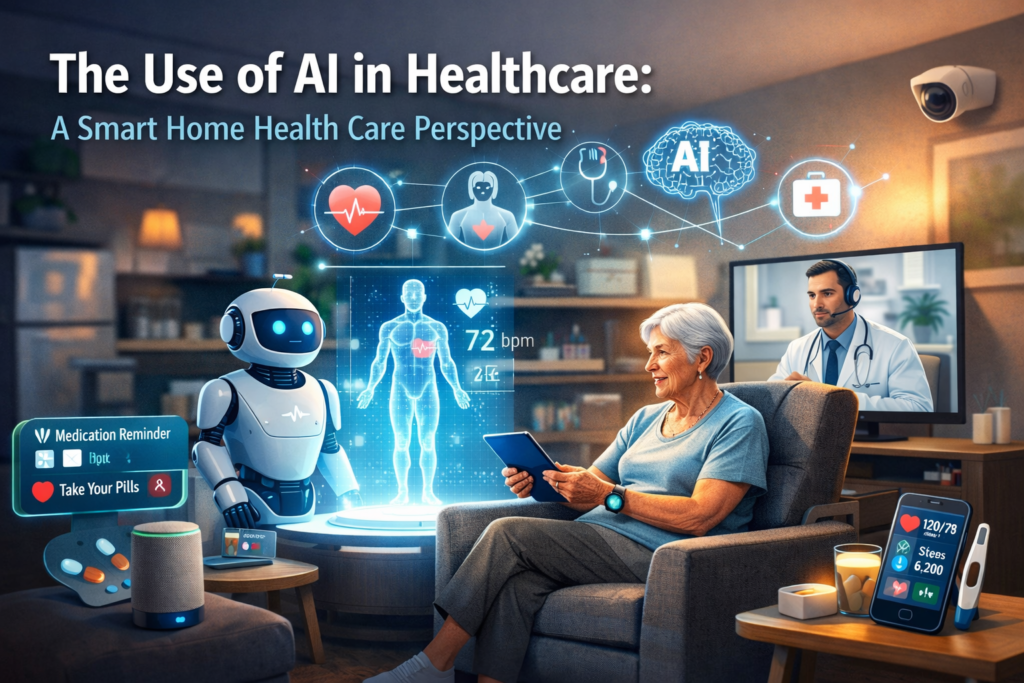
In A Smart Home Health Care model, everyday devices such as wearable monitors, smart beds, medication reminders, and connected health dashboards provide continuous medical insights. These systems send real-time data to healthcare providers who can monitor patients remotely.
This approach allows doctors to detect potential problems before they become serious. It also reduces the need for unnecessary hospital visits while ensuring patients receive timely care.
How Artificial Intelligence Enhances Home-Based Care
Artificial intelligence plays a crucial role in making home healthcare systems efficient and reliable. AI does more than collect health data. It interprets information and provides meaningful insights that help patients and doctors make informed decisions.
Several intelligent features are transforming home healthcare.
Real-Time Health Monitoring
AI-powered wearable devices can track vital signs such as heart rate, oxygen levels, sleep patterns, and blood pressure. These devices send data to intelligent systems that analyze patterns and alert caregivers if something unusual occurs.
For elderly patients living alone, this feature can be life saving.
Predictive Health Analysis
AI can identify early warning signs of medical conditions by analyzing historical health data. For example, patterns in blood pressure or glucose levels can indicate potential complications.
Predictive analysis allows healthcare professionals to intervene early rather than waiting for symptoms to worsen.
Intelligent Medication Management
Many patients struggle with managing multiple medications. AI-driven systems can provide reminders, track medication schedules, and alert caregivers if doses are missed.
This reduces medical errors and ensures treatment plans are followed accurately.
Virtual Health Assistants
AI-powered voice assistants can answer medical questions, provide reminders, and guide patients through basic health checks. These assistants also help patients schedule appointments or communicate with healthcare providers.
Such tools make healthcare support available at any time without requiring direct human interaction.
Benefits of AI-Powered Smart Home Healthcare
Integrating artificial intelligence with home healthcare provides a wide range of advantages for patients, families, and medical professionals.
Improved Patient Independence
Many elderly individuals prefer to remain in their homes rather than move to assisted living facilities. AI-enabled monitoring systems allow them to maintain independence while still receiving medical supervision.
Reduced Healthcare Costs
Hospital admissions and long-term care facilities can be expensive. Home-based healthcare systems help reduce these costs by preventing unnecessary hospital visits and enabling remote consultations.
Early Detection of Medical Issues
Continuous monitoring allows healthcare systems to detect problems earlier than traditional checkups. Early detection often leads to more effective treatments and improved outcomes.
Better Chronic Disease Management
Chronic illnesses such as diabetes, heart disease, and respiratory conditions require constant monitoring. AI systems can track symptoms and provide real-time insights that help patients manage their conditions more effectively.
Improved Communication with Healthcare Providers
Smart home healthcare systems allow doctors to access patient data remotely. This means medical professionals can track progress, adjust treatments, and provide guidance without requiring in-person visits.
Key Technologies Behind Smart Home Healthcare
Several technologies work together to make AI-driven home healthcare systems possible. Understanding these technologies helps illustrate how advanced and practical these systems have become.
Internet of Medical Things (IoMT)
Connected medical devices form the foundation of home healthcare systems. Devices such as glucose monitors, blood pressure cuffs, and smart thermometers collect health data continuously.
Machine Learning Algorithms
Machine learning enables AI systems to analyze patient data and identify patterns. Over time, these systems become more accurate in predicting health outcomes.
Smart Sensors
Sensors installed in homes can monitor movement, detect falls, and track daily activity patterns. This is particularly helpful for elderly individuals who may require assistance.
Cloud-Based Health Platforms
Cloud systems store and analyze health data collected from home devices. Healthcare providers can access this information securely from anywhere.
Together, these technologies create a comprehensive ecosystem that supports A Smart Home Health Care approach.
Challenges and Ethical Considerations
Despite its benefits, AI-powered home healthcare also presents several challenges that must be addressed carefully.
Data Privacy and Security
Health information is extremely sensitive. Protecting patient data from cyber threats and unauthorized access is essential for maintaining trust in digital healthcare systems.
Technology Accessibility
Not all patients are comfortable using advanced technologies. Designing user-friendly systems is necessary to ensure everyone can benefit from home healthcare innovations.
Dependence on Technology
While AI systems are highly effective, they should complement human medical expertise rather than replace it. Doctors and caregivers remain essential for interpreting complex medical situations.
Infrastructure Limitations
Reliable internet connectivity and access to digital devices are necessary for smart healthcare systems to function effectively. In many regions, these resources may still be limited.
Addressing these challenges will help ensure that AI-driven home healthcare systems are both safe and accessible.
The Future of Healthcare at Home
The integration of artificial intelligence into healthcare is still evolving, but its potential is enormous. As technologies become more advanced, home healthcare systems will become even more intelligent and responsive.
Future developments may include:
- AI systems capable of detecting diseases years before symptoms appear
- Advanced robotic assistants for elderly care
- Personalized health recommendations based on genetic data
- Fully integrated smart homes designed specifically for healthcare support
These innovations will continue to reshape how healthcare services are delivered. The vision of A Smart Home Health Care environment will become increasingly common as technology becomes more accessible and affordable.
The shift toward intelligent home healthcare represents a major step forward in patient-centered care. By combining artificial intelligence with everyday living environments, healthcare becomes more convenient, proactive, and personalized. This transformation not only supports medical professionals but also empowers individuals to take greater control of their health and well-being.

