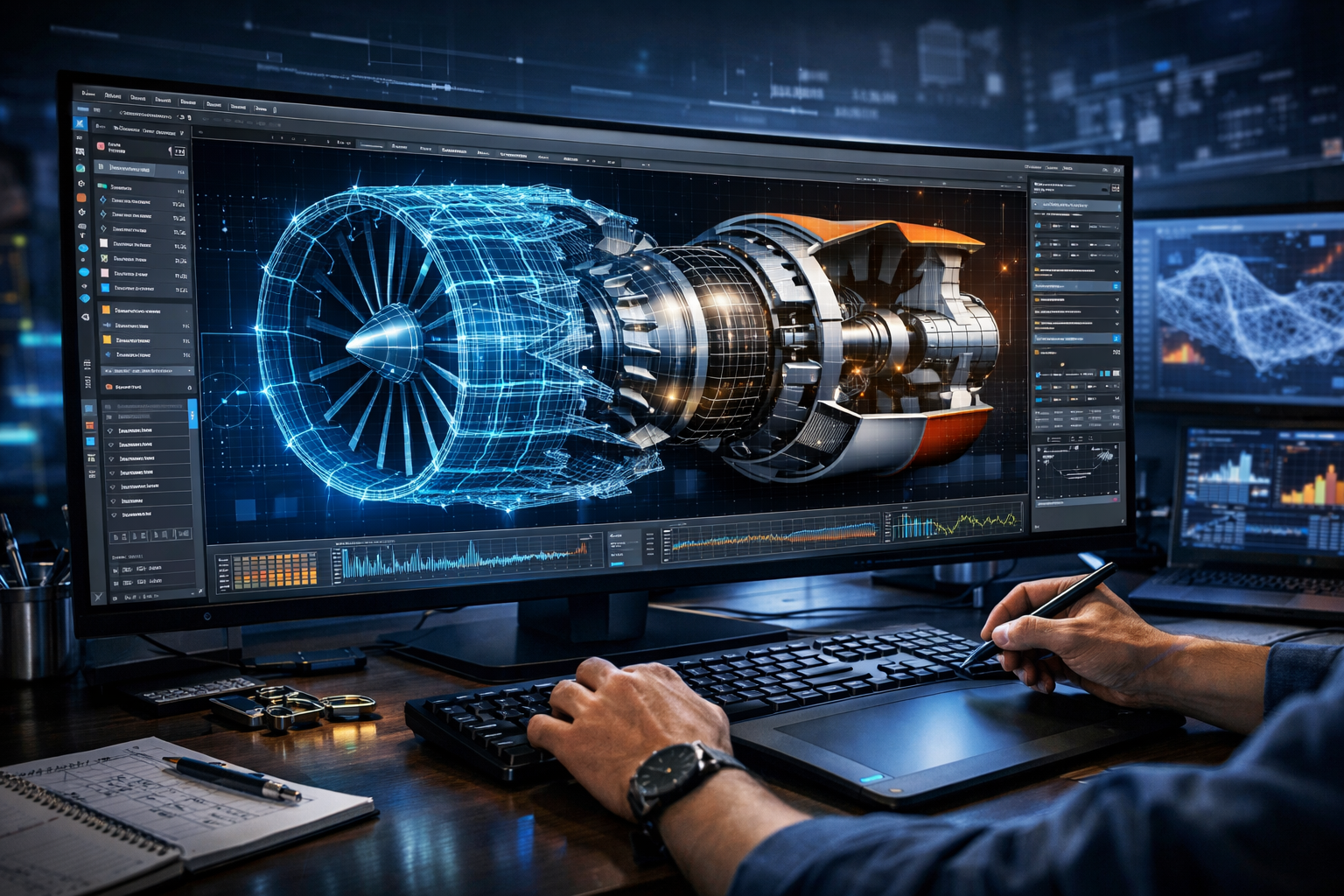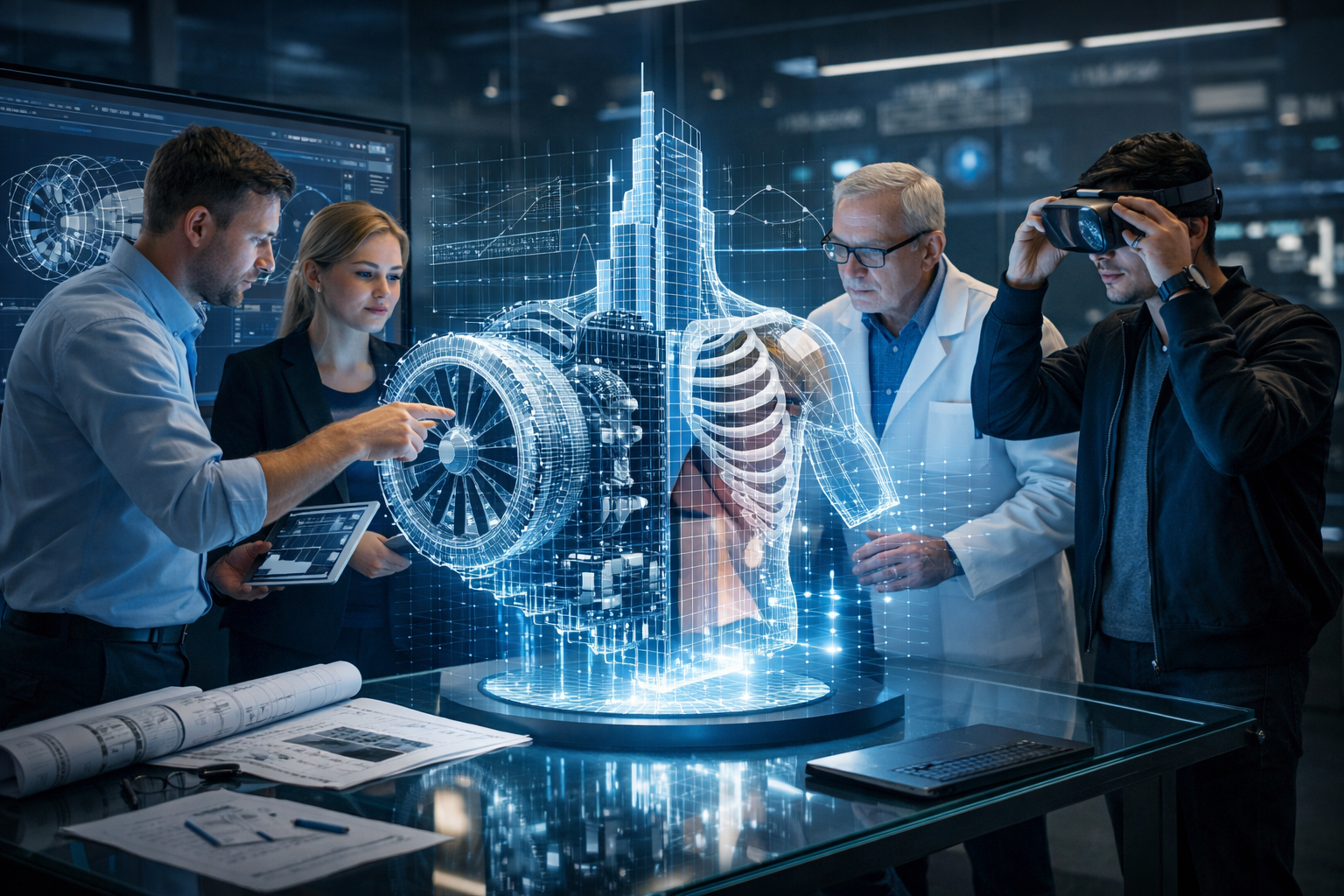
Visual communication in the contemporary world has changed to being more than drawings and sketches. It includes an accurate and mathematically based depiction of shapes and spaces beyond the human ability to imagine. At the centre of this development is geometric modeling, which is a field that employs mathematical methods in order to describe, manipulate and communicate complex forms and structure. The engineering designs to architectural blueprints, medical imaging to digital media, geometrical modeling is a tool in the foundations of expressing spatial information in a clear and correct way.
This paper reviews the complex use of geometric modeling in contemporary visual communication and how it helps in increasing clarity, minimizing ambiguity, and simplifying collaborative processes in a wide range of professional settings.
Understanding Geometric Modeling
Geometric modeling refers to the development of mathematical expressions of three-dimensional (3D) objects. In contrast to the traditional drawings, which rely on subjective interpretation, geometric models have accurate numerical data of defining shapes, dimensions, and spatial relationships. Such models may be present in the form of curves, surfaces, or solid representation depending on the level of detail and the demands of the application.
For deeper theoretical perspectives related to historical transformative texts and their influence on modern intellectual development, foundational works across disciplines demonstrate how structured systems of representation shape contemporary communication fields, including geometric modeling.
Types of Geometric Models
Wireframe Models
Wireframe models depict objects in terms of vertices and edges in the form of no-surface objects. They give a skeletal appearance of the object which can be used to explain the structure within the object.
Surface Models
Surface modeling establishes the external boundaries of things. It is common in the design of cars and planes to depict aerodynamic forms.
Solid Models
Solid modeling explains the entire volume of an object which makes it possible to simulate, measure and analyze properly. It is inherent in engineering and architecture to develop accurate prototypes.
Parametric Models
Object definition Parametric modeling enables designers to define objects on the basis of parameters and constraints. Automatic updating of the model is done by changes in parameters making the iterative design of the model easier.
Through these forms of modeling, practitioners are able to develop digital models that are used to represent complex geometries in a very accurate manner eliminating chances of being misinterpreted.
Geometric Modeling in Engineering
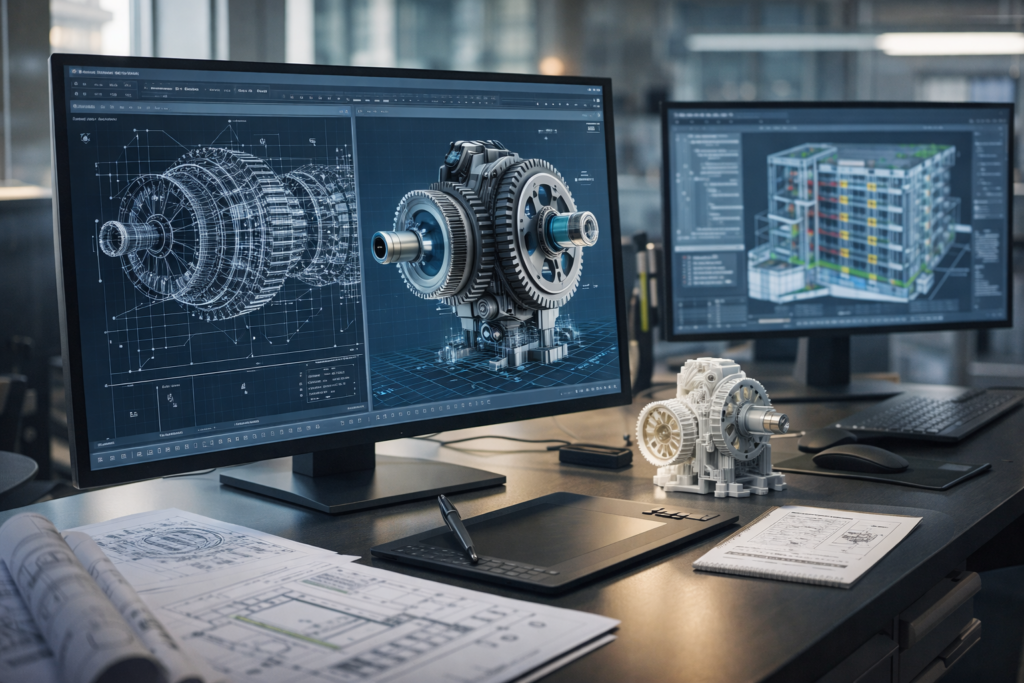
Engineering projects involve very elaborate parts which have to be in harmony with each other. Geometric modeling helps an engineer to visualize, analyze and optimize designs prior to a physical production.
Increasing Precision and Accuracy
The engineers use geometry models to ascertain that the components fit as planned. As an example, in mechanical engineering, CAD (Computer-Aided Design) software is a geometric modelling that defines all curves, edges, and surfaces of an object in a machine part. This accuracy enhances the error reduction, lessens the material wastage and speeds up the production process.
Making Simulation and Testing Easy
Simulations, including stress analysis, thermal dynamics, as well as fluid flow, are based on geometric models. Exact geometry modelling makes sure that simulations give valid responses, which may be used to make design improvements without expensive prototyping.
Enhancing Work Collaboration
The contemporary engineering projects tend to be multidisciplinary. Geometric models enable the coordination of work of mechanical, electrical and software engineers. By using common digital models, engineers are able to arrange tolerances, interfaces and assembly processes effectively.
Geometric Modeling in Architecture
Architecture depends a lot on visual communication in order to translate conceptual designs into built environments. Geometric modeling has transformed the sphere offering the tools that can support creativity and accuracy.
Between Conceptual Sketches and Digital Reality
The architects tend to begin with conceptual drawings, which are converted into geometric ones. There are software applications such as BIM (Building Information Modeling) that incorporate geometric modeling to develop detailed building representation, such as walls, roofs, structural elements, and even the interior ones.
Improving Spatial Visualization
Geometric modeling enables architects to experiment with the characteristics of space, lighting, and material under a virtual environment. This enhances client, stakeholders and construction teams interpretability. The complex forms e.g. curved facades or freeform geometries can be conveyed without any ambiguity.
Favors of Sustainable and Efficient Design
Geometric modeling enables architects to model energy usage, sunlight exposure and air circulation movements. Such simulations make sustainable designs informed so that buildings can be efficient in meeting environmental and regulation requirements.
Geometric Modeling in Medicine
In medicine, anatomy is an essential component of an art that requires a clear visualization of anatomical structures in order to help in diagnosis, surgical planning and education. Geometric modeling gives clinicians the right 3D models of the organs, tissues and physiological systems.
Medical Imaging 3D Reconstruction
MRI, CT scan techniques and ultrasound techniques produce volumetric information which can be converted into geometric models. These models enable doctors to discuss patient anatomy in detail and in 3D and improve the quality of diagnosis and the structure of the operation.
Increasing Surgical Accuracy
Geometric models help the surgeon to perform complex operations and provide an opportunity to simulate the procedure and practice it in advance. An example of this is in orthopedic surgery, bone and joint models are used to assist in the fitting and adjustment of the implants and minimizing the risk involved in the surgery and enhancing the outcomes of the patient.
Communicating and Educating
Geometric modeling is used as an educational resource in the medical field. The students will be able to manipulate 3D models of human anatomy and it will provide the students with better understanding of complex spatial relationships. Besides, the models assist physicians to describe conditions and operations to patients in a more comprehensible manner.
Geometric Modeling in Digital Media
Geometric modeling is used in the entertainment and digital media industry to generate immersive experience in animation, games and virtual reality.
Creating Realistic Visuals
Geometric modeling determines the shapes, the textures and movement of digital characters, objects and environments. These models in combination with the rendering techniques allow creating photorealistic images, which facilitate storytelling and consumer interaction.
Sponsoring Interactive Experiences
Geometric models are used in the virtual reality (VR) and augmented reality (AR) to enable users to manipulate digital objects in real time. The correct modeling will guarantee the predictable behavior, collision detection and the ability to perceive space in a realistic manner, which is essential to the simulated experience.
Automation of Business Processes
Geometric models enable cooperation between the animators, designers, and programmers. The modifications to the models automatically spread across various assets and minimize mistakes and amplify production schedules.
Benefits of Geometric Modeling in Visual Communication
In all these areas, geometry modeling can be viewed to have a few major advantages that can make a visual communication more effective.
Reducing Ambiguity
Geometric modeling eliminates interpretive ambiguity of hand-drawn sketches by the representation of shapes mathematically. All the dimensions, curves and angles are specified in detail and there is less confusion among professionals.
Enhancing Interpretability
Digital models can be viewed in various angles, scaled without deformation and marked with metadata. This enhances understanding to the experts and non experts in a way that complicated spatial information is communicated in an understandable manner.
Improving Collaboration
The geometric models serve as a universal language of multidisciplinary teams. Models can be shared and amended concurrently, tracks versions and is improved over time to promote effective teamwork across geographical and professional borders.
Supporting Innovation
Geometric modeling allows experimenting with new forms, structures and materials due to the accuracy and flexibility of this modeling. Designers and engineers can look at creative solutions which otherwise would have been hard to attain using conventional means.
Trends in Geometric Modeling in the Future
The future of the geometric modeling is connected with the new technologies, including artificial intelligence (AI), machine learning, and generative design.
AI-Enhanced Modeling
Pattern recognition, error detection, and optimization are some of the areas of geometric modeling, which can be automated with the help of AI. This save on human labor and improves accuracy and efficiency.
Generative and Parametric Design
Generative design algorithms take as input constraints geometric models of what can be explored by them to the thousands of possible solutions. This method is already revolutionizing engineering and architecture because it allows extremely optimized and innovative designs.
Integration with AR and VR
The integration of the application of geometrical modeling with AR and VR holds out the promise of immersive collaborative environments. The 3D models enable designers, engineers, and clients to communicate with real time models, resulting in quicker and more informed decision-making.
Conclusion
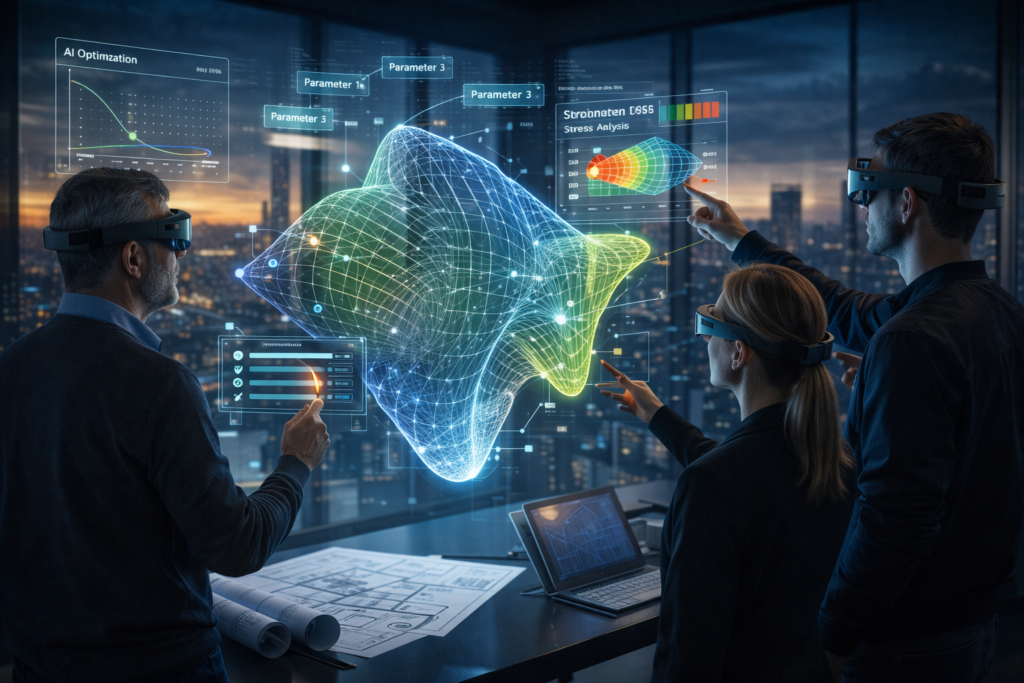
Geometric modeling is not merely a technical device, but it is a language of visual art everywhere. It provides the connection between imagination and reality by giving specific, interpretable, and manipulable representations of shapes. Geometric modeling, in all fields of engineering, architecture, medicine, and digital media, removes ambiguity, enhances group work and promotes innovation. With the advancements in technology, the use of geometric modeling will only expand and professionals will have ability to present more sophisticated spatial information succinctly and clearly.
Knowing and using the rules of the geometric modeling, the contemporary industry can keep on and bring ideas into practice as it stretches the limits of designing, communications and visualizations.