The anatomy of the dentin is sometimes said to be a study in form, which however is not true; it is a study in substance. All ridges, grooves, cusps and contours of a tooth would be there because they have a particular mechanical or biological purpose. The dentition of humans is not a fortuitous construction; they represent an extremely optimized system, which helps in chewing, speaking and supporting the regulation of vertical facial dimension. This knowledge of the interaction between structure and their functions is the key to understanding how oral structures come together in a coordinated biomechanical unit.
The evolutionary and functional models of teeth qualify them as engineered structures. Their morphology met the requirements of mastication, phonetics and occlusivity of these teeth. Such minor variations in shape may cause changes in the distribution of forces, the efficiency with which food is broken down, and how stable the jaws will be during rest and operation.
The First Law of Nature: If it looks like a duck, it ought to act like a duck.
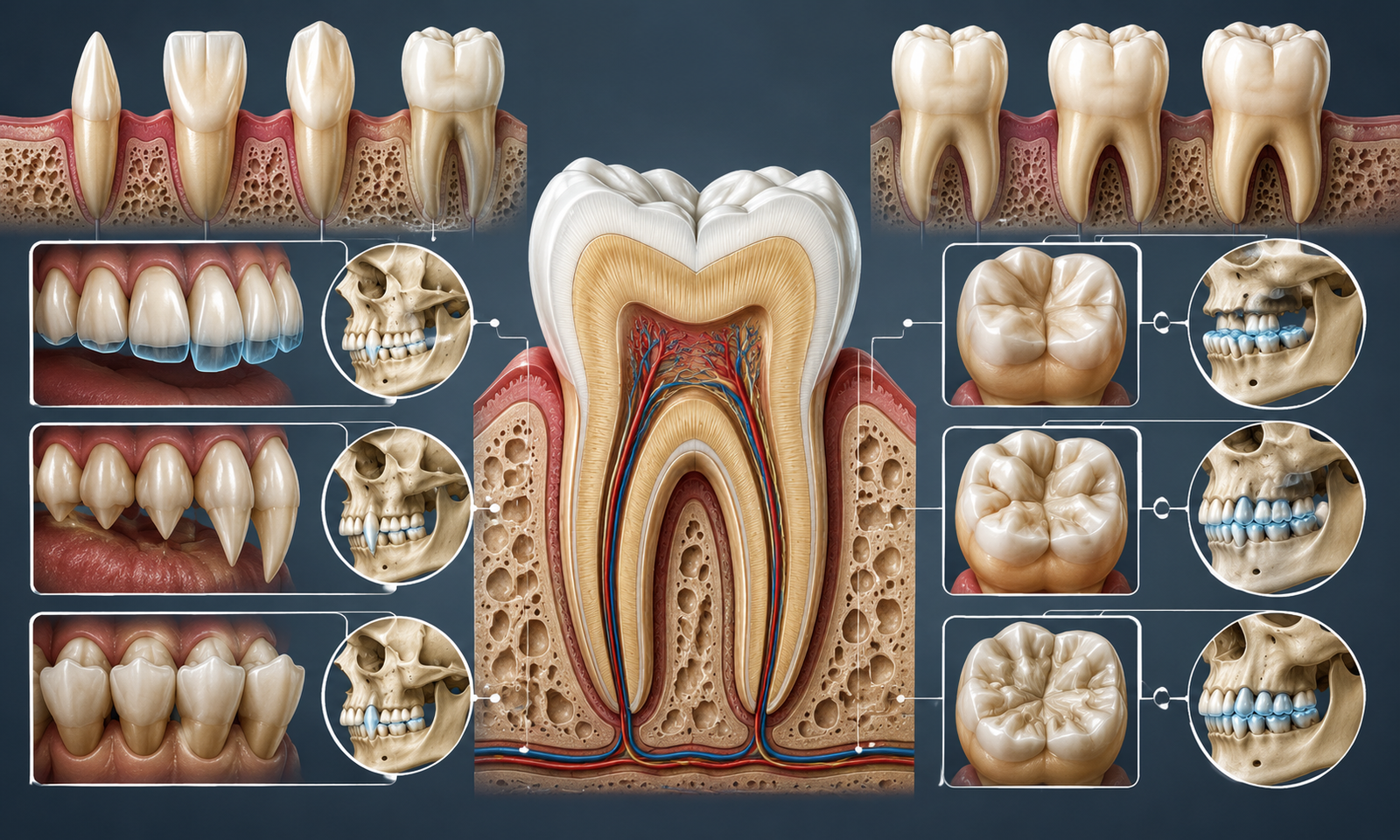
This is a simple yet mighty point in the very fabric of dental anatomy, the structure is the determinant of performance. The design of the teeth is well-designed in that they have a better form which enables it to carry out a better role. Incisors used to cut, canines to tear, and molars to grind- Generalized, which is comprehensive and affects all categories and the majority of individuals.<|human|>Generalized meaning comprehensive and subjecting to all the categories and most people.
This division of labour is not accidental. It is the expression of biomechanical optimisation. As an illustration, posterior teeth are designed in such a way that they handle the vertical compressible forces, whereas anterior teeth are made in such a way that they can handle the vertical compressible forces. All the enamel thickness, dentin support and occlusal morphology lead to this functional balance.
Anything that causes a change in any area of this system (through wear, restoration or malocclusion) may result in the impaired efficiency of the whole oral system. This is the reason why the restorative dentistry gives a lot of concern to the replication of natural tooth structure as close as possible.
Cusp Height, and Its Functional Significance.
Cusp design is one of the most important features of the posterior tooth morphology. The height of cusps is significant in the way of transmission and distribution of occlusion forces during chewing.
Steeper cusps are likely to augment occlusal efficiency by augmenting the shearing/ grinding action of teeth. Nevertheless, too high cusps can cause instability or lead to more likelihood of occlusal interference. Flatter cusps on the other hand distribute forces more uniformly, however, it might lessen chewing capabilities.
Cusp height affects biomechanically:
- Direction of forces: Steeper cusps have forces directed more vertically whereas flatter cusps have forces directed more horizontally.
- Efficiency of food breakdown: Better penetration and shearing of food particles occurs because there are higher cusps.
- Occlusal stability: Has balanced cusp height which allows smooth cuspation without premature contacts.
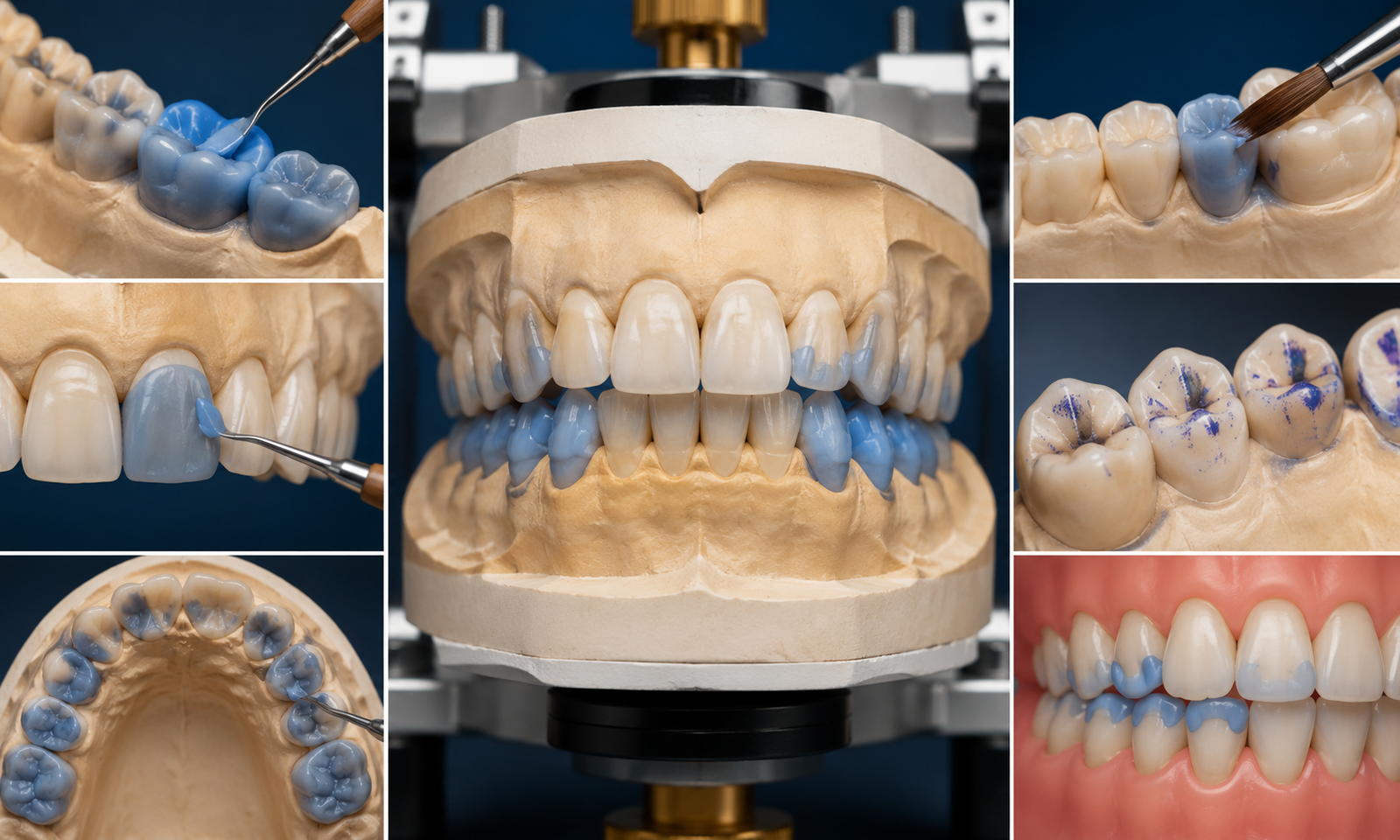
In the field of clinical dentistry, proper cusp height is also a key aspect in the field of restorative dentistry such as crowns and occlusal variables. The reconstruction of the cusp inappropriately may result in an uneven distribution of the forces, tension of the temporomandibular joint, or increased tooth wear.
To continue reading on the effect that cusp height has in response to the action of the occlusal mechanisms and the mandibular guidance, see:
https://pubmed.ncbi.nlm.nih.gov/3198852
Arch Direction and Use harmony.
The dental arches are not mere curvy lines of teeth; but the dynamic structures of the body to be in balance and efficient use. Correct arch positioning and balance allows equal distribution of the occlusives force over the dentition, and safely transferred to the supporting bone.
Manidibular and maxillary arches are designed in a coordinated relationship complementary to each other. Such an alignment permits the intercuspation process in mastication to proceed smoothly and so avoids placing undue stress in individual teeth.
Important functional functions of arch alignment are:
- Distribution of forces: Well aligned arches have the masticatory forces distributed between more than two teeth.
- Occlusal efficiency: To achieve maximum contact with food during chewing periods, it is important to have good alignment.
- Bite stability: Untipped arches can decrease the occurrence of floating teeth or malocclusion.
The loss of functional efficiency of the whole system occurs when there is disruption in arch alignment, which is brought on by crowding, spacing or loss of teeth. This tends to cause disproportionate wear patterns and impairment of the ability to chew.
Occlusal Guidance and Mandibular Movements.
Occlusal guidance is the distribution of teeth in mandating jaw motions in action. It is a critical factor in dental biomechanics and is the means to achieve smooth and controlled mandibular motion and nondamaging interference.
The anterior teeth (especially incisors and canines) are predominant in directing the mandible in protrusive and lateral action. This direction ensures the protection of teeth at the back of the mouth against overload of lateral forces which may result in wear or fracture.
There are three key aspects of occlusal guidance:
- Anterior guidance: Front teeth, direct forward and lateral jaw movements.
- Canine guidance: Canines cushion posterior teeth when there is a side to side movement.
- Group action: When canine guidance is not observed, multiple teeth in the back of the mouth are part of a load-sharing group as they tend to be involved in the lateral movement during which load sharing takes place.
Effective occlusal instructions make the forces act along long axes of teeth, which reduces the stress of an extension, and also maintains tooth structural integrity.
Dental Form in Chewing Efficiency.
The chewing, or mastication, process belongs to the number of the most significant due to the dentition. It is very dependent on the accurate interaction between tooth shape and occlusal forces.
The teeth in the back are broadocclusally formed with more than one cusp which is designed to crush and grind foods. The combination of cusp height, fossa depth with marginal ridges forms a very effective grinding system.
During mastication:
- Food is first squeezed in-between facing cusps.
- All shearing is a result of the sliding of cusps across occlusives.
- Fracturing is done using vertical forces.
The effectiveness of such process lies completely on the precision of the morphology of teeth. Any form deviation including flattened cusps or improper occlusal contacts, lowers the effectiveness of chewing and can provide added stress on the surrounding structures.
Form and Speech Production of the Dental Speech.
Speech also takes an important part in teeth as they help to articulate some of the consonant sounds. Form and function are not limited to mastication but in phonetics.
The teeth located in the front are particularly significant in the production of such sounds as f, v, th and s. These teeth have their position, inclination and alignment which affect the airflow and contact of the tongue.
For example:
- Incisors assist in regulating air flow when making fricative/phonetics.
- Right spacing guarantees the articulation though not distorted.
- Form of the arches influences the placement and resonance of the tongue.
Even a slight change in tooth position or shape can have the influence on the speechareness. That is why the orthodontic and prosthetic therapy frequently takes into account phonetic results together with esthetics and functionality.
Maintaining Vertical Dimension.
The vertical dimension of occlusion can be defined as the height of the upper and low jaw when the teeth come into contact. Dural morphology has proven to be pertinent in terms of ensuring the maintenance of this vertical aspect.
The cusp height, anatomy of the occlusal surface and tooth contact patterns are all factors that determine the support of the jaws during closure. Properly formed teeth have a constant vertical dimension that provides support to the aesthetic aspects of the faces and the balance of the muscles.
Loss of occlusal height- through wear, tooth loss or inappropriate restorations- can result in:
- Reduced facial height
- Muscle fatigue
- Temporomandibular joint discomfort
- Compromised chewing efficiency
It is not only crucial in preserving oral functionality but also the general facial expression.
Dental Morphology Biomechanical Principles of Dental Morphology
Teeth functional design has a basis on the basic biomechanical concepts. These are force distribution, minimization of stress and optimization of structure.
Key principles include:
- Load distribution: Teeth are formed to have forces distributed across enamel and supporting dentin.
- Reduction of stress: Curvy surfaces minimize the locations of concentration points of stress.
- Energy efficiency: Occlusal design involves minimizing muscular effort used to chew.
- Mechanical advantage: Cusp-fossa correlations increase the efficiency of grinding.
Every tooth is literally a Biomechanical device designed to do some monotonous mechanical labor without necessarily breaking down during a long period of service.
Clinical implication of form functioning relationship.
In clinical dentistry it is imperative to understand the connection between form and function. To maintain functionality, the natural anatomy must be replaced in a process of restorative procedures.
The Core clinical applications are:
- Restorations: Crowns and fillings need to be carried out to restore normal cusp height and occlusal contours.
- Orthodontics: The corrections of the alignments should also extend the restoration of functional occlusion.
- Prosthodontics: Dentures and braces need to stand at the vertical dimension as well as at the occlusal balance.
- Occlusal changes: Bite relationships refinement helps to avoid over wear, and discomfort.
Such compounds can result in the long-term effects of long-term complications in the form of long-term instability, muscle strain, and dysfunction of the joints.
Conclusion
Gravity Approach Gravity being a fundamental law that all aspects of oral performance abide by, the relationship between form and function in dental anatomy is a fundamental principle that governs all aspects of oral performance. The cusp heights and arch alignments, as well as the occlusal guidance, and the vertical dimension of each structural component of teeth have a specified mechanical function.
Teeth are not mere structures, they are highly specialized tools that are designed to be efficient, stable and last as long as possible. Compared to the extent of strength and precision, their morphology indicates the delicate balances between the muscles and their task.
In the natural and clinical environment, it is critical to respect this relationship. In diagnosis, in planning of therapy, or in restoration, the objective is the same: to save, or to restore, the natural harmony between form and function that constitute a healthy and functional dentition, and that is also stable.