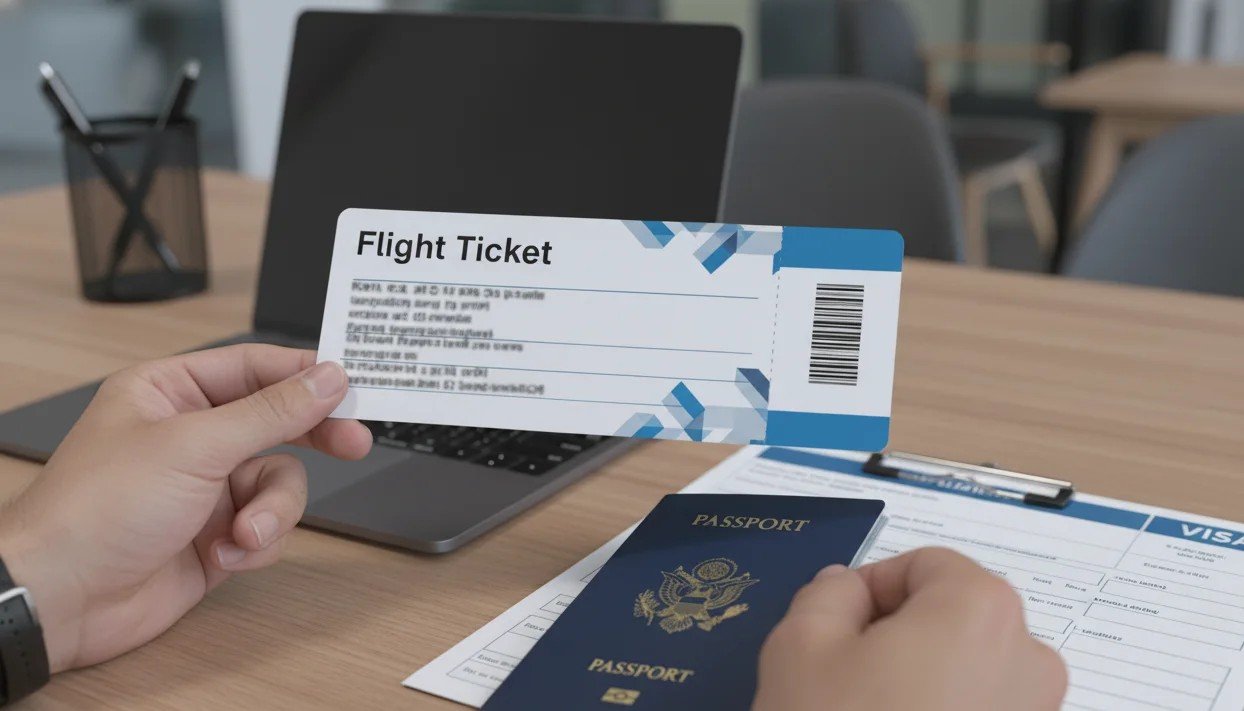
For the modern digital nomad, the dream of total freedom—the ability to wake up in Bali and decide on a whim to head to Lisbon—often hits a very boring, very frustrating wall at the airport check-in counter: the proof of onward travel requirement.
In a recent survey we conducted among 100 active digital nomads, we uncovered a staggering trend in how travelers are navigating these bureaucratic hurdles. The results were clear: the traditional “fixed itinerary” is dead. In its place, a new gray-market economy has emerged.
The Survey: A Shift in Strategy
We asked 100 long-term travelers how they handle immigration requirements when entering a country that demands proof of an exit flight. The data reveals a massive shift toward alternative solutions:
| Travel Strategy | Number of Nomads (Out of 100) |
| Used a “Dummy Ticket” Service | 80 |
| Booked a fully refundable flight | 12 |
| Booked their actual next destination in advance | 5 |
| Attempted to enter without any proof | 3 |
According to our findings, a whopping 80% of nomads now rely on dummy ticket to cross borders. This isn’t just a niche trick anymore; it is the standard operating procedure for the location-independent community.
Why the Shift? The Death of the Fixed Itinerary
Why are the vast majority of nomads choosing “rented” tickets over real ones? It comes down to the core philosophy of nomadism: maximum flexibility.
1. The “Commitment” Problem
Nomads often don’t know if they’ll love a city or want to flee it after a week. Buying a real, non-refundable ticket months in advance locks them into a date and location, defeating the purpose of being a “nomad.”
2. Financial Liquidity
While “fully refundable” flights are an option, they are often the most expensive tickets on the plane. A nomad might have to tie up $1,200 in a business-class seat just to satisfy a visa requirement, then wait 30 days for the refund to process. For many, that’s capital that could be better spent on accommodation or experiences.
3. The Visa Catch-22
Many countries require proof of exit before they even grant a visa. If the visa is denied, the traveler is out the cost of a real flight. Dummy tickets provide a low-cost ($10–$15) insurance policy against bureaucratic rejection.
Understanding the “Dummy” Ticket
It is important to distinguish between a “fake” ticket and a “dummy” ticket. Our survey respondents noted that they avoid “fake” tickets—photoshopped PDFs or generated layouts—because they carry the risk of fraud charges or being blacklisted.
Instead, the 80% majority use verified reservation services. These companies use global distribution systems to create a legitimate flight hold with a valid PNR (Passenger Name Record). For 24 to 48 hours, that ticket exists in the airline’s database. If an immigration officer checks the code, it shows as a valid, confirmed reservation. After the traveler passes through customs, the hold simply expires.
The Risks of the Open Road
Despite its popularity, the strategy isn’t foolproof. If a flight is delayed and the 48-hour hold expires while the nomad is still in transit, they may be forced to buy a last-minute, full-price ticket at the gate. However, for 8 out of 10 nomads, that is a calculated risk they are willing to take to keep their horizons open.