The combination of TMS and Ketamine therapy brings fresh possibilities for treating patients with treatment-resistant depression.
People who suffer from depression find standard treatment methods including antidepressants and psychotherapy sessions to be effective for their condition. The symptoms of depression continue to affect numerous people after they have tried multiple medications and spent numerous months in therapy. Treatment-resistant depression affects millions of people annually because standard treatments fail to deliver sufficient results.
The scientific community has discovered fresh solutions which bring new possibilities for depression treatment. The medical field now offers two innovative treatments known as Transcranial Magnetic Stimulation (TMS) and Ketamine therapy which help patients achieve significant improvements when traditional treatments fail. The brain receives novel stimulation through these treatments which create effective non-invasive methods for recovery.
Why Standard Methods Fail
Standard treatment methods fail to deliver sufficient results to patients.
Each person experiences depression in their own unique way. The current treatment methods for depression including SSRIs and therapy sessions use a standardized approach which fails to understand the unique brain functions of every individual. The way people respond to treatment depends on their genetic makeup and their body’s reaction to medications and their exposure to environmental stressors.
The diagnosis of treatment-resistant depression occurs when patients fail to achieve success with two or more antidepressant medications. The condition creates deep disappointment yet it indicates that patients need to try alternative therapeutic methods.
HWS Center, along with other mental health clinics, now use advanced treatment methods to create individualized care plans which bring new hope to patients who have endured depression for many years.
The Mechanism of TMS Therapy
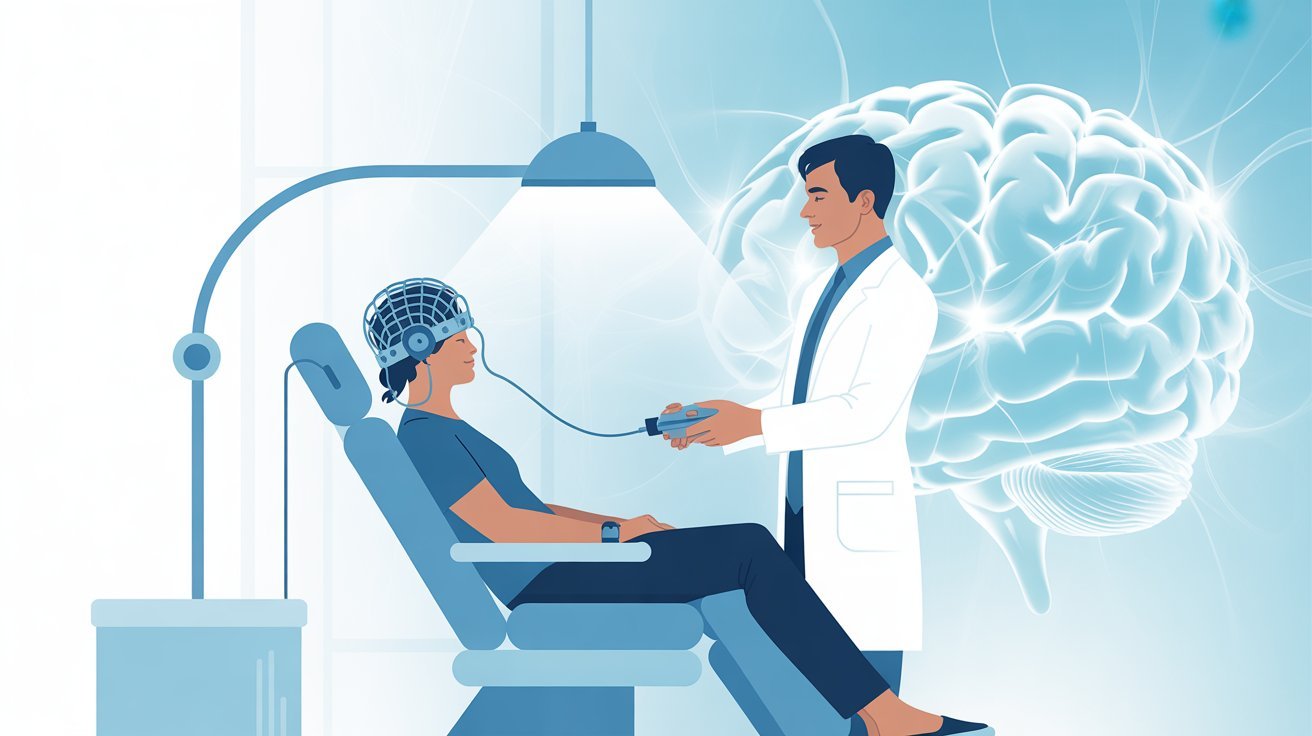
Transcranial Magnetic Stimulation (TMS) stands as a promising treatment for patients who have not achieved success with medication. The non-invasive treatment method uses soft magnetic waves to activate brain regions which control mood regulation, especially the prefrontal cortex which shows decreased activity in people with depression.
TMS therapy operates through a different mechanism than traditional antidepressants because it does not use chemical substances or systemic reactions. The treatment method operates by enhancing brain neural activity which enables the brain to create new connections that help patients achieve emotional stability. The treatment process takes 20 minutes while patients stay alert and feel no pain during the entire session.
Research evidence demonstrates that TMS therapy enables numerous patients to achieve depression remission or substantial symptom reduction after failing previous treatments. The FDA has approved TMS as a safe and effective psychiatric breakthrough which medical professionals use to treat patients.
Patients who want to try innovative TMS therapy for depression should consult a qualified mental health professional to assess their eligibility for this treatment approach.
Ketamine Therapy: A Fast-Acting Treatment Option
Ketamine Therapy serves as a fast-acting treatment option for patients with treatment-resistant depression.
The psychiatric community has discovered Ketamine as a treatment for depression because it helps patients achieve fast relief from their symptoms even when they have not responded to previous treatments.
The treatment process of Ketamine therapy produces fast results because patients start showing improvement within short periods of time ranging from hours to days. The treatment method operates through the brain’s glutamate system to establish better neuronal communication and develop fresh neural pathways.
The treatment of Ketamine infusions brings complete relief to numerous patients who suffer from ongoing depression symptoms and suicidal thoughts and anxiety. The treatment serves as a life-saving solution for patients who have exhausted all available conventional treatment options.
The combination of TMS and Ketamine therapy under proper medical supervision leads to better results because it treats brain circuitry and chemical imbalances. The future of mental health treatment will use science-based approaches to create personalized care plans that address individual needs with compassion.
Who Benefits Most from New Treatments
These methods work best for specific patient groups and patients who have not responded to standard antidepressant medications.
The new treatments work best for two main groups of patients.
- People with treatment-resistant depression or major depressive disorder who have not responded to previous treatments.
- People who experience negative side effects from standard antidepressant medications.
- People who want to manage their moods through non-invasive methods that do not require drugs.
- People who have lost emotional sensitivity after undergoing therapy for several months.
Modern psychiatry focuses on finding the correct therapy for each person based on their biological characteristics and life experiences. The individualized treatment method enables healthcare providers to achieve better results which patients can trust for their recovery journey.
Finding the Right Provider in New Jersey
New Jersey residents who need to find their ideal healthcare provider for their needs.
The success of alternative therapies depends on working with experienced healthcare professionals. Patients need to select providers who bring together their clinical skills with state-of-the-art diagnostic equipment and caring medical practice. Your treatment plan will start after the professionals understand your complete medical background and all your symptoms and desired outcomes.
The mental health centers in New Jersey provide patients with access to non-invasive depression treatments and scientific information about these therapies.
Integrating TMS and Ketamine into a Holistic Care Plan
The complete treatment potential of TMS and Ketamine therapy emerges when these therapies are used as part of a complete holistic care strategy.
The combination of TMS with Ketamine therapy produces better results for treatment-resistant depression when patients receive a complete holistic care plan. The current psychiatric approach to treatment understands that complete mental health recovery requires simultaneous treatment of biological and psychological factors. The HWS Center provides patients with customized treatment plans which unite neurostimulation therapies with ongoing psychotherapy and lifestyle guidance and emotional support.
The brain develops new functional connections through Ketamine therapy while TMS treatment builds neural pathways which control mood stability. The combination of these treatments with talk therapy and mindfulness practices and scheduled follow-up appointments enables patients to achieve symptom reduction and life quality improvement.
People who thought recovery was impossible now achieve emotional clarity and motivation and increased energy after finishing integrated therapy programs. The new approach to mental healthcare combines scientific methods with compassionate care to create personalized treatment plans which help patients achieve balance and hope. People who have not found relief through other treatments should consider TMS and Ketamine therapy in New Jersey as their starting point for permanent healing.
A Future of Personalized Healing
The implementation approach views the brain as an active system which can heal and develop new connections.
These therapies provide people with TMS and Ketamine therapy represents a fundamental transformation in mental health treatment methods. The current treatment who feel trapped or without hope has a chance to start again by showing them that treatment continues beyond standard medical care. The right medical care and guidance enable patients to recover their emotional stability and mental clarity and their lost sense of happiness.