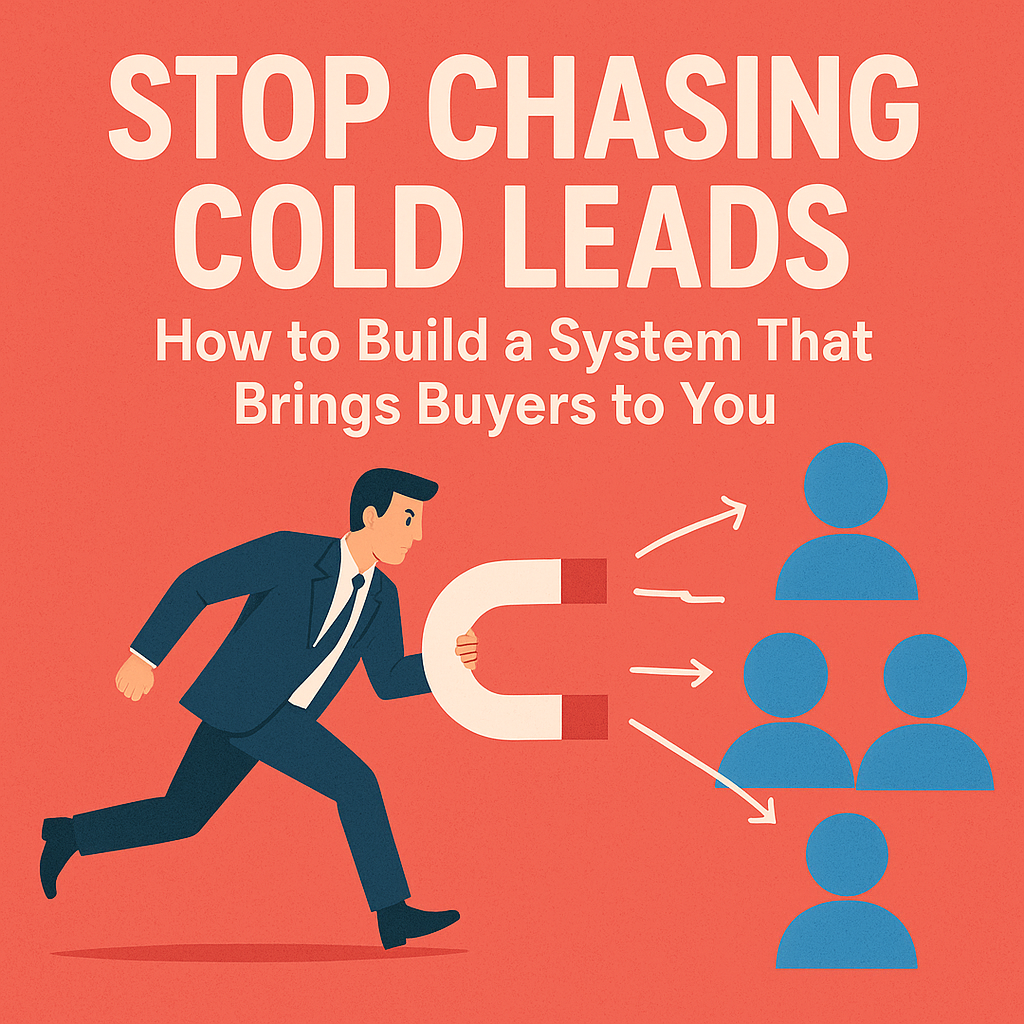
If you’re like most B2B companies, you acquire a list, send out emails, call decision-makers and hope for the best. It’s exhausting, it’s expensive, and to be blunt, it doesn’t work as well as it once did. The whole playbook comes from disruption, making people listen who haven’t asked to hear from you and convincing them why they need what you have to offer.
But it doesn’t have to be that way. Instead of chasing leads who may or may not need your solution, the better businesses create systems that attract buyers in search of help. Not warm leads and hot leads, but people with problems who know they have the problems and are actively searching for a partner to engage.
It’s time to transition from hunting to attracting. It’s time to build a better system. This isn’t just about marketing. It’s about creating a new way of doing business.
Why the Old Playbook for Prospecting No Longer Works
There was a time when cold outreach worked because there were fewer options and less buyer research. If someone wanted to learn about enterprise software or professional services, they had to talk to a vendor. That dynamic no longer exists.
Now, buyers do their own research. They review options, ask peers, and narrow down their list before they even schedule a meeting with a vendor. By the time they’re ready to pick up the phone, they’ve already decided whether it’s worth their time.
Yet, in many cases, people are still calling people who aren’t in the buying mood. They’re sending emails to decision-makers who haven’t even prioritized a problem yet. And they’re competing with 15 other vendors who’ve sent the same email that day asking for their attention.
Two things happen as a result. One, your conversion rates remain dismally low because your outreach is misaligned. Two, your sales team burns out trying to ice skate uphill when interest doesn’t exist. This process isn’t sustainable and even if everyone works harder than they ever have in their lives, they’ll get mediocre results at best.
What Inbound Lead Generation Means
Inbound isn’t just content marketing and SEO, which can certainly help – but instead, inbound lead generation means creating multiple ways for buyers to find your business when they’re looking for solutions.
It means visibility in searches so that if someone needs accounting software or inventory analysis help, your name comes up. It means familiarity within the communities where your ideal clients spend their time. It means partner and referral networks that help buyers connect with your business through a credible source.
It’s all about being in the right place at the right time and when someone recognizes that they need what you have to offer. A buyer who finds you through relevant research is exponentially more valuable than someone who gets a cold email on a Tuesday during their work grind.
For companies that need systems in place to continually generate opportunities without relying on outbound efforts, it makes sense to partner with specialists who know how to create these systems. Companies that focus on lead generation for saas companies and other B2B sectors understand how to build the infrastructure to make inquiry happen without constant cold outreach.
The Pieces that Make Up a Self-Sustaining System
It’s important to note that this system won’t work piecemeal; all elements must be integrated and connected so that the pipeline continually fills itself.
Search Visibility That Meets Intent
If someone searches for “best accounting software for construction companies” or “ways to improve warehouse efficiency,” then they’re showing buying intent. If your business can resolve those issues but isn’t at the forefront, then you’re invisible to those who actively want to buy.
It’s not about visibility for every keyword relevant to your practice; it’s about being able to capture searchers based on specific inquiries showing a willingness to evaluate options. Thus, if you can align along those lines, you’ve got yourself a qualified lead.
Content That Proves Competency
Buyers want to work with those who know their problems inside and out. Case studies, guides, insights and more compiled as content are readily accessible for anyone in need of gauging a viable solution; thus, by the time you do have a conversation, you’re already credible in their eyes.
It’s about usefulness over marketing. Content that can actually help someone resolve an issue or assess their options is what’s shared, saved and recalled. When the time comes for someone to commit, they’ll remember your company because you’ve illustrated that you know what you’re talking about.
Referrals That Generate Trust
People trust people more than they trust vendors, so creating alliances with complementary companies, industry insiders, consultants and those who’ve previously worked with you creates a referral machine that produces pre-qualified leads.
These aren’t referrals based on transactional referral programs with incentives and tracking; instead, they’re natural partnerships where everyone benefits by making good introductions. A trusted referral means more than any cold email ever will.
Responsive Follow-Up Time
People reach out for follow-up faster because they’ve indicated interest. Whether it’s filling out a contact form or requesting a demo, they’re engaged and will be disappointed if they haven’t heard back right away. Thus, it’s the responsibility of those at your company not just to get back in touch but to quickly triage their inquiry to keep momentum.
The companies that win inbound leads are those who respond sooner than later and quickly gauge interest with intent rather than jumping through hoops unnecessarily. Perceived urgency is more valuable than polishing a perfect offer if someone is already evaluating options on your turf.
The Gap Nobody Talks About
It’s important to note that it’s not going to happen overnight; building an integrated system like this will take time. Therefore, if you need leads now (and you’re unlikely to have them), there’s a period where outbound still needs to keep the pipeline full, but not fully distributed.
Instead of cavalier outreach bringing in random low-quality meetings, you’re strategically reaching out to particular firms with aligned messaging based on who you believe would be interested based on previous research.
Over time, you’ll meet the right number of people and generate enough interest from inbound leads so that the pendulum will swing in favor of outbound less while you’ll spend more time addressing inbound requests (closing versus booking meetings).
Why Some Companies Never Transition from Outbound
The biggest hindrance has nothing to do with technical abilities; it has everything to do with organizational structures. Companies must be willing to pivot from what makes them comfortable even if it requires an upfront investment without immediate returns.
Thus, they try it for three months at most, fail to see any drastic differences and return back to what’s familiar: cold outreach. At least getting some meetings, even if conversion rates are low, was better than nothing.
Companies that successfully make the switch cultivate buy-in from all stakeholders in order to build up the infrastructure even when it’s uncomfortable during the transition period. They take time on various projects, not just internal, but in terms of search visibility and reputation building without feedback before reaping what they’ve sown down the line.
It’s better in the long run because once it’s built and established as successful, companies that reap this reward will enjoy streamlined growth without additional manual effort; leads will come in whether or not your team is actively prospecting. Instead of volatility in the pipeline system, companies now know what they should expect before reality sets in.
What Gets Managed Gets Measured
You can’t build what’s working without tracking analysis across multiple parts of different systems. Volume isn’t enough , what source produced an opportunity? What channel brought businesses? What do you need more of versus less of?
Some channels generate low-volume high-quality leads while others convert high-volume low-quality leads. You need all data support before making decisions that ultimately filter which channels work best toward revenue generation.
It’s not about aligning with one successful source; it’s about cultivating an array of sources that overlap yet provide different entry points yet all work best together.
Making It Last Over Time
Never mind productivity; it’s cheaper for you per acquisition brought on board. Your sales team’s time is best utilized seeking people who really want what they have to offer instead of cold pitching anyone just because they didn’t get one yesterday, but ended up on their list anyway.
It’s important to note that this doesn’t negate outbound entirely; there’s still value in strategic targeted outreach if you’re re-entering markets or have specific customers you’d like onboarded, but it’s one avenue among many as opposed to the only way your company can grow.
Companies that help establish these systems create competitive advantages that only compound over time, the longer your channels work independently of human effort, the better it is for your company moving forward. Sure, there are no guarantees now that you’ve relied too long on outbound, and tried ice skating uphill, but at least now the ball is rolling in your favor where it wasn’t before when focusing on outbound exclusively.
Great insights on modern marketing and the shift from cold outreach to inbound strategies.
Businesses that focus on attracting the right audience can build stronger relationships and
generate better leads. By the way, gamers looking for updates can also check out volleyball legends roblox codes new latest to unlock free spins and rewards in the game. –
I wanted to take a moment to commend you on the outstanding quality of your blog. Your dedication to excellence is evident in every aspect of your writing. Truly impressive!