Introduction
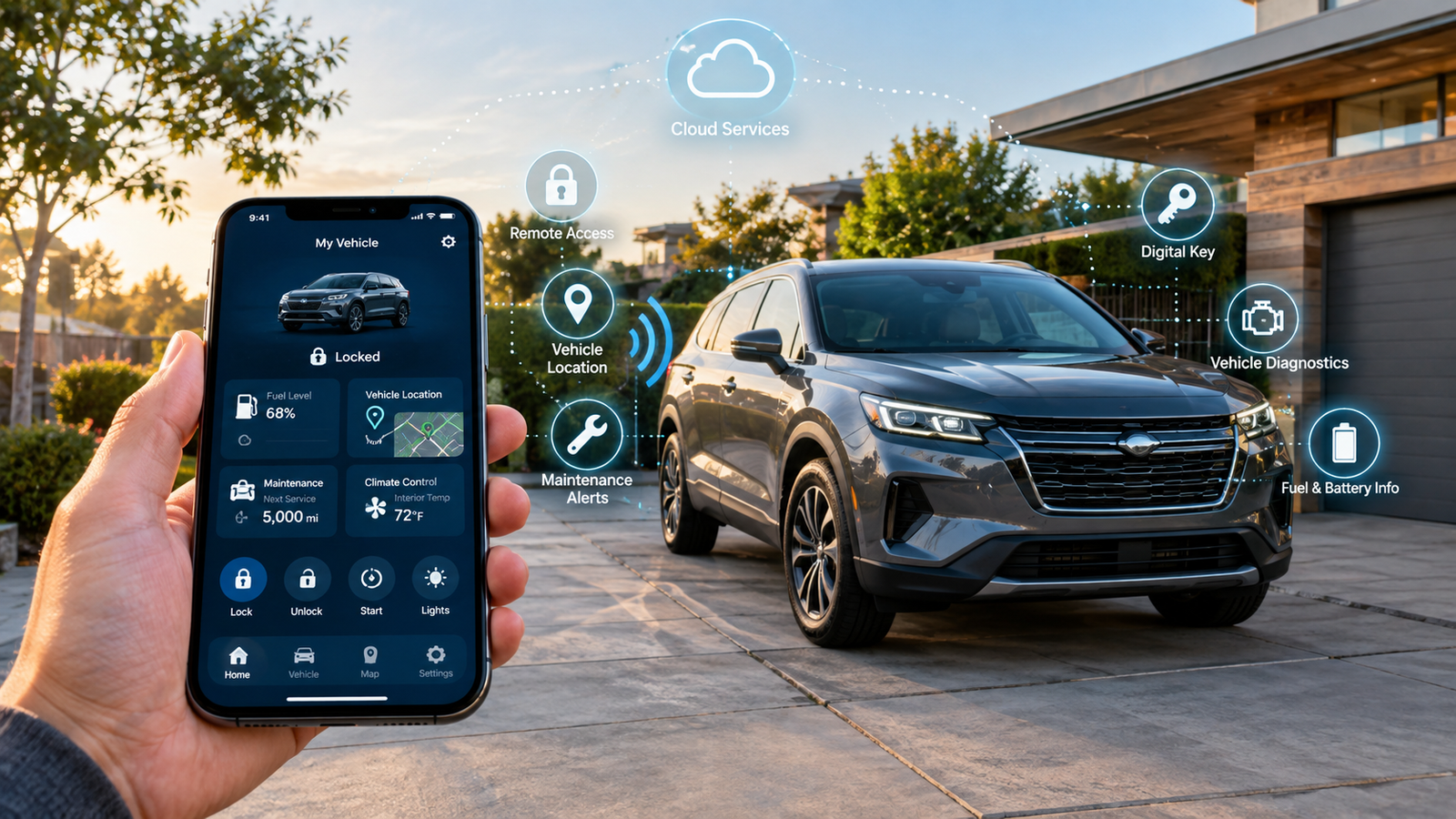
Smart Car Apps are becoming a large element of the modern driving experience as today’s cars integrate with smartphones. In-car apps, which are a part of this trend, allow drivers to check in on their vehicle’s info, find out where they parked, lock or open the doors from their phone, get alerts for maintenance issues, and, in some cases, start the car from a distance. This integration of the smartphone, car, and cloud is what is making car ownership a more convenient experience.
Connected in-car tech is also going into digital keys, vehicle diagnostics, infotainment, charge info, and drive stats. These may vary by what make and model of car, but being aware of these techs may help the driver get more out of their car and also choose the best add-on services.
Remote Vehicle Access
Remote vehicle access, which in turn allows drivers to use a smartphone app for vehicle functions. What a car may come with is the ability for a driver to lock or unlock doors, check in on the vehicle’s status, turn on the lights, start the engine, or see the fuel and battery info. Also, this is very handy when the driver is not near the vehicle and just needs to make sure it is secure.
Drivers who wish to get into the world of remote vehicle access can read more about it here. These systems go through the cloud, which means your mobile command has to travel to the manufacturer’s servers, which in turn send it to the car. Also, because of this, remote access may vary based on your cell service, internet access, subscriptions, and your car’s particular equipment.
Vehicle Location and Tracking
Vehicle placement features include the ability to track a car’s position in large parking structures, at shopping centers, airports, or in foreign areas. In some models, we may also report the car’s last known place on a map, and in certain cases, the owner will be able to turn on the lights or the horn to help locate the car.
These features also include protection of your vehicle, which we see through info related to its activity. But do pay attention to how we handle location data, which may reveal where your vehicle has gone. Also, it is important that drivers use strong security for their accounts and to know who has access to the connected car’s info and location data.
Maintenance Notifications
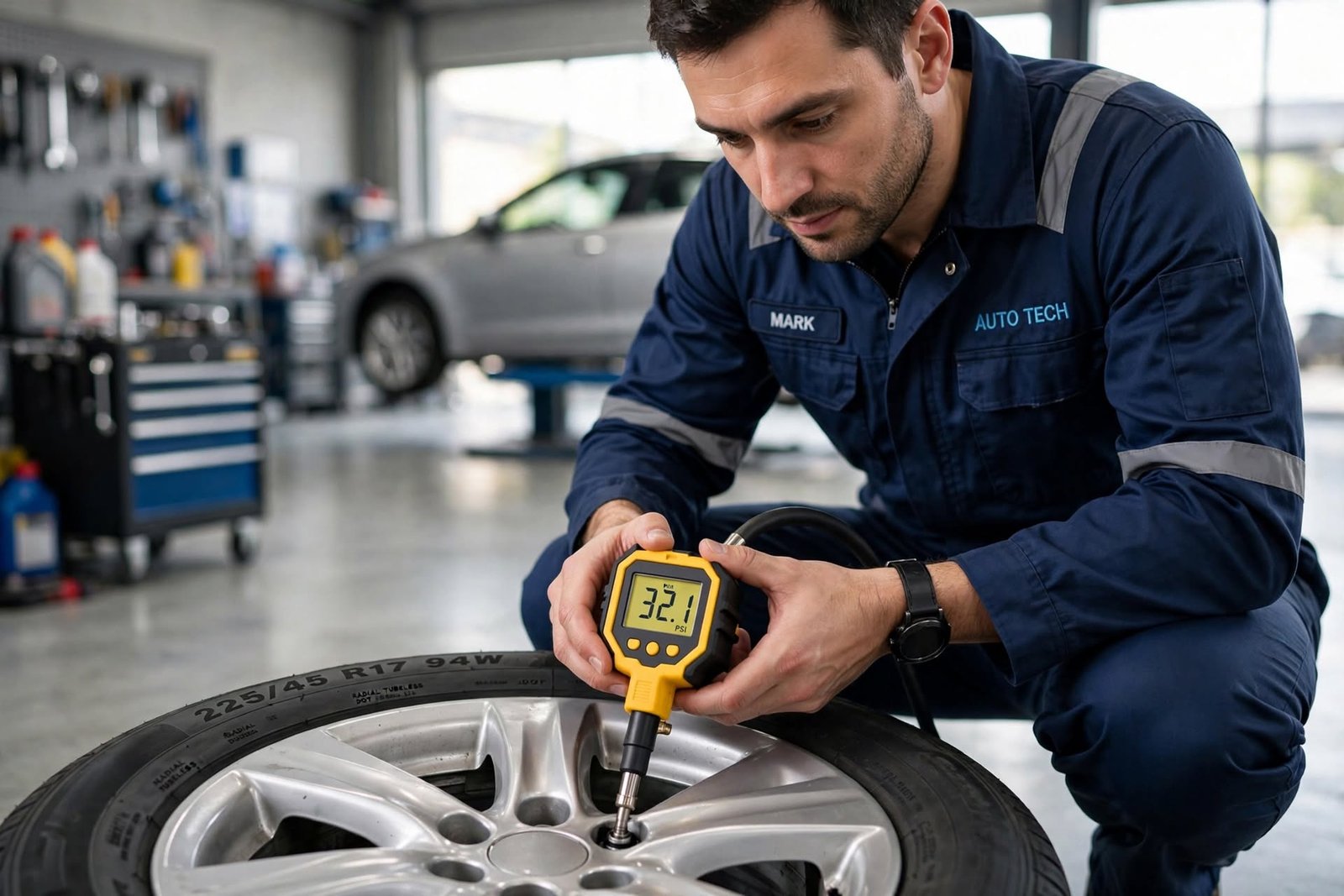
Connected car apps may also include alerts for when it is time for your routine maintenance. What also varies by car is that the system will log into your trip meter, service intervals, warning indicators, tire pressure, battery health, and other car data. This, which in turn reduces the dependency on memory or that old paper service record.
Some systems will also alert you to vehicle health issues as they come up. But what we see with smartphone diagnostics is that they don’t always get to the root of the problem. What I would recommend is to treat these notifications as a pre-warning and to bring your car in to a professional for a full inspection when the vehicle reports out of the red.
Remote Start and Climate Control
Remote start feature for your car, which can be done via our smartphone app. Also, some of the systems out there include the ability to control the climate, preset the heat or air conditioning. Which in turn will get the cabin to the temperature you like before you get in, which is very handy in very hot or cold weather.
Electric cars present a similar feature set with remote climate control and battery management. You may be able to pre-condition the cabin while the car is charging, which in turn helps prepare it for when you leave. What is available varies by make and model, which is why it is best to check your manufacturer’s instructions.
Digital Keys
Digital wallets that are compatible with most smartphones perform many of the tasks which in the past were handled by physical keys or key fobs. What we see is that in some cars, the phone is used for door access and also to enable the car to be started via methods like Bluetooth, NFC, or ultra-wideband.
Digital access to vehicles is also a feature of digital keys. An owner may give another person who is authorized access at any time and not hand over the physical key. Also, at the point of a phone being lost, damaged, or out of charge, or when the owner has to, he should know what that means for digital access and also how to remove that access when it is no longer needed.
Vehicle Diagnostics
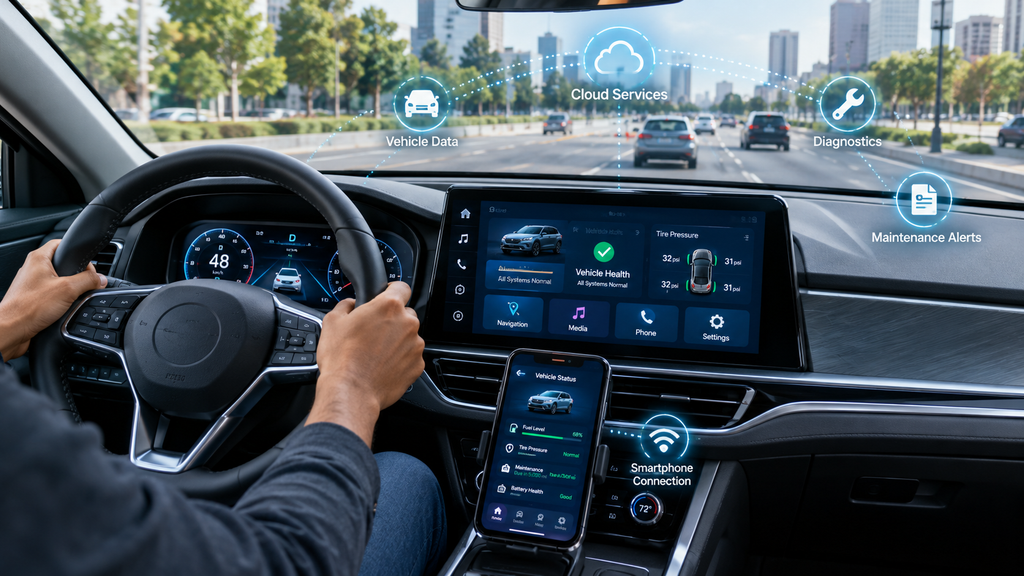
Today’s cars are fitted with a large array of sensors and electronic control units. In the connected car world, we see that info from those systems is used by applications to alert drivers of which may be coming issues. These alerts, in turn, enable drivers to be made aware of problems at an earlier stage and to determine if, in fact, professional help is required.
However, in many cases, connected diagnostics do not replace professional vehicle inspection. What a warning may do is point out which system is affected but not the in-depth mechanical issue. At which point an important warning comes up, the driver should refer to the manufacturer’s recommendations and take the car in for a check-up when needed.
Infotainment Integration
Smartphone connectivity is a very popular feature in today’s connected cars. What we see in modern infotainment systems is that they provide access to navigation, music, phone calls, messages, podcasts, and other compatible services via the car’s display and control units.
Voice commands and control of the steering wheel will make these features more accessible during operation. As for drivers, it is best to put safety first and avoid screen interaction when not necessary. When it comes to the purchase of a car, think to bring into play smartphone compatibility, wireless connection, navigation quality, voice control options, and the overall ease of use.
Driving Statistics
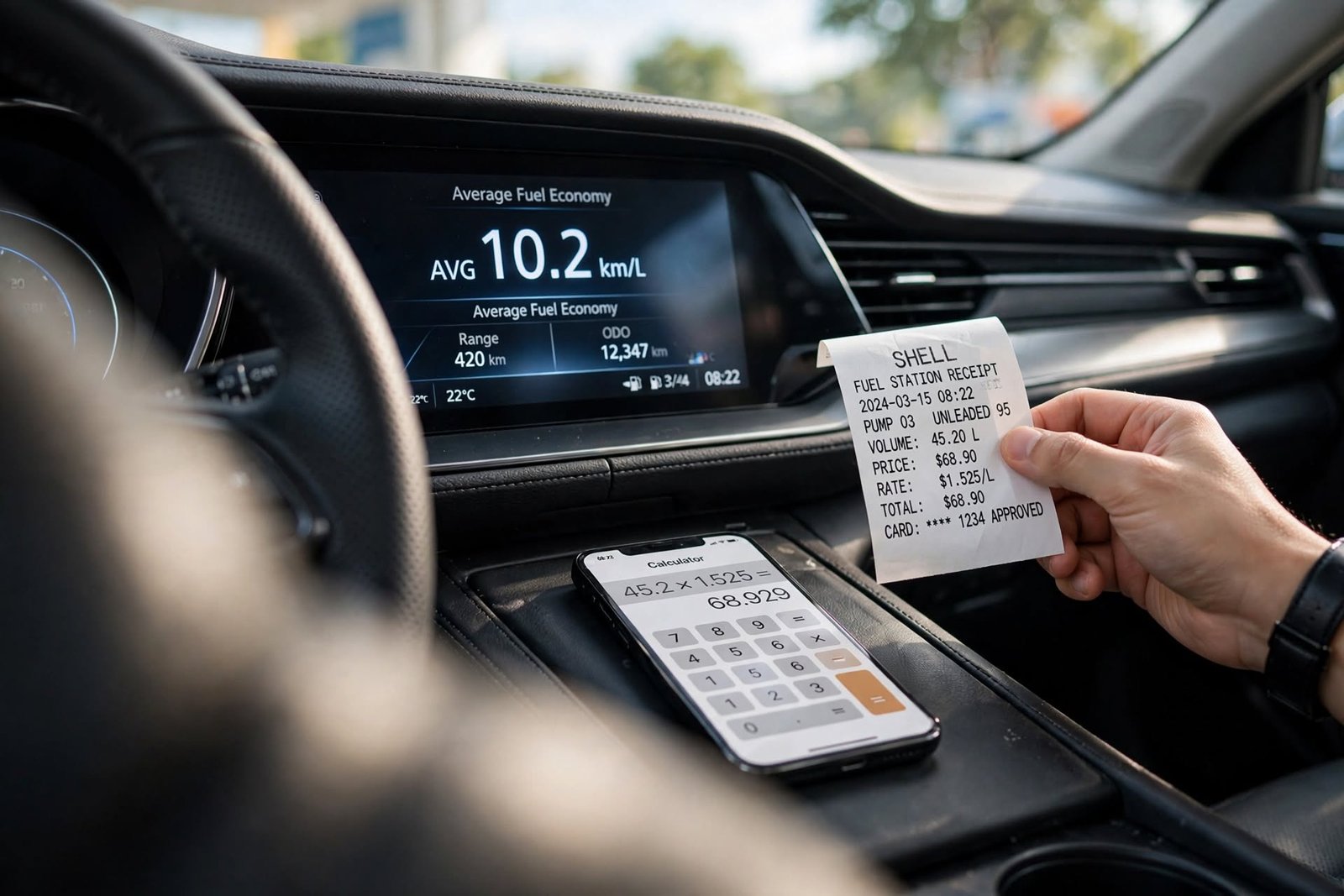
Connected car technologies report out on a variety of driving info. What you will see as a driver is to do with trip distance, fuel use, energy consumption, average speed, charge levels, or other stats.
These statistics put forth a trend which drivers may see to improve their fuel economy or energy use. Also, it is made known that variables like traffic, weather, road conditions, tire pressure, and vehicle load play a role in the results. Thus, it is up to the driver to use this info as a guide and not as a precise measure of driving performance.
Cloud Services and Software Updates
Cloud-based services enable cars to talk to smartphone apps and our manufacturers’ platforms. This tech supports remote commands, vehicle info, maintenance alerts, charging info, and other connected services which do not require the driver to be in the car.
In today’s world, many car models also see remote software updates. What these updates do is they may fix issues in the software, improve infotech features, add to the connectivity, or bring in brand new features. To keep the car software as well as the smartphone app up to date is to also keep the connected services which we have come to depend on, reliable.
Choosing a Smart Car App

The best smart car app does not go to the one with the most features. What we see is that which functions are the most useful for your particular use is what really counts. For some, that may be the feature which reports the location of the car; for others, it may be info related to the battery and charging of an electric vehicle.
Drivers also should look at what the subscription costs are, smartphone compatibility issues, privacy concerns, what the connectivity requirements are, and if the features which they are looking for are included in the vehicle. Also, by which they familiarize themselves with these issues before jumping into a connected service, they can avoid unexpected problems down the road.
Conclusion
Smart tech in cars is transforming what drivers do with their vehicles. Remote access, vehicle location, maintenance alerts, remote start, digital keys, diagnostics, infotainment, and driving stats, which in turn makes vehicle ownership a more convenient and informed experience.
As we see cars becoming more integrated with smartphones and cloud services, we will in turn see these techs grow in number. Which drivers that study out how the connected systems work may in fact get more out of their vehicles, which at the same time will make them aware of issues of security, privacy, compatibility, and also the variables of each system.