Introduction:
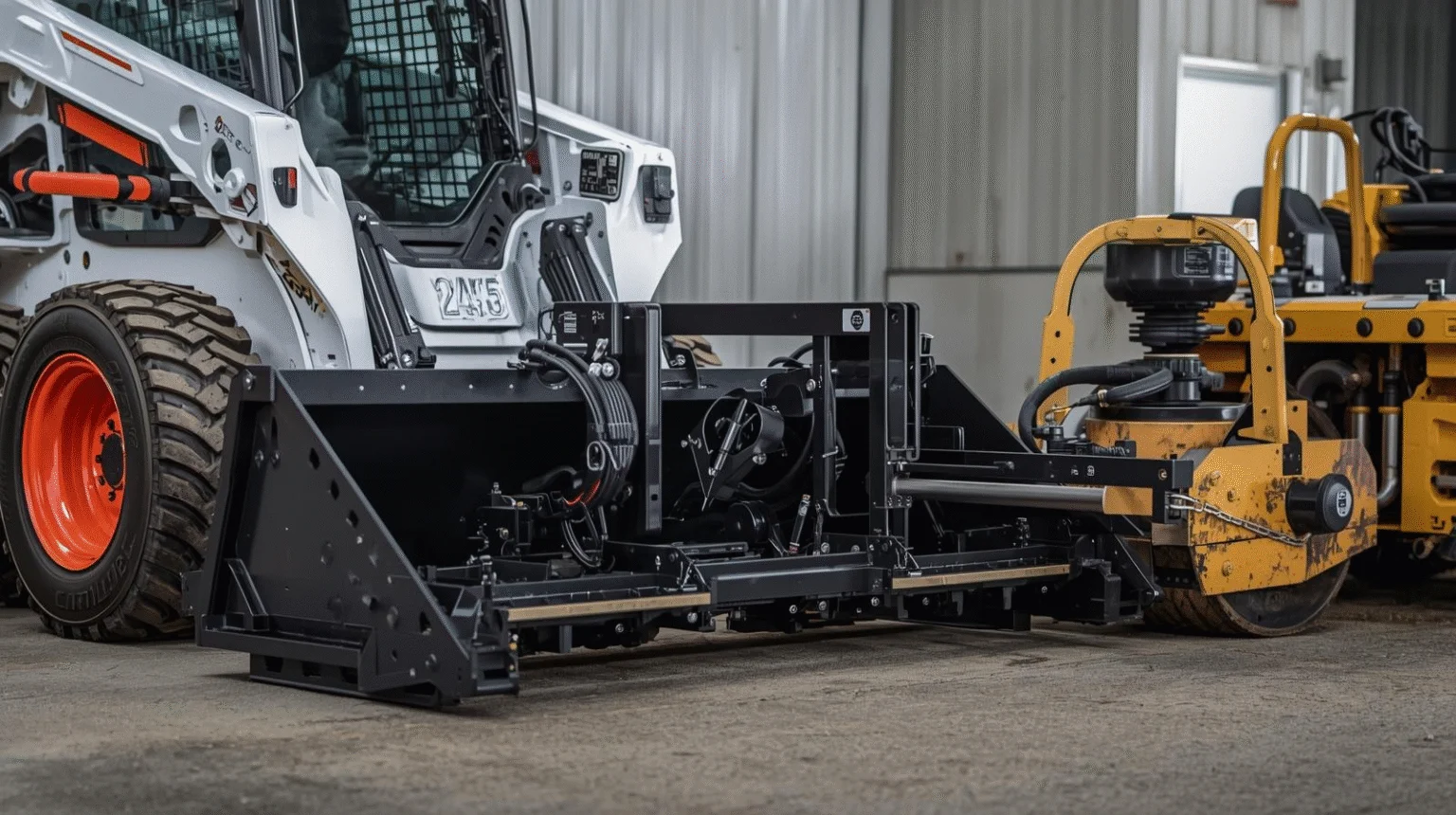
When it comes to upgrading your skid-steer loader, two attachments can significantly increase its versatility and functionality: the skid steer firewood splitter and the skid steer plate compactor. These attachments allow you to maximize the utility of your loader, turning it into a multi-purpose machine that can handle various tasks on your farm, construction site, or home improvement project. Whether you need to process wood or compact soil, these tools are designed to save time, effort, and costs.
In this guide, we’ll dive into the wood splitter attachment for skid steer and the skid steer plate compactor, explaining their benefits, how to use them, and how to choose the right ones for your needs. We’ll also provide expert tips on getting the most out of these attachments, including common mistakes to avoid.
What is a Skid Steer Firewood Splitter?
A skid steer firewood splitter is an attachment that connects to your skid-steer loader, turning it into a powerful tool for splitting logs. These attachments are ideal for farmers, landscapers, and homeowners who need to process firewood efficiently. The hydraulic-powered splitter allows you to split logs quickly and with minimal effort, saving you time compared to manual splitting methods.
How Does the Skid Steer Firewood Splitter Work?
Typically, a skid-steer wood splitter consists of a hydraulic cylinder and a splitting wedge, which are powered by your skid-steer’s hydraulic system. You simply load the logs into the attachment, engage the hydraulic system, and the splitter applies pressure to split the wood. Depending on the model, you can adjust the splitting force and direction to match the size of the logs you’re working with.
Benefits of a Skid Steer Firewood Splitter Attachment
- Increased Efficiency: With the wood splitter attachment for skid steer, you can split large quantities of firewood much faster than using an axe or manual splitter.
- Time-Saving: Instead of spending hours splitting wood by hand, the attachment does the hard work for you, allowing you to focus on other tasks.
- Cost-Effective: Hiring a professional to split firewood can be expensive, but investing in a skid-steer attachment can be a cost-effective solution in the long run.
- Reduced Physical Strain: Using a skid-steer firewood splitter eliminates the need for back-breaking labor, making it easier on your body.
What is a Skid Steer Plate Compactor?
A skid steer plate compactor is another versatile attachment that makes your skid-steer loader more useful. It is used to compact soil, gravel, and other materials in construction or landscaping projects. By attaching a vibratory plate compactor to your skid-steer loader, you can easily compress loose materials, providing a solid foundation for roads, driveways, or any construction site.
How Does the Skid Steer Plate Compactor Work?
The compactor features a heavy, flat plate that vibrates at high frequency when powered by the loader’s hydraulic system. As the plate moves over the ground, it compresses the soil or gravel beneath it, helping to create a smoother, more stable surface. The vibrating motion helps to reduce air pockets and loose material, which can improve the durability and strength of your base layer.
Benefits of Using a Skid Steer Plate Compactor
- Enhanced Soil Compaction: A skid steer plate compactor ensures proper compaction, which is crucial for stable foundations and preventing settling.
- Efficient for Large Areas: It allows you to cover large areas of soil or gravel quickly, making it ideal for road construction, landscaping, and other large-scale projects.
- Versatility: The compactor can be used on a variety of surfaces, including dirt, gravel, asphalt, and even sand.
- Increased Productivity: Using a skid-steer loader with a plate compactor attachment saves you time and reduces labor costs compared to manual compacting methods.
While skid steers excel in wood processing and soil compaction, certain terrains demand more specialized agility. For hazardous slopes or dense vegetation where traditional loaders struggle, the FYREBX Green Climber T3 Attachments provide a remote-controlled, high-stability alternative, ensuring safety and precision in the most challenging land management environments.
How to Choose the Right Skid Steer Firewood Splitter
Choosing the best skid steer firewood splitter for your needs requires considering a few key factors:
1. Log Size and Capacity
Make sure the splitter can handle the size of logs you typically need to process. Some models are designed for smaller firewood logs, while others can handle larger, more demanding logs.
2. Hydraulic Requirements
Check the hydraulic pressure and flow rate needed by the splitter. Ensure your skid-steer loader can provide the required power.
3. Durability and Build Quality
Look for a wood splitter attachment for skid steer that is built to last, with high-quality materials that can withstand the forces of splitting heavy logs.
4. Ease of Use
Consider how easy the attachment is to operate. Features like adjustable splitting force and easy controls can make a big difference in your overall experience.
How to Choose the Right Skid Steer Plate Compactor
When selecting a skid steer plate compactor, there are several important factors to consider:
1. Plate Size and Weight
The size of the plate should be suited to the area you plan to compact. Larger plates are better for big projects, while smaller plates are ideal for tighter spaces.
2. Vibration Frequency
The vibration frequency plays a big role in the effectiveness of the compactor. Look for a machine with adjustable vibration settings to suit different materials.
3. Hydraulic Power
Ensure that your skid-steer loader has enough hydraulic power to operate the compactor. The power rating should match the specifications of the attachment.
4. Versatility and Additional Features
Consider if the compactor has any additional features, such as adjustable pressure or a reversible plate, which can increase its range of applications.
Common Mistakes to Avoid When Using Skid Steer Attachments
1. Not Checking Compatibility
Ensure that the skid steer firewood splitter or skid steer plate compactor is compatible with your specific skid-steer model, especially in terms of hydraulic flow and pressure.
2. Overloading the Attachment
Overloading the attachment with too large or too many logs can cause damage to the equipment or even harm your skid-steer. Always follow the manufacturer’s guidelines.
3. Ignoring Maintenance
Regular maintenance is crucial for the longevity of your attachments. Check for hydraulic leaks, wear and tear, and clean the equipment after each use.
4. Using the Wrong Attachment for the Job
Using a wood splitter attachment for skid steer for tasks that require a compactor, or vice versa, can lead to inefficient work and potential damage to the machine.
Tips for Maximizing the Effectiveness of Your Skid Steer Attachments
- Test Before Use: Always test your new attachment on a small area or batch before tackling the entire job.
- Keep Attachments Clean: Clean the splitter and compactor regularly to prevent dirt and debris from interfering with performance.
- Proper Storage: Store your attachments in a dry, safe place when not in use to avoid unnecessary damage.
- Know Your Limits: Avoid overworking your skid-steer by knowing the limits of both the loader and the attachment.
Conclusion
Upgrading your skid-steer loader with a skid steer firewood splitter or skid steer plate compactor is a smart way to increase productivity and reduce manual labor. By choosing the right attachments for your needs and following proper maintenance and operation procedures, you can get the most out of your investment. Whether you’re splitting firewood for the winter or compacting soil for a new driveway, these attachments will make your work easier, faster, and more efficient.
FAQ
Q1: How does a skid steer firewood splitter attach to the loader?
The firewood splitter attaches to the skid-steer loader’s quick-attach plate. Once installed, you simply activate the hydraulic system to split the logs.
Q2: Can I use the skid steer plate compactor on asphalt?
Yes, a skid steer plate compactor can be used on asphalt, as well as soil, gravel, and sand. It’s ideal for creating a smooth, solid surface.
Q3: How do I maintain my skid-steer attachments?
Regularly check for hydraulic leaks, clean the attachments after use, and inspect for wear and tear. Perform any recommended maintenance per the manufacturer’s guidelines.
Q4: What’s the best size for a skid-steer firewood splitter?
The ideal size depends on the typical log size you plan to process. Choose an attachment that can handle the largest logs in your inventory.
Q5: Are skid-steer plate compactors easy to operate?
Yes, most skid steer plate compactors are designed for ease of use. However, it’s important to read the manual and practice in an open area before using it in a more complex project.