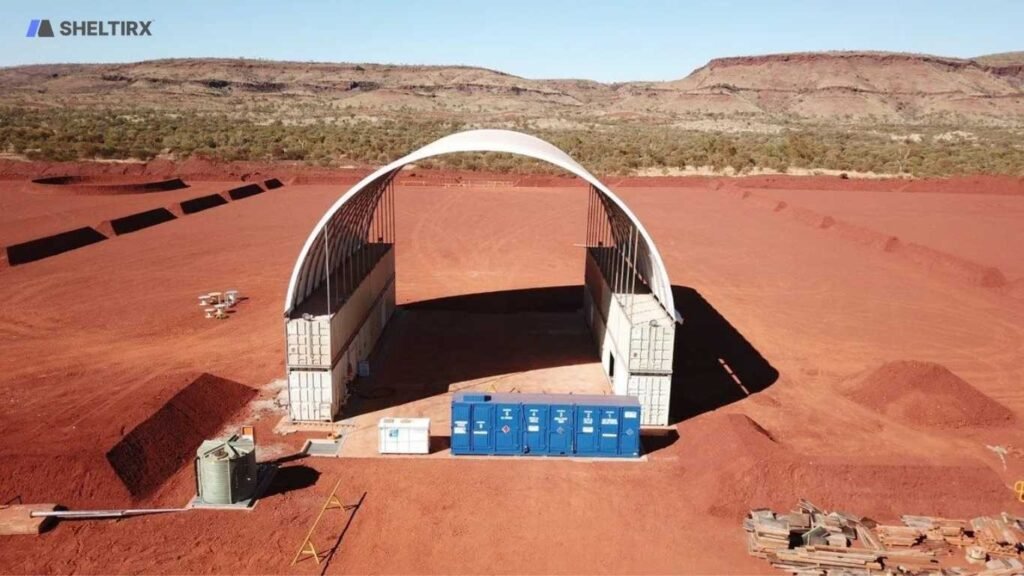
On industrial job sites, unpredictable weather delays, material damage, and ineffective site setups continue to result in preventable expenses. Productivity declines and replacement costs quickly increase when goods or equipment is left out in the open. Although the cost of a shipping container canopy is highly variable depending on design, size, and performance requirements, it provides a useful solution to create covered workspaces without permanent construction. Procurement teams can avoid overpaying—or worse, under-specifying a structure that fails under actual conditions—by knowing what drives those expenses in 2026.
What a Shipping Container Canopy Is and Why It Matters
A canopy mounted on a container is a semi-permanent form of shelter that is constructed between two ISO containers that have been shipped. The canopy provides an area to store, stage or maintain items, or have some temporary activity. Unlike a fixed building, a canopy can be installed very quickly and can adapt to a changing configuration of site layout.
Most canopies are constructed using galvanized steel frames with tensioned fabric coverings. The coverings are designed to withstand wind, snow, and UV rays. Because of their ability to be adapted to a number of different uses, these canopies are ideal for construction sites, logistics yards, and emergency response operations. When buying a container canopy for sale, many buyers seem to value speed of installation and the level of site preparation needed to install the canopy.
From an overall cost standpoint, canopies save both direct and indirect costs. They protect the materials from weather damage, enhance the flow of work in a given area, and reduce the amount of time workers will be idle at that location. Overall, over a period of time the savings associated with those costs will usually be greater than the original cost of the canopy. However, it is important to note that not all canopy units are created equally. Canopies that are lower cost may not have sufficient structural integrity and durability; in this case, the lifecycle cost associated with their repair and replacement might be greater than their original price.
Real-World Use Cases and Cost Comparisons
Canopies are usually selected by industrial clients mainly due to their intended use in operations instead of appearance. A significant factor affecting cost is that each application requires different specifications, therefore having a direct impact on the overall price of the system.
Some of the most common applications include:
- Construction staging areas
A contractor uses a canopy for securing tools and machinery within a protected area. A mid-range system normally provides adequate coverage; however, if the construction site will be exposed to severe weather, then an upgraded canopy would likely be required. - Equipment maintenance bays
A maintenance bay for heavy equipment needs to have a higher clearance and a more robust construction method as compared with other types of structures. When additional structural supports and wider spans are required, pricing of systems will increase significantly. - Agricultural storage and protection of bulk goods
Farmers and distributors rely on sturdy fabric coverings to protect their feed, grain or machinery from exposure to environmental elements. Factors that will play a role in the longevity, effectiveness or efficiency of these canopies include UV ratings and ventilation.
There is a large price difference between using a canopy for storage vs. using traditional steel structures. Construction of a permanent structure involves the construction of a foundation, obtaining proper permits and a longer timeframe to construct than the time it takes to construct a canopy. Canopy systems provide a much quicker return on investment, as there are fewer regulatory barriers to meet than when constructing a permanent building. However, canopies may not last as long as a fully engineered structure that has been built in accordance with local building code requirements, particularly in climates that could be considered extreme.
Key Buying Considerations That Affect Price
Canopy pricing in the year 2026 generally falls between $3000-$15000; however, several factors will determine what portion of that price range a specific product falls into.
1. Frame strength and material construction characteristics
Heavy-duty galvanized steel frames typically cost more to manufacture than light-gauge steel frames but offer greater resistance to corrosion and fatigue. On the other hand, light-gauge steel frames reduce costs at the expense of strength and durability.
2. Fabric type and lifespan
Polyethylene canopies tend to have lower initial prices compared to PVC-coated fabrics; however, over time PVC-coated fabrics offer superior weather resistance and extended life spans. Warranties provided by the fabric manufacturers can indicate what the future durability of these products can be expected to be.
3. Canopy size and span width
Wider canopies will require additional engineering and experience to design and build than narrow canopies, thus increasing their final cost. A 20-foot canopy typically has a lower final cost than a 40-foot or custom width canopy due to this factor.
4. Wind load and snow load ratings
Canopies located in areas where severe weather is common must be designed, engineered and manufactured to withstand the higher rated loads associated with these areas; therefore, it requires higher manufacturing costs, however, provides greater peace of mind regarding future performance.
5. Installation difficulty
There are many canopy systems available that require very little assembly with few tools, while there are others that require specific trade labor in order to install them. Additionally, installation costs can represent a very significant portion of the total investment required for the development of a project.
Potential buyers should also consider the reliability of suppliers, warranty terms and availability of replacement parts. Often times, a less expensive price at the initial time of purchase indicates a higher risk for future failure, or lack of adequate support for the product.
Performance-Based Design in Action
In the past several years, manufacturers have been continually working on enhancing their products so that they have greater structural integrity and can be deployed rapidly. For example, the SkyShield™ Canopy System created by Sheltirx® has become very well-known in discussions regarding procurement. The canopies are highly engineered to meet stringent load limits and are designed to be installed in a modular fashion. The two main issues regarding canopy systems are their durability and ability to be scalable when used on live job sites.
As many of the teams that use canopy systems have begun to view them as long-term solutions instead of short-term solutions, it is evident that there is a growing need within the industry for adaptable, cost-effective solutions that can withstand high usage patterns. For a deeper look at how procurement teams approach fast deployment and cost control, this resource on shipping container canopy for procurement outlines key considerations shaping current buying decisions.
Conclusion
The decision of which canopy system is best for you will be influenced by many factors, including performance, durability, and the overall function of the system to your business, with costs being only one factor. Many customers purchasing canopies based solely on their cost will incur additional expense over a more extended period due to repair and/or inefficient cancellation of customers. By looking at the true quality of materials used in manufacturing, structural attributes (e.g., ANSI and ASTM ratings) and how the canopy has been used in previous projects, customers can make informed investment choices. As job sites require shorter set-up times and increased flexibility, canopy systems will play a continual and significant role in minimizing risk and improving productivity in all industries.