Every time you heat up a pan, you’re making a decision about what goes into your food. Scratched non-stick coatings releasing invisible chemicals, reactive metals altering the taste of your meals, and cookware that warps or degrades after just a year of use—these are everyday realities for millions of home cooks. The frustration of replacing cheap pans every few seasons adds up, both financially and environmentally. There’s a better path forward, and it starts with choosing the right material.
Stainless steel pans have earned their reputation as the gold standard for health-conscious kitchens. They combine non-reactive safety with remarkable longevity, and when backed by a lifetime guarantee, they represent one of the smartest investments a cook can make. This article explores why material choice directly impacts your health, what makes stainless steel exceptionally durable, how lifetime guarantees protect your purchase, and the environmental advantages of choosing cookware built to last. Whether you’re upgrading your kitchen or starting fresh, you’ll find practical guidance for selecting pans that serve you safely for decades.
The Foundation of Safe Cooking: Why Material Matters for Health
The surface your food touches during cooking can introduce unwanted substances into your meals. Traditional non-stick coatings, particularly those containing PFOA or PTFE, begin degrading at high temperatures, releasing potentially harmful compounds into food and air. Aluminum pans without protective linings can leach reactive metals, especially when cooking acidic foods like tomatoes or citrus-based sauces. Over time, these exposures accumulate in ways that health-conscious cooks rightfully want to avoid.
Stainless steel eliminates these concerns through its inherently inert composition. Typically crafted from a chromium-nickel alloy (most commonly 18/10, meaning 18% chromium and 10% nickel), the chromium forms an invisible oxide layer that prevents the metal from reacting with food. This passive barrier means no chemical leaching, no metallic taste transfer, and no degradation of the cooking surface over thousands of uses. The material remains stable across the full range of cooking temperatures home kitchens demand.
Reputable stainless steel cookware meets rigorous safety standards, including FDA food-contact compliance and European Union regulations for metal migration limits. Some manufacturers pursue additional third-party certifications confirming their products are free from PFAS, lead, and cadmium. When selecting pans, look for explicit declarations of food-grade stainless steel and compliance markings—these serve as your assurance that the cookware has been independently verified as safe for daily cooking.
Built to Last: Maximizing Cookware Durability in Your Kitchen
Durability in cookware means more than simply surviving a few years without visible damage—it means maintaining consistent cooking performance, structural integrity, and aesthetic quality over decades of daily use. A truly durable pan eliminates the cycle of replacement purchases that drain household budgets and fill landfills with discarded cookware. When a pan performs identically on day one and day three thousand, you’ve found genuine durability.
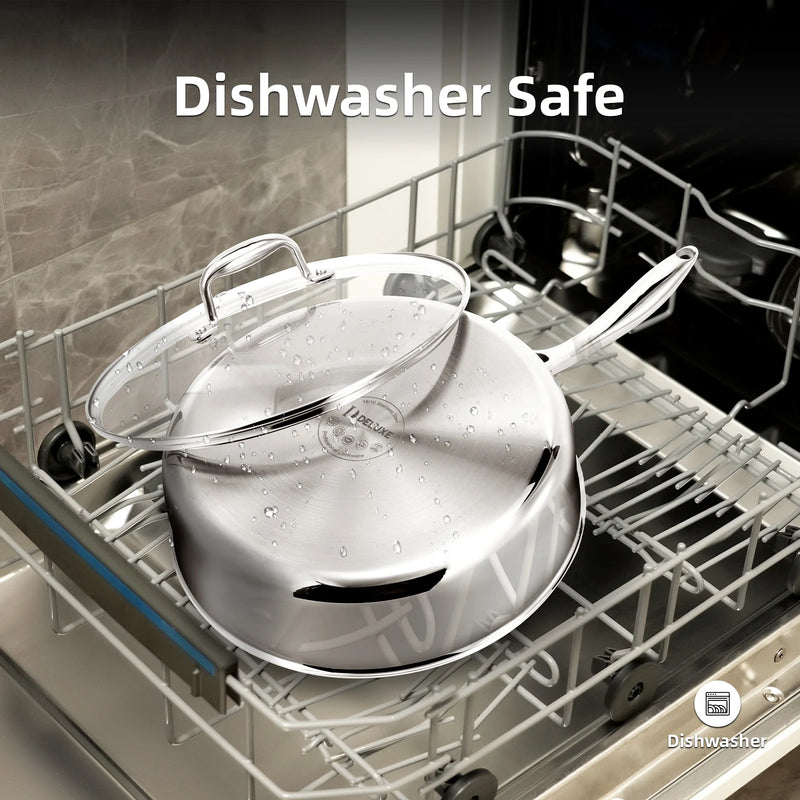
Several construction factors determine how long a pan will serve you well. Material thickness plays a critical role: thicker gauge steel resists warping under thermal stress, maintaining flat contact with your cooktop for even heat distribution. Layered construction, particularly tri-ply designs that sandwich an aluminum or copper core between stainless steel layers, delivers superior heat conductivity while preserving the non-reactive cooking surface. This bonded construction also prevents delamination, a common failure point in cheaper clad cookware. Corrosion resistance matters equally—high-quality stainless steel withstands acidic foods, aggressive cleaning, and moisture without pitting or staining.
Stainless steel’s inherent hardness makes it resistant to scratching from metal utensils, unlike coated alternatives that demand careful handling. This resilience directly supports eco-friendly practices by keeping functional cookware out of waste streams for generations. When shopping, assess durability through tangible cues: a substantial weight suggesting proper gauge thickness, seamlessly bonded layers visible at the rim’s edge, and solid riveted construction at stress points like handle attachments. These physical indicators reveal manufacturing quality that no marketing claim can substitute.
Lifetime Guarantees: What They Mean for Your Investment and Peace of Mind
A lifetime guarantee on cookware represents a manufacturer’s confidence that their product will perform flawlessly for as long as you own it. Unlike limited warranties that expire after a set period, a true lifetime guarantee typically covers defects in materials and workmanship—think warping, delamination of bonded layers, loose handles, or compromised cooking surfaces. Some brands extend coverage to include free repairs or full replacements, while others offer prorated options depending on the product’s age. Understanding what’s actually covered before purchasing prevents disappointment later.
For consumers, this commitment translates into tangible long-term value. A pan purchased once and guaranteed for life eliminates the recurring expense of replacements every few years. It also signals brand accountability—companies offering lifetime guarantees have a financial incentive to manufacture products that rarely need servicing. This alignment between brand interest and consumer benefit builds genuine trust. When a company stands behind its cookware indefinitely, it’s telling you they’ve invested in quality control, superior materials, and construction methods that withstand real-world kitchen demands.
The sustainability connection deserves attention too. Lifetime guarantees actively discourage disposability by keeping cookware in service rather than in landfills. When a pan can be repaired instead of discarded, raw material extraction and manufacturing energy are conserved. When comparing brands, examine the specifics: does the guarantee cover commercial use or only domestic? Is registration required? Are shipping costs for warranty claims covered? Brands like All-Clad, Deluxe Cookware, and Heritage Steel each structure their guarantees differently. Reading customer reviews about actual warranty experiences reveals whether a company honors its promises efficiently or creates bureaucratic obstacles. Choose brands where the guarantee functions as a genuine safety net, not merely a marketing phrase.
Eco-Friendly Cookware: Stainless Steel’s Role in Sustainable Living
Stainless steel stands out as one of the most environmentally responsible cookware materials available. It’s 100% recyclable without any loss of quality, meaning a pan that eventually reaches end-of-life can be melted down and reformed into new products indefinitely. Modern stainless steel production has also become increasingly energy-efficient, with many manufacturers incorporating significant percentages of recycled content into new cookware—some using up to 85% recycled steel in their production processes.
For health-conscious consumers already mindful about what enters their bodies, extending that awareness to environmental impact feels natural. Choosing stainless steel cookware directly reduces the demand for disposable alternatives that cycle through landfills every few years. When paired with a lifetime guarantee, the environmental equation becomes even more compelling: one pan serving a household for thirty or forty years displaces perhaps eight to ten cheaper replacements that would otherwise require raw material extraction, manufacturing energy, packaging, and shipping. This compounding effect makes each long-lasting pan a meaningful contribution to resource conservation.
To verify a brand’s eco-credentials, look for transparency about recycled material content in their steel, responsible manufacturing certifications like ISO 14001 for environmental management, and packaging made from recyclable or minimal materials. Some companies publish sustainability reports detailing their carbon footprint reduction efforts. These indicators help you distinguish genuinely committed manufacturers from those simply capitalizing on green marketing trends.
A Step-by-Step Guide to Choosing Your Ideal Stainless Steel Pan
Start by assessing your cooking habits honestly. If you cook daily and favor techniques like searing, deglazing, or making pan sauces, you’ll benefit from heavier tri-ply or five-ply construction. Occasional cooks preparing simpler meals may find a quality tri-ply set perfectly sufficient. Consider your cooktop type as well—induction requires a magnetic stainless steel exterior, so confirm compatibility before purchasing.
Next, evaluate construction details hands-on whenever possible. Lift the pan to gauge its weight, examine the rim for visible bonded layers, and test handle comfort. Check that handles are securely riveted rather than spot-welded, and confirm the pan is oven-safe to at least 500°F for versatile cooking. Then verify safety credentials: look for explicit food-grade 18/10 stainless steel declarations, FDA compliance, and any third-party certifications confirming the absence of PFAS or heavy metals. Eco-friendly labels indicating recycled steel content add further confidence.
Compare brands specifically on their lifetime guarantee terms. Read the fine print regarding what’s covered, whether registration is mandatory, and how claims are processed. Customer reviews describing actual warranty experiences prove more revealing than marketing language. Finally, protect your investment through proper maintenance: avoid prolonged soaking in salted water, use Bar Keeper’s Friend for stubborn discoloration, heat pans gradually to prevent warping, and store them with protective liners between stacked pieces to preserve their finish indefinitely.
Key Features to Prioritize
Multi-ply bases with aluminum or copper cores ensure even heat distribution, eliminating hot spots that cause burning and uneven cooking. Riveted handles made from cast stainless steel provide structural integrity at the pan’s most vulnerable stress point, maintaining a secure grip even after years of heavy use. Oven-safe construction lets you transition seamlessly from stovetop searing to oven finishing, expanding your cooking repertoire while using fewer pieces of equipment. Together, these features create cookware that performs safely and reliably across every cooking scenario you’ll encounter.
Invest in Health, Durability, and Sustainability with the Right Cookware
Choosing cookware is ultimately a decision about health, value, and responsibility. Stainless steel pans deliver on all three fronts by providing a non-reactive, chemically inert cooking surface that keeps harmful substances out of your food. Their robust construction—thick gauge steel, bonded multi-ply layers, and corrosion-resistant alloys—ensures consistent performance across thousands of meals without degradation. A lifetime guarantee transforms that durability into a financial commitment from the manufacturer, protecting your investment and eliminating the wasteful cycle of frequent replacements.
The environmental benefits compound over time. Every year a quality stainless steel pan remains in service is a year that raw materials stay in the ground, manufacturing energy goes unspent, and landfill space remains preserved. For health-conscious consumers who already scrutinize ingredient labels and sourcing practices, applying that same intentionality to cookware selection is a natural extension of mindful living. Use the guidance in this article to evaluate construction quality, verify safety certifications, compare guarantee terms, and maintain your pans properly. The right stainless steel cookware doesn’t just equip your kitchen—it safeguards your health and supports a more sustainable future, one meal at a time.