Introduction
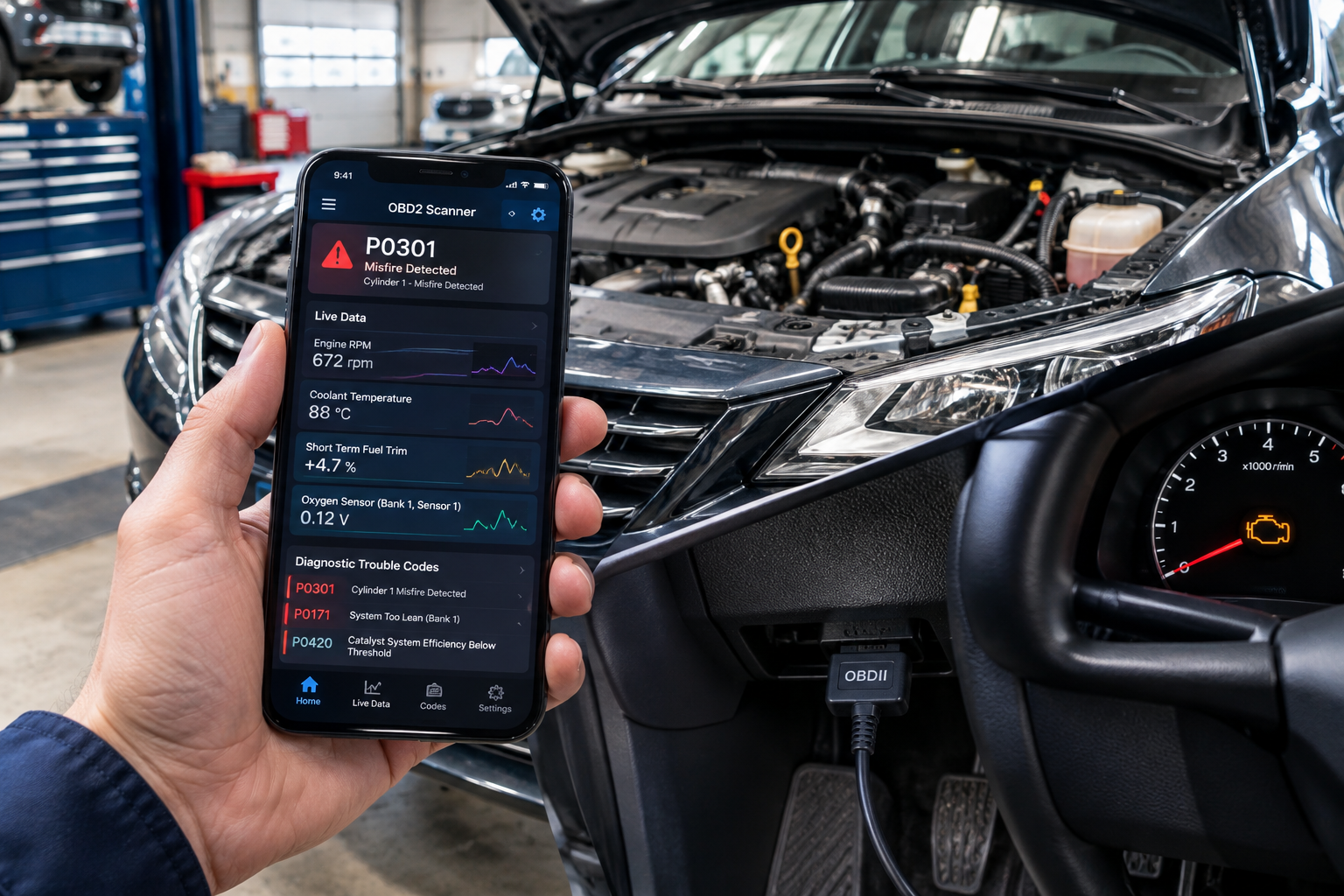
Today’s vehicles feature computers, sensors, and electronic control modules that keep track of the performance of the engine, emissions, fuel delivery, and other systems. If the vehicle senses a problem, it will store a diagnostic trouble code (DTC) and may turn on the check engine light. The information can be accessed by a driver using some of the information from an OBD2 scanner app connected to a compatible OBD2 adapter via a smartphone. Rather than driving to a repair shop just because a warning is on display, drivers can utilize an application to decipher diagnostic codes—and, for supported vehicles, get live information from the sensors.
A car OBD2 software could be useful for discovering possible issues such as the ignition system, sensors, fuel system, engine temperature, and emissions devices. It is crucial to know that a diagnostic code does not always specify the component that has failed. It is recommended to use the app as a starting point in troubleshooting and not as a replacement for professional diagnostic equipment.
Check Engine Light Problems
The check engine light is a common reason that drivers use an OBD2 scanner app. If this warning comes on, the computer in the vehicle could have saved one or more diagnostic trouble codes. These codes can be obtained from an app and used to give descriptions to explain which system has identified abnormal conditions. An example of a misfire, fuel mixture problem, sensor fault, or emissions problem can be detected by the scanner. This information can provide a much better starting point for the driver than merely the warning light that appears on the dashboard.
But, not all the time does the code indicate the component indicated in the description must be replaced. A sensor code may be triggered by a variety of issues, including damaged wiring, poor connection, or other issues with the sensor. Familiar with the code, drivers should use it with the symptoms of the vehicle and the maintenance history. If the car is already running poorly or the warning light flashes, it is advisable to consult a professional for diagnosis instead of relying on the application.
What Causes Misfiring Engines, Why and How to Repair Them
An OBD2 scanner application will be able to identify engine misfires by reading the codes saved by the vehicle’s computer. A misfire occurs when the combustion does not take place properly in one or more engine cylinders. The driver might experience erratic idling, hesitation, poor performance, or odd engine behavior. The computer can detect a misfire from a particular cylinder, or it may report a random or multiple-cylinder misfire depending on the vehicle. These codes can be used by an app to help understand the reason why the check engine light has appeared.
A misfire code does not necessarily pinpoint the malfunctioning part. The possible causes are spark plugs, ignition coils, fuel injectors, wiring, intake leaks, or mechanical issues. Therefore, when replacing parts due to the description in the scanner, one can end up with unnecessary repairs. The app can be more useful as a diagnostic guide to narrow down the possibilities. The mechanic can then conduct other tests to get to the root cause.
When a Sensor Fails, or an Abnormal Reading Occurs

There are numerous sensors in most modern engines to check the engine temperature, airflow, oxygen level, throttle position, and intake pressure. Diagnostic trouble codes can be stored in the engine computer if there is a problem with a sensor or the circuit. An OBD2 scanner app can pull these codes and, depending on the vehicle, show real-time data from certain sensors. This can be helpful for drivers and techs to spot out-of-the-normal readings during engine operation.
Codes related to sensors need to be read carefully, nonetheless. This could mean that the sensor is functioning properly, but there is another issue causing the sensor to give an incorrect reading. There are a variety of reasons that can generate codes relating to the sensors, including damaged wiring, electrical connections, air leaks, or mechanical problems. It is important for drivers not to replace a sensor because the app shows its name. If an electrical diagnosis or component testing is required to diagnose an issue, a professional mechanic will produce more accurate results.
Fuel System Problems
Fuel system issues can impact performance, fuel economy, and pollutant emissions. An OBD2 scanner application is able to detect diagnostic codes that relate to issues like either an overly rich or a lean air-fuel ratio. Some applications also will show fuel-trim information, so that users can see how the engine computer is adjusting fuel delivery. Useful information can be gained from these readings when a vehicle exhibits poor performance, rough running, or an illuminated check engine light.
A fuel-related code is not necessarily an indication of failure in fuel injectors or the fuel pump. For instance, if a car has a lean condition, it might be due to a leak in the intake, faulty airflow sensing, low fuel pressure, or other issues. Fuel-pressure tests, air leak checks, electrical tests, and/or injector tests may be necessary for proper diagnosis. While the scanner app can aid in determining where to start looking, it typically isn’t enough on its own to diagnose the actual reason.
Maintain Engine Temperature Within the Proper Range
Some vehicles will have an engine coolant temperature sensor for providing engine temperature information to the engine management computer. With the vehicle and application, this information can be shown as real-time data on an OBD2 scanner app. This can assist drivers with identifying abnormal temperatures and/or diagnostic codes that may be caused by temperature. This can be helpful when troubleshooting cooling-system issues, as well as to determine if the engine is running at the proper temperature.
However, OBD2 apps should not be used to take the place of the vehicle’s built-in temperature warning system and basic safety measures. There are several mechanical reasons that could cause overheating: low coolant, leaks, thermostat problems, cooling fan problems, water pump problems, etc. The scanner is not able to physically check the cooling system or assure that the coolant is flowing as it should. Should a vehicle start to overheat, it should be brought to a safe stop until it cools down, and professional help should be obtained if needed.
Emissions-Related Faults
Modern vehicles have continuous monitoring of emissions-related systems such as oxygen sensors, catalytic converters, evaporative emissions equipment, and air-fuel control. If the computer senses that one of these systems is not functioning as it should, it can put a diagnostic trouble code into memory. These codes can be retrieved using an OBD2 scanner app and, for compatible vehicles, emissions readiness information will be displayed. This means that this app can come in handy for detecting issues that would not necessarily be apparent in regular driving conditions.
For example, an emissions-related code could be connected to an evaporative emissions leak, oxygen sensor issue, or catalytic converter efficiency problem. The code is a good starting point but does not necessarily indicate the specific faulty component. So, it is essential to know the limitations of OBD2 apps when it comes to using smartphone diagnostics. The app provides information from the vehicle’s computer, but further inspection and testing may be necessary to identify what’s causing the problem.
What an OBD2 Scanner App Tells You
The primary benefit of an OBD2 scanner app is that it is convenient. Under certain conditions, a compatible adapter and smartphone app can be used for reading trouble codes, getting live data, monitoring some engine parameters, and providing emissions readiness information. This can help to make warning lights easier to interpret and even provide information that can help a mechanic. It can also aid the driver in recording intermittent issues which may be hard to provide explanations for.
However, an application is not capable of carrying out all of the diagnostic functions that may be carried out professionally with equipment. There may be manufacturer-specific systems and information that are only available on a particular vehicle that can’t be retrieved through a simple OBD2 application. A code can also refer to a system without indicating which one is broken. Clearing a code does not fix the fault, and if the fault is still present, the warning may reappear. In view of these facts, smartphone diagnostics should be regarded as a useful preliminary step, and not as a definitive repair tool.
When to call a Professional Mechanic
If a vehicle has serious or persistent issues that can’t be safely diagnosed using an app, then drivers should seek professional repair service. Engine problems that are a big trouble, overheating, frequent stalling, significant fluid leaks, abnormal noises, or persistent warning lights may necessitate a physical examination and specific testing. A check engine light that flashes is another sign that needs to be addressed immediately and should not be ignored and may mean there is an engine issue that should not be ignored.
Advanced scan tools, electrical testing equipment, pressure testing equipment, manufacturer information, and physical diagnosis are the tools that professional mechanics can use to better pinpoint faults. The driver can use an OBD2 scanner app in the process to provide the mechanic with the codes and live data collected. This can provide helpful information for the mechanic to start on and may help streamline the diagnostic process.
Conclusion
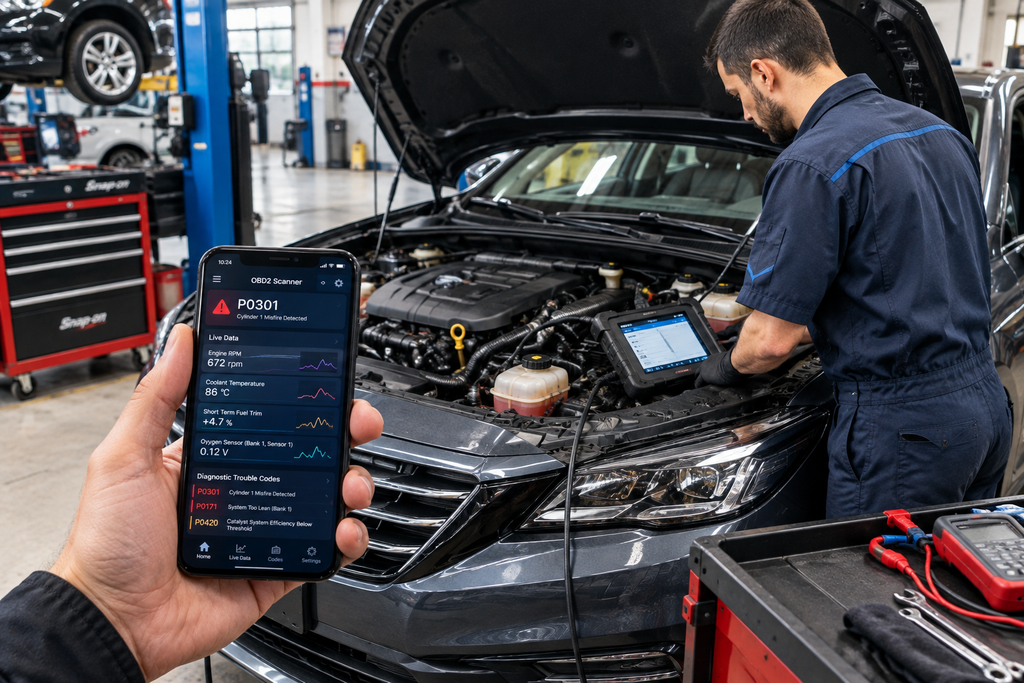
Many of the most common issues can be investigated with the use of an OBD2 scanner app, such as the check engine light, misfiring engine, sensor failures, fuel system problems, temperature problems, emissions-related issues, and more. When a vehicle is exhibiting an unusual behavior or warning, smartphone-based diagnostics is a convenient first step to retrieve diagnostic codes and display selected live data.
Information retrieved by an app, though, should not be confused with a thorough diagnosis. The diagnostic codes may not always refer to the specific failing part or to a specific system or condition; in some cases, the problem can only be solved by using special equipment or requiring a physical inspection. This is where an appropriate OBD2 scanner application can be a real boon to the driver, giving him/her some insight into how their car works, as well as providing valuable data and providing a way to communicate better with a mechanic when it’s time to seek out the pros.