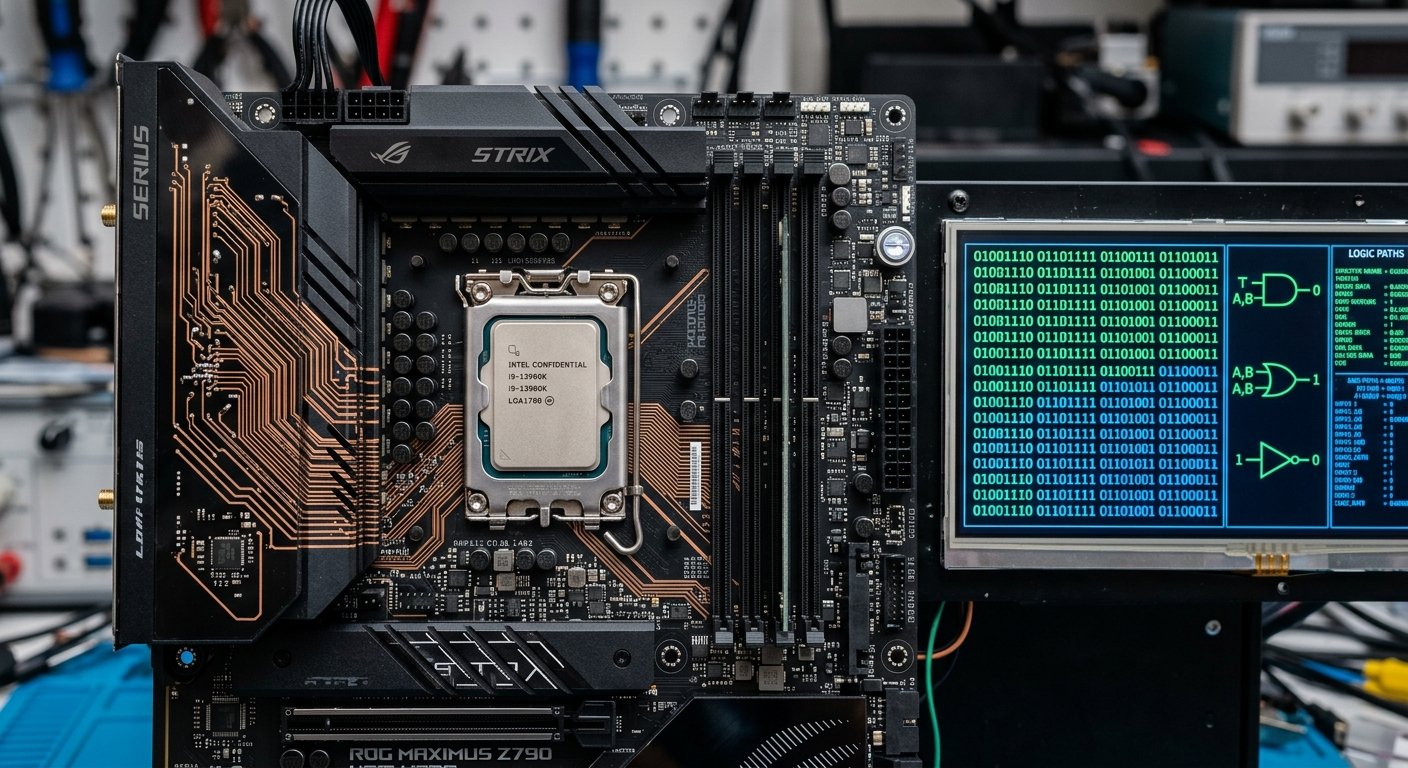
Introduction to Net-Centric Computing
Today, computing extends beyond the use of individual computers. Organizations today rely on systems that are interconnected to enable the sharing of resources and the communication of computers, servers, applications, databases, users, and devices. This is termed “net-centric computing” in which the network plays a central role in the use of computing resources and provisioning of services. Users can access resources on local networks, private infrastructures, data centres, and cloud platforms, rather than dealing with data processing and storage on a single device. It enables e-banking, video conferencing, e-commerce, digital education, enterprise use and cloud applications. Network infrastructure is a key component of these systems since computation resources are unable to deliver reliable services when there is poor network connectivity.
Net-cantered computing is closely related to the evolution of modern networks and distributed computing. In a net-centric environment, computing resources will work together via a communication network rather than as stand-alone entities. An application is running on a remote server and a user accesses the application but the application data is stored in another server, and there are a number of switches, routers, wireless access points, and communication links. The individual parts each play a particular role, but the various parts need to be coordinated to ensure the provision of an integrated service. Thus, network infrastructure becomes a basis for connected computing, as the efficiency of the information transfer between users and resources depends on it. Consequently, knowledge about servers, routers, switches, wireless networks, data centers, and communication links is a helpful starting point to understanding how modern connected systems work.

Understanding Network Infrastructure
Network infrastructure is the hardware, network technologies, software and other facilities used to make it possible for computers and other devices to communicate. It comprises servers, routers, switches, wireless access points, network cables, fiber-optic links, firewalls, and network management systems. It also encompasses bigger facilities like data centers where numerous networking devices and servers are running all the time. All of these components together form the ways in which information flows between places. Net-centric applications require multiple applications to be supported concurrently on the infrastructure, such as data transfer, application access, authentication, file sharing, communication and remote processing. Therefore, a well-designed infrastructure needs to offer adequate bandwidth, reliability, security, scalability, and performance. If these characteristics are absent, connected applications can suffer delays, disconnections, data loss, and even service failures that impact both users and organizations.
Network infrastructure is like the transportation system used to convey information. People and goods are moved between places via roads, bridges, traffic signals and vehicles, and data is moved between computing resources via network devices and communication links. It also shows how each part is important. Even with a high performance server, a slow network connection to that server can result in a poor user experience. Likewise, internal communication issues could occur in an organisation even though the internet might be fast because of poor configuration of the switches and/or wireless infrastructure. The performance of these various elements is what makes net-centric computing work, not the performance of any one thing. This means that system-to-system communication needs to be taken into account during infrastructure planning. To choose and introduce new network technologies, organizations must be aware of the traffic that will be traveling through the network, who will be using it, what applications will be running, what security requirements are needed, and what the growth plans are for the network.
Networked Services Are Provided by Servers
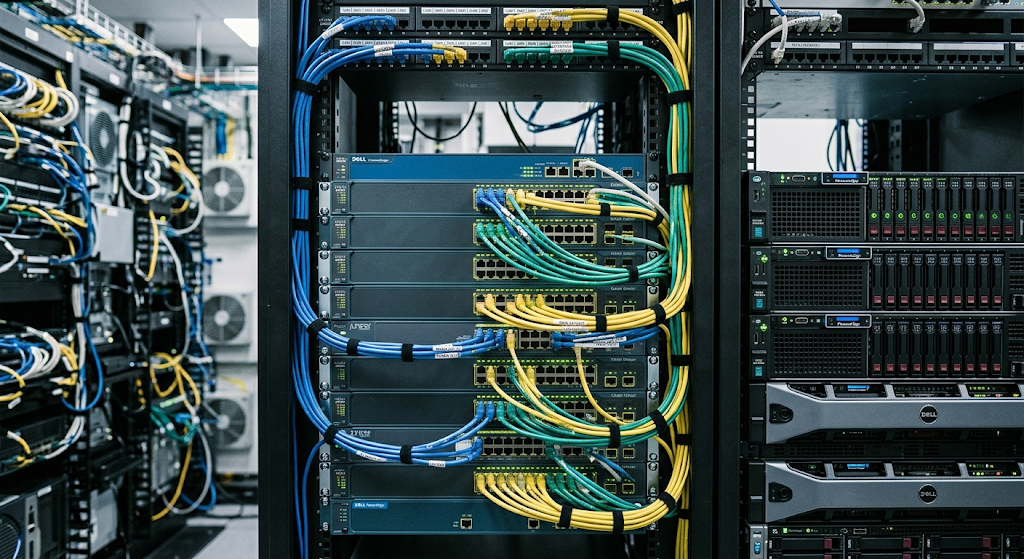
Servers are a crucial part of network infrastructure as they deliver computing resources and services to other devices. A server is a computer system that responds to requests from clients, such as applications, computers, phones and tablets. A server can be used to run websites, store files, handle databases, offer email services, verify users or process business applications or serve cloud computing workloads, amongst other functions.
Users may not need to know the actual physical location of the server that is providing a service in a net-centric environment. They just send a request across the network and the appropriate server handles the request and provides the needed information. This abstraction of users from physical computing resources makes networked services more flexible and enables organizations to move important applications and data to the center, the central repository.
Server Reliability and Scalability
In connected systems, servers offer reliability and scalability as well. Organizations can have more than one server to spread loads across more than one server. When one server is overloaded, it is possible that requests are diverted to other servers. New technologies like virtualisation enable multiple virtual machines (VMs) to run on a single physical machine, and containerisation can bundle apps and their dependencies so they behave the same on any machine.
For larger environments, load balancing can provide better performance and availability by sharing incoming requests over multiple servers. They also come in handy for organizations where their applications need to support many users at once. Servers need sufficient network resources, power, cooling, security, storage, and maintenance, however. Their usefulness then will certainly rely not just on their internal processing capabilities, but on the infrastructure that links them to the users and other systems.
The Movement of Data Between Networks
Routers are the devices that are used to route information between networks. A router is used for routing information between networks and finding a route to send information from one network to another. For instance, when a user accesses an online service located on a network outside the organization’s local network, the user’s request could route through multiple routing devices to the online service. Routers are thus pivotal in establishing local networks with larger networks, such as wide area networks and the internet.
They rely on routing information to find out which segment in the network to send the packets to, so that data can flow from one network segment to another. If there weren’t routers, separate networks wouldn’t be able to communicate with each other. They are vital to net-centric computing, especially in organizations relying on remote servers, cloud computing, branch offices, and Internet-based services.
Advanced Router Functions
Today’s routers can offer more than a simple packet forwarding service. They can contain features like network address translation, virtual private networks, traffic management, access controls, and quality-of-service mechanisms, depending on the model and the deployment environment. These functionalities enable companies to manage the flow of traffic entering and exiting their networks and can enhance the dependability of key applications. For instance, an organization can assume that it counts traffic from voice or video communication as more important than other types of traffic to minimize the impact when network activity is high.
Routers also can be involved in designs of redundant networks that provide alternative routes in the event of a failure. Many of these systems are often interconnected, not just a local network, and these properties are essential to net-centric computing. Routers enable connections between offices, data centers, cloud platforms, and external services to facilitate digital expansion.
Switches and Efficient Local Network Communication (ELNC)
Another important piece of network infrastructure is switches, especially for local area networks. Routers are used to connect different networks, switches connect devices on a network and efficiently direct data to a target network. Wired network connections can connect to switches such as computers, printers, servers and wireless access points. A Switch is a device that is able to switch traffic towards specific devices based on information about the connected devices, so that unnecessary traffic does not reach devices that do not require it.
Switches are crucial in office, educational, data center and other settings for maintaining efficient communication. For efficient local traffic management, users and computing resources often communicate to a variety of systems in a net-centric computing environment, where application performance and congestion are important.
Network Organization and Segmentation
The change of technology also helps in the organization and segmentation of the networks. Administrators can restrict the number of devices in each group by using a feature like virtual local area networks even if they are both attached to the same switching equipment. This can help to enhance security and streamline network management. For instance, an organization might divide employee devices from guest devices, servers and special equipment into separate logical network segments.
Managed switches can also offer monitoring and configuration features which can assist administrators in detecting uncommon traffic patterns or functionality concerns. Switches are used in larger environments in hierarchical designs that can support a large number of connected devices. Data centers, for instance, can have many switches due to the requirement of rapid and reliable communication between servers and storage systems. As such, the ability to switch infrastructure is an integral component of the internal communication layer needed to make it possible for a net-centric application to run efficiently.
Wireless Networks and Mobile Connectivity
Wireless networks offer network connectivity without the use of traditional wires, providing connectivity to computers, smartphones, tablets, sensors, and other devices. Wireless access point: a point that sends radio signals to client devices and that connects them to the organization’s larger network. This flexibility is especially significant in schools, offices, hospitals, public facilities or homes, where users can be from one location to another without losing their connection.

Wireless networks are also used for mobile computing, which adds the ability to use applications and services from a variety of devices from various locations. Mobile applications and remote working have become an important feature of net-centric computing, so wireless connectivity has become a vital component of the network infrastructure and not just an optional convenience.
Challenges of Wireless Networks
Organizations face certain challenges when it comes to wireless networks, though. The distance, physical barrier, interference and connected devices can all impact on radio signals. What can work great for a few users can fall apart when hundreds try to communicate on a wireless network at the same time. Another important point to consider is security; wireless signals can travel outside the walls of a building.
Organizations must thus have the right authentication, encryption, access control, network segmentation, and monitoring. Correct placement of the wireless access points and correct channel and capacity configuration can also enhance performance. Appropriate management of these components makes wireless networks an important access layer for net-centric computing, enabling users to be connected to applications and services, along with enabling mobility and flexible working environments.
How Data Centers powers Big Compute
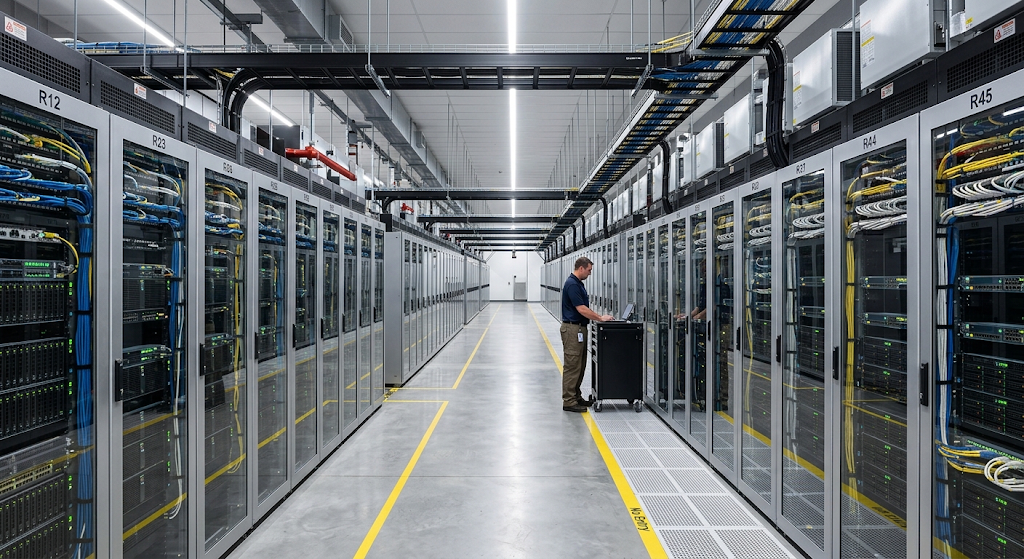
Data centers are dedicated facilities that accommodate servers, storage solutions, network infrastructure, power systems, cooling systems, and security measures. They are an essential foundation to many of the services utilized in net-centric computing. Data centers can house thousands of computing devices that are interconnected, and are used by websites, databases, enterprise applications, cloud services, online platforms and digital storage systems.
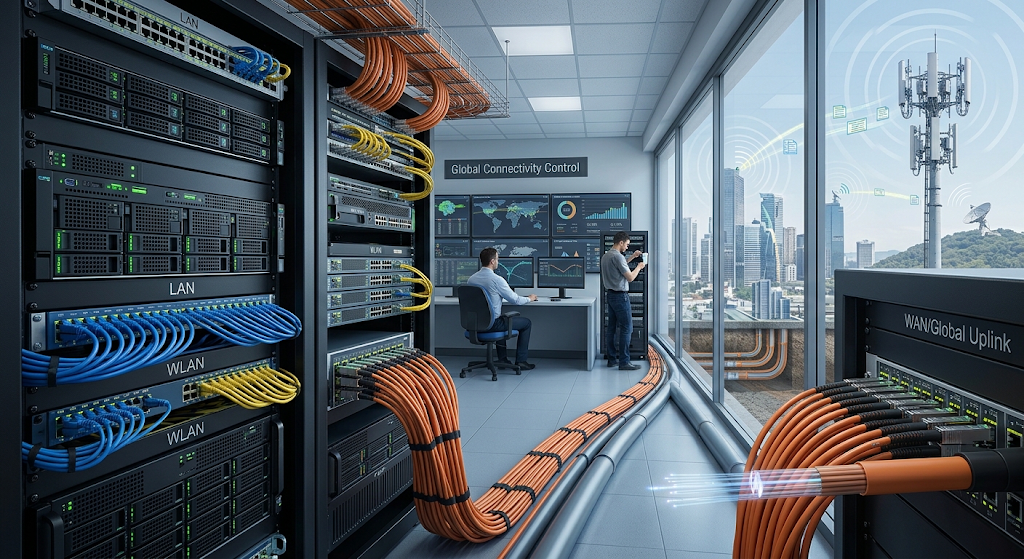
A data center has to offer far more than just office space for computers. It needs sufficient power, climatic conditions, physical security, network connectivity, monitoring, backup solutions and maintenance and disaster recovery procedures. Such support systems enable the computing resources to run 24 hours a day and to provide service to users from multiple locations. If an organization does not have reliable data center infrastructure, it would be very difficult to deliver the required availability of today’s networked applications.
Data Center Network Design
The design of the network within a data center is critical because servers usually communicate a significant amount of data to other servers, data stores, and external users. Data center networks are consequently engineered to meet the need for high bandwidth, low latency, redundancy, and efficient traffic management. A number of switches, routers, communication pathways, and security systems can be configured to allow a service to still be available if one of these systems fails. In addition, to increase resilience and enable disaster recovery, an organization can have multiple data centers located in different geographic regions.
Large Data Centers are used by Cloud Service Providers to offer computing resources to their customers via the Internet. This represents the correlation of physical infrastructure and the net-centric computing environment: Users may be using a simple app or browser to access services, but under the hood, a complex data center infrastructure is handling requests and returning data.
Communication Links and Data Transmission
Communication links are the actual means by which information flows between connected systems. These links may be constructed in a variety of technologies such as copper cables, fiber optics, radio communication, cellular network, satellite communication, and other transmission technologies. The selection of the communication link will be influenced by distance, bandwidth, cost, reliability, physical environment and application requirements.
Fiber-optic connections are also popular for high-speed data transmission because they can transmit high volumes of data over long distances. There are wireless and cellular technologies to offer flexibility and mobility, and copper-based technologies are still used in many local networks. Net-centric computing has communication links that enable users to connect to local networks, local networks to larger networks, data centers to other centers, and organizations to external services.
Communication Performance and Reliability
Communication links can directly impact the user experience. Bandwidth is the amount of data that can be sent over the connection in a set amount of time, latency is the delay between the times that data is sent and received. Applications can also be impacted by packet loss, since lost information may have to be retransmitted. Cloud storage, video conferencing, online gaming, remote desktop, and real-time collaboration are just a few applications that can be especially demanding for network performance.
Organizations must thus choose communication technologies based on the needs of the applications. Redundant links can offer extra protection in case the primary link fails, permitting traffic to be directed along an alternate link. Therefore, dependable communication paths are crucial to the overall performance and availability of connected computing systems.
How the Components of the Network Work Together
It’s how its individual components work together that makes network infrastructure really powerful. Imagine that a user is logging in to access an enterprise application from his/her laptop. The laptop can initially be connected via a wireless access or Ethernet to the switch. The traffic may then be routed through routers as well as security systems to a server that is running the application. The server could be connected to a database or storage server that is situated in another part of the data center.
The answer is then sent back through the network until it reaches the user’s device. The user may perceive this process as one event, but many infrastructure components could be involved in providing the requested service. This coordinated communication is the foundation of net-centric computing, which is based on the fact that application and data are frequently stored on a number of systems, not just the user’s.
Infrastructure Interdependency and Redundancy
The interdependency of this infrastructure also makes that any failure of one of its components can impact a service as a whole. If any communication link fails, users might not be able to access a server, and if any switch is congested, communication between applications and databases could take longer. A faulty router can cause disruption between networks and poor wireless coverage can mean that mobile customers can not benefit from services in an effective manner.
Monitoring and management systems are thus employed by organisations to keep track of network performance, detect failures, and take action on issues. Another important strategy is redundancy, which means that if a component fails, a critical system still functions. Infrastructure designed as a system and not as a set of devices leads to greater reliability and predictability in digital services.
Ensuring Security in Net-Centric Network Infrastructure
Security is an absolute must; interconnected systems provide several ways for unauthorized access or malicious activity to take place. Data should be protected when it is being transferred between users, applications, servers and storage systems. Many technologies and practices like firewalls, encryption, authentication, access control, network segmentation, intrusion detection, continuous monitoring are commonly used by organizations.
Security policies can also specify who is allowed to use certain systems and what activities they’re allowed to conduct. With the net-centric environment emphasis on individual computer security is insufficient – communication between systems is a critical component of security. Protecting the network allows for minimising the risk of unauthorised access to the network, ensuring the confidentiality, integrity and availability of organisational information and services.
Ongoing Network Security Management
Networks also evolve and evolve over time, so security also needs management. As an organization grows, new devices, applications, users and external services can be added. Meanwhile, attackers could try to exploit vulnerabilities in legacy software, misconfigured devices, compromised credentials or insecure communication channels. Administrators are thus responsible for keeping systems up and running, applying patches, monitoring traffic, checking access policies, and reacting to any threats that are found.
One aspect of network segmentation is that the effect of the compromised device is contained because it does not communicate with the rest of an organization unless needed. However, user awareness should be coupled with strong security practices, as users’ behavior can impact the security of connected systems. A robust network infrastructure will give a better base for the dependable use of services of net-centric computing.
The Concepts of Scalability, Reliability, and Network Management
With the growth of the organisation, the network infrastructure needs to grow as well. Scalability is the capability of a system to support more users, devices, applications and data without affecting performance. The number of devices, such as switches, wireless access points, servers and Internet connections required by a small organization might be a few, while a large enterprise may need thousands of network devices and multiple data centres.
Organizations have the ability to plan effectively for future growth, avoiding infrastructure constraints that may cost more to resolve down the road. Modular equipment, virtualization, cloud resources, redundant connections, automated equipment configuration and centralized monitoring are all options for scalable architectures. These methods can help organizations to scale up and down their services and scale up their capacity according to the changing demand.
Reliability and Network Management
Reliability is also a must, as users come to expect networked applications being available when required. Redundancy, backup power, multiple communication links, duplicate network devices, failover systems, and geographically distributed infrastructure are all ways that organizations can enhance reliability. A monitoring tool can be used to tell you how your network is being used, the health of your devices, latency, errors, and more.
From that information, administrators can spot potential issues and prevent them from becoming serious service disruptions. Proper network management also includes keeping records of the infrastructure, managing configurations, managing addresses, updating equipment, and developing a procedure for handling failures. Such practices enable the transformation of network infrastructure from a set of physical devices into a managed platform that enables reliable computing services.
Network Infrastructure Essential for the Operations of different Organizations
Almost all aspects of today’s organizational computing are supported by network infrastructure. In education, networks are used to link students and teachers with learning management systems, digital libraries, online classrooms, and cloud applications. Networks are used in business for communication, financial systems, customer relations, databases, collaboration efforts, e-commerce, and teleworking.
Networks are essential for healthcare organisations to link clinical systems, administrative applications, databases and communication services. Networks are deployed by government institutions to serve digital government and to connect departments and sites. The examples illustrate that network infrastructure is not just a technical background element. It has a direct impact on how organizations interact, function, store data and provide services to users.
Network Infrastructure and Digital Transformation
Increased reliance on digital services also puts a greater emphasis on planning and investing in network infrastructure. Organizations require infrastructure that will support evolving workloads, yet at the same time keep delicate information safe and shield service accessibility. The proliferation of emerging technologies like edge computing, the Internet of Things, artificial intelligence, 5G connectivity and cloud computing will expand the device and system numbers communicating over networks.
This will require infrastructure to handle more data and different communication patterns. Companies with knowledge of the connections between computing resources and network infrastructure will be better prepared to create computing systems that are responsive, secure, scalable, and reliable. Strong infrastructure is therefore the base for digital transformation, and not just a way of connecting computers.
Conclusion
Net-centric computing is a shift to network connection that allows system users and computing resources to collaboratively work together. Servers deliver applications and data, routers link two or more networks together, switches control communications inside a local network, wireless networks offer flexible access, data centers store and process large volumes of data and communication links transport information between locations. All of these components do not work alone. The performance of these two combine what determines fast, secure, and reliable access to digital services for users. Therefore, network infrastructure is not a supporting system of a modern computing system, but rather a part of it.
Reliable network infrastructure will continue to be critical as organizations rely more and more on cloud-based services, distributed applications, mobile devices, remote collaboration, and data-intensive technologies. Good infrastructure design needs to be done with performance, scalability, security and redundancy in mind, as well as future needs and requirements. A robust network can be used to efficiently share computing resources and carry out the delivery of services across organizational and geographical boundaries. By knowing these infrastructure elements, one can get a better picture of how these services function, as people use them every day. Ultimately, net-centric computing relies on a network foundation that’s well-designed to connect people, devices, applications, servers, and data into a reliable, coordinated computing environment.