In this article, we explain what market risks mean for mutual fund investors, using real-world data, expert insights, and practical examples. You’ll learn about key market risks such as volatility, interest rate changes, and geopolitical events and proven ways to manage them. Whether you’re assessing risk-return tradeoffs or selecting the best mutual funds on trusted platforms like Credyfi, this guide helps you make informed and confident investment decisions.
Types of Market Risks Affecting Mutual Funds
Equity Risk
Equity risk is the risk of loss due to a decline in the market price of stocks. Mutual funds that invest primarily in equities are directly exposed to this risk. For instance, during the COVID-19 pandemic, the Nifty 50 index saw a sharp decline of approximately 40% from February to March 2020, which impacted equity mutual funds significantly. According to a report by Morningstar, funds that were heavily invested in small and mid-cap stocks faced even greater volatility, with some reporting losses exceeding 50% during this period. Investors should consider the long-term growth potential of equities while being prepared for short-term fluctuations.
Interest Rate Risk
Interest rate risk is particularly significant for debt mutual funds. When interest rates rise, the value of existing bonds falls, leading to potential losses for investors. A recent report by the Reserve Bank of India (RBI) indicated a tightening of monetary policy, which can influence the performance of fixed-income mutual funds. For example, in 2022, as the RBI raised interest rates to combat inflation, many long-duration debt funds reported a decline in NAV by 5% to 10%. Investors should be aware of the duration of the bonds within their debt funds, as longer duration bonds are more sensitive to interest rate changes.
Currency Risk
For mutual funds that invest in international markets or foreign currency-denominated bonds, currency risk becomes a critical factor. Fluctuations in currency exchange rates can affect the returns on these investments. For example, if the Indian Rupee weakened against the US Dollar by 5%, the returns on dollar-denominated assets could be significantly impacted. In the financial year 2022-23, the depreciation of the Rupee led to increased volatility in international funds, underscoring the need for investors to monitor currency trends and their potential impact on returns.
Liquidity Risk
Liquidity risk arises when an investor cannot sell their investment quickly without a significant loss in value. Some mutual funds, especially those investing in smaller companies or niche markets, may face liquidity challenges during market downturns. For example, during the market correction in 2020, several small-cap funds faced redemption pressures, leading to delays in processing withdrawals. Investors should check the liquidity profile of the funds they are considering, ensuring that the underlying assets can be liquidated without substantial loss.
Market Sentiment Risk
Market sentiment can greatly influence mutual fund performance. Factors like political instability, economic downturns, and global crises can sway investor confidence. For example, the volatility in the stock market during the 2019 elections significantly impacted mutual fund inflows, with a reported drop of 15% in equity fund investments in the months leading up to the elections. Understanding the broader economic and political landscape can help investors anticipate shifts in market sentiment and adjust their strategies accordingly.
Understanding the Mutual Fund Disclaimer: A Critical Element
Every mutual fund investment comes with a disclaimer: “Mutual funds are subject to market risk.” This statement serves as a reminder to investors about the inherent risks associated with their investments. It is crucial to read and understand these disclaimers to gauge the risk-return profile of the fund accurately. The disclaimer emphasizes that while mutual funds offer the potential for significant returns, they also come with the risk of capital loss, especially in volatile market conditions.
In Hindi, the mutual funds disclaimer reads: “म्यूचुअल फंड बाजार के जोखिमों के अधीन हैं।” This emphasizes the same message, highlighting the need for investors to approach mutual funds with caution and a well-informed strategy. Investors should conduct thorough research or consult with financial advisors to understand the implications of the disclaimer fully.
Strategies to Mitigate Market Risks in Mutual Fund Investments
Diversification
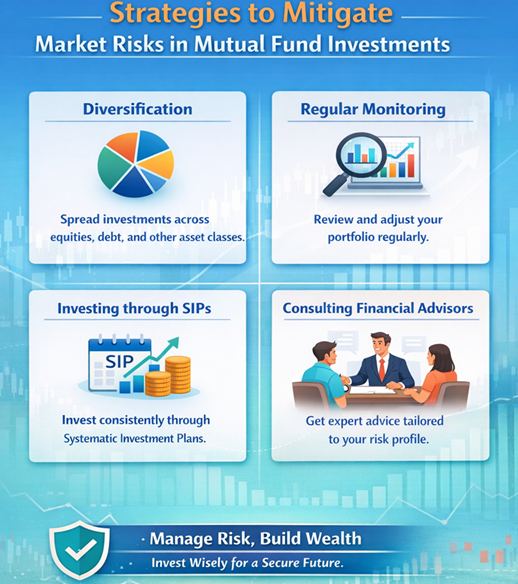
Diversifying your investment across various asset classes and sectors can help mitigate risks. By not putting all your eggs in one basket, you can cushion against market volatility. For instance, a balanced mutual fund that includes both equity and debt can provide stability during turbulent times. A study by the Association of Mutual Funds in India (AMFI) showed that diversified portfolios outperformed concentrated ones during market downturns, reinforcing the importance of a well-rounded investment strategy.
Regular Monitoring
Regularly tracking your mutual fund investments helps you stay aligned with changing market conditions and your financial goals. Periodic reviews ideally on a quarterly basis—allow you to identify underperforming funds, rebalance your portfolio, and make timely adjustments without reacting emotionally to short-term volatility. Using smart tools like the Credyfi Invest app makes this process easier by letting you monitor fund performance, track returns against benchmarks, and compare funds in one place, enabling more informed and confident investment decisions.
Investing through SIPs
Systematic Investment Plans (SIPs) allow investors to invest a fixed amount at regular intervals, making it easier to navigate market ups and downs through cost averaging. By investing consistently, SIPs reduce the risk of market timing and promote disciplined, long-term investing. They are especially effective in volatile markets, as investors automatically buy more units when prices are low and fewer when prices are high. Using a SIP Calculator can help investors estimate returns, set realistic goals, and plan their investments more effectively.
Consulting Financial Advisors
Seeking advice from certified financial planners can provide personalized insights into your risk tolerance and investment objectives. They can help you choose mutual funds that align with your financial goals while considering market risks. A survey by the Financial Planning Standards Board India indicated that individuals who consulted financial planners reported higher investment satisfaction and better financial outcomes compared to those who managed their investments independently. Financial advisors can also help navigate complex market conditions and recommend suitable adjustments to your portfolio.
Frequently Asked Questions (FAQs)
What is the meaning of “mutual funds are subject to market risk”?
This phrase indicates that the value of mutual fund investments can fluctuate based on market conditions, and investors may not get back the original amount invested. It serves as a reminder to conduct thorough research and understand the risks involved.
How can I assess the risk of a mutual fund?
Look at the fund’s historical performance, risk ratings provided by financial analysts, and the types of assets it invests in to assess risk levels. Tools like the Sharpe Ratio and standard deviation can also provide insights into a fund’s risk-adjusted performance.
Are all mutual funds equally risky?
No, mutual funds vary in risk based on their asset allocation. Equity funds generally carry higher risks compared to debt funds. Hybrid funds can offer a balanced approach, but understanding the underlying assets is crucial for assessing risk.
Can I lose all my money in mutual funds?
While it is unlikely to lose all your investment, there is a risk of losing a portion of it, particularly in equity-oriented mutual funds during market downturns. Historical data suggests that long-term investments in equity mutual funds tend to recover losses over time, but short-term investors may face significant risks.
What are the benefits of investing through SIPs?
SIPs help in averaging the cost of investment, reduce the impact of market volatility, and encourage disciplined investing. They also allow investors to start with a smaller amount, making mutual funds accessible to a broader audience.
Is it necessary to read the mutual fund disclaimer?
Yes, understanding the disclaimer is crucial as it outlines the risks involved and helps you make informed investment decisions. Ignoring the disclaimer may lead to unrealistic expectations regarding returns and potential losses.
Author-Abhishek Sonawane
Abhishek Sonawane, an MBA graduate from the prestigious Indian Institute of Management Visakhapatnam (IIMV), brings over ten years of experience in the finance domain. His extensive background includes various roles in financial management and strategy, providing him with a comprehensive understanding of the financial landscape. Abhishek’s expertise and dedication to financial education make him an authoritative voice in personal finance, helping readers make informed financial decisions.