The New Standard for Luxury Visuals
Luxury has always depended on details. A soft reflection on polished gold, the grain of fine leather, the glow around a glass perfume bottle, or the clean shadow beneath a designer watch can change how a customer feels about a product. In the AI era, these details are no longer limited to large studios, expensive lighting rigs, and long production schedules. Brands can now create refined commercial images faster while still protecting the elegance that premium buyers expect.
Luxury product photography is not just about showing an item clearly. It is about creating desire, trust, and emotional value. A high-end image should make the product feel rare, carefully made, and worth paying more for. In 2026, AI tools are helping brands build this kind of visual identity with greater control and creative freedom.
For fashion labels, jewelry designers, cosmetics companies, and high-value consumer brands, the aim is not to replace taste with automation. The aim is to use technology to support stronger creative direction and more consistent premium branding visuals.
Why Premium Product Images Influence Buyers
Online shoppers cannot touch a silk scarf, feel the weight of a watch, smell a fragrance, or test the texture of a luxury cream before buying. They make decisions through visual signals. A flat or poorly lit image can make even an expensive product look ordinary. A refined image can communicate quality within seconds.
Premium customers look for signs of craftsmanship. They notice symmetry, texture, packaging, light, and mood. They also expect consistency across websites, social platforms, digital ads, lookbooks, and marketplace listings. If a brand looks elegant on one channel but inconsistent on another, the feeling of luxury becomes weaker.
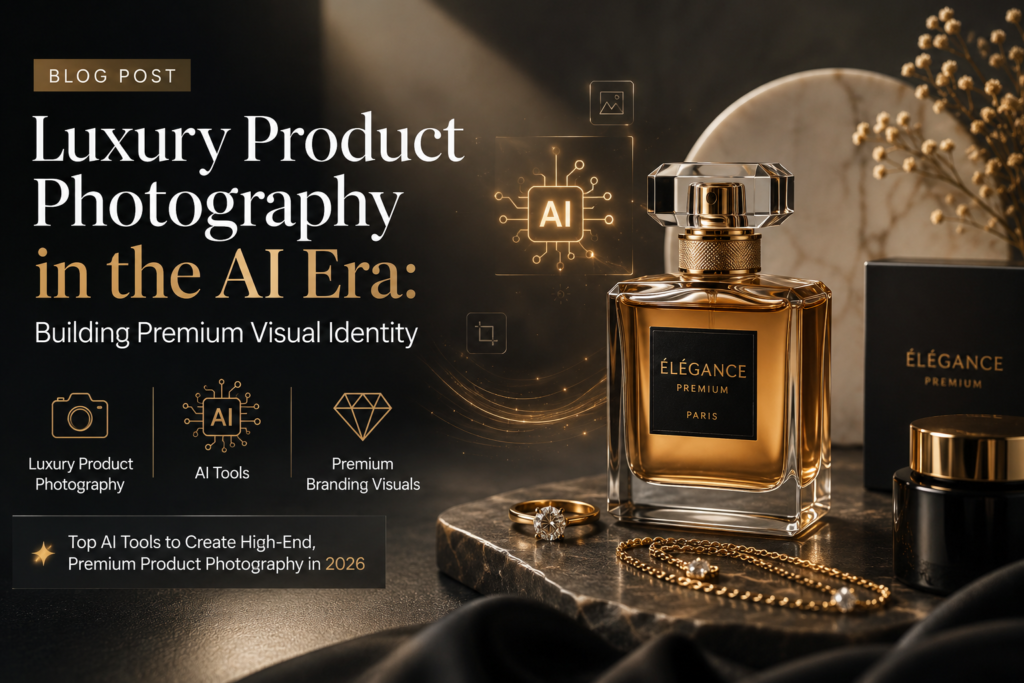
This is where luxury product photography, AI tools, premium branding visuals work together as a modern creative system. AI can help produce high-quality images while giving teams a clear style across many platforms. It allows businesses to test backgrounds, lighting styles, and visual themes before investing in a full shoot.
How AI Tools Are Changing High-End Image Creation
AI tools have moved far beyond basic background replacement. Modern creative platforms can assist with lighting simulation, realistic texture rendering, object placement, color harmony, image expansion, retouching, and campaign variation. For luxury brands, these features are useful because premium visuals often depend on small refinements.
The best use of AI is not random generation. It begins with a clear visual direction. Brands should define the feeling they want: quiet luxury, bold glamour, modern minimalism, heritage craftsmanship, futuristic elegance, or soft feminine beauty. Once the direction is clear, AI becomes a creative assistant that helps shape consistent results.
What Makes an AI Image Feel Premium
Not every AI-generated product image looks luxurious. Some images appear too glossy, artificial, or visually confusing. Premium branding visuals need restraint, realism, and careful composition. The image should feel expensive without looking forced.
A luxury-level image usually includes:
- Clean lighting with soft shadows
- Realistic reflections and highlights
- Natural product proportions
- Premium textures such as marble, leather, velvet, glass, silk, metal, or polished stone
- Balanced negative space
- A limited and elegant color palette
- Strong focus on the product
The most successful luxury product photography does not overload the scene. It gives the product room to breathe. A gold ring may need only a deep shadow, a velvet surface, and one perfect highlight. A perfume bottle may need mist, glass reflections, and warm light, not a crowded background.
Best AI Tool Features for Luxury Brands in 2026
Brands do not need every tool available. They need features that support commercial quality, consistency, and control. In 2026, the most useful AI tools for luxury product photography usually include image generation, product placement, background control, upscale enhancement, brand style memory, and advanced editing.
Strong features to look for include:
- Product reference upload, so the item remains accurate
- Lighting controls for studio, cinematic, daylight, or editorial looks
- Texture realism for premium materials
- Background replacement with believable depth
- Image expansion for banners and campaign layouts
- High-resolution export for web and print use
- Style consistency across collections
For a luxury brand, accuracy is especially important. A bag cannot have the wrong stitching. A necklace cannot lose its clasp shape. A lipstick shade cannot shift too far from the real product. The best workflows combine generated scenes with human review, product references, and final editing.
Building a Premium Visual Identity with AI
A visual identity is more than a logo or color palette. It is the full impression created by every image a customer sees. Luxury brands need a recognizable style that makes their products feel part of the same world. AI can help create this world faster, but it must follow rules.
Start with a brand image guide. Define preferred lighting, backgrounds, product angles, color tones, surface materials, shadow softness, crop styles, and emotional mood. A premium skincare brand may choose warm beige tones, stone textures, soft sunlight, and calm spacing. A fine jewelry brand may prefer black velvet, sharp highlights, close-up detail, and dramatic contrast.
Once these choices are documented, prompts and image references become more focused. Instead of asking for a “luxury product image,” the team can request a specific mood, lighting direction, and material setting. This produces stronger results and reduces repeated editing.
AI Workflows for Fashion, Jewelry, Cosmetics, and Premium Goods
Different luxury categories need different visual treatments. Fashion accessories need texture and structure, so handbags, belts, shoes, and eyewear should show material quality, stitching, shape, and finish. Jewelry needs precision, with metal tone, gemstone depth, polished reflections, and accurate scale.
Cosmetics need mood and sensory appeal. Skincare, perfume, lipstick, and makeup products benefit from soft liquids, glass, cream textures, flowers, mist, water, stone, or fabric. AI tools can create elegant scenes that suggest freshness, softness, confidence, or glamour.
High-value consumer goods such as premium tech, home decor, pens, luggage, and lifestyle products need clean lines and a strong environment. The image should suggest quality, purpose, and status without becoming too busy.
Common Mistakes to Avoid
AI can create beautiful visuals, but luxury brands should avoid careless shortcuts. The biggest mistake is accepting the first attractive image without checking accuracy. Premium buyers notice when a product looks unrealistic.
Avoid these common issues:
- Overly shiny surfaces that look plastic
- Incorrect product shapes or altered logos
- Crowded backgrounds that distract from the item
- Lighting that does not match the product material
- Inconsistent colors across a product collection
- Unrealistic shadows or floating objects
Human judgment remains essential. A creative director, designer, or brand manager should review every final image for accuracy, elegance, and brand fit. AI should speed up production, not lower the standard.
Better Prompts for Luxury Images
A strong prompt should be specific, visual, and controlled. It should describe the product, mood, materials, lighting, background, camera style, and overall impression. Instead of writing “create a luxury perfume photo,” describe a clear glass perfume bottle on pale marble, soft golden side lighting, delicate reflections, minimal beige background, premium editorial composition, elegant shadows, and high-end commercial style.
Prompt quality often determines whether the final image feels premium or generic. Clear direction also prevents clutter, distorted labels, fake reflections, extra objects, cartoon effects, or unrealistic proportions.
A Refined Future for Premium Brand Imagery
The AI era is opening a new chapter for luxury product photography. Brands can now create polished, elegant, and adaptable visuals without depending on traditional production alone. This is valuable for small luxury labels, growing fashion houses, independent jewelry designers, cosmetic startups, and premium lifestyle companies that need strong visuals across many channels.
The future of premium branding visuals will belong to brands that combine technology with taste. AI tools can provide speed, variety, and creative range, but the final impression still depends on human direction. When lighting, texture, composition, and brand identity work together, product images become more than pictures. They become a quiet promise of quality, elegance, and desire.