If you have a serious chewer at home, you already know the routine. You buy something that claims to last. You hand it over. Ten minutes later, it’s gone. Sometimes less.
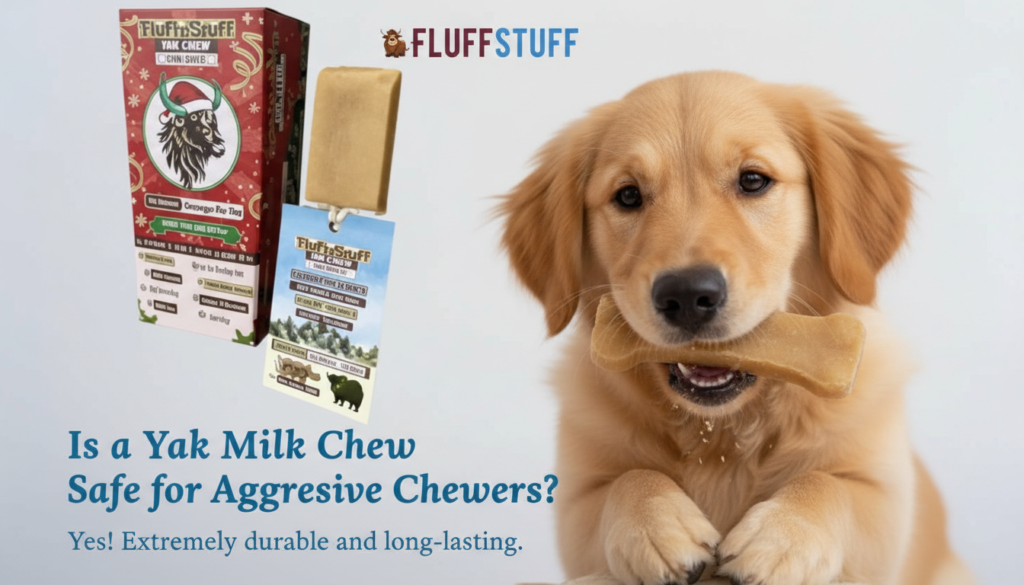
That’s usually when people start looking at a Yak Milk Chew and wondering if it’s actually tougher — and more importantly, if it’s safe.
Short answer? It can be safe. But it’s not magic. And it’s not indestructible either.
Why They’re So Hard in the First Place
A Yak Milk Chew isn’t baked like a biscuit. It’s dried for a long time until it turns dense and solid. That slow drying process pulls out moisture and leaves a very firm block behind. That’s why many yak milk chews feel almost like smooth stone when you first hold them.
Compared to softer dog chews, they don’t tear easily. They don’t bend. Dogs have to grind them down little by little.
That’s usually good news for aggressive chewers. Grinding takes longer than snapping.
The Real Risk With Power Chewers
Here’s where things get real.
Aggressive chewers don’t just nibble. They clamp down hard and try to break things apart. If the chew is too small, they might succeed in cracking off a chunk. That’s where safety becomes a concern.
Size matters more than brand names. A thick yak milk cheese bone is much safer than a thin stick for a strong dog. If you’re buying a yak bones for dogs multipack, check the size of each piece before handing it over.
Bigger is almost always better with power chewers.
Supervision Is Not Optional
Even though yak chews are dense, they still wear down over time. Once the chew becomes small enough to fit fully in your dog’s mouth, you need to remove it.
Some owners microwave the final piece. It puffs up into a crunchy treat and becomes easier to chew safely. That works well for yak cheese bones for dogs, and it prevents waste.
But don’t leave aggressive chewers alone with a shrinking chew. They tend to test limits.
What I’ve Noticed With Strong Dogs
When the size is right, many aggressive chewers actually settle into a steady rhythm. Instead of trying to destroy the chew instantly, they work on it slowly. That steady grinding seems to satisfy that intense urge to chew.
The hardness also creates natural abrasion on teeth. It’s not a replacement for brushing, obviously, but it can help scrape surface buildup as they chew.
Some dogs even calm down during chew time. That focused chewing can burn mental energy, not just physical tension.
When It Might Not Be Ideal
There are exceptions.
Very young puppies with baby teeth probably shouldn’t start with a dense yak milk bone. Their teeth are still developing, and something extremely hard may be too much.
Older dogs with dental issues might struggle as well. If your dog has cracked teeth before, talk to your vet before offering hard chews.
And if your dog has a history of breaking very tough objects quickly, monitor closely. Even strong Himalayan Yak style chews aren’t immune to extreme force.
So, Is It Safe?
For most healthy adult dogs with strong jaws, yes — a properly sized Yak Milk Chew can be a safe option. The key is choosing thick pieces, avoiding small sizes, and supervising chew sessions.
It’s tougher than many standard dog chews. It lasts longer than soft treats. But it still requires common sense.
No chew is completely chew-proof. The goal isn’t indestructible. The goal is durable and managed safely.
If you treat it that way, a Yak Milk Chew can work well even for aggressive chewers.