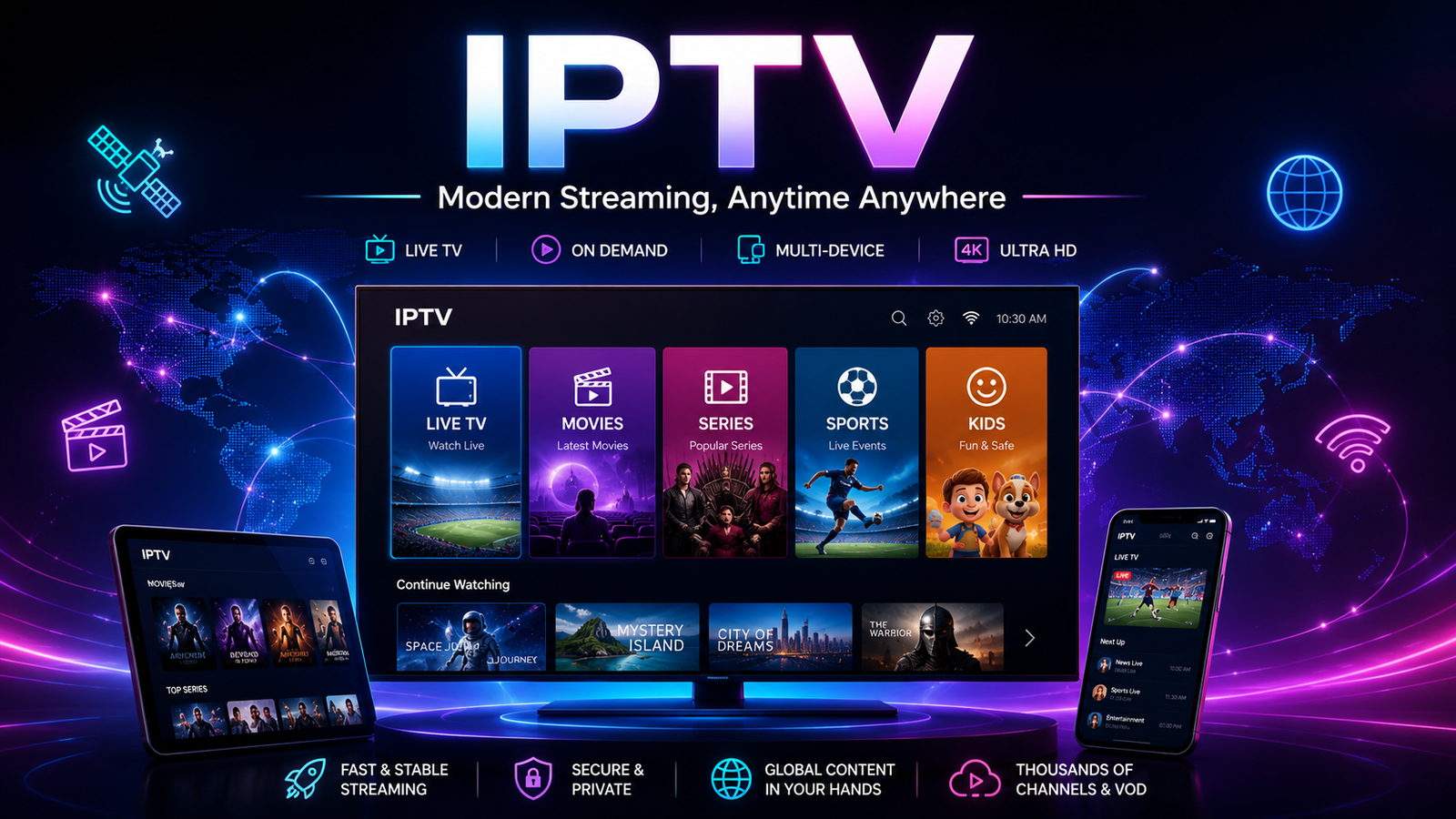
Television entertainment has changed rapidly over the last few years. Many people no longer depend only on cable or satellite services to watch movies, sports, TV shows, and live channels. Internet technology has completely transformed how viewers access entertainment at home and on mobile devices. One of the biggest innovations in digital streaming is IPTV.
IPTV stands for Internet Protocol Television. Instead of using traditional cable systems, IPTV delivers television content through the internet. This allows users to stream live TV, video-on-demand content, and recorded programs on smart TVs, smartphones, laptops, tablets, and streaming devices.
As internet speeds improve around the world, IPTV continues to become more popular because it offers flexibility, affordability, and access to a large variety of entertainment options. In 2026, millions of people will be switching from old cable systems to modern internet-based streaming platforms.
What Is IPTV?
IPTV is a system where television services are delivered using Internet protocols instead of satellite signals or cable formats. It works through broadband internet connections, allowing users to stream content directly from servers.
Traditional television broadcasts channels at the same time for every viewer. IPTV works differently because users can choose what they want to watch whenever they want. This creates a more personalized viewing experience.
An IPTV system usually includes three major types of content:
Live Television
Live IPTV streaming works similarly to regular TV channels. Users can watch sports events, news broadcasts, entertainment channels, and live shows in real time.
Video on Demand (VOD)
This feature allows viewers to select movies, TV series, documentaries, or programs whenever they want. It gives complete control over entertainment choices.
Time-Shifted Media
Time-shifted content allows users to replay programs that aired earlier. This feature is useful for people who miss live broadcasts.
How IPTV Works
IPTV works through internet data transmission. Instead of receiving TV signals from antennas or satellite dishes, content is streamed through servers using internet protocols.
When users choose a channel or video, the IPTV system sends compressed video data over the internet to the device being used. The content is then decoded and displayed on the screen.
The process involves several components:
- Content source
- IPTV servers
- Internet connection
- Compatible device
- IPTV application or player
A stable internet connection is very important for smooth streaming. Faster internet speeds help reduce buffering and improve video quality.
Why IPTV Is Becoming Popular
The demand for IPTV has increased because viewers want more control over their entertainment experience. Traditional cable services often come with expensive packages and limited flexibility.
IPTV offers several advantages that attract modern users.
Flexible Viewing
Users can watch content on different devices from almost anywhere with internet access. This makes IPTV convenient for travel and mobile entertainment.
Large Content Libraries
Many IPTV platforms provide thousands of channels and extensive movie collections from different countries and languages.
Affordable Entertainment
Compared to cable subscriptions, IPTV services are often more budget-friendly for users who want multiple entertainment options.
High-Quality Streaming
Modern IPTV systems support HD, Full HD, and even 4K streaming quality when internet speeds are strong enough.
Personalized Experience
Viewers can choose exactly what they want to watch without depending on fixed broadcasting schedules.
Devices That Support IPTV
One reason IPTV has become so successful is its compatibility with many devices. Users are not restricted to watching content on a television only.
Popular IPTV-supported devices include:
Smart TVs
Many smart TVs support IPTV applications directly, making installation easy for users.
Android TV Boxes
Android TV devices are widely used for IPTV streaming because they support many apps and customization options.
Smartphones and Tablets
Users can stream IPTV content while traveling or relaxing away from home.
Laptops and Computers
Desktop and laptop streaming remain popular for viewers who prefer larger displays while working or browsing.
Streaming Devices
Devices like Fire TV Stick and other streaming hardware are commonly used for IPTV entertainment.
Understanding IPTV Subscription Services
Many users today search for an Iptv subscription because they want a modern alternative to traditional cable television. IPTV subscriptions usually provide access to live channels, movies, sports content, and TV series through internet streaming.
Subscription plans vary depending on content libraries, streaming quality, number of connections, and customer support. Some services focus on international channels, while others specialize in sports or entertainment content.
When choosing an IPTV plan, users should check:
- Video quality
- Channel availability
- Device compatibility
- Streaming stability
- Customer support
- Trial options
- Internet requirements
Reliable services usually offer clear setup guides and responsive support for users.
Features to Look for in IPTV Services
Not all IPTV platforms provide the same quality or experience. Users should understand important features before choosing a service.
User-Friendly Interface
A clean and organized layout helps users navigate channels and content easily.
Electronic Program Guide (EPG)
An EPG allows viewers to see current and upcoming programs, similar to traditional TV guides.
Multi-Device Support
Good IPTV services support multiple devices and simultaneous streaming options.
Video Quality Options
Users should look for services that support HD and 4K content with adaptive streaming technology.
Stable Servers
Reliable servers reduce buffering and downtime during live streaming.
Catch-Up Features
Catch-up TV allows users to watch previously aired content without recording it manually.
IPTV and Internet Speed
Internet speed plays a major role in IPTV performance. Slow internet connections may cause buffering, lagging, or low-quality video playback.
Recommended internet speeds include:
- 10 Mbps for HD streaming
- 25 Mbps or more for 4K streaming
- Higher speeds for multiple simultaneous streams
Using wired ethernet connections instead of Wi-Fi can improve stability for some users.
Legal and Safety Considerations
Before using IPTV services, users should understand legal and safety aspects. Legitimate IPTV companies operate with proper licensing agreements and content rights.
Users should avoid suspicious services that provide unauthorized content because these may create legal risks or security concerns.
Safe IPTV usage includes:
- Choosing trusted providers
- Avoiding illegal streaming platforms
- Using secure payment methods
- Keeping apps updated
- Protecting personal information
Researching reviews and reputation can help users identify trustworthy services.
IPTV for Sports Fans
Sports streaming has become one of the biggest reasons people switch to IPTV. Many viewers want access to international sports events, live matches, and premium sports channels.
IPTV platforms often provide:
- Football matches
- Cricket tournaments
- Basketball games
- UFC and boxing events
- Tennis championships
- Motorsport coverage
The flexibility of IPTV allows fans to watch sports on mobile devices even while traveling.
IPTV for International Content
Another major advantage of IPTV is global entertainment access. Users can stream channels and shows from different countries and languages.
This is especially useful for:
- Expats living abroad
- Multilingual families
- International news viewers
- Fans of foreign movies and dramas
IPTV creates a more connected entertainment experience across cultures.
Choosing the Right IPTV Provider
Finding the right Iptv provider requires careful research because service quality varies greatly between companies. Some providers focus on stability and customer support, while others emphasize massive channel collections.
A trustworthy provider should offer:
- Good uptime
- Fast customer support
- Transparent pricing
- Trial periods
- Secure applications
- Device compatibility
- Positive user feedback
Reading reviews and testing free trials can help users make better decisions before purchasing a subscription.
The Future of IPTV Technology
The IPTV industry continues to grow as internet infrastructure improves worldwide. Future developments may include:
- Better AI-powered recommendations
- Faster cloud streaming
- Improved personalization
- More interactive content
- Enhanced 8K streaming support
- Virtual reality entertainment integration
As smart homes become more common, IPTV services may integrate deeply with voice assistants and home automation systems.
Common IPTV Problems and Solutions
Although IPTV offers many advantages, users may sometimes experience technical issues.
Buffering
Buffering often happens because of slow internet speeds or overloaded servers.
Solution: Improve internet speed or use wired connections.
App Crashes
Some IPTV apps may crash due to outdated software.
Solution: Update applications regularly.
Login Issues
Incorrect account details can prevent access.
Solution: Verify username and password carefully.
Poor Video Quality
Low-quality streaming can happen when internet bandwidth is unstable.
Solution: Reduce other network usage during streaming.
IPTV vs Traditional Cable TV
Many users compare IPTV with traditional cable television before switching services.
IPTV Advantages
- More flexibility
- On-demand viewing
- Mobile streaming
- International content access
- Often lower costs
Cable TV Advantages
- Stable broadcasting
- No internet dependency
- Familiar setup for older users
In 2026, IPTV continues gaining popularity because internet technology now supports high-quality streaming for most households.
How to Find the Best IPTV Service
People often search online for the Best iptv provider because they want stable streaming, reliable support, and quality entertainment options. Choosing the right service depends on viewing habits, device compatibility, and internet quality.
The ideal service should balance affordability, performance, and customer experience. Free trials are useful because they allow users to test streaming quality before making long-term commitments.
Users should also compare:
- Channel lists
- Video quality
- App design
- Device support
- Customer reviews
- Server uptime
IPTV Trends in 2026
Several trends are shaping the IPTV market in 2026.
AI Recommendations
Streaming platforms are becoming smarter by recommending content based on viewing habits.
Cloud DVR
Cloud recording allows users to save programs online without physical storage devices.
Multi-Screen Viewing
Families can stream different channels on separate devices at the same time.
Smart Integration
IPTV systems now integrate with voice assistants and smart home devices.
Final Thoughts
IPTV has transformed the entertainment industry by making television more flexible, personalized, and internet-driven. Viewers now expect content on demand, multi-device access, and high-quality streaming experiences.
As technology continues evolving, IPTV services are likely to become even more advanced and user-friendly. Whether someone watches sports, movies, documentaries, or international channels, IPTV provides a modern solution for digital entertainment.
Many users today search for The best iptv subscription because they want reliable streaming combined with flexibility and affordability. By researching carefully and choosing legal, trusted services, viewers can enjoy a smooth and secure IPTV experience in 2026.
FAQ Section
What does IPTV mean?
IPTV stands for Internet Protocol Television. It delivers TV content through internet connections instead of cable or satellite systems.
Is IPTV better than cable TV?
IPTV offers more flexibility, on-demand content, and multi-device support, while cable TV may provide more stable broadcasting in some areas.
What internet speed is best for IPTV?
At least 10 Mbps is recommended for HD streaming, while 25 Mbps or more is better for 4K content.
Can IPTV work on smartphones?
Yes, IPTV works on smartphones, tablets, smart TVs, laptops, and streaming devices.
Is IPTV legal?
Legal IPTV services operate with proper content licenses. Users should choose trusted and authorized providers to avoid risks.