Having a bright, airy home is not only a beautiful idea, it can brighten your mood, open up your space and lessen your need for artificial light during the day. Learning how to increase natural light in home is one of the most effective ways to make rooms feel more inviting and energizing. Unfortunately, many homeowners do not realize what can be accomplished with a few simple adjustments to maximize natural light in their home. Whether it’s mirrors or paint, there are many practical methods for brightening interior spaces to make any room feel more inviting. Let’s take a look at 8 helpful tips you can use to make the best use of daylighting in your home.
1. Strategic Mirror Placement
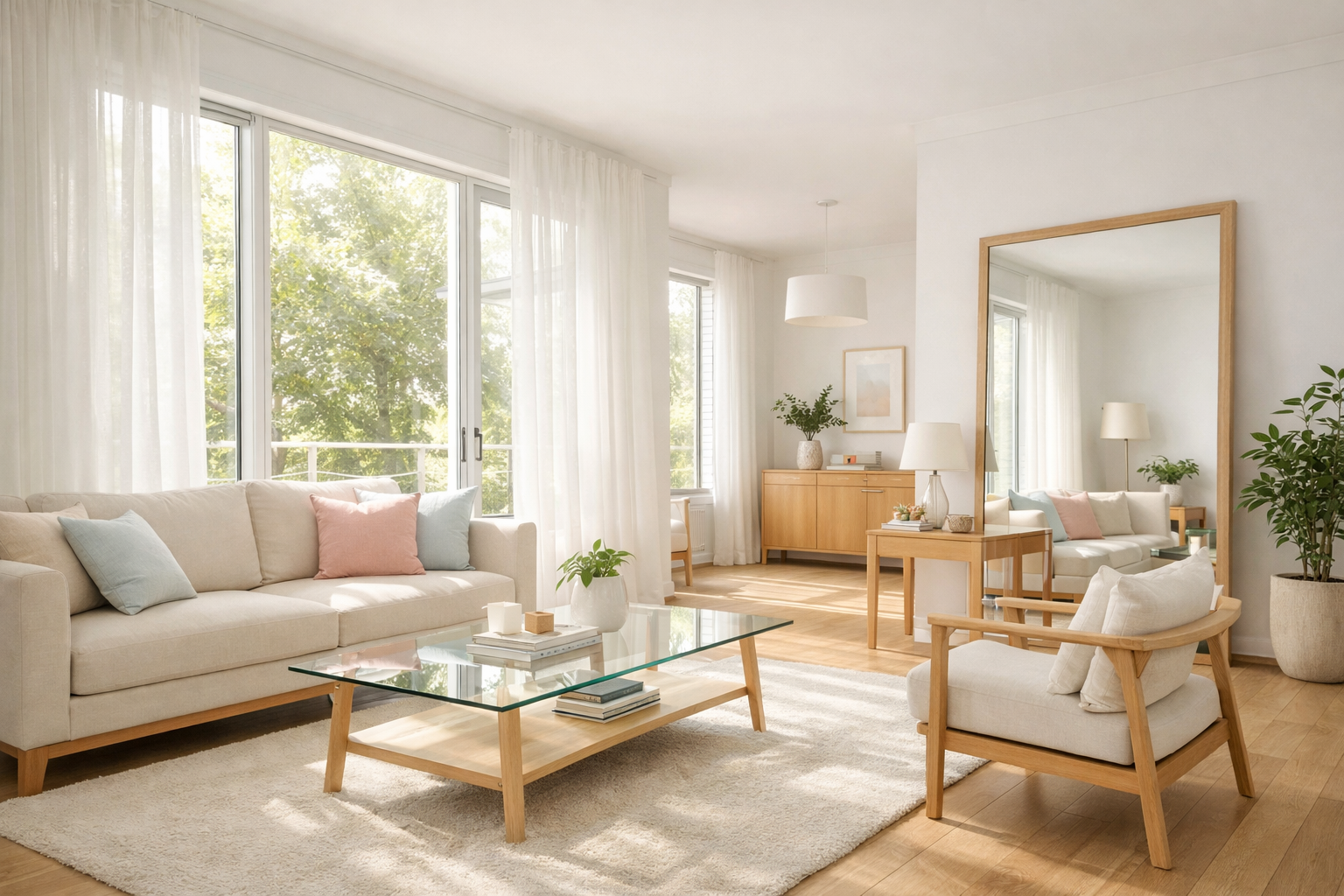
One of the strongest methods of increasing natural light is by using mirrors. They reflect the light deeper into a room so that it can be twice as bright as the light without any electrical effort. Use large mirrors back to back with or beside windows to reflect light. Mirrored furniture or decorative wall panels will slightly add light in hallways or smaller rooms. It all comes down to the arrangement of the lights: try several angles to see what works best for distributing the light. The method not only helps to brighten but also makes small spaces appear larger.
2. Light and Airy Window Treatments
Luxury drapes can be a great way to block out precious daylight. Use sheer curtains, thin linen blinds or curtains that easily roll, instead. Roller shades in light colours provide privacy and let some light in. To go with a simple design, maintain clear windows or apply frosted glass to bathrooms. The idea is to get as much exposure as possible while keeping it comfortable. Opt for breathable materials and shades to allow in more natural light and limit glare and privacy.
Avoid heavy drapes and curtains:
- While heavy drapes can be gorgeous, they can also prevent sunlight from streaming through the window.
- Consider instead sheer curtains, light linen panels or blinds that are easy to adjust.
- Light shades roll up so that some sunlight can come through, and privacy is maintained.
- For a more streamlined appearance, consider keeping windows bare and/or frosted in bathrooms.
- The aim is to get as much exposure as possible without compromising on comfort.
3. Selecting the Right Paint Colours
Light is an integral part of your house; its play with the paint can be subtle, but potent. White and off-white are very light reflective colours and soft pastels are light reflective colours with a certain degree of colour personality such as pale blue, blush pink and mint green. Glossy or satin finishes reflect light better than matte finishes, particularly on the ceilings. Try to use lighter shades for trim and doors to accentuate windows and bring in more light. The color of a wall can make a huge difference in the way a room looks throughout the day, even if you merely change the color of the wall.
4. Furniture Arrangements for Maximum Light

Large furniture can obstruct the sun’s rays without being obvious. Clear walkways of large furniture items such as sofas and wardrobes from windows to allow for natural light. The furniture is designed to be low to the floor, which helps with sight lines and allows light to flow. Glass or acrylic tables, open shelving and lighter wood tones help bring the space to a more transparent look. It can make a significant difference if it’s just one piece that’s been rearranged. Consider the layout of your furniture as a map for how light moves—anything in the way reduces light, and creative furniture placement can increase it.
5 Mounting and adjusting equipment for proper light illumination:
- Large furniture pieces may block out the sun without being intended to.
- Make sure larger furniture such as sofas and wardrobes are not placed near windows to ensure the ease of movement for natural light.
- Low furniture helps to maintain sightlines and allow light to flow.
- The use of glass and acrylic tables and open shelving, plus lighter shades of wood, enhance the transparency.
- Just a small re-arrange can make a difference.
5. Structural Designs that Create and Store Energy
In addition to mirrors, glass tabletops, glossy tiles and metallic accents can reflect natural light. Shiny surfaces that reflect sunlight onto surfaces are ideal for kitchens and baths. Use glass doors for inside spaces or skylights for overhead light. Decorative objects such as vases, picture frames or polished hardware enhance the overall brightness of the ambiance. The greater the number of reflective surfaces you add, the more light has to reflect and disperse.
6. Maximizing Window Size and Placement
An alternative if renovations are possible is to increase the amount of natural light by enlarging windows or adding new windows. Bay windows, floor to ceiling windows or skylights are features that can completely change the interiors by permeating them with light. Clean and unobstructed frames in existing windows. Back prune the garden plants that could shade the sun from reaching the foliage. Making the most of even minor changes, such as installing thinner frames instead of thicker mullions, can help maximize the light flow into your house.
7. Installing Light-Colored Flooring and Rugs
The effect of light perception is surprisingly due to the floors. Brightness will reflect up on light-colored carpet or hardwood floors, but will be absorbed onto dark carpets or hardwood floors. Light finishes of oak, bamboo or whitewash are perfect for promoting more light. If you don’t want to replace the flooring, try large area rugs with cream or pastel colors. They will not only fill the room with color, but can also add warmth and texture. Adding a reflective surface to your floor can help add to the overall glow, in a subtle way.
8. Maintaining Cleanliness and Eliminating Clutter
Rooms can seem darker than they are when there is a lot of clutter to absorb light and to cast shadows. Having a clean, understated design will allow daylight to pass through. Wash windows frequently to get rid of dust and dirt that obstruct light. Keep furnishings simple with fewer items but larger statement pieces. Clear surfaces, organized storage and open shelving help to create a sense of openness and clarity. In the end, good design isn’t the only thing that counts when it comes to maximizing natural light, cleanliness and simplicity count as well.
Conclusion

The use of natural light is an art and science. With these and other tips, such as using mirrors, letting light into the room with window treatments, incorporating reflective surfaces, or clever furniture arrangements, you can make your home feel brighter, bigger, and warmer. These changes will not only look good, but will save energy, which will make your home more eco-friendly! The important thing is to consider light as a design element that can make your home a lively, uplifting space, whether you’re looking to make some minor adjustments or tackle a more extensive project.