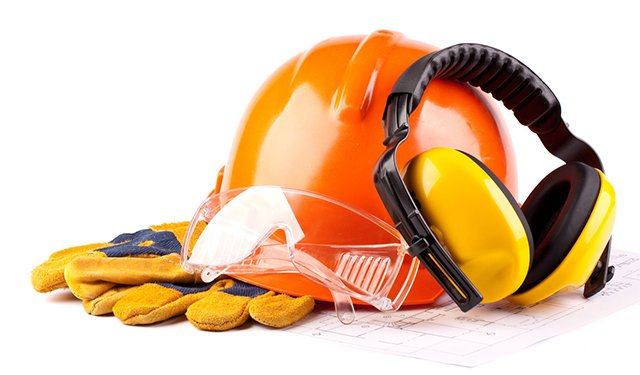
The concept of personal protective equipment
According to Chalagwe (2010), personal protective equipment is a piece of equipment used or worn to protect workers against hazard or risk existing in a working environment. Ideally, whenever hazard is found, every effort should be made to eliminate or control such hazard through the redesigning of engineering change in material handling.
Effiong (2014) refers to personal protective equipment (PPE) as protective clothing, helmets, goggles, or other garments or equipment designed to protect the wearer’s body from injury or infection. Amadi (2012) stated that personal protective equipment do not actually prevent accident or hazards, but it can only reduce or minimize the individual exposure to hazard or accident. The hazards addressed by protective equipment include physical, electrical, heat, chemicals, biohazards, and airborne particulate matter. Protective equipment may be worn for job-related occupational safety and health purposes, as well as for sports and other recreational activities.
The purpose of personal protective equipment is to reduce employee exposure to hazards when engineering controls and administrative controls are not feasible or effective to reduce these risks to acceptable levels. PPE is needed when there are hazards present. PPE has the serious limitation that it does not eliminate the hazard at source and may result in employees being exposed to the hazard if the equipment fails (Unuraye & Olojoba, 2009).
Various types of personal protective equipment
According to Amadi (2010), there are nine (9) classes of personal protective equipment based on the body. They are:
- Head protective: Protective helmet are needed on jobs where head of work men bump their head against over head structures. The safety helmet or hat is the most common type of head protective equipment used on most industries. Above all, safety should be fire resistance to impact in some cases resistant to high voltage. The safety hats are commonly made of metals (aluminum) and plastics (Amadi, 2010)
- Face protective: There are many types of personal protective equipment designed to shield the face, as well as the eyes, in some cases the entire head and neck against light impacts, chemical splashes, radiation and other hazards. They observed that there are three type of face protection; they include face shield, welding helmet (shield and goggles) and acid hoods. They are made of transparent colored plastics (Odibo & Sanubi, 2009).
- Eye protection: Industrial operation expose the eye to varieties of hazards which include flying objects, splashes or corrosive liquids and molten metals, dust and harmful radiation. Goggles and other forms of protection of the eyes are available in many types of styles. The protective medium maybe heat-treated glasses, transparent plastic etc. (Odibo & Sanubi, 2009).
- Respiratory protective: This is breathing apparatus used over the nose to prevent inhaling hazardous substance such as dust or free silica partial. It helps in supplying unpolluted oxygen in an environment where there is shortage or non availability of oxygen (Wole, 2014)
- Ear protection: Ear protection is used to reduce noise when all available engineering control to reduce noise failed. The type of equipment used is called ear muffs and ear plugs. This earmuff is designed to cover the external part of the ear from excessive noise, the earplug is inserted into the canals. They are made of rubber, cotton and wax. Many industrial machines produce noise far above the required decibel, which may result to permanent loss of hearing (Chalagwe, 2010).
- Hand protection: Odibo and Sanubi (2000) contends that fingers palm and hand exposed to cuts, scratches bruises and burns and as such proper protective equipment should be utilized. Olorunda and Aibor (2006), explains that hand protected through the use of hand gloves in working place to hold firmly and prevent hand from contamination or skin penetration. There are six (6) types of hand gloves, they are metal mesh gloves, rubber gloves, leather gloves, cotton or fabric gloves, PCV coated fabric gloves, neoprene and vinyl gloves.
- Body protection: According to Chalagwe (2010), overall and coverall are used for protection of the skin and trunk from dust and injurious particles. Overall garments also protect the skin from liquid spills such as chemicals. He said overall are required by every worker particular those in the engineering and technical service division of industrial establishment. Body protection against health and hot metal is vital. Chijoke (2013), observed that health protection equipment is required by workers who come in contact with hot metal and intense radiation particularly fire men leather clothing is one of the most common forms of protection against ultra-violet radiation.
- Foot protection: It is highly essential that safety shoes be used in industries. Although there are different types of safety shoes. Generally they have reinforce toe and toe box must support a stationary load of at least 2,500lbs and must withstand a sustain the impact of a 50lbs weight dropped from a distance of one foot. Foot and leg protection involve the use of plastic or leather boots with puncture proof sole to protect against nail and sharp object (Odibo & Sanubi, 2009).
- Safety belts: According to Chalgwe (2010) workers in high place must required safety belts to secure themselves from falling off accidental in process of doing these jobs. Electricians are good example of workers who require safety belt as protect gear. Also, those who climbs down into tank.
Problems of not utilizing personal protective equipment
The health implications associated with industrial activities ranges from physical injury, impairment to health due to lack of safety equipments.
- Accident: Accident in this content means event which take place without ones for sight or expectation that could lead to injuries. Either superficial or deep one. These usually occur as a result of faulty machine or due to failure to use helmet, overall, respirators, safety boot etc. accidents lead to disabilities which often leaves residual damage that bring victims into extreme misery if not assisted (Odibo & Sanubi, 2009).
- Hearing impairment: Exposure to high sound or noise then the allowable limit which normally exceeds 80-90dB are liable to cause vibration of the ear drum which causes inability of the ear to receive and transmit sound easily for on ward interpretation by the brain. This usually occurs due to absence of earmuff when operating heavy duty machine (Odibo & Sanubi, 2009).
- Occupational asthma: This is a health problem due to lack of respiratory asthma result as inhalation of sensitizing agents or irritants present in work environment such as dust in case of pellet plant department (WAHEB, 2009).
Other health problems associated with lack of protective equipment (which may be due to heat, cold and radiation) are heat, stroke, heat cancer, genetic changes and sterility.
The importance of PPE
Personal protective equipment is a statutory equipment because whenever hazard is found to exist in work place, P.P.E only becomes necessary when all other efforts to eliminate hazard have failed. The following are some of the importance of PPE as identified by Craig (2011).
- Personal protective equipment enables workers to work at ease without injury.
- It saves life.
- It acts as the last resort to eliminate hazards when all other efforts have failed.
- It reduces the gravity of injury when accident occurs. It does not prevent accident from happening or remove the hazards but can minimize the effect of hazards on workers.
Reasons for not using P.P.E by workers
It has been observed that it is of great importance that the workers be shielded from numerous industrial hazards with his work environment by the provision of protective equipment. But in most situations even when they are they are provided the workers may not use them, after giving series of excuses. The following are some of the reasons:
- According to Amadi (2010) personal protective equipment such as respirators, earplugs, goggles, helmets, safety boots etc. are often hot and uncomfortable to be especially during hot moments. He further stated that it restricts movement and sometimes visions, which discouraged its use fullness. He suggested that the use of P.P.E should be seen as the last resort in the prevention and control of occupation hazards.
- Awake (2014), holds that earplug if used for long reduces one hearing ability. The magazine further stated that it is always painful and does not allow the user to be aware of what is happening around them. Agreeing that PPE are uncomfortable to use and most often does not allow the user to be aware of what is happening around them. Apart from agreeing that PPE are uncomfortable ignorance of importance of protective wears.
- Lack of safety officers to ensure enforcement on the use of protective wears.
- Provision of unquotable or bad protective wears.
- Stressful environment.
- When workers are not motivated.
Awareness on the use of PPE
In other to embrace the smooth running and efficiency of production development, Amadi (2012) highlighted the need to properly protect workers from harmful conditions by suggesting that:
- Officers to mastermind the effective usage of these safety gadgets by workers should be motivated towards the achievement of technical controls.
- Supervision of workers during working hours on the use of PPE must be taken seriously.
- Workers should be encourages to use PPE to protect themselves from harm.
- Adequate sanctions should be meted out for non-utilization of PPE by workers.
- Laws on “No PPE No Entry” to operation sites should upheld strictly.
Conclusion and recommendations
When all engineering and technical measures to reduce accidents and injury during operation have been exhausted, PPE ensures that the worker is protected from accidents and injuries or reduce the severity of these unforeseen and unfavourable conditions.
Based on this, it is recommended that:
- The use of PPE should be taken seriously by management.
- Workers should adequately health educated on the importance of using PPE.
- Sanctions should be meted out for failing to make use of PPE by works.
References
Aibor, M. S. & Olorunda, J. O. (2006). A technical handbook of environmental health in the 21st century for professionals and students. Akure: His Mercy Publishers.
Amadi S. A. (2010). Monography on fundamental of petroleum engineering. Port Harcourt: Ebis Concept.
Awake (2014). Chemical and your health. Pennsylvania: Watch Tower Bible and Track Society.
Chalagwe, K. (2010). Industrial safety. Ile Ife: University Press
Effiong , S. (2014). Occupational health programme in agro allied industries in Edo state, Nigeria. Journal of Environmental Health, 1(1), 14-16.
Chijoke, N. L. (2013). Occupational health and safety. Aba: Educational Books.
Craig, R. (2011), Meeting the challenge of injury prevention. American Journal of Preventive Medicine, 3(9), 19-21.
Odibo, A. A. & Sanubi, B. O. (2009). Health and safety education: A functional approach including first aid procedures. Warri: COEWA Publishers
Unuraye, L. O. & Olojoba, A. O. (2009). A functional book on occupational safety and environmental health management. Ughelli: Ama Ohoror
Wole, A. M. (2014). Essentials of community health, primary health care and health. Benin City: Mediscucess
WAHEB (2009). Waste disposal and environmental hazard control. Ibadan: Sterling and Cleverian.

