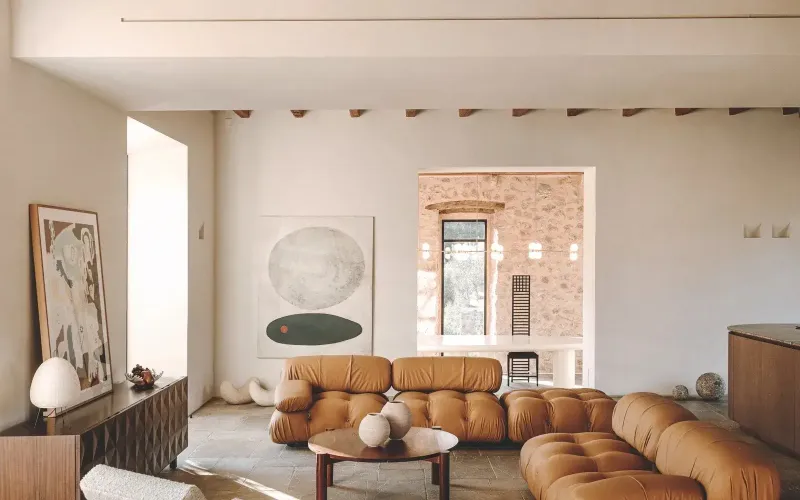
A Mario Bellini Camaleonda sofa suits a small living room only if you resist the urge to buy the full six-module version. Quell Workspaces sells its camaleonda sofa replica in smaller two- and three-module configurations built for exactly this problem, and the modular design means you can reshape the layout as the room’s use changes. The short version for 2026: measure your actual floor space before ordering, pick a two-module corner or three-module straight run over the full set, choose a fabric that doesn’t visually shrink the room further, and keep a clear walking path on the side you use most.
The Camaleonda, designed by Mario Bellini in 1970, was built as a sprawling modular system for large rooms — which is exactly why it gets styled badly in small ones. This guide covers how to size, configure, and position a Camaleonda-style modular sofa in a compact living room without it swallowing the space, plus the mistakes that make an otherwise good sofa look wrong in a tight layout.
What You’ll Need
- A tape measure and painter’s tape (to mark the sofa footprint on the floor before delivery)
- The room’s total floor dimensions, including doorways and radiator positions
- A Camaleonda modular configuration guide to compare module counts before ordering
- A fabric or leather sample, not just a photo — colour reads differently under living room lighting
- A rug sized to the seating group, not the whole room
- 30-45 minutes to trial the layout with masking tape before committing
Step 1: Measure the Room, Not Just the Wall
Most sizing mistakes happen because people measure the wall the sofa will sit against and ignore the rest of the room. A Camaleonda-style sofa needs clearance on at least two sides to read as modular rather than boxed in.
Measure the full floor area, then subtract the space taken by doors swinging open, any permanent fixtures like radiators, and the walking route between the seating area and the rest of the room. What’s left is your real sofa footprint, and it’s usually smaller than people expect.
Expected outcome: a floor plan sketch with a marked rectangle or L-shape showing exactly what the sofa can occupy. Common mistake: measuring only the width of the wall and assuming depth isn’t a constraint — Camaleonda modules are deep-seated by design, so depth eats floor space fast.
Step 2: Choose a Module Count Built for the Room, Not the Showroom
This is the step that decides whether the sofa works or doesn’t, and it’s where most small-room projects go wrong before a single cushion is placed.
The original Camaleonda ships as a sprawling multi-module system meant for open-plan spaces. In a small living room, that configuration overwhelms the floor and blocks sightlines to the rest of the room. Quell Workspaces builds its Camaleonda sofa replica in smaller module counts specifically for this — two-module corner sets and three-module straight runs sized for rooms where a six-piece layout was never realistic. A two-module corner configuration typically works best against a single wall junction, giving you an L-shape that defines the seating zone without needing a rug or furniture line to do it for you. A three-module straight run works better in a narrower room where a corner shape would block a walking path.
Before ordering, check the Camaleonda modular configuration guide against your Step 1 measurements — it lays out which module combinations suit which room shapes, so you’re comparing configurations against your actual floor plan rather than guessing from a product photo. If you’re deciding between a Camaleonda-style modular sofa and a more traditional three-seater for a small room, the modular sofa configuration guide covers how modular seating compares on flexibility versus a fixed-frame sofa in tight spaces.
Expected outcome: a confirmed module count and shape that fits inside the footprint from Step 1, with margin for clearance. Common mistake: ordering the largest configuration available because it photographs well, then finding it blocks the room’s main walking route once it’s actually in place.
Step 3: Pick a Fabric That Doesn’t Shrink the Room Further
Fabric choice matters more in a small room because the sofa is a bigger proportion of what you see. A dark, heavy fabric on a large modular shape reads as a solid block; a lighter tone with visible texture reads as furniture rather than mass.
Bouclé and other textured weaves tend to work better than flat velvet in compact rooms because the texture breaks up the surface visually. If the room gets strong natural light, a warmer neutral avoids the washed-out look that pale grey can get under direct sun.
Compare options against the room’s existing palette using the fabric and colour options guide before ordering swatches — matching the sofa to wall colour and flooring tone matters more in a small room where there’s less visual space to absorb contrast.
Expected outcome: a fabric sample tested against the room’s actual light at different times of day. Common mistake: choosing fabric from a screen photo without checking a physical swatch in the room.
Step 4: Position the Sofa Away from the Main Walking Path
A modular sofa placed across a room’s natural walking route makes the whole space feel smaller than it is, regardless of how good the sofa looks.
Use the masking tape from your kit list to outline the confirmed module shape on the floor before delivery. Walk your normal route through the room — to the window, to the door, to wherever you sit most often — and check the tape outline doesn’t block it. Interior design guidance generally recommends a minimum of around 90cm of clearance on primary walking routes; anything tighter starts to feel cramped even in a large room, and it’s worse in a small one.
Expected outcome: a taped floor plan you can walk through without adjusting your usual path. Common mistake: placing the sofa dead-centre against the longest wall because it looks balanced on paper, ignoring that it now blocks the route to the kitchen or hallway.
Step 5: Layer a Rug and Side Table to Anchor the Group
A modular sofa without a rug underneath tends to float in a small room, making the space look unfinished rather than considered.
Size the rug to the seating group, not the room. The front two legs of the sofa modules should sit on the rug; if the whole rug disappears under the sofa, it’s too small for the group and won’t visually anchor it. Add a single side table at one end rather than a table on each side — in a compact layout, one table does the job and a second just adds clutter.
Expected outcome: a defined seating zone that reads as a considered layout rather than furniture placed against the nearest wall. Common mistake: buying a rug sized for the room’s total floor area rather than the sofa footprint, which leaves the seating group looking disconnected from it.
Step 6: Style with Fewer, Larger Cushions
Small rooms with modular sofas get overcrowded fast if you style them the way you’d style a large open-plan sofa. Fewer, larger cushions read cleaner than a full scatter arrangement.
Two to three cushions per module maximum, in no more than two coordinating tones, keeps the seating area from competing with the rest of the room’s decor. A single textured throw folded over one arm does more visual work than three mismatched cushions.
Expected outcome: a styled sofa that still reads as spacious rather than layered with soft furnishings. Common mistake: styling a modular sofa the way a showroom does, which is designed to sell cushions rather than suit a small living room.
Step 7: Reconfigure Modules as the Room’s Use Changes
The advantage of a modular system in a small room is that the configuration doesn’t have to be permanent. If you host occasionally and need more open floor space, separate a module out as an accent chair for the evening and reconnect it afterward.
Check how modules connect before you rely on this — most replica systems use either a strap-and-buckle connector or a peg system between modules, and knowing which one you have determines how easily you can split and rejoin the configuration on a regular basis.
Expected outcome: a layout you can adjust for different uses without needing to buy a second sofa. Common mistake: never testing the reconfiguration until the one night you actually need it, then discovering the connectors are stiffer than expected.
Common Mistakes to Avoid
- Buying the full six-module set for a small room — check module count against your floor plan before ordering, using the Camaleonda modular configuration guide rather than the largest option shown first.
- Skipping the fabric swatch stage — order a physical sample and view it in the room at different times of day before committing.
- Placing the sofa across the main walking route — tape the footprint on the floor and walk through it before delivery day.
- Buying a rug sized for the room instead of the seating group — the sofa’s front legs should sit on the rug, not float past its edge.
- Not checking leather or fabric quality before ordering — the guide to spotting low-quality replica leather covers the stitching and grain checks worth doing before you buy.
- Assuming delivery includes assembly — confirm what’s included using the replica furniture delivery guide so you’re not left connecting modules alone in a hallway.
Tools and Resources
- Quell Workspaces Camaleonda sofa replica — sold in two- and three-module configurations built for smaller rooms, with the full buying guide covering module counts, fabric options and sizing.
- Painter’s tape and a tape measure — for the floor-plan test in Step 1 and Step 4, costs a few pounds and prevents the most common sizing mistake.
- A fabric swatch kit — request physical samples rather than relying on product photography before ordering.
- A rug sized to the seating group — measure the confirmed module footprint before shopping for one.
FAQ
Is a Camaleonda-style sofa too big for a small living room?
The full six-module Camaleonda is generally too large for a compact room, but a two-module corner or three-module straight run scales the same design down to a footprint that works in rooms under roughly 20 square metres. Quell Workspaces builds its Camaleonda sofa replica in these smaller configurations specifically for this reason.
How many modules should I buy for a small room?
Start with two modules in a corner configuration for rooms narrower than about 3.5 metres, or three modules in a straight run for slightly wider rooms without a natural corner. Measure the floor first using Step 1 above, then compare against the Camaleonda modular configuration guide before ordering.
What fabric works best on a Camaleonda replica in a small room?
Textured weaves like bouclé generally read lighter than flat velvet or solid leather on a large modular shape, which matters more when the sofa takes up a bigger share of a small room’s visual space. Check swatches against the room’s actual light before deciding.
Can I reconfigure the sofa later if my room layout changes?
Yes — that’s the main advantage of buying a modular system over a fixed three-seater. Confirm which connector type your Camaleonda sofa replica uses before you rely on frequent reconfiguration, since strap-and-buckle systems and peg systems differ in how easily modules separate and rejoin.
Does a Camaleonda replica need a rug underneath it?
A rug sized to the seating group anchors the modules visually, especially in a small room where the sofa can otherwise look like it’s floating against a bare floor. Size the rug so the sofa’s front legs sit on it, not past its edge.
Conclusion
A Camaleonda-style modular sofa works in a small living room when the module count matches the floor plan rather than the showroom display. Measure first, size down to a two- or three-module configuration, choose a fabric that doesn’t add visual weight, and keep a clear walking route on the side of the room you actually use. Quell Workspaces’ Camaleonda sofa replica is built in these smaller configurations for 2026 specifically because most UK living rooms were never going to fit the original six-module layout, and the full buying guide is worth checking against your own measurements before you order.