Imagine walking into your office and logging in simply by smiling at a screen. No passwords to remember, no cards to swipe, just your face confirming who you are. That is the power of modern face verification solutions. But with so many options available, finding one that is accurate, secure, and reliable can feel like searching for a trustworthy lock in a store full of knockoffs.
Choosing the wrong solution can be costly, both in money and reputation. The right choice, on the other hand, can protect your organization while creating a seamless user experience. Let’s look at how to make that decision wisely.
Why Picking the Right System Matters
A strong facial recognition system does more than enhance digital security. It builds confidence with users and shields your organization from potential breaches.
According to IBM’s 2024 Data Breach Report, the average cost of a single breach is now over $4.5 million. Add in legal obligations from regulations such as GDPR, and the margin for error disappears.
When your system is compliant and well-designed, verification happens smoothly in the background. But when it is not, users can sense it immediately, and that erodes trust faster than any technical flaw ever could.
How Face Verification Works Behind the Scenes
Before choosing a vendor, it helps to understand what happens when someone looks into a camera.
The system captures an image or video frame, identifies unique facial landmarks such as the distance between eyes or the shape of the jawline, and turns these into a mathematical template. That template is then compared to stored data to determine whether there is a match.
Today’s systems use artificial intelligence and deep learning to improve accuracy, even in poor lighting or when someone is wearing glasses. For a closer look at how these algorithms are tested and ranked, visit the NIST Face Recognition Vendor Test (FRVT). It is considered the global benchmark for measuring facial recognition performance.
Key Features to Look For in a Face Verification Solution
When evaluating options, focus on performance and reliability rather than marketing promises. A great system should feel effortless to users while being rock solid underneath.
Here are the key factors to consider:
- Accuracy and Reliability: Systems that rank highly on NIST FRVT 1:1 evaluations have proven consistency across age, gender, and lighting variations.
- Liveness Detection: This feature prevents fraud attempts using photos or videos. It confirms that the person undergoing verification is physically present.
- Privacy and Compliance: The best systems comply with international standards like GDPR and apply strong encryption in data storage and transmission.
- Scalability: As your organization grows, your verification tool should scale easily without performance issues.
- Ease of Integration: Developer-friendly APIs or SDKs, such as those available on Recognito Vision’s GitHub, help connect the system with your existing infrastructure.
These features ensure that your chosen system is both secure and future-ready.

Security and Compliance: The Backbone of Trust
Every organization that collects or processes biometric data takes on a serious responsibility. Mismanaging that data not only risks legal trouble but can also damage your reputation.
To stay compliant and maintain trust, keep these principles in mind:
- Collect only what you need.
- Get clear consent from users before capturing any data.
- Be transparent about how the data will be used and stored.
- Delete data responsibly when it is no longer required.
A European fintech company once improved customer verification times by 40 percent using a new facial verification system. However, they neglected to clarify how long biometric data would be stored. When regulators conducted a GDPR audit, the company faced penalties that erased nearly all its quarterly profit. The lesson is simple: compliance is not a one-time setup; it is a continuous process of accountability.
Real-World Use Cases and Industry Adoption
Face verification has moved far beyond airports and smartphones. It now plays a critical role in a wide range of industries.
Financial institutions use it to confirm identities during online onboarding and to prevent fraud. Healthcare systems rely on it to secure patient data and control staff access. Universities employ it for remote exam monitoring, while airports have streamlined boarding with AI-based identity verification.
According to NIST, facial recognition algorithms have improved accuracy by more than 20 times since 2014, reducing false match rates to near zero in leading systems. That progress has made the technology both practical and dependable.
If you want to experience how these systems function, try the Recognito Face Biometric Playground. It offers a hands-on look at how modern AI identifies and verifies faces safely.
How to Evaluate Vendors and Tools
Choosing the right vendor is as much about trust as it is about technology. You are relying on them to protect sensitive data and maintain compliance across regions.
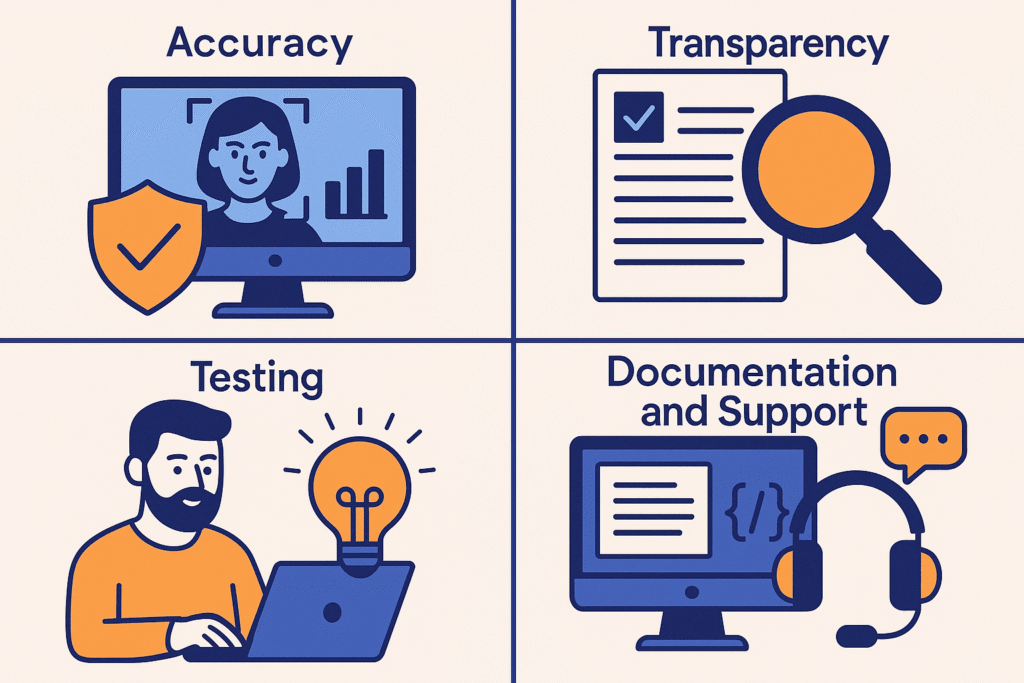
When evaluating vendors, consider the following:
- Accuracy: Check independent benchmarks like the NIST FRVT 1:1 results.
- Transparency: Ask about data handling, consent management, and deletion policies.
- Testing: Always test with real-world conditions. Lighting, camera quality, and face diversity can all influence performance.
- Documentation and Support: Strong developer documentation and community support, like that on Recognito Vision’s GitHub, are good indicators of reliability.
As one security specialist aptly put it, “Technology without transparency is like a lock without a key. It looks secure but is useless when you need it most.”
Common Mistakes to Avoid
Many companies stumble during implementation because they treat biometric security as a plug-and-play feature. The most frequent mistakes include:
- Choosing the cheapest option instead of the most secure.
- Ignoring scalability for future growth.
- Overlooking privacy and regulatory requirements.
- Skipping pilot tests before full deployment.
Each of these missteps can lead to costly downtime or compliance penalties. Proper testing and planning make the difference between a successful rollout and a security fiasco.
Final Thoughts
Selecting the right face verification solution is more than a technical upgrade; it is a strategic choice that influences how your organization handles trust, compliance, and innovation.
A system that balances accuracy, speed, and privacy will not only protect your business but also improve the experience for everyone who interacts with it. When you are ready to explore a transparent, research-driven option, visit Recognito. Their open approach and developer-friendly tools make biometric verification both powerful and accessible.
In the digital world, your face is your identity. Make sure the technology that verifies it does so with care, precision, and respect.