The human body was not designed to spend eight to twelve hours sitting in one place. But this is the demand of modern life. Sit in a car to commute. Sit at a desk for the duration of the work day. Sit in a car on the way back home. Sit on the couch to relax. This quantity of time sitting in a seated position creates physical compensations that seldom show in the moment but manifest over time, compounding and developing into real issues over months and years.
Muscles develop in an adaptive shortening fashion in response to the most frequent position taken. When sitting takes up so much of someone’s day, adapted shortening occurs in particular muscles while others become weak and elongated. Thus, pain presentations occur in a predictable pattern, albeit over an extended length of time.
Hip Flexors Are the First
The hip flexors are the muscles that reside at the front of the hip which bring the knee to the chest. When someone sits all day, these muscles are in a constant state of shortening for hours on end. Continual exposure renders them adaptive shortened where they lose length even in a standing position, rendering them always tight.
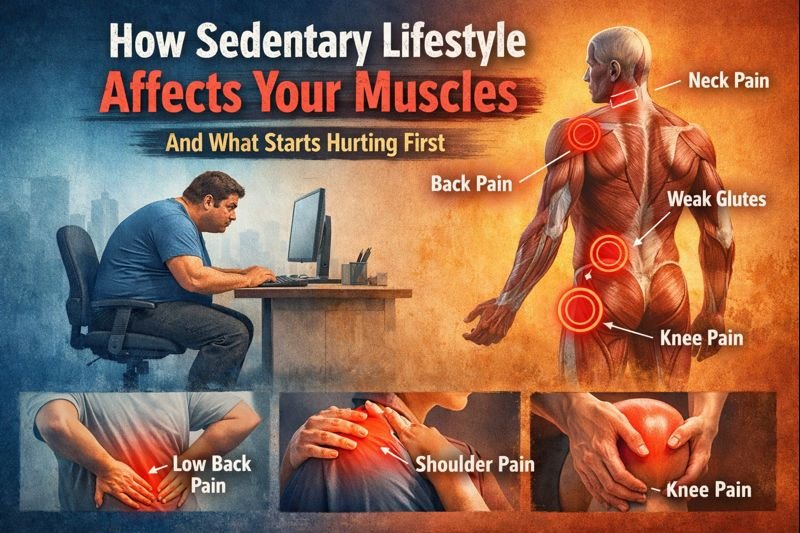
Additionally, with continuous tightness, the pelvis gets pulled anteriorly (front down), creating an exaggerated curve in the lumbar (lower back) region. As this area becomes his/her/a person’s new position, it travels up to the spine where additional compensation occurs. The muscles of the lumbar region have to accommodate this excessive curvature and get fatigued. Eventually, with constant tension, they start developing pain, too; people often develop chronic lower-back pain without recognizing that it’s their hips causing the issue. When these muscles “give out,” they do so in an acute locking position which requires professional intervention for back spasms treatment to get the person moving again.
The complication occurs with those tight hip flexors weakening the glutes. When someone keeps their hip flexors in a constant state of shortening, the body forgets to let go, meaning that muscles which should stabilize a pelvis are not doing so.
Lower Back Pain Is Next
Lower back pain is where someone finally starts to acknowledge something is wrong—ironic, as there were changes at the level of the hips before, but people rarely notice until it gets magnified more proximal. The lower back takes on all of the stress from sitting—and has more natural curvature in a slumped or aligned position; ultimately the tight hip flexors exacerbate this phenomenon.
When someone sits, there’s no longer assistance from leg muscles which help maintain proper posture; thus, all responsibility lies within the spine. Muscles that run alongside the spine are never meant to do this much work at such low-level contraction; one is supposed to either exert high resistance or nothing for proper strength gains. But sitting requires an unnatural, subtle continuous effort for prolonged amounts of time.
If that’s not enough, the spinal discs—the organs that cushion one vertebra from another—rely on movement for health; movement pumps nutrients in and waste products out. Sitting compresses spinal discs; fluids cannot exchange properly and over time, disc deterioration occurs as discs bulge or herniate.
Neck and Shoulders Become Tighter
Next comes forward head posture courtesy of screens and deskwork. For every inch that one’s head comes forward out of alignment, it adds ten pounds of stress onto one’s neck muscles (which support the head). Thus, if someone is working with their head jutting out an additional three inches, they’re forcing their neck to accommodate an additional thirty pounds throughout their day.
The upper trapezius muscles that run from the neck to shoulder level (above) support this added tension. They become tight with trigger points that refer pain into one’s head and create tension headaches. People rub their upper traps or put heat on them temporarily but rarely recognize it’s posture causing it.
Shoulders also round forward naturally when the head moves forward and the chest gets collapsed. The shoulder blades slide forward as well as the muscles in between them get overstretched and weakened; this is why there’s always that ache between them that people feel needs rubbing.
Cascading Effects Elsewhere
Sedentary habits do not stop with clear physical manifestations. Knee pain frequently emerges from weakened glutes and tight hip flexors; walking patterns all change as required movement gets outmoded by a reliance on hip stability—which isn’t present.
Ankles get tight as well; sitting keeps them in a relatively stationary position as surrounding ankle muscles grow weak. Thus, this can create balance issues and increased injury risk when people are active.
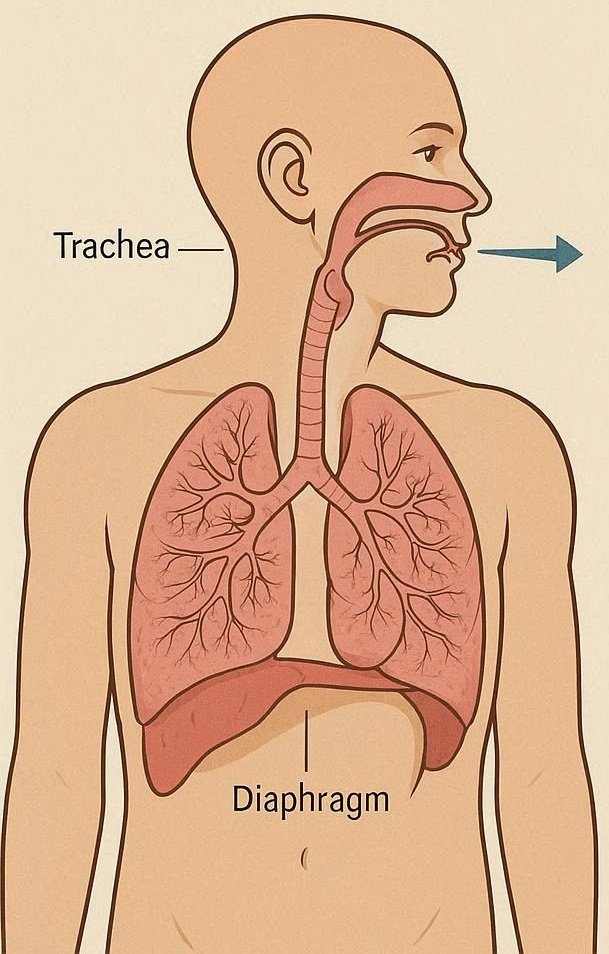
Breathing also grows impaired with extended sitting—collapsed chests don’t allow diaphragmatic breathing as they rely on chest breathing facilitated by sternum support; shoulders rise up as they act as external breathing muscles that only compound tension.
Exercise Isn’t Enough; Movement is
Here’s where people get it wrong: one hour at a gym does not counteract five to eight hours of sitting during the day. While physical activity helps cardiovascular strength patterns at best, it does not address static positions taken for prolonged periods of time rendered efficient by a sedentary existence.
A person may be “active” but still present all of the symptoms from sedentary life—pain patterning making sense over time despite previously believing themselves healthy.
This is why it’s important to move throughout the day versus high-intensity efforts. Standing up every thirty minutes to an hour; walking around an office or stretching quickly prevents further accommodation to this adaptive process. The body responds to what it’s most frequently doing well; when it’s doing what’s most accessed poorly? Patterns emerge.
This is why varied positions matter; alternating between standing desks versus seating desks versus walking on a conference call means mixed environments keep muscles from adapting safely—and promoting negative compensation patterns over time.
How You Don’t Connect Your Pain Over Time
Most people don’t recognize they’re in pain because of sitting until someone reaches critical levels of injury or discomfort. Low back pain; neck pain; shoulder tension—they all seem like separate random problems without one coherent pattern from putting it all together over time with sedentary habits.
Identifying this pattern is half the battle since people need to stop symptoms from occurring without ever treating causation—and learn they can stop causation from occurring through improved interventions.
Reversing adaptive changes occur gradually since people must relearn safe lengths and strengths—stretch tight hip flexors; strengthen glutes that have been rendered weak; opening up new chests for breathing will improve neck posture.
It’s good news to note since bodies are malleable in either direction through compensatory benefits as successfully as malleable process worked poorly through sedentary efforts. Little habits make big differences through mass volumes completed since once compensatory imbalances get addressed, the little changes will preserve a better quality of life more quickly than expected.