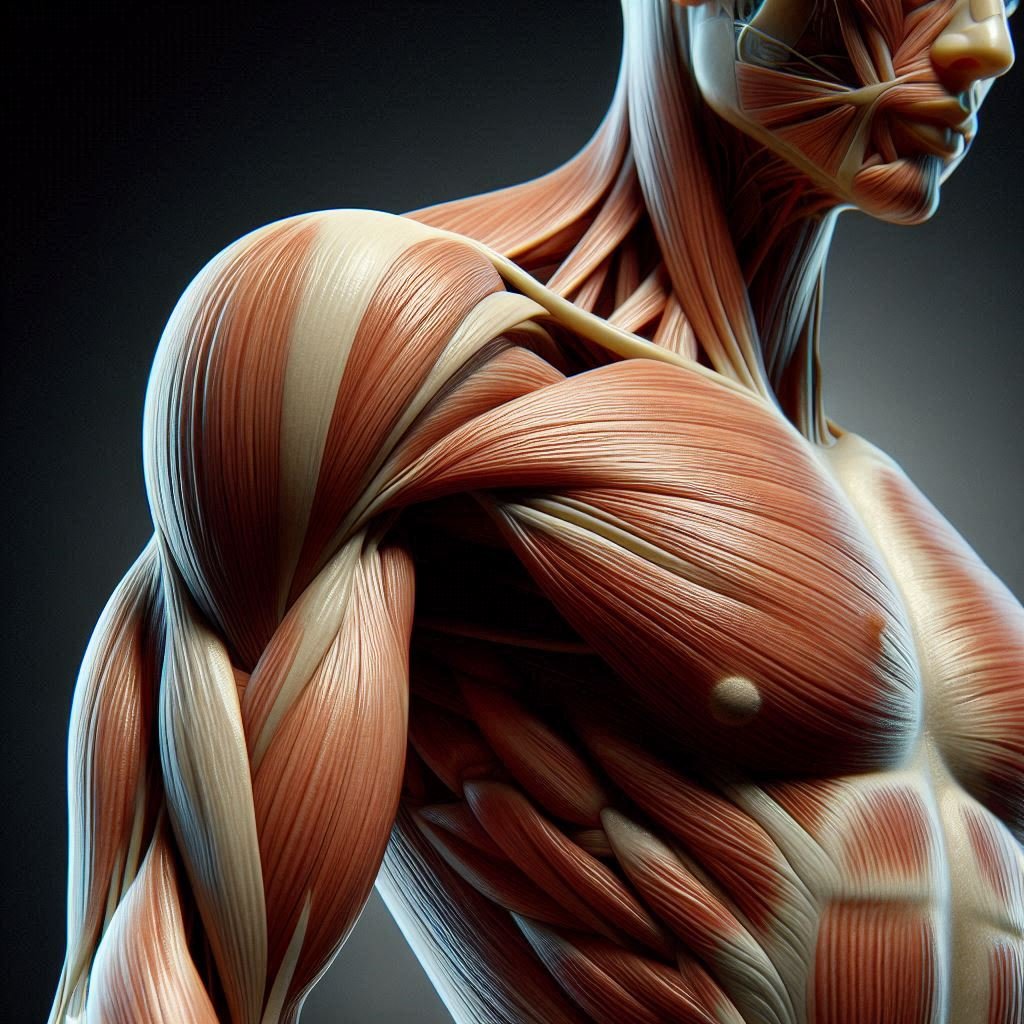
Human movement can be said to be as complex as it is multifaceted because movement is the outcome of highly organized biological processes that take place at microscopic levels in the body. Each time you pick something up, walk or even blink, your muscles are both contracting and relaxing in a very specific order. When the full sequence of muscle contraction is understood, one sees that the nervous system, the muscle fibers as well as the molecular structures interact to produce visible movement. This is initiated by the nerve signal and concluded by the interaction of proteins within the muscle cells which converts electrical impulses into mechanical force. Discovering stages step by step, it becomes less difficult to comprehend how complex physiology helps to perform everyday actions and makes the body move effectively and meaningfully.
Muscle Contraction: This is the Role of the Nervous System in Muscle Contraction
The complete process of muscle contraction begins with the nervous system which is the control center of muscle contraction. When the brain chooses to do something, it releases an electrical signal via motor neurons to the muscle which is required to contract. This impulse passes down the spinal cord, and along peripheral nerves until it gets to the neuromuscular junction, the place where a nerve cell meets a muscle fiber.
At this crossroads, the electrical signal is transformed into a chemical one. The nerve releases a neurotransmitter named acetylcholine that attaches to receptors on the muscle cell membrane. This binding activates a different electric signal in the muscle fiber, and the contraction process starts. This is a necessary step since this is what will guarantee that muscle activity will be accurately controlled and adjusted in line with the needs of the body. In the absence of this nerve-muscle communication, voluntary movement could not exist.
Electrical Signals In the Muscle Fiber
After the signal has reached the muscle fiber, it diffuses rapidly across the cell membrane and into the inside of the muscle through structures called transverse tubules. These tubules see to it that all the parts of the muscle fiber are reached at the same time by the electrical signal, so that they may contract all together. This step is a crucial step of the whole process of muscle contraction because it is what makes the entire muscle fiber react in the same manner to the nerve signal.
The release of calcium ions out of the sarcoplasmic reticulum, a specialized structure inside the muscle cell is triggered by the propagation of this electrical signal. Calcium is important in triggering the process of interaction between the proteins that aid in contraction. The speed, with which calcium ions are released and distributed, makes sure that the muscle is prepared to contract nearly instantaneously after the nerve signal has been received. This step brings out the close relationship between electrical and chemical processes in facilitating the functionality of muscle.
Sliding Filament Mechanism
The sliding filament mechanism lies at the heart of the entire process of muscle contraction, and it takes place at the microscopic scale, inside muscle fibers. The repeating units of muscle cells are known as sarcomeres and are composed of two main types of protein filaments: actin (thin filaments) and myosin (thick filaments). These filaments are able to interact with each other to effect contraction.
When the calcium ions are released, they attached themselves to regulatory proteins on the actin filament, revealing binding sites on myosin. These sites are then bound to myosin heads to form cross-bridges. The myosin heads pull the actin filaments towards the center of the sarcomere using energy provided by ATP (adenosine triphosphate). This tugging effect will shorten the sarcomere, which makes the muscle contract. This takes place many times in quick succession leading to a continuous contraction with smooth flow. It is the sliding of actin and myosin filaments across each other that ultimately produce force and movement.
The ATP in Muscle Contraction
ATP is needed in all phases of the entire sequence of muscle contraction, the energy needed in the interaction between actin and myosin. As ATP binds with a myosin head, it enables the head to dissociate with the actin filament following a power stroke. The energy produced by breaking down the ATP is then used to re- cock the myosin head which is ready to undergo the next round of contraction.
Without ATP, myosin heads would not be able to dissociate with actin, the muscle would not relax. It is due to this that when a lack of ATP occurs following death, one is most likely to suffer a condition referred to as rigor mortis, in which muscles become stiff. Under normal activity, though, the constant supply of ATP makes it possible to have the muscles contract and relax repeatedly. This is an energy-dependent process that is vital in sustaining muscle activity and allowing prolonged movement.
Relaxation of the muscle and Re-setting the System
The entire set of muscle contraction does not culminate in contraction but it also entails relaxation which is necessary so that muscles can go back to their original position. When nerve signal ceases, calcium ions are actively pumped in back into the sarcoplasmic reticulum. The result of this calcium removal is that the binding sites of actin are once again covered, preventing further interaction with myosin.
Consequently, the muscle fibers lose their tension and go back to the resting position. This process requires energy, as ATP is needed to pump calcium ions back into storage. Relaxation is equally significant as contraction because through relaxation, the muscles are enabled to be ready to take the next step. The contraction and relaxation ratio provides smooth controlled movement but not the continuous or uncontrolled muscle movement.
The Muscle Contraction Coordination in the Body
Muscles seldom act in isolation within the human body. Rather, they operate as a team to generate synchronized actions. So, when you bend your arm, one group of muscles is contracted, and one group is relaxed. This coordination is regulated by the nervous system which is in charge of making sure that the entire sequence of muscle contraction takes place in the appropriate muscles at the appropriate time.
This coordination makes possible complex motions like walking, running, and posture maintenance. The brain modulates the muscle activity in real time using sensory feedback of the muscles and joints so as to achieve accuracy and balance. The coordination of various muscle groups underscores the transformation of small-scale processes of contraction into large-scale movements that are critical to everyday life.
Daily demonstrations of muscle contraction
Every physical activity, including such simple acts as blinking or more complex ones like lifting heavy objects involve the full sequence of muscle contraction. Even what appears to be automatic, e.g., breathing, is dependent on the contraction of particular muscles. The diaphragm, such as, contracts and relaxes rhythmically to permit the air to move in and out of the lungs.
These real world examples help to show that muscle contraction is an unending and necessary process. The effectiveness and accuracy of this system make humans to carry out a wide range of activities with ease. Through the realization of the underlying mechanisms, it is now easy to realize that muscle functions are essential towards not only the survival of life but also the ability to perform complex physical activities.
Conclusion
The entire cycle of muscle contractions is an astonishing affair that converts electrical impulses into physical motion. Starting with an impulse in a nerve and ending with the interaction of actin and myosin filaments, every step has to be well coordinated to achieve an efficient and controlled muscle activity. The role of calcium ions, ATP, and specialized cell structures in the process make it quite complex, whereas the fact that it is so seamlessly integrated into everyday life makes it so very important. The stepwise deconstruction of the sequence makes it easier to recognize the role of microscopic events happening within the muscle cells to create the movements defining human activity. The knowledge of the process is not only beneficial in learning about the human physiology, but it also offers an insight into the way the body sustains strength, coordination and mobility.