
Some cultural shifts announce themselves with fanfare. Others happen quietly, one evening session at a time, one server at a time, one player realizing they have lost three hours without noticing. The rise of mmorpg games belongs to the second category. It did not dominate headlines the moment it happened. It grew in basements and dorm rooms and internet cafés, accumulating players and lore and community at a pace that the mainstream entertainment industry failed to take seriously until the numbers became impossible to ignore.
Today, the evidence of that growth is everywhere. MMORPG games have influenced the design of virtually every live-service title released in the last two decades. They pioneered subscription models that streaming services later adopted. They built the blueprint for digital economies that blockchain developers spent billions trying to replicate. And they created the template for online community-building that social media platforms are still trying to improve upon.
Understanding how this genre grew from a niche curiosity into a defining force in global gaming culture is a story worth telling properly, from the text-based origins that made it all possible to the AI-driven worlds now being built for the next generation of players. For those ready to experience what mmorpg games offer firsthand, kaikkitaieimitaan24.fi offers a well-structured entry point into the broader online entertainment landscape, a useful compass before you commit to a world you may spend years inside.
The History and Growth of MMORPG Games
The lineage of mmorpg games is longer and more interesting than most players realize. Long before polished fantasy epics with millions of subscribers, the genre existed as text-based Multi-User Dungeons, or MUDs, running on university servers in the late 1970s and early 1980s. Players navigated rooms described entirely in words, fought monsters through typed commands, and formed alliances with strangers they would never meet. The social architecture was primitive. The compulsion was unmistakably the same.
Graphical interfaces arrived in the 1990s, and the genre accelerated. Ultima Online launched in 1997 and introduced the persistent world concept at scale, thousands of simultaneous players, a living economy, and consequences that carried across sessions. EverQuest followed in 1999, bringing more sophisticated combat and the raid system that would become the genre’s signature cooperative achievement. Then, in 2004, World of Warcraft arrived and changed the conversation entirely, demonstrating that a mmorpg game could reach mainstream audiences without sacrificing depth.
Key Milestones That Shaped the Genre
1978
MUD1, The Text-Based Origin
Richard Bartle and Roy Trubshaw create the first Multi-User Dungeon at Essex University, establishing the persistent multiplayer world concept
1997
Ultima Online, Persistence at Scale
Origin Systems launches the first graphical MMORPG with a true living economy and meaningful player-driven consequences
1999
EverQuest, The Raid Era Begins
Sony Online Entertainment introduces the group-based raid system that becomes the cornerstone of cooperative MMORPG design
2004
World of Warcraft, Mainstream Breakthrough
Blizzard’s landmark title reaches twelve million subscribers at peak, proving the genre’s mass-market potential and setting the standard for the decade ahead
2013+
The Free-to-Play Revolution
Free-to-play models democratise access globally, opening mmorpg games to markets across Asia, Latin America, and Southeast Asia at unprecedented scale
What the timeline reveals is a genre that did not simply grow; it evolved strategically in response to player behavior, market forces, and technological possibility. Each era of mmorpg games produced design innovations that the broader industry then absorbed and redeployed, often without acknowledging the source.
The Social Power of MMORPG Games
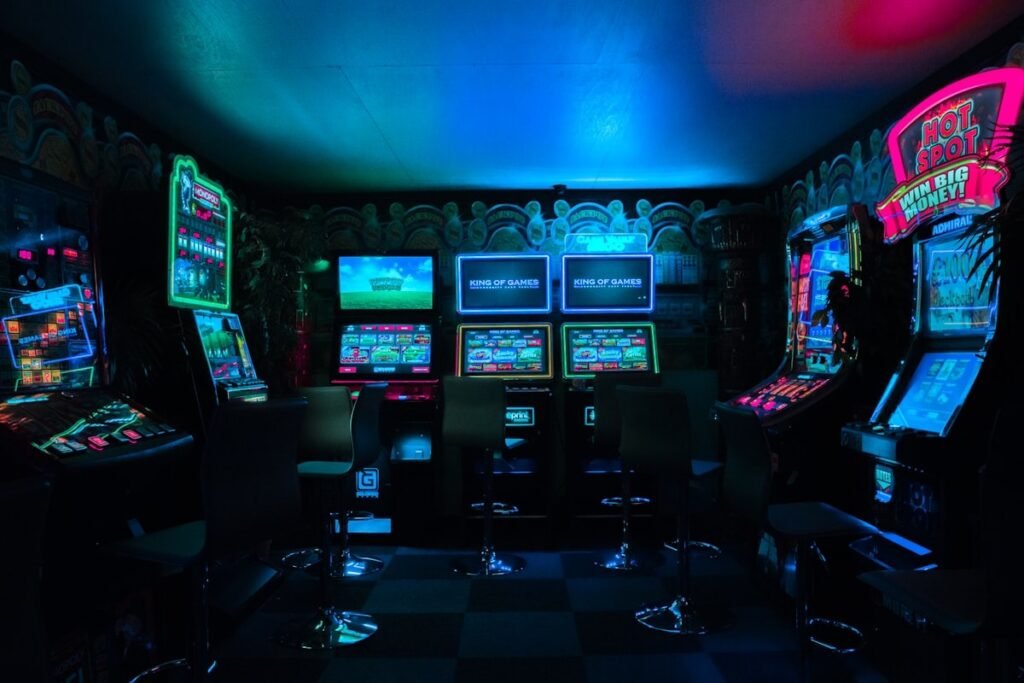
Before Facebook normalized the idea of maintaining social relationships through a screen, mmorpg games were already doing it, with considerably more depth and commitment than any social network has since achieved. The reason comes down to shared stakes. Passive social media interaction requires no real investment. The communities built inside mmorpg games are forged through genuine shared effort.
Guild systems are the most visible expression of this social architecture. Players form organizations with elected leadership, internal promotion systems, shared resource pools, and collective reputations that take months to build. The internal culture of a well-established guild in a mature mmorpg game has genuine complexity, complete with its own inside references, unwritten norms of behavior, and interpersonal histories that stretch back years.
Communication Systems That Create Community
The tools that mmorpg games provide for communication are also more sophisticated than they are typically given credit for. Layered chat systems distinguish between public zone chat, guild communication, party chat during missions, and private messaging, each channel serving a different social function. Voice communication during raids creates the acoustic dimension of real collaboration. In-game mail systems support economic relationships between players who may never occupy the same zone.
The communities inside mmorpg games are not an accidental byproduct of shared gameplay. They are the deliberate result of systems designed specifically to make players need each other and to make that dependency feel like belonging rather than obligation.
The social proof of this design philosophy is consistent and cross-cultural. Studies of gaming communities across Europe, North America, and Southeast Asia all find the same pattern: players who joined a mmorpg game for the gameplay and stayed for the community. The two become inseparable, and separating from either becomes increasingly difficult and decreasingly desirable with time.
For players navigating the social landscape of online gaming for the first time, knowing where to start matters enormously. Platforms like Kaikkitaieimitaan24 help new and returning players orient themselves within the current gaming ecosystem, matching interests with communities before the first character is created.
Competitive and Cooperative Gameplay

The genius of the best mmorpg games is that they support radically different motivations within the same persistent world. A player who wants to compete against other human opponents and a player who wants to cooperate with teammates against environmental challenges can both find what they are looking for, often within the same game session, sometimes within the same encounter.
Raids. The Pinnacle of Cooperative Design
Raids represent the clearest example of what makes cooperative gameplay in mmorpg games so distinctive. These encounters are architected around a fundamental truth of human motivation: people perform better and feel more when the outcome of their efforts affects other people they care about. Failing a critical mechanic in a raid does not just cost you; it costs your twenty teammates who have been working toward this moment for weeks.
That weight of shared consequence creates the conditions for genuine team development. Groups that raid together regularly develop communication shorthand, mutual understanding of individual tendencies, and trust that extends well beyond the specific encounter they are practicing. The raid leader who learns to manage twenty-four other people through a difficult progression tier is developing real leadership skills, and most of them know it.
PvP Where Competition Sharpens Everything
Player-versus-player content in mmorpg games operates on a completely different emotional register. Where raids reward coordinated patience, PvP rewards individual mastery, rapid decision-making, and psychological adaptability. Ranked arena systems create progression tracks for competitive players that mirror the structure of professional sporting leagues, complete with seasons, rankings, and the cultural weight of achieving elite status.

Large-scale faction warfare, territorial sieges involving hundreds of players on each side, creates a third mode that combines elements of both. The strategic planning required to coordinate a siege, maintain supply lines, and deploy forces effectively across a large virtual battlefield demands both cooperative organization and competitive ruthlessness. These events generate some of the most discussed moments in mmorpg games history, stories that circulate within communities for years.
The Future of MMORPG Games
The mmorpg games of 2025 are already dramatically more sophisticated than those of 2010. The gap between 2025 and 2035 is likely to be wider still. Several technological trends are converging in ways that will fundamentally alter what the genre is capable of not merely making existing features prettier but enabling entirely new categories of experience.
Cloud Gaming Infrastructure
Streaming-based delivery removes hardware barriers entirely, making flagship mmorpg games accessible on any device with a stable internet connection, dramatically expanding the global player base
AI-Driven NPCs:
Machine learning systems allow non-player characters to move beyond scripted dialogue trees, adapting to individual player behaviour, remembering prior interactions, and contributing to emergent narrative
Next-Gen Rendering
Real-time ray tracing and photorealistic environment generation are closing the gap between cinematic quality and live gameplay in mmorpg games faster than most expected
Global Connectivity
Low-latency 5G and satellite internet infrastructure is enabling players in previously underserved regions to participate in real-time multiplayer experiences for the first time.
The intersection of AI and narrative design is perhaps the most transformative development on the horizon. Current mmorpg games offer branching questlines and reactive dialogue, but the narrative outcomes are always predetermined by what a developer anticipated. AI systems capable of generating genuinely responsive story content in real time would allow mmorpg games to become truly emergent narrative environments, worlds where the story that unfolds is genuinely unique to the players who participate in it, rather than a variation on a scripted template.
- Cross-Platform Play Expansion
- Unified servers across PC, console, and mobile, removing platform barriers from multiplayer communities
- Procedural World Generation
- AI-assisted environment creation enabling worlds that grow and change dynamically without manual developer intervention
- Immersive Hardware Integration
- VR and AR systems maturing to the point where physically inhabiting a
- mmorpg game
- world The world becomes a practical choice rather than a novelty
- Deeper Economic Systems
- Player-driven markets becoming more sophisticated, with transparent mechanics that reward genuine economic skill
Conclusion: A Phenomenon Still in Motion
The story of how mmorpg games became a global phenomenon is not a story that has ended; it is one still being written. From a text-based server at a British university to worlds inhabited by millions of simultaneous players across every timezone on earth, the genre’s trajectory is one of consistent expansion, adaptation, and cultural relevance.
What has remained constant throughout that journey is the core promise: a persistent world, shared with real people, where effort produces genuine progress and community creates lasting meaning. Technology changes the scale and fidelity of that promise. It has not, in forty-five years, required anyone to change the fundamental offer.
As cloud infrastructure democratizes access, AI reshapes narrative possibility, and connectivity draws new player populations into the fold, mmorpg games are positioned not for decline but for their most significant period of growth yet. The phenomenon is global. The ceiling, for the moment, remains out of sight.