Along the Gulf Coast of Corpus Christi, daily life moves to the rhythm of busy highways, commercial routes, and a thriving port economy. With major trucking corridors running through the region and constant freight traffic supporting local industries, serious roadway collisions are an unfortunate reality for many families. When a crash involving a commercial truck results in catastrophic injuries, the consequences can be overwhelming physically, emotionally, and financially. In these moments, understanding how lawyers manage catastrophic injury truck cases becomes critical.
From launching immediate investigations to coordinating with medical and accident reconstruction experts, attorneys build claims designed to reflect the full, long-term impact of life-altering harm. Every step requires precision, strategy, and a deep familiarity with both state and federal transportation regulations. For those searching for guidance after a devastating crash, speaking with a trusted truck accident lawyer in Corpus Christi can be the first meaningful step toward stability and accountability.
Initial Case Assessment
Before taking any action, lawyers will assess the incident. They will collect the fundamentals, look at accident reports, and interview witnesses. This stage assesses if the case is legally valid and outlines the parties involved. In the process of doing so, they become reliant upon medical records as the reference point to how serious an injury really is. An early evaluation also looks at insurance coverage and potential violations of transportation laws.
Evidence Collection and Preservation
Lawyers capture images at the crash site of the damaged cars and any apparent injuries. The CCTV footage and video captured from nearby cameras also provide vital clues about the sequence of events. Obtaining electronic data, for example, records maintained by a vehicle black box, may show the speed of a vehicle.
Dealing with Insurance Companies
After an incident, insurance representatives generally reach out to injured parties rather quickly. Lawyers counsel clients against monkey-branching perils. In addition, attorneys manage all communications with insurers to avoid anything that could jeopardize the case. They review your insurance and ensure that all injury-related expenses are covered.
Expert Consultations
Many truck cases involving complex injuries need experts, and that is where experts come in. Doctors give estimates about the seriousness of injuries and the potential long-term effects. In the case of an accident, accident reconstruction specialists look at the evidence to show how the crash happened. Economists might estimate the cost of your injuries based on lost wages and quality of life.
Negotiating Settlements
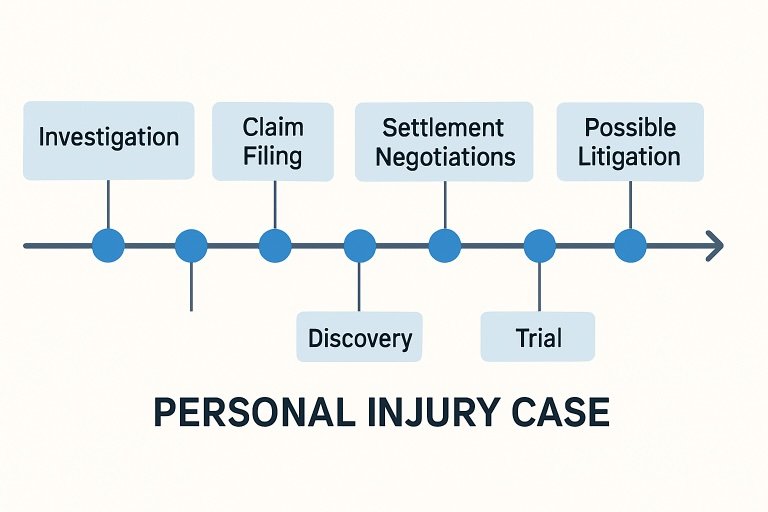
Catastrophic injury cases most often settle out of court. Attorneys become detailed and include expert opinions and supporting documentation with their settlement demand. They illustrate the entire extent of how the injury has affected the client physically, emotionally, and financially. Then the lawyers for both sides negotiate terms that accurately express the claim’s merit. If talks stall, lawyers gear up to litigate.
Preparing for Trial
Some accident cases go to court. Compiling all evidence and witness statements is essential for preparation. Lawyers create coherent and compelling presentations to submit to a judge or jury. They know perfectly how others might respond to their arguments and prepare their answers beforehand. Trial lawyers deal with cross-examinations and help simplify technical issues for the court. Client interests are always put first throughout the process.
Supporting Clients Through Recovery
For those with serious injuries, it’s the last thing they should worry about. Lawyers provide support and peace of mind during challenging times. They update clients on the progress of their cases and what they can expect next in the legal process. Legal professionals frequently collaborate with healthcare providers and support services.
Adapting to Changing Regulations
There are frequent changes in trucking laws and the standards of safety. Lawyers stay informed about legal changes that could impact their case. Continuous education ensures that legal tricks do not end in ineffectiveness or illegality. Such a dedication to continuous growth enables attorneys to predict new challenges and deal with them proactively.
Conclusion
Handling truck cases involving catastrophic injuries takes skill, diligence, and compassion. Lawyers assist from the very start of an investigation to the end of its resolution. Attention to detail, evidence gathering, working directly with experts, and aggressive negotiation are tools attorneys use to create fair outcomes. Their commitment is invaluable to those who suffer from catastrophic accidents.