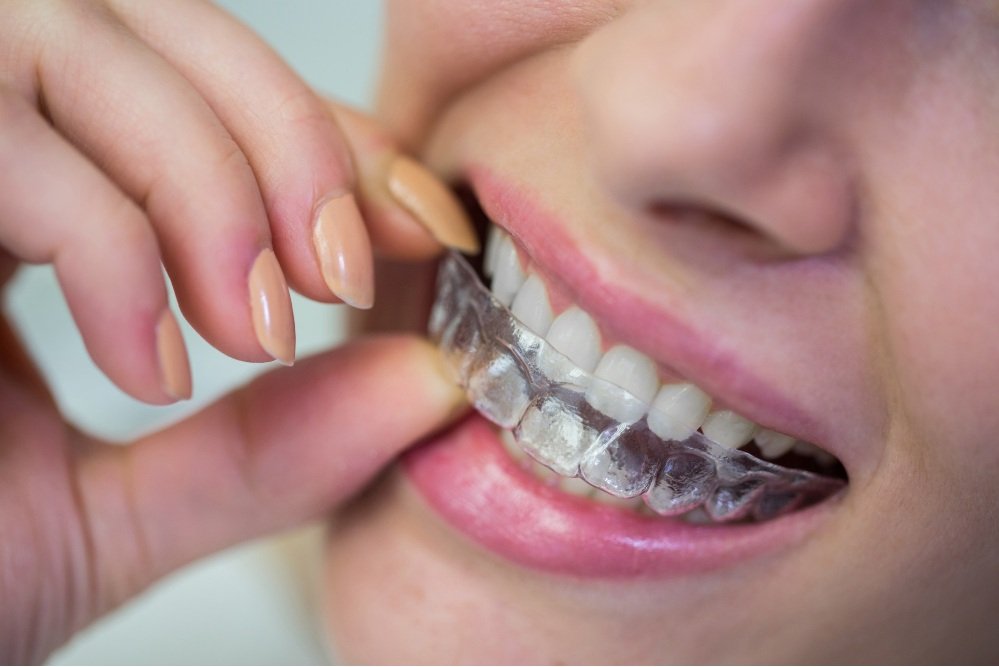
It’s nearly impossible to understand that thin sheets of plastic move teeth. They’re embedded within bone, surrounded by soft and hard tissue and generally, after decades of chewing motion, very good at moving. So how does plastic get them to move? The science behind how invisible aligners work is as incredible as the eye cannot see. More importantly, understanding how and why they work with action taken over time.
Teeth do not want to move on their own. There’s biological controls in place. Invisible aligners take advantage of the biological opportunity to reshape the bone that surrounds the teeth—through consistent pressure, inflammation occurs. It’s been used in orthodontics for well over 100 years; it just comes down to a greater science of alignment today with less discomfort.
Bone Remodeling
Teeth are not fused with bone. Instead, they’re held in place through a thin sheet of connective tissue known as the periodontal ligament that works as a shock absorber along the tooth root and bone. This tissue and gap between the tooth and bone is what allows for movement.
When pressure is applied to a tooth, the periodontal ligament essentially squishes together on one side and stretches apart on the other. In response, the body responds biologically. On the squashed side, it sends in osteoclasts to resorb (break down) the bone mass; on the stretched side, it sends in osteoblasts to lay down new bone.
This process is called bone remodeling. Bone constantly remodels all over your body naturally. Aligner systems use this benefit with consistent pressure that tells your body what to do. If a tooth moves into the resorbed space, new bone comes in to hold that tooth in place. If this space doesn’t get filled immediately, the tooth wants to return back to its original position.
Why It’s Over Time
Unfortunately for orthodontics (but for healthy teeth), bone remodeling does not happen overnight. Osteoclasts need time to resorb and osteoblasts need time to make their new deposits. Any force applied beyond a threshold will exert enough damage to neighboring supportive structures including roots, ligaments, and surrounding bone.
Therefore, instead of focusing on one aligner that has the potential for numerous movements, invisible aligners focus on many aligners that each anticipate miniscule movements per aligner—as little as .25-.5 mm each. So each aligner does a little bit and your body has to stabilize that until another attempt can be made.
Typically aligner stages are worn for one to two weeks. During that time real teeth move as bones remodel around them stabilizing through an appropriate timeframe that correlates with biological realities.
The Physics Behind Aligner Pressure
Invisible aligners do not apply simple pressure that stands beyond comprehension—they’re manufactured with specific pressure, at specific angles and for specific purposes. For example, plastic has memory; it wants to return back into its own shape. However, if you put an aligner (constructed by your teeth) into a more accommodating space than currently existing, its constructed space wants to revert back into memory mode and therefore the tooth must move instead.
Furthermore, the pressure is low—generally measured in grams—not pounds. Too much pressure will damage tissues and slow movement down.
In addition, teeth all require different amounts of pressure for movement: molars have larger roots than incisors, rotation requires different directional force than tipping forward. This is where the best invisible aligners for teeth work because computers can gauge what teeth require what pressure when and how so it’s healthier over a gradual time frame that makes sense.
Which Teeth Move Faster Than Others
Some teeth move faster than others in response to aligner pressure; some do not. For example, incisors (front teeth) are single-rooted teeth—they usually move fast. Molars (back teeth) are two or three rooted—they take more time.
Moreover, specific rotational teeth take more time than simple lateral movements. In addition, biological factors can help or hinder expedited movement: younger patients typically have less dense bone; therefore their remodeling process is faster. Adults can get similar outcomes; however, their bone is more dense so it remodels more slowly—as such adults should assume longer timelines for completion even though they can achieve rewarding results.
Finally, dental history plays a role—and it’s taken into account during treatment planning—for example, teeth with large fillings or crowns move differently than those without; or teeth that have root canals shift differently than those no dental intervention ever.
The Use of Attachments
Many clear aligner systems use little buttons made from tooth colored resin known as attachments bonded onto specific teeth. They are not cosmetic; they are functional; attachments afford aligners something to hold onto when more difficult movements cannot be achieved through plain plastic alone.
For example, stubborn rotations may require assistance from attachments where they need to turn; conversely, attachable force comes with direction where attachment assist better sees an opportunity than without accessibility. Attachments are placed where their movement needs require; rarely does anyone notice them once they’re there—they’re there for how efficiently they can assist movability.
What Happens Between Aligners?
Those two weeks you wear each aligner is not static; instead, active biologic movements occur over time where you feel pain and discomfort when you change your aligner—and that’s good—because it means your periodontal ligaments are squished and stretched—which means bone remodeling has commenced.
By day three or four that pain settles in because your teeth have adjusted into new shapes since they’ve learned what they needed to from their position.
However, if you switch your aligner too early it won’t fit because your teeth have not adjusted quickly enough; there’s a timeline because it takes time for biology to secure those movements.
Why Retainers Are Important
Aligners need to be worn 20-22 hours daily because they rely on constant pressure over time; removal at any point serves as a break for bones remodeling because they start back over at square one—which serves successful adjustment disadvantageously when it’s been proven good at first attempt.
In addition, if you think all your teeth will stay as they were positioned by themselves over time you’re mistaken—nothing is static—they’re malleable—they want to return back into their original positions unless held in place locked much like a door only stays closed if it has a lock on it.
Therefore it’s important after all adjustments are completed that retainers are worn aggressively for a period of time when even retainers do not keep teeth secure because the surrounding bones are not still secure—through retention they can cement themselves back into compliance while everything around them reshapes itself.
Your periosteum works hard with minerals through new bone applications stabilizing everything into its new world order.
The Biology Behind Why It Works!
Invisible aligners only work when invisible forces respect how your body naturally wants them to move—gradually—withheld pressure per position—specifics per stage—they respect biological reality based on how you learn how your mouth communicates everything else over time.
By understanding this science behind it makes sense how things don’t happen overnight; how reason makes sense through treatment plan due because of biology—and that if it takes time to move things then fine—but once it’s moved forevermore stabilized healthily based on how adaptable the rest of your body works with it.