Table of Contents
- Understanding the Impact of Water Heating on Energy Consumption
- Upgrade to Energy-Efficient Water Heaters
- Implement Smart Water Heating Controls
- Adopt Simple Energy-Saving Practices
- Take Advantage of Financial Incentives
- Consider Professional Energy Audits
- Stay Informed About Energy-Saving Technologies
- Conclusion
Managing household expenses can quickly become overwhelming, especially when energy bills take such a large share of your monthly costs. Hot water typically accounts for a significant portion of this expenditure, so optimizing your home’s hot water system is one of the most practical ways to save energy and money. From newer appliances to smarter usage habits, making small or large improvements today can lead to noticeable drops in your monthly utility payments. If you’re considering a system upgrade, finding reliable hot water tank installation in Hamilton is a crucial first step toward greater efficiency and comfort for your household. By consulting regional experts for installation, you ensure your investment yields maximum returns in performance and energy savings for years to come.
It’s important to understand exactly how much energy your hot water system consumes and to identify where improvements will make the biggest difference. Many homeowners underestimate how small upgrades or switching to more advanced technology can build significant long-term value. Whether you are upgrading your water heater to a newer model, using smart controls to automate heating schedules, or taking advantage of local and federal rebate programs, every improvement contributes to a more efficient and resilient home. Considering a holistic approach empowers you to make changes with confidence, knowing you’re not only reducing costs but also increasing comfort and sustainability in your daily life.
Understanding the Impact of Water Heating on Energy Consumption
According to the U.S. Department of Energy, water heating is responsible for about 18% of household energy use, making it the second-largest energy cost in most homes, surpassed only by heating and cooling systems. This underscores just how pivotal your choice of hot water system is when looking to cut overall energy consumption. The average family can spend hundreds of dollars annually to maintain a steady supply of hot water, so efficiency in this single area is crucial for those looking to reduce monthly utility bills.
Minor inefficiencies, such as outdated technology, uninsulated pipes, or minor leaks in the system, can quickly add up to significant energy loss and waste. A leak the size of a pinhole can release gallons of heated water every day, all of which must be replaced and reheated, costing you money. By switching to a more energy-efficient system and addressing simple issues like leaks and heat loss, you can ensure that more of the energy you pay for is actually used where you need it, rather than wasted on inefficiency.
Upgrade to Energy-Efficient Water Heaters
One of the most impactful steps you can take to cut your energy bills is investing in a high-efficiency water heater. Modern water heaters, particularly heat pump water heaters (HPWHs), are designed to use energy far more effectively than their conventional electric or gas predecessors. HPWHs operate by drawing heat from the surrounding air and transferring it to the water, requiring up to 70% less electricity than older electric models. This translates to lower monthly energy use and a smaller carbon footprint for your home.
The benefits extend beyond monthly savings. To encourage sustainable choices, the federal government offers homeowners tax credits of up to $2,000 for installing qualifying heat pump water heaters by December 31, 2025. These incentives, when combined with improved home comfort and lower maintenance costs, make upgrading to a modern water heater a smart financial step for most households. By reducing the upfront cost, this incentive enables more families to adopt better technology without incurring substantial financial strain. Over time, savings on your bills can quickly offset the cost of the new equipment (Tom’s Guide).
Implement Smart Water Heating Controls
As technology advances, the options for making your water heating system more efficient have expanded. Smart controls, such as model predictive control (MPC) systems, are revolutionizing how water heaters are used in today’s homes. These innovative controllers use data-driven algorithms to predict your household’s unique hot water needs, then automate heating schedules so water is only heated when it’s truly required. The result is substantial energy savings; studies have shown that smart controls can reduce energy use by as much as 37% when compared to leaving a traditional heater running throughout the day.
Smart heating controls often come with companion mobile apps or online dashboards, making it easy for homeowners to monitor real-time energy consumption and adjust usage settings from anywhere. This added visibility empowers you to identify patterns and further refine your hot water habits, maximizing financial savings and minimizing environmental impact without sacrificing comfort or convenience.
Adopt Simple Energy-Saving Practices
Advanced upgrades are highly effective, but even simple, everyday habits can significantly reduce your home’s energy use over time. Consistent, small changes can save substantial amounts of energy and money annually:
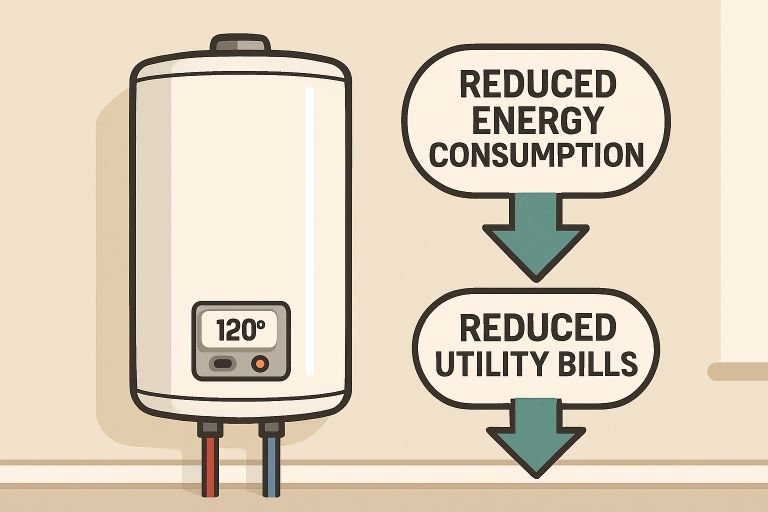
- Lower the Water Heater Thermostat: Set your water heater to 120°F (49°C); this is both safe and sufficient for bathing, cleaning, and cooking. This helps reduce heat loss as hot water sits in the tank, saving energy while also extending the heater’s lifespan by minimizing scale buildup.
- Fix Leaks Promptly: A dripping faucet or leaking pipe can waste thousands of gallons of hot water per year, resulting in hidden costs that add up quickly. Prompt repairs prevent this waste and reduce the energy needed to reheat replacement water.
- Use Cold Water for Laundry: For most laundry loads, cold water is just as effective as hot, thanks to advances in detergents. Making this switch can dramatically cut your total hot water usage, putting immediate savings back into your pocket with every wash.
Take Advantage of Financial Incentives
Many city, state, and utility companies promote environmentally responsible upgrades by offering rebates or financial incentives to homeowners who make energy-efficient improvements. San Francisco, for example, provides up to $1,200 in bill credits for installing efficient heat pump water heaters, while similar offers can be found in many regions across North America. These incentives can lower the barrier to investing in energy-saving technology and reduce the time it takes for an upgrade to pay off through lower utility bills.
It’s worth researching local and federal incentive programs before making a purchase or scheduling an installation. Some programs may also cover the cost of professional energy audits, insulation improvements, or even smart thermostat installations, helping you stretch your home improvement budget even further.
Consider Professional Energy Audits
Professional energy audits provide an in-depth analysis of how your home uses and loses energy. Auditors use specialized equipment to assess insulation levels, identify heat loss from plumbing and water storage tanks, and evaluate the efficiency of appliances such as water heaters. By pinpointing the best opportunities for improvement, an audit ensures you can prioritize upgrades for the greatest impact, whether that means upgrading a tank, adding pipe insulation, or sealing small leaks.
Many homeowners find that investing in an audit pays off quickly, as the recommended changes often lead to energy savings that continue year after year. Beyond financial returns, these improvements contribute to a more comfortable, resilient home environment, helping you maintain even temperatures and a dependable hot water supply throughout every season.
Stay Informed About Energy-Saving Technologies
The world of home water heating continues to evolve, with new advances each year designed to boost efficiency and make eco-friendly living more accessible. Technologies such as predictive controls, solar-assist features, and renewable-ready water heaters are gaining traction in today’s market. Staying aware of these developments can empower you to make smarter upgrade decisions and maximize your home’s energy-saving performance.
Taking the time to research new systems and trends, through trusted sources or local specialists, means you’ll be ready to adapt when affordable, cutting-edge solutions become available, securing lasting benefits for both your household and the environment.
Conclusion
Lowering energy bills through efficient hot water solutions involves a thoughtful blend of technology, routine, and awareness. By upgrading to modern, energy-efficient water heaters, integrating smart controls, adopting cost-saving routines, and leveraging available incentives, homeowners can reduce their utility expenses while contributing to a more sustainable future. With a mix of simple actions and informed investments, you can secure long-term benefits that reward both your wallet and the environment, making your home more comfortable, efficient, and future-ready in every season.